Format: Paperback

Guards! Guards! by Terry Pratchett

Posted May 16, 2013 by Michael @ Knowledge Lost in Fantasy / 0 Comments

Guards! Guards! by Terry PratchettTitle: Guards! Guards! (Goodreads)
Author: Terry Pratchett
Series: Discworld #8
Published: Orion, 1998
Pages: 317
Genres: Fantasy
My Copy: Borrowed from a Friend

Buy: AmazonBook Depository (or visit your local Indie bookstore)

The Unique and Supreme Lodge of the Elucidated Brethren of the Ebon Night is a secret organisation that plans to overthrow the Patrician and install a king of their choosing; a puppet under the control of the Supreme Grand Master. Using a stolen magic book to summon a dragon on the people of Ankh-Morpork, the plan is to slay the dragon, rid the city of its tyranny and have their hero take the throne.

Guards! Guards! attempts to parody Hard-Boiled and Noir novels with elements of police procedurals but there is one thing that really doesn’t match this style. Guards! Guards! is writing in third person with an omniscient and reliable narrator, this really seems weird since the style of novel it is trying to parody is often first person and unreliable. I’m not sure if it is the fact that all Terry Pratchett novels are written in the same style but it really didn’t help me connect with the novel, let alone notice most of the parodies.

This is a simple quest plot, The Unique and Supreme Lodge of the Elucidated Brethren of the Ebon Night obviously want to take over the throne but there are a few other plotlines that are on a quest for power. Wonse (The secretary to the Patrician) had power; he could make commands and have them carried out and he quite enjoyed that. Now he has lost this power, he wants it back. The Patrician wishes to hold onto his power as the ruining king, ultimately his calm demeanour is what aids him through the tyranny.

One thing I thought was difficult about this book was the language; while this novel uses modern language there is a lot of in world slang that took a while to get used to. There was an incident where a character got intoxicated and the words started being misspelt for emphasises. This can be effective but you don’t find out this is due to his intoxication till you read through some of his gibberish. Sometimes the language can be effective like when Death speaks, he only uses capital letters and when the dragons are speaking they use italics. Overall it just took so much to get used to. If you are a reader of the Discworld series, this might not seem too difficult but for an outsider like me it really affected my enjoyment of this novel.

This novel wasn’t broken into chapters; it’s just three hundred plus pages of continuous story. I’m not really sure the reason behind this, but the only way the novel switches between the plot and subplot are paragraph breaks. I’m not saying it is necessarily a bad thing but when you want to put the book down, I think it makes it hard to find a decent stopping place.

I’ve been very vocal about my struggle to connect with fantasy novels; I discovered I do enjoy the urban fantasy/noir blends (The Dresden Files, Bobby Dollar series) so I thought maybe this would be similar. Sure this book was funny and some of the parodies worked really well but it missed any crime element to really work for me. To make a good fantasy/noir blended novel, I think it needs to be a lot darker, with some cynical elements; it doesn’t necessarily need a crime but a quest that will cause an inner struggle within the protagonist will help.

If someone has a suggestion for a decent fantasy novel with some noir elements to it, please let me know. Guards! Guards! is a very funny fantasy novel; this is the second Discworld novel I’ve read and while I did enjoy them, I felt like the both lacked something. I guess I much prefer darker stories; this is just light entertainment and sometimes you need that, but it’s not a series I plan to read in its entirety.


The Reader by Bernhard Schlink

Posted May 15, 2013 by Michael @ Knowledge Lost in Historical Fiction / 0 Comments

The Reader by Bernhard SchlinkTitle: The Reader (Goodreads)
Author: Bernhard Schlink
Translator: Carol Brown Janeway
Published: Orion, 1998
Pages: 216
Genres: Historical Fiction
My Copy: Personal Copy

Buy: AmazonBook Depository (or visit your local Indie bookstore)

The Reader tells the story of the teenage years of Michael Berg while recovering from hepatitis and his passionate affair with a mysterious woman twice his age. Later going on to study law and discovering that this woman was involved in the death march from Auschwitz. The book continues on through the war crimes trial and the relationship between the two after her imprisonment.

Bernhard Schlink was born in 1944 (one year before the war ending), studied law then became a professor of public law and the philosophy of law. His passion for reading comes from a teacher in his high school who encouraged his reading and discovery of literature. Later he discovers that this teacher was a member of the Gestapo and involved in some questionable practices. His first series of books featuring a sixty year old private investigator Gerhard Selb (Selb translates to Self) also had a questionable past during the war and his coming to terms with this. This is interesting since the books in the series are called; Self’s Punishment, Self’s Deception and Self’s Murder. Also he has a collection of essays called Vergangenheitsschuld which translates to Guilt about the Past, which leads you to believe that Bernhard Schlink has a fascination about the effect of World War II has on the next generation of Germans.

This is not a book about the Holocaust novel; while this historical event plays a role, this is rather a novel that gives you a lot of questions and problems to think through. Divided into three parts; the summer of love, the trial and imprisonment; The Reader explores three different scenarios as well as the notion of keeping secrets. At the start of the book Hannah comes across as Good Samaritan trying to help Michael who was throwing up in the street. Later he pursues her and she gets an impression that he is old enough to be out of school; he doesn’t correct her, thinking the papers he leaves behind was enough for her to know his true age but we later finds out she would never have looked at them. When she finds out, they are in bed together and he tells her that he is skipping classes to be with her. She throws him out and it’s not until very later in the book we discover just how important education is to her. Hannah is his first love, he is too young to fully understand the kind of relationship they are having, while Hannah remains guarded and tries to protect both her public and private shames.

While most people focus mostly on the relationship between the two, but there is so much more to look at in the novel. Years later Michael finds Hannah again in a trial and the reader is asked to consider two things; the nature of her guilt and the significance of her other secret (the one she is more ashamed of it). While she was never the ringleader of her charges and she was following orders, when it came to the damning report, she let the court believe she wrote it to continue to hide her illiteracy. This brings to the overall concept to the book; ignorance is not necessarily innocence. The pride to protect herself from people discovering of her illiteracy works against her though out the entire book. She gives up promotions and lands herself in prison all to protect this secret.

This leads into the third part; years later we find that Michael starts reading to Hannah once again. Sending cassettes both the reader and Hannah mistakenly get the impression that this is an act of affection and when Hannah eventually finds out,  we also find out just how cold he has been acting. I’m not sure if he was trying to gain back the power in their relationship or just the bitterness of his life doing it but we are led to believe he still cares about Hannah when all he really cares about is that summer fling when he was still a teenager.

The book wants you to recognise that you are the reader, and Hannah, in particular, wants you to realise just how blessed you are to be able to read this book. I remember there was a great movie adaptation of this book a while ago; while very meta to have a movie about reading, I’m surprised how well it came together. I didn’t remember much about this movie while I read this but it all come back to me as I discovered it in the book. It was a great feeling to remember as I read and not know what would happen next.

I really loved this book; there is that element of uncomfortableness with the relationship at the start, which really is something people can be afraid to talk about but with a book like this it can be scandalous.  There are also so many other interesting elements that I think are equally valuable; especially with the whole German shame towards what they did in World War II and the next generation having to deal with it. While the movie closely follows the book, it is still worth reading; I highly recommend it.


The Last Good Kiss by James Crumley

Posted May 12, 2013 by Michael @ Knowledge Lost in Pulp / 0 Comments

The Last Good Kiss by James CrumleyTitle: The Last Good Kiss (Goodreads)
Author: James Crumley
Series: C.W. Sughrue #1
Published: Vintage, 1978
Pages: 244
Genres: Pulp
My Copy: Personal Copy

Buy: AmazonBook Depository (or visit your local Indie bookstore)

James Crumley’s private investigator CW Sughrue finds himself searching for a runaway young woman, missing for ten years. But this is not how it started out; he was hired by a woman to find her ex-husband, Abraham Trahearne before he drinks himself to death. A confrontation in the bar that results in Trahearne being injured in hospital puts Sughrue in a position to look for this missing woman.

This hard-boiled novel is told in a way I don’t think has been done enough in a pulp crime novel. A parallel narrative exploring the problematic relationship between Sughrue and the wandering alcoholic novelist, and the three femme fatales in Trahearne’s life, just to make things more complex. Apart from that, you have the usual elements that make up a hard-boiled novel; alcohol, money, love, sex, power and violence.

Somehow James Crumley has a refreshing voice for this genre; I’m not sure if it is just that I’ve not read enough hard-boiled novels set in the seventies or there is something else there. I would put Crumley somewhere between Raymond Chandler and Jim Thompson; he doesn’t have the plotting skills and wit that Chandler has but he isn’t as violent and philosophical as Thompson. The narrative, while in a first person point of view, manages to switch between making the reader feel like they are in the same room trying to piece this mystery together, and then all of a sudden you are inside CW Sughrue head reading all his thoughts, emotions and memories. This isn’t easy to do but Crumley does this so seamlessly that you don’t really notice it happening. This narrative, mixed with the cynicism and low regard to society is what I think makes this book so refreshing.

This novel deals a lot with sex; Sughrue’s personal integrity and professional ethics are corrupted by the sexual desire towards Catherine; a desire she uses to manipulate him. Trahearne hasn’t been able to be creative because of his sexual desire with Melinda and his attraction towards his mother. Then there is Betty Sue, who just has a sexual desire towards everyone in the book. It’s important to know at the core of this books portrayal of sexual desire is the cynical belief that such corruption is unavoidable and even inevitable.

The Last Good Kiss also deals with the idea of identity and trying to escape your past, but ultimately realising you can’t run. Betty Sue hides her true self between layers of masks and other identities; she is running from her sexually exploitative time in San Francisco but it all comes back in the end. Trahearne can’t escape his infidelities, alcoholism and his ex-wife’s fury. All of them fail to realise that the past defines the present. Their mistakes in the past do not have to define their future but helps them grow; this book just ends up being a twisted celebration of life’s obstacles shaping our personality.

Admittedly I found myself being bored in parts of this book and wanting to skim read, but I persevered and found some interesting elements that stopped this from being a generic crime novel. CW Sughrue, is an alcoholic ex-army officer turned private investigator and that dark past is what makes me want to keep reading the series, just to discover what he is running from.  The Last Good Kiss has been described as the most influential crime novel of the last 50 years, influencing people like Michael Connelly, George Pelecanos, Dennis Lehane and even Neal Stephenson; that alone is an impressive reason to check this book out. While I think I prefer Jim Thompson for style and message, James Crumley is an author I plan to explore more of.


Heart of Darkness by Joseph Conrad

Posted May 8, 2013 by Michael @ Knowledge Lost in Classic / 0 Comments

Heart of Darkness by Joseph ConradTitle: Heart of Darkness (Goodreads)
Author: Joseph Conrad
Published: Oxford World's Classics, 1899
Pages: 225
Genres: Classic
My Copy: Personal Copy

Buy: AmazonBook DepositoryKindle (or visit your local Indie bookstore)

Heart of Darkness tells the tale of Charlie Marlow’s journey on an ivory transporter down an unknown river in the Congo. What he sees horrifies and perplexes him, calling into question the very basis of civilisation and human nature. The story follows this commercial agent and the object of his obsession, the notorious ivory-procurement agent Mr Kurtz. This novella has become an important piece in the western canon for its range of themes and scholarly values.

I remember reading this book a few years back and while I thought it was an interesting book, I never really grasped it completely (and I’m not sure if I ever will) but for comparison to what I know now and then, check out my review here. To begin with we need to gain an understanding of Joseph Conrad’s life because there are a lot of life experiences in this book. Born Josef Teodor Konrad Walecz Korzeniowski in Russian-ruled Poland in 1857; this part of Poland is now part of Ukraine. Both parents were political activists and as a result of their participation in the Polish independence movement they were exiled to Northern Russia in 1863. At sixteen he dropped out of school to work on a French merchant ship, sailing the West Indies as an apprentice. Later he joined a British ship where he served as a merchant for ten years, during this time he gained the rank of captain and became a naturalized British citizen. During a trip in 1890 sailing through the Belgian Congo and Congo River he got really sick and had to retire from sailing and focused his energy on writing. This means Joseph Conrad must have grown up speaking Polish and Russian, learning French at some point and then English. Although he often struggled to write in his adopted language, he is now considered one of the greatest prose stylists in English literature.

There are many themes explored in this book, so much so that I think I would need to keep reading this book again and again to discover them. Though major themes include slavery (the effect the British had on Africa) as well the author’s problems with Colonialism and Imperialism. There are a few other themes I would much prefer exploring. First of all, the idea of alienation; both Conrad and Marlow are both outsiders. The entire novel questions what alienation and loneliness can do to a person over an extended period of time, especially since they are in hostile environments. Even the doctor warns Marlow prior to his departure of changes to his personality that may be produced by a long stay in another country.  Prolonged solitude seems to have damaging effects on the sailors, which leads me into another major theme; insanity. In the case of Kurtz, the loneliness lead to literal madness, while others like Marlow’s predecessor, Captain Fresleven was described as a gentle soul that transformed into a violent one.

There are other themes I really would love to talk about but for the sake of keeping this review a decent length I will just highlight them. Heart of Darkness also looks at the way Belgium is exploiting the Congo, order verse disorder, duty verse responsibility, doubt verse ambiguity, race verse racism and finally violence and cruelty. All these, plus many more, are reasons why this book has been studied. It is a very difficult book to explore, I found myself rereading passages trying to get more out of it. I know at one point near the start of reading this I thought I would never get enough meaning out of this book but eventually it opened up to me.

There are a lot of symbols within the book as well, beginning with the title and the setting; Heart of Darkness deep in the heart of the Congo, the centre of the deep dark Africa. Even the fact that the entire story is told in the late afternoon as the sun sets is a motif of Africa. There are a lot more in this novel but I want to quickly talk about the movie adaptation Apocalypse Now. Sure there are some similarities but not enough to really consider the movie to be based on this novella. There are more similarities with Coleridge’s The Rime of the Ancient Mariner in the way the book starts out, also with Bram Stokers’ Dracula with the suspension between life and death. So how are they the similar, since one is set in the Congo and the other during the Vietnam War? The very basic answer would be that both look at the deterioration of humanity as a result of conflict, one via imperialism and one by war.

I would love to talk about the narrative and how there are two narrators, Marlow and someone anonymous. And how all the scenes on the Nellie are obviously an introductory and critique to the story that it doesn’t go away after the intro. Marlow’s narrative is often interrupted by this unnamed narrator as they listen to the story as a way for Conrad to tell the reader to notice different themes. There are also the proses in the book, poetic and while difficult, you can get swept away and not really notice just what Conrad is trying to do. So many things I want to talk about but I have to cut this review short.

Heart of Darkness is a really complex book but if you take the time to break it apart and explore the text critically, you’ll find there is so much to appreciate. It’s like a fine meal, it can be enjoyed without any thought, but if you take the time to see how each element complements each other you end up enjoying the novella a whole lot more. It all comes together with a sense of satisfaction that while you might not know everything Joseph Conrad was trying to say, you know enough for the book to have real value.


Shoot the Piano Player by David Goodis

Posted May 6, 2013 by Michael @ Knowledge Lost in Pulp / 0 Comments

Shoot the Piano Player by David GoodisTitle: Shoot the Piano Player (Goodreads)
Author: David Goodis
Published: Prion, 1956
Pages: 196
Genres: Pulp
My Copy: Library Book

Buy: AmazonBook Depository (or visit your local Indie bookstore)

Haunted by his past, Eddie plays to forget. Hiding from life, he plays nightly at a small joint on Skid Row; a place for hookers, lowlifes and crooks. A washed-up classical pianist, he finds himself bottoming out — he’s only care in the world is stroking the keys in this dive bar. When his brothers get in trouble with some gangsters, he finds himself being dragged into the chaos of his no-good family.

David Goodis really knows how to create a bleak world, which I did find myself being sucked into from the very start. Yet I tend to think that maybe Goodis missed the mark a little with this novel; there was something missing and the end result  was not as compelling as others in this genre. I think the narrative was a bit flat; do not get me wrong, I love the existentialism, alienation and angst that were coming from Eddie but I think it failed to be as melodramatic or psychological as I would like from a noir novel like this.

Eddie was suppose to be an empty shell, not even closely resembling his former self and I think here is where I had the problem. There was no real character development for Eddie as there was nothing really there.  He wasn’t hard-boiled, he was not witty or intelligent in any way; he just seemed to not care at all. Sure he tried to survive but as a character I thought of him as flat and boring. Lena, on the other hand, seemed like there was so much hidden from the reader but she never really got enough time in the book to explore that.

Another issue I found was the books was jammed back with dialogue and I feel like David Goodis was better at building atmosphere. I am not saying this is a bad book or that I did not enjoy it; I had a lot of fun reading this book. I just wanted to look at what let me down with the book as well as what worked. Shoot the Piano Player moves at a frenetic pace and if it wasn’t for the over use of dialogue to slow it down, this could of been a real page turner. This novel also feels really different to other noir novels; the style feels the same but there is something about this novel that makes it unique, possibly the execution of the plot but I cannot put my finger on it.

I have  mixed feelings about this novel, at times it is amazing then you turn the page and it almost flat lines. Almost like it had it’s own emotions and suffers from severe mood swings. This balance never felt right; I get the impression this would work a whole lot better as a movie. In fact I think the movie French noir classic directed by François Truffaut and starring Charles Aznavour in 1960 was what held this book firmly in place with the other great noir novels. I wonder if the movie was not a success would this book fade into obscurity like the rest of David Goodis’ novels.

I did not intend to be so hard on this novel, I wanted to enjoy it and to some extent I did. Just in the end the cons far outweighed the pros. I have yet to see “Tirez sur le pianiste” but if I get my hand on it I think I would be correct in assuming that it is better than the novel. Add more angst, existentialism, melodrama or psychological elements and fix my issues; that would be the perfect pulp novel. Although then you will be more likely be reading a Raymond Chandler, James M Cain or Jim Thompson novel.


The People of Forever Are Not Afraid by Shani Boianjiu

Posted May 4, 2013 by Michael @ Knowledge Lost in Young Adult / 0 Comments

The People of Forever Are Not Afraid by Shani BoianjiuTitle: The People of Forever Are Not Afraid (Goodreads)
Author: Shani Boianjiu
Published: Hogarth, 2012
Pages: 320
Genres: Young Adult
My Copy: ARC from Publisher

Buy: AmazonBook Depository (or visit your local Indie bookstore)

Lea, Avishag and Yael grow up in a small town on the Israel/Lebanon border leaving normal teenage lives. The People of Forever Are Not Afraid tells the story of these three normal Israeli girls from passing notes in school, talking about boys to turning eighteen and being conscripted into the army. Winner of the National Book Foundation’s “5 Under 35” authors to watch list in 2011, Shani Boianjiu’s debut novel is a coming of age novel unlike any before. Growing up in this intense war torn world changes everything, even for three normal teenage girls.

First thing I would like to say is I was hugely impressed with The People of Forever Are Not Afraid, I never expected to find a New Adult novel that offers so many different elements. While this seems to be marketed as a Young/New Adult novel, I think this is because the old “coming of age” formula seems to go hand and hand with these two genres. Though this is so much different; these three girls are plucked from their normal teenage lives, put into the army and forced to grow up rather quickly.

There are some really interesting themes throughout this novel. Firstly there are the major themes of growing up as an Israeli girl and conscription, and Shani Boianjiu is the voice of experience here; at the age of 18, she entered the Israeli Defence Forces and served for two years. So you get the sense that maybe this novel is semi-autobiographical but not knowing much about the author I wonder which of the three girl’s best resembles her. Though I have a feeling that Lea, Avishag and Yael all have an element of Boianjiu in them; I like how she has the three different personalities within the book to help show the how war really effects a person.

This brings us to the theme of War; while for the most of the book they are living in a perpetual state of war, the conflict between Israel and Lebanon still puts them into real danger. Though the reader has to ask themselves if eighteen too young to deal with war; they are still in a state of self-discovery when they are thrown into such an extreme situation. I know it is part of their heritage but when you talk about war and even RPG children (“children who tried to shoot RPGs at soldiers and ended up burning each other because they were uninformed, and children”) you really have to wonder how old is old enough to deal with war.

Finally, the book looks at the influence western society has on the Middle Eastern culture; I’m sure girls thought about boys and sex but there is a definite changing that comes through in the novel. References to Dawson’s Creek and Mean Girls and the whole attitude towards relationships (breaking up every week) and sex really feels more like something from an American teen drama than an Israeli town. I don’t know much about their culture but I know enough about pop-culture and the difficulties that western society has on Muslim and Jewish heritage to notice this real culture clash.

The People of Forever Are Not Afraid really is an interesting New Adult novel; it is smart and thought provoking and yet it’s really funny as well. I remember the cheesy lines made me chuckle like the idea of a mother not wanting her daughter to have a party because she was worried that her friends will break her hymen. All these elements seem to work together to produce a novel that is both easy to read and unlike anything I’ve read before.

I was never sure what to make of The People of Forever Are Not Afraid but I’m glad I had a chance to read this novel. It’s a debut novel that shows us that Shani Boianjiu is an author to watch in the future. It’s not without its flaws, the repetitiveness got to me a little but in the end all the good aspects of this book outshined any problems. It’s the type of novel that made me want to turn back to page one and start reading it again. I’m not a fan of Young Adult and New Adult novels in general but I can’t help but recommend this one to all readers.


Burial Rites by Hannah Kent

Posted May 3, 2013 by Michael @ Knowledge Lost in Historical Fiction / 0 Comments

Burial Rites by Hannah KentTitle: Burial Rites (Goodreads)
Author: Hannah Kent
Published: Picador, 2013
Pages: 352
Genres: Historical Fiction
My Copy: ARC from Publisher

Buy: AmazonBook Depository (or visit your local Indie bookstore)

In a small town in northern Iceland 1829, Agnes Magnusdottir is waiting her execution for her part in the brutal murder of two men. District Officer Jon Jonsson, his wife and two daughters have been appointed to act as Agnes jailors leading up to her death. Horrified to have a convicted killer living with them leads to the drama that is Hannah Kent’s Burial Rites.

I remember hearing about this book when Waterstones released their Waterstones Eleven list for 2013. This list is their picks for the most promising Fiction debuts of the year. While I’ve never really known of this list till this year I was very interested to discover some books that I thought I would need to get my hands on. Books that I immediately added to my list included Idiopathy by Sam Byers, The Universe Versus Alex Woods by Gavin Extence, Pig’s Foot by Carlos Acosta and of course Burial Rites. Hannah Kent is an Australian author and Deputy Editor for Kill Your Darlings, an independent literary publication. I was surprised how much buzz this book got leading up to its release and the fact that she sold the manuscript to so many countries before people had a chance to read it and talk about it.

Burial Rites is told from multiple perspectives.  There is a first person narrative from Agnes which appears to be unreliable as she doesn’t seem to have a clue about some of the things going on around her. Then there are all the other perspectives which are told in third person, I thought I would get annoyed with the switching perspective and the reliable third person verse the unreliable first but really it didn’t bother me at all. The way the story progresses you don’t really notice too much in the change and it really helps the reader to understand what is happening in this little town even if Agnes is unaware.

The differing opinions towards Agnes were really fascinating, in this sense I found myself being reminded of Crime and Punishment. The psychology of each character gets explored, from Agnes’ acceptance and waiting for her fate to Jon’s fear of corruption to the compassion, understanding and a whole range of issues. As the novel progresses and people learn more about Agnes and/or the crime, you can see the way they change in behaviour. I was so drawn to the way Hannah Kent really explored her characters and the way they behave towards Agnes as they learn more about the whole situation.

This is based on real events; Agnes Magnusdottir was the last application of capital punishment in Iceland and while I didn’t find much about the crime and the execution, I did feel like Kent has researched enough for this novel. Using historical events to write fiction is a trick thing to do, sometimes you can get it right, like in the case of this novel and Wolf Hall, but sometimes you just mess too much with the personalities of who you want to portray and it doesn’t feel authentic, A Treacherous Likeness is a good example of this. I’m sure it helps that a quick search of Agnes Magnusdottir doesn’t give you much information apart from being convicted for the murders of Nathan Ketilsson and Pétur Jónsson so it is hard to tell just how accurate this novel is. Though I feel like I know a little more about the last execution in Iceland than originally (which was nothing); even if it was learnt from a historical novel.

Burial Rites was a great read, I found myself being sucked into the world and enjoying the way each character was explored. Trying to pronounce the Icelandic names is always hard but I’m pleased to see there is a little guide at the start of the book to help with pronunciation. A brilliant debut novel from Hannah Kent and she will be one Australian author I will be watch in the future. This psychological novel really is worth reading, but then again I do enjoy a novel that explores the psychological elements of murder.


Life After Life by Kate Atkinson

Posted April 26, 2013 by Michael @ Knowledge Lost in Historical Fiction / 18 Comments

Life After Life by Kate AtkinsonTitle: Life After Life (Goodreads)
Author: Kate Atkinson
Published: Knopf Doubleday, 2013
Pages: 480
Genres: Historical Fiction
My Copy: Personal Copy

Buy: AmazonBook Depository (or visit your local Indie bookstore)

What if you had the chance to live your life again and again, until you finally got it right?

Ursula Todd is born in a snowstorm in England in 1910 but dies before she can take her first breath. During that same snowstorm she was born again and lives to tell the tale; again and again. Life after Life tells the story of Ursula’s lives, as with each new life she makes small changes that send her on a completely different path.

I feel like I’m the only person on the planet that thought this book was overhyped and over rated. Sure Kate Atkinson has this trippy ability to create this bleak world while still managing to add some wit and compassion but it wasn’t the writing that was at fault. The premise of the book makes it sound really good but let’s face it; it is just Groundhog Day in disguise.  The book is clever, but it tries too hard to be clever and it didn’t really turn out the way it should have; for me anyway. This book is getting so many rave reviews, I feel like I am a black sheep just telling people it did not work.

As I said before, there is nothing wrong with the writing; Kate Atkinson has created this lyrical narrative and I did find myself being swept away in the words. I even felt like at times I was reading this book without thinking about what was happening; a few times I had to stop and process before continuing. I almost found myself not noticing a death and Ursula’s life starting again and that could have got me completely lost. I did feel like Kate Atkinson did however overdo the twists and it turned out to be a roundabout way to retell the same story over and over again with different outcomes. This could have worked; and it sounds like it worked for many people but I sadly wasn’t one of them.

I wonder if Kate Atkinson was trying something different and experimental where she could play with the character’s death and life, explore the concept of life’s choices and their consequences but because there were no real penalty to Ursula’s life I wonder if it really worked? Do you ever have déjà vu? (I don’t think so, but I could check with the kitchen) Life after Life just seems to repeat the same scenes, some readers might gain a sense of familiarity and for me it just felt like I wasn’t getting anywhere.

Life after Life is the kind of book you should probably read in a real cold climate; the snowy, dark and sometimes bleakness of the novel seems to call for it. Maybe read snuggled up on a dark winters night and don’t forget your booties ’cause it’s cooooold out there today (It’s coooold out there every day. What is this, Miami Beach?).  It is just the book that would work better in the cold; though it is never cold here in Townsville, maybe that’s why it didn’t work for me.

I really wanted to enjoy this book; I will try another Kate Atkinson novel because I really think she has a great style. Just so happened Life after Life was not for me and I know people loved this book and will probably complain about this review but at least it was just an excuse to put some Groundhog Day quotes into something. This book has had so many positive reviews so maybe it is just me, if the book sounds like something you’d like then don’t let this review stop you, is it too early for flapjacks?


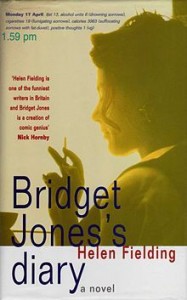
Bridget Jones’s Diary by Helen Fielding

Posted April 25, 2013 by Michael @ Knowledge Lost in Chick Lit / 0 Comments

Bridget Jones’s Diary by Helen FieldingTitle: Bridget Jones's Diary (Goodreads)
Author: Helen Fielding
Series: Bridget Jones #1
Published: Pan Macmillan, 1996
Pages: 310
Genres: Chick Lit
My Copy: Personal Copy

Buy: AmazonBook Depository (or visit your local Indie bookstore)

Bridget Jones’s Diary is the year in the life of a thirty-something single working woman living in London. While she writes about her career, problems, family, friends, and a quest for a romantic relationship she is also on a quest for self improvement. To quit smoking, cut down on drinking, lose weight and develop Inner poise, this novel is a comical look at the modern woman.

First of all, I think of this book as a pseudo feminist novel; while there are plenty of elements in the novel that could be considered a critique of feminism; this is more satire than anything else. Bridget wants to be that kind of woman but she never gets there, she tries to come across as a strong independent working woman who does what she wants when she wants, but when it all comes down to it, what she wants is a man. Interesting enough the strongest feminist is the mother who has legitimate feminist ideals, but not portrayed in a very positive light.

There is this idea that Bridget Jones’s Diary is based on Pride and Prejudice but I have some issues with this and I will try to explore some of my basic thoughts on this. Firstly Bridget is not Elizabeth Bennett; she would like to be, but in the book her personality would be more like Lydia. Her goal is to become more like Lizzie but her relationship with Daniel Cleaver (possible the Wickham of the story) shows us that she is living a life of self gratification. If we are going to compare characters to those in Pride and Prejudice, then Bridget’s mother might start off as a Mrs Bennett but in the end turns into a Lydia as well. Mark Darcy is obviously Mr Darcy and probably the only character that closely resembles the original character. There is also the desire to find a husband (or mate) due to the pressures put on them by their mothers as well as the perception of running out of time. In Lizzie’s case, she was at the age where she needs to seriously consider getting married as it was expected of her and in Bridget’s case it was more to do with her biological clock.

Here is how I think the comparison was made; in the novel Bridget was obsessed with the BBC TV adaptation of Pride and Prejudice, she considered Lizzie and Darcy the idea of the a great romance and wanted to find her own Mr Darcy. She loves the lake scene with Colin Firth in the wet white shirt (not in the book), so when it come to moment where Bridget realises who’s the right man for her, the book tries to replicate the scene with the description of Mark Darcy coming in dirty and sweaty and her attraction to him at that moment. Obviously since the movie had Colin Firth playing Mark Darcy, they were able to replicate this scene a lot better and this is why the ending was changed.

I don’t know much about Chick Lit so it is hard to talk about the writing and how it compares to other books in this genre but I have some thoughts I want to explore. First of all, this novel is almost like a soliloquy; obviously being a diary she is expecting no one else to read her thoughts, so she can express feelings that she would never consider sharing with others. The diary takes the reader through the year with her, as it happens, not with the wisdom of hindsight or any wisdom at all. The only problem is that it blurs the line between a first person narrative and third; there are parts of the book where it would be obscure to think Bridget was writing down everything happening, minute by minute as it was happening. This is to help add to the comedy of the book but to me it added to the absurdity.

Lastly I want to talk about Bridget Jones; the modern woman, obsessed with romance but still wanting to appear as a strong independent woman. She starts the diary in an effort try to improve herself but it also suggests that she is self-absorbed. What really got me was her negative body image; each day she weighed herself and throughout the course of the entire book the most she ever weighed was 9.6 stone (just over 60kg or 132 pounds) and she considers herself overweight by that? I know she compares herself to people on TV but it’s just ridiculous. Also with the amount of calories, cigarettes and alcohol she drinks, I’m surprised she is so under weight and that is where the satire started to frustrate me.

Overall, I was entertained by this book; as a novel it did have its issues and is riddled with chick lit clichés. As a satirical novel, it worked on some levels but most of the time it had to rely on the chick lit elements to help push it through. I didn’t remember much about the movie, except for the fountain scene and Renée Zellweger putting on weight for the role. Which when comparing it to the book doesn’t make sense but on a personal level, I think it was an improvement; she looked fantastic. Overall the book was quirky but the real surprise for me was the wit and irony used throughout the novel; enough to entertain me.


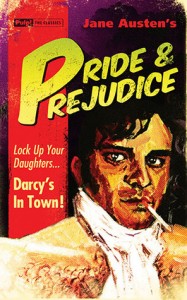
Pride and Prejudice by Jane Austen

Posted April 21, 2013 by Michael @ Knowledge Lost in Classic / 13 Comments

Pride and Prejudice by Jane AustenTitle: Pride and Prejudice (Goodreads)
Author: Jane Austen
Published: Pulp! The Classics, 1813
Pages: 320
Genres: Classic
My Copy: Personal Copy

Buy: AmazonBook Depository (or visit your local Indie bookstore)

Jane Austen’s Pride and Prejudice is often considered one of the greatest novels of all time; the story of proud William Darcy and the prejudices of Elizabeth Bennet. From Lizzie’s perspective their spirited courtship plays out on the page; in this witty comedy of manners, upbringing, morality, education, and marriage in early 19th century society.

Most of you would already know this story; you’ve probably seen an adaptation or two in your time. For me, I was never interested in reading this book, I knew what it was about but I never knew what to expect. Eventually I had to read this book, in part for university and because it’s a classic that will always remain on the 1001 Books You Must Read Before You Die List. This is the novel that just will not die; 200 years later since this was published the book still sits very often in the top ten in a lot of bookstores and other literary lists. It’s been adapted multiple times as well as been retold many times (highlights include Lost in Austen & The Lizzie Bennet Diaries). The novel has also inspired a range of other books including books by Georgette Heyer, Agatha Christie and Helen Fielding.

First of all I want to look at Jane Austen’s attempt to play with the traditional quest format to offer us this rather clever novel. Let’s look at the novel from a traditional storytelling point of view. The potential princes in this novel; Darcy was considered clever and cold, Mr Wickham was too hot, then there was Mr Collins, the one that could save the ‘castle’ who should be just right, but he was not warm but tepid and boring. The pattern is reshaped and slowly the princess’ heart has been won, even if she doesn’t know it straight away. Then Austen needs to make the suitor eligible to win over the heroine; so she sends him on a quest to win Lizzie’s heart. Then like all quest stories, the story ends abruptly, with a marriage and a happy ending. This ancient pattern only provided the basic story structure for Jane Austen to weave her story into.

The interesting thing about this novel is the fact that this book has no physical action in the entire book; the novel rather concerns itself with the complexity of courtship and marriage in the landowning classes in provincial England. Austen writes about the people she knows, doing the activities we would expect them to do. Yet she manages to write it with such wit and skill that the novel refreshing and remained so popular.

Elizabeth Bennet is clearly Austen’s favourite in the book; the character is stronger and smarter than even the men in the book. Yet she goes to great lengths to make sure that this is believable. While she is clever, Lizzie still has romance/the sublime on her mind; her references to the Lake Distracts could be considered evidence of this. I feel like Jane Austen is trying to show that a woman like Lizzie should be deserving of the family home more than someone like Mr Collins. The Bennet’s are not middle class in this novel; Mr Bennet doesn’t work, he is a man of leisure, landowners but without a son their property will be inherited by Mr Collins. So we have this impending doom (according to Mrs Bennet) with only one hope of saving the family, marriage. When Lizzie Bennet rejects Mr Collins and eventually marries Darcy, Austen tries to tell us that character matters more than rank when it comes to romance, but then there is still a whole lot to do with rank and class that remains within the novel.

At the start of the novel Lizzie and Darcy hate each other but by the end they are the perfect couple. So what is Austen trying to tell us with this change in momentum? To do this let’s look at the other relationships; First off there is some evidence that Mr and Mrs Bennet got married at a very young age, lust had brought the two together and there might have been a pregnancy. Now that the lust has cooled they find they have nothing in common. Mr Collins and Charlotte are almost the opposite; there is no passion in their marriage, it was more of a business arrangement, no kids and unhappy in their marriage. Mr Bingley and Jane are just smitten with each other; there is no real evidence that there is anything more than just an infatuation. So when it comes to Lizzie and Darcy, they are written as the opposite, they are not smitten, they have to make their way there. They develop a healthy respect and admiration as well as love. All the details are focused on Lizzie and Darcy; all the other characters are rather underdeveloped, they feel more like caricatures, yet we still need to look at the other couples to see what Austen was trying to achieve.

Now I want to look more at the writing and style rather than character and plot. Pride and Prejudice started off as an epistolary novel, it has been said that this was originally written as a series of letters; this is why there is a huge lack of character description. This is also a novel of wit so let’s focus more on how Jane Austen achieves that.

“It is a truth universally acknowledged, that a single man in possession of a good fortune must be in want of a wife.”

Looking at the very first line we get a sense of Austen’s ironical attacks; Bingley and Darcy both have women lined up but both don’t seem too keen to marry. Single men with large fortunes have the luxury of doing what they want. It is only Mrs Bennet that is trying to convince the reader that the opening line is indeed true. Just in the first few lines we can see the subtlety of Austen’s language. This book is full of other slight digs at society and it took me a second read through to really see them, but they are there and I suspect that is why this book continues to remain popular; no matter how many times you read this book there is still something to discover.

Jane Austen likes to dig at the concepts at Class and Courtship, but more so towards love and marriage. It is interesting to see that many people read this book at face value and just gloss over any attempt at irony in this book. This book is riddled with discursive and dramatic irony but to Jane Austen’s credit she was able to do it in such a subtle way that it can be easily overlooked or missed. For a cynical person like me, it was this irony that I respect the most. I love that you can read this book as a great romance or as an ironic look at love and marriage. While the irony plays out in the book, Jane Austen’s fundamental optimism makes sure no damage was done and the outcome is a happy one.

I expected Pride and Prejudice to be a romance, exploring the courtship of Lizzie and Darcy, which it is, but I was so pleased that there was so much more in this novel to explore. I read this novel and then went back and reread this novel right away; this was mainly because I needed to for Uni but I found this deliciously cynical voice come through the second time that changed my opinion of this book. I’m not sure if Jane Austen’s novels are always so ironic but if they are, she has found herself a new fan.