Publisher: Knopf Doubleday

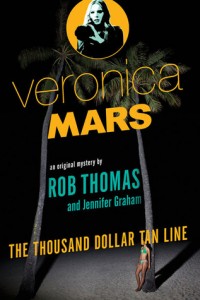
The Thousand-Dollar Tan Line by Rob Thomas & Jennifer Graham

Posted May 2, 2014 by Michael @ Knowledge Lost in Crime / 2 Comments

The Thousand-Dollar Tan Line by Rob Thomas & Jennifer GrahamTitle: The Thousand-Dollar Tan Line (Goodreads)
Series: Veronica Mars #1
, 2014
Pages: 324
Buy: AmazonBook DepositoryKindle (or visit your local Indie bookstore)

Veronica Mars is quite possibly one of the most interesting characters on TV. She’s intelligent, witty and snarky; think Philip Marlowe meets Nancy Drew. First of all, if you haven’t seen the TV show, I highly recommend you do so first. Watch the show then the movie and then you’ll be ready to read this novel. This new series takes place after the events of the movie, which means not only do I have to avoid spoiling the novel, but I must also try and avoid any major spoilers of the movie. I’m sure there will be spoilers from the TV show (mild spoilers from the movie as well) but that really can’t be helped.

Veronica Mars is back in the land of sun, sand, rich entitled kids, crime and corruption otherwise known as Neptune, California. A town that has no middle class, you are either rich or you are considered low class, and the Sheriff, he comes down hard but only on those below the poverty line. When a girl goes missing at spring break, a media frenzy follows but the Sheriff’s department are not being helpful. Veronica is hired to find the girl but this leads her into a dangerous underground of drug and organised crime.

All your characters are back, with one surprise. I’m pleased to report that everyone and everything in Neptune felt authentic and I’m so happy to see that Mac had a bigger role as Veronica’s sidekick. There is one major flaw in this movie, it changed perspectives; the TV show and movie are all told in a first person narrative but the book is in third person. Which is strange, Veronica Mars’ first person narration is iconic to the brand and also a vital part of the neo-noir style. While that noir style is still evident in the novel it just didn’t feel the same.

Another major flaw in the novel is the missing ‘bigger’ mystery. It was what made the TV show so great; ‘who killed Lilly Kane’ is what got me addicted to the show and each season had a new mystery to solve. I would have liked to see this return in the new book series but much to my disappointment it didn’t. These books are marketed to fans of the Veronica Mars brand and taking away pieces that make the show/movie great really does not do this novel or the others any justice.

I am a marshmallow (if you don’t know what that is then maybe this book isn’t for you) so I obviously loved this novel and enjoyed being back in Neptune. I will be reading any Veronica Mars novel that gets released and backing any kickstarters for any more possible movies. It was fun to stay in Veronica Mars’ world but I would like to know what happened in the ten years between the TV show ending and the movie. I’m hoping this series will tell me more about Veronica’s university and FBI years.


By Blood We Live by Glen Duncan

Posted March 26, 2014 by Michael @ Knowledge Lost in Horror, Literary Fiction / 4 Comments

By Blood We Live by Glen DuncanTitle: By Blood We Live (Goodreads)
Author: Glen Duncan
Series: Bloodlines #3
Published: Knopf Doubleday, 2014
Pages: 368
Genres: Horror, Literary Fiction
My Copy: Hardcover

Buy: AmazonBook Depository (or visit your local Indie bookstore)

It’s a sad day for me; Glen Duncan’s Bloodlines trilogy has finally come to an end. This series has been a favourite of mine and I have been desperate to get my hands on By Blood We Live. If you don’t know, this trilogy started off as a bit of a joke for Glen Duncan. One New Year’s Eve party he jokingly claimed that he would write a page-turner with werewolves, and “none of my usual philosophical angst or moral inquiry.” Having recently been dumped from a publisher (he had no best sellers and had won no awards) the move towards literary genre fiction was a recipe for success for Duncan.

In the early planning stages, Glen Duncan had planned to write a “clever narrative with a memorable antihero at its feral, furry heart”. Being disappointed by the recent wave of popular paranormal novels (Twilight, etc) Duncan drew from the horror novels he loved (Frankenstein and Dracula) as well as his favourite werewolf movie (An American Werewolf in London); the end result was The Last Werewolf. It was Duncan’s take on the werewolf novel; remaining true to the mythology, unlike other paranormal novel The Last Werewolf was gritty, violent and over sexed. Jake Marlowe is the last werewolf alive, with the pending extinction of his new race, will he give up? The novel was nothing like other horror novels I read, this was dark and literary.

Then came Talulla Rising, which continued the story, this time from the point of view of Talulla Demetriou; a strong female protagonist that both kick-assed and was full of inner torment (my catnip). Where The Last Werewolf looked at life and loneliness, Talulla Rising forced more on love and family. It has been a two year wait but finally By Blood We Live was finally released to conclude this fantastic trilogy.

In By Blood We Live we follow both Remshi, 20,000-year-old vampire that has been haunted by Talulla in his dreams. Having half the novel from a vampires perspective is an interesting change for fans of the series. This novel focuses on survival and humanity, which are both common elements in a paranormal novel but a nice way to tie this trilogy together. Talulla is been pursued by a Vatican-based Militi Christian group of monster hunters who have taking the place of the now defunct WOCOP (World Organisation for the Control of Occult Phenomena).  Remshi tries to uncover why Talulla haunts him as well as trying to stop the recklessness of a newly turned vampire.

While I wasn’t disappointed by By Blood We Live, I felt like this book wasn’t as great as its predecessors. It did conclude the trilogy and there were some great moments within the novel, I just felt like it had less to say than the first two. The literary wasn’t as prominent, almost like Glen Duncan is moving into the realm of best-selling author. While he does deserve the success, I would hate to see Duncan throw away any sign of the literary in his future novels. Rest assured that the dark and gritty feel to this series is still there. Something I must have looked in the first two novels was the amount of literary and pop culture references have been made; I know they were always in this series but I noticed them so much more in this novel.

I loved this series and I plan to reread them sometime in the near future; I know I’ll need to return to these witty and dark novels. I also have to try some of his other books, I know he said he wasn’t going to add his “usual philosophical angst or moral inquiry”, but I’m so glad he did, it really works for him. I hope Glen Duncan continues on his literary genre fiction journey and I’m eagerly awaiting what he does next. Has anyone else read this series? Or does anyone want to try to predict what genres his next book will cover?


Loaded by Christos Tsiolkas

Posted January 25, 2014 by Michael @ Knowledge Lost in Contemporary / 42 Comments

Loaded by Christos TsiolkasTitle: Loaded (Goodreads)
Author: Christos Tsiolkas
Published: Vintage, 1995
Pages: 151
Genres: Contemporary
My Copy: Paperback

Buy: AmazonBook Depository (or visit your local Indie bookstore)

Ari feels very much alone in the world, a Greek immigrant, unemployed and struggling with his sexuality. That is to say he has a same sex attraction but his friends and family would never approve of that. In Christos Tsiolkas’ normally overlooked Loaded we follow Ari through his struggles as an outsider in this autobiographical novel.

Christos Tsiolkas is a critically acclaimed author with books like Barracuda and my personal favourite The Slap. It is a shame that his debut novel Loaded just doesn’t get the attention it deserves. Was this published at the wrong time? I remember the nineties as a time where homosexuality was thought of as disgusting; granted I was still in high school in a small backwards country town but I couldn’t imagine what it would be like for someone that actually was struggling with their sexuality.

What little I know about Tsiolkas, I’ve come to the conclusion that Loaded was a reflection of his own struggles living in Melbourne with a traditional Greek family that expects so much from you. They went through all the effort to move to Australia in the hopes for a better life; the least you can do is make the most of it. Do well in school, get a good job, marry and have kids. What if this isn’t part of your plan? How would your parents react to this news?

I had to read this book for university, right after studying Joseph Conrad’s Heart of Darkness so I’ve naturally made some connections between the two. Marlowe and Ari are very similar in the sense they both are outsiders, though one deals with this during colonial times and the other is a post-colonial take. Without going too much into the parody of Heart of Darkness, because my mind has really made some interesting connections (some are probably a stretch). The different ways the two protagonists (Heart of Darkness and Loaded) are portrayed as loners in a world that doesn’t feel like home were done in interesting ways.

The whole sense of belonging is a huge part in Loaded; even the way Christos Tsiolkas talks about Melbourne is done as a parody. In Tsiolkas’s Melbourne people are divided into different cliques, much like a diverse multi-cultural city, but there is also are separation into the north, south, east and west. This is interesting to see the separation of power, wealth, religion and culture; sure this normally happens in a normal city, each suburb seems to be stereotyped as a good or bad neighbourhood. In Loaded the division is more extreme, highlighting all these groups of people and showing the reader just how much Ari doesn’t fit in anywhere he goes.

Read More


The Narrow Road to the Deep North by Richard Flanagan

Posted December 14, 2013 by Michael @ Knowledge Lost in Historical Fiction / 0 Comments

The Narrow Road to the Deep North by Richard FlanaganTitle: The Narrow Road to the Deep North (Goodreads)
Author: Richard Flanagan
Published: Vintage, 2013
Pages: 467
Genres: Historical Fiction
My Copy: Paperback

Buy: Book Depository (or visit your local Indie bookstore)

The Narrow Road to the Deep North follows the story of Dorrigo Evans, an Australian doctor haunted by his past; life in Tasmania, a love affair with his uncle’s wife, World War 2 and so on. At the heart of the story is his horrific time in a Japanese slave labour camp as a prisoner of war working on the Burma death railway. Taking its title from 17th-century haiku poet Basho’s travel journal, The Narrow Road to the Deep North is about the impossibility of love.

I started reading this book at the beginning of my recent reading slump, I felt so much pressure to try and get it read before my local book club. As a result, I wasn’t able to finish it in time and I ended up putting this aside half read. I obviously went back to the book and finished it, but I think it did play a big role in my enjoyment of the novel.

This is my first Richard Flanagan novel; I have heard a lot about him, but never had a chance to try him out before. The Narrow Road to the Deep North is about the harshness of war, not just the struggle of trying to survive the battlefield, or being a prisoner of war. This goes further and looks at trying to survive post war. I’ve read some great novels similar to this; Catch 22, Slaughterhouse-Five, The Yellow Bird, Billy Lynn’s Long Halftime Walk and The Machine come to mind. So I felt that I ended up using these novels as the measuring stick and The Narrow Road to the Deep North just didn’t feel like it covered the topic properly.

I felt like this book also tried to be an epic novel, following the exquisite pain of Dorrigo Evans’s life. Then I got halfway through the novel and wasn’t sure how it could cover the entire life in so little pages. I normally associate epics with great big books and if this book covered more of Dorrigo’s life then it could have fit this genre.

Flanagan focuses on not just the cruelty of war and it’s after effects but the impossibility of love, especially when so damaged. I think this was the major theme Flanagan wanted to explore, more than war and the Burma death railway. The relationship between his uncle’s wife Amy and then his girlfriend Ella play a big role in exploring Dorrigo’s life and the pain he suffers. Forbidden love and the relationship everyone expects from him; this is what I think the author wanted to explore.

I really enjoyed the style of Richard Flanagan’s The Narrow Road to the Deep North, so much so that I think it could have been a future Australian classic. The main problem was some parts go on for pages in great detail and then others were just glossed over. There was no consistency and in a great epic novel, you expect the same amount of detail in everything happening. Sure some parts deserve more time but I think there were something interesting points that needed to be focused on a lot more. This is a good novel that could have been great; I think that is what frustrated me the most about The Narrow Road to the Deep North.


The Never List by Koethi Zan

Posted October 20, 2013 by Michael @ Knowledge Lost in Thriller / 0 Comments

The Never List by Koethi ZanTitle: The Never List (Goodreads)
Author: Koethi Zan
Published: Vintage, 2013
Pages: 303
Genres: Thriller
My Copy: ARC from Netgalley

Buy: AmazonBook DepositoryKindle (or visit your local Indie bookstore)

Sarah and Jennifer kept a “Never List”; this is a list of things to avoid, to keep safe. Rule number one “Never get into a strangers car” but this is what happened and they were abducted. Ten years later Sarah still struggles to get over the torturous event that took plays in that dungeon-like cellar. Now that her abductor is up for parole Sarah decides this is her last chance to find Jennifer’s body and keep this sadist in prison.

I want to compare Koethi Zan’s debut The Never List to thriller authors like S.J. Watson but maybe Gillian Flynn is a better choice. Much like Flynn’s Gone Girl, The Never List does something different to the thriller genre that I don’t think I’ve seen before. Rest assured the standard psychological thriller tropes are there but this novel focuses more on the psychological rather than the thriller elements.

The Never List focuses on the aftermath of the abduction and sadistic torture and focuses on Sarah as she tries to recover from these traumatic events. Though this wasn’t done to a full extent and I end up feeling like this was a missed opportunity to really explore the psychology and the road to recovery (if you can truly come back from that), rather it went to the thriller clichés instead.

I really enjoyed the focus on the aftermaths but Koethi Zan had other ideas for this novel. I did end up enjoying the thrilling journey it ended up taking but I felt like the twists were too visible and never unexpected. I choice to see the lack of character development as an attempt for Sarah and the others to protect themselves from being hurt again, this seemed to work well for the enjoyment of this novel.

I don’t want to give too much away, just in case people want to read this novel and it is well worth checking out. I did enjoy the book, I had questions and upon reflection when I tried to get these answers I noticed most of the major problems. For me the novel had the opportunity to do something different but took the safe path and followed a cliché thriller path. The ending felt anti climatic as a result of the safety in plotting.

Thriller fans will enjoy this book; I just think there was a missed opportunity to do something far more complex and interesting. As a debut novel, I can understand why Koethi Zan didn’t risk it but I would have liked the book a whole lot more. As I said before I would compare it to S.J. Watson and Gillian Flynn, so if you like their books you may enjoy this one. I’m interested to see what Zan does in the future; she has a promising career ahead of her.


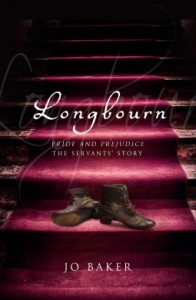
Longbourn by Jo Baker

Posted October 2, 2013 by Michael @ Knowledge Lost in Historical Fiction / 0 Comments

Longbourn by Jo BakerTitle: Longbourn (Goodreads)
Author: Jo Baker
Published: Knopf Doubleday, 2013
Pages: 368
Genres: Historical Fiction
My Copy: ARC from Netgalley

Buy: AmazonBook DepositoryKindle (or visit your local Indie bookstore)

Longbourn follows the daily lives of the servants of the Bennet house. Sarah is an orphaned housemaid who spends her day doing laundry, polishing the floor and emptying chamber pots. The house is blooming with romance and heartbreak, not just for the Bennet sisters. One day a mysterious new footman arrives and the servants’ hall is under threat of been completely upended.

A unique reimagining, this novel tells the story of Pride and Prejudice told from the people serving the Bennet’s. I get the sense that this book was inspired more by Downton Abbey more than Jane Austen but never really seems to live up to either. All the drama of Bingley, Wickham, Mr Collins and Mr Darcy play out as a background characters for the drama that is happening with the servants.

I only read Pride and Prejudice earlier this year and absolutely loved it so I was a little wary of trying a spin off novel. The idea of a novel in the style of Downton Abbey did interest me but I felt let down. I got nether Austen’s wit and humour nor the drama for Downton. Some of Austen’s memorable characters didn’t seem to line up too well in this novel either; Mr Bennet comes to mind, his sarcastic humour appears completely absent in this novel. This could be written off as the servant’s perception of the Bennets and other characters.

There are some redeeming qualities in Longbourn; the novel seemed historically accurate, and while I don’t know for sure if this is correct, it did felt like this novel aligns with what I’ve read in Pride and Prejudice. Also I have to admire the way Jo Baker wrote; she is no Jane Austen but the prose was still elegant and I found myself continuously being impressed with her style while always looking for ways she may have ruined Austen’s masterpiece.

I always felt like the Bennets were wealthy enough to allow Mr Bennet to be a man of leisure but not enough to stop Mrs Bennet from worrying. So when servant hall in Longbourn seem smaller than what you would normally expect, it didn’t come as a surprise to me. The arrival of a new footman means that Mr Bennet has finally given into the demands of his wife and in comes the mysterious James. While the servant’s seem pleased with the new addition, Sarah doesn’t and soon she becomes aware of his interests towards her. You can probably guess where this is going and I won’t spoil it for you.

I spent most of the book worried that Baker will do damage to a true classic and I think this did detract from my enjoyment but for the most of it I was pleasantly surprised with the outcome. I did how ever feel as if this novel dragged on in parts and the fact that this was marked as a book for Downton Abbey fans seemed completely wrong. If you are a Downton fan I would recommend The Remains of the Day by Kazuo Ishiguro well before I recommend Longbourn.


The Lost City of Z by David Grann

Posted August 16, 2013 by Michael @ Knowledge Lost in Non-Fiction / 2 Comments

The Lost City of Z by David GrannTitle: The Lost City of Z (Goodreads)
Author: David Grann
Published: Knopf Doubleday, 2009
Pages: 351
Genres: Non-Fiction
My Copy: Library Book

Buy: AmazonBook DepositoryKindle (or visit your local Indie bookstore)

The Lost City of Z tells the story of Percy Fawcett, a legendary British explorer who disappeared in 1925 along with his son looking for an ancient lost city in the Amazon. For decades explorers, archaeologists and scientists have tried to find any evidence of this lost city of El Dorado which Fawcett has called Z. it is believed that over 100 people have perished or disappeared in this search in David Grann explores this topic in the book The Lost City of Z: A Tale of Deadly Obsession in the Amazon.

While my wife was away in Chile and Brazil I thought I would read a book set in that continent so after a bit of research and cross checking with what my library had I decided on David Grann’s The Lost City of Z. Maybe not the best book to read while she was away but I want to read more non-fiction and this sounded really interesting. For centuries Europeans believed the Amazon concealed the glittering kingdom of El Dorado and they obsessed with it. Those who did go searching for El Dorado often disappeared or died. The mysteries of the Amazon remained mysteries because the explorers didn’t understand what was in the uncharted jungles of Brazil.

Percy Fawcett has been referred to as a “Nietzschean explorer” spouting “eugenic gibberish” so it was interesting to read about his obsession with finding this lost city as well as everyone else who were determined to find El Dorado. Exploring an unknown jungle without any idea of what dangerous plants, animals and maybe tribes you find doesn’t sound like a great adventure to me but it was interesting to read about mysteries surrounding these quests. For me this book makes the Amazon sound really dangerous; many disappearing or dying and some even going insane but I was fascinated by the book and enjoyed reading it (even though my wife was in Brazil at the time).

I’m never really sure how to write a review for a non-fiction book but I hope I gave you enough information and expressed my thoughts well enough for this book. I think David Grann wrote this book in a really accessible way but at times I felt like he idolised Percy Fawcett; like he was enlightened where others call him a Nietzschean explorer, which isn’t necessarily a bad thing at all. A book that took me out of my comfort zone and I’m thankful for that. The book gets bonus points for referencing and endnotes; I might not have used them but I respect a non-fiction book more if it offers me references to back up what it is saying.


Invitation to a Beheading by Vladimir Nabokov

Posted May 19, 2013 by Michael @ Knowledge Lost in Classic / 0 Comments

Invitation to a Beheading by Vladimir NabokovTitle: Invitation to a Beheading (Goodreads)
Author: Vladimir Nabokov
Published: Vintage, 1936
Pages: 240
Genres: Classic
My Copy: Personal Copy

Buy: AmazonBook Depository (or visit your local Indie bookstore)

In this bizarre and irrational world, Cincinnatus has been convicted and condemned to death by beheading for gnostical turpitude, an imaginary crime with no definition.  Cincinnatus spends his remaining days in prison where he is visited by the chimerical jailers, an executioner who masquerades as a prisoner, and his in-laws. When Cincinnatus is finally brought out to be executed, he simply wills his executioners out of existence: they disappear, along with the whole world they inhabit.

There is no denying that Invitation to a Beheading is a weird novel; often compared with Franz Kafka’s The Castle, it is important to know that Vladimir Nabokov had not read any German novels, let alone Kafka when writing this. The reason this is important is to avoid trying to compare the two novels; sure they have similarities but they are still also vastly different. Originally published as a serial, with the title Sovremennye Zapiski (Contemporary Notes), Nabokov has stated while Lolita holds his greatest affection, this novel holds his greatest esteem.

While people call this Kafkaesque, the impossible and dreamlike world reminds me more of Haruki Murakami’s style. From the very start the reader understands there is something not right about this world, this reminded me of Hard-Boiled Wonderland and the End of the World. I got the feeling that this wasn’t reality but a world constructed in Cincinnatus’ mind based on his fears, doubts, and insecurities. Cincinnatus’ enemy is the society he’s created and the people of that society act according to ridiculous rules that have been set. We never know what gnostical turpitude is and this will probably remind people of Kafka’s The Trial. Cincinnatus is rebelling against the construction of this reality and the rules the people of this society observe and perhaps this is what makes him a criminal.

Maybe gnostical turpitude is the crime of being different from all the other people in this reality. Maybe Cincinnatus is being oppress for his ideas and his nature. Maybe he is so different from everyone around him; he has an internal depth that the others lack. A lot like Lolita, Vladimir Nabokov has a way about his writing that just leaves you with so many questions that you need to think through, this whole reality and society leaves me perplexed. Though this is the point; life isn’t simple and being an outsider sometimes feels like you are Cincinnatus in a bizarre reality.

While this book primarily looks at society and oppression it also looks at human connection. Cincinnatus desires to connect with his wife Marthe, despite her unfaithfulness and lack of concern for him. The one thing he craves the most is to make a connection and she felt like the logical choice; also the fact that he loved her helped. He begs her to come alone and reveal her true self to him but there is always something that interferes with the communicating.

While this was a very odd book, Vladimir Nabokov is just a brilliant writer and that really makes up for the weirdness. Also the weird and bizarre act as motifs within the narrative and without the symbolism and meaning it would just be trippy book. Nabokov does a good job of weaving his messages and ideas while entertaining the reader in unexpected ways. Most people only ever read  Lolita by Vladimir Nabokov and I think that means they miss out on his brilliance, I hope to read more; currently on my To Be Read list is Mary, Pnin and Pale Fire. Are there any others I should add?


The Last Good Kiss by James Crumley

Posted May 12, 2013 by Michael @ Knowledge Lost in Pulp / 0 Comments

The Last Good Kiss by James CrumleyTitle: The Last Good Kiss (Goodreads)
Author: James Crumley
Series: C.W. Sughrue #1
Published: Vintage, 1978
Pages: 244
Genres: Pulp
My Copy: Personal Copy

Buy: AmazonBook Depository (or visit your local Indie bookstore)

James Crumley’s private investigator CW Sughrue finds himself searching for a runaway young woman, missing for ten years. But this is not how it started out; he was hired by a woman to find her ex-husband, Abraham Trahearne before he drinks himself to death. A confrontation in the bar that results in Trahearne being injured in hospital puts Sughrue in a position to look for this missing woman.

This hard-boiled novel is told in a way I don’t think has been done enough in a pulp crime novel. A parallel narrative exploring the problematic relationship between Sughrue and the wandering alcoholic novelist, and the three femme fatales in Trahearne’s life, just to make things more complex. Apart from that, you have the usual elements that make up a hard-boiled novel; alcohol, money, love, sex, power and violence.

Somehow James Crumley has a refreshing voice for this genre; I’m not sure if it is just that I’ve not read enough hard-boiled novels set in the seventies or there is something else there. I would put Crumley somewhere between Raymond Chandler and Jim Thompson; he doesn’t have the plotting skills and wit that Chandler has but he isn’t as violent and philosophical as Thompson. The narrative, while in a first person point of view, manages to switch between making the reader feel like they are in the same room trying to piece this mystery together, and then all of a sudden you are inside CW Sughrue head reading all his thoughts, emotions and memories. This isn’t easy to do but Crumley does this so seamlessly that you don’t really notice it happening. This narrative, mixed with the cynicism and low regard to society is what I think makes this book so refreshing.

This novel deals a lot with sex; Sughrue’s personal integrity and professional ethics are corrupted by the sexual desire towards Catherine; a desire she uses to manipulate him. Trahearne hasn’t been able to be creative because of his sexual desire with Melinda and his attraction towards his mother. Then there is Betty Sue, who just has a sexual desire towards everyone in the book. It’s important to know at the core of this books portrayal of sexual desire is the cynical belief that such corruption is unavoidable and even inevitable.

The Last Good Kiss also deals with the idea of identity and trying to escape your past, but ultimately realising you can’t run. Betty Sue hides her true self between layers of masks and other identities; she is running from her sexually exploitative time in San Francisco but it all comes back in the end. Trahearne can’t escape his infidelities, alcoholism and his ex-wife’s fury. All of them fail to realise that the past defines the present. Their mistakes in the past do not have to define their future but helps them grow; this book just ends up being a twisted celebration of life’s obstacles shaping our personality.

Admittedly I found myself being bored in parts of this book and wanting to skim read, but I persevered and found some interesting elements that stopped this from being a generic crime novel. CW Sughrue, is an alcoholic ex-army officer turned private investigator and that dark past is what makes me want to keep reading the series, just to discover what he is running from.  The Last Good Kiss has been described as the most influential crime novel of the last 50 years, influencing people like Michael Connelly, George Pelecanos, Dennis Lehane and even Neal Stephenson; that alone is an impressive reason to check this book out. While I think I prefer Jim Thompson for style and message, James Crumley is an author I plan to explore more of.


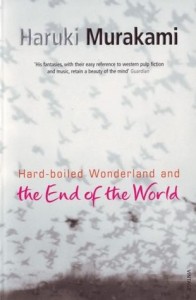
Hard-Boiled Wonderland and the End of the World by Haruki Murakami

Posted April 29, 2013 by Michael @ Knowledge Lost in Book of the Month, Literary Fiction, Magical Realism / 0 Comments

Hard-Boiled Wonderland and the End of the World by Haruki MurakamiTitle: Hard-Boiled Wonderland and the End of the World (Goodreads)
Author: Haruki Murakami
Translator: Alfred Birnbaum
Published: Vintage, 1985
Pages: 400
Genres: Literary Fiction, Magical Realism
My Copy: Personal Copy

Buy: AmazonBook Depository (or visit your local Indie bookstore)

In the future, Tokyo remains the technology powerhouse it is today. With the major advances in technology, data security has become more valuable; problem is all codes can be broken if you know how. The Calcutec is a human data processor/encryption system who has been trained to use his bio-algorithms implant and subconscious for encryption. A new comer to a strange, isolated walled town known as “The End of the World” is assigned a job as a dream reader. As he finds acceptance within the town, his mind begins to fade; or has it only been suppressed?

Hard-Boiled Wonderland and the End of the World tells the story of a split between two parallel narratives from different worlds. The consciousness and the unconscious mind; “Hard-Boiled Wonderland” refers to The Calcutec’s life as an encryption machine while “The End of the World” is his subconscious world. The two stories are told in alternating chapters as the reader slowly discovers the mysteries connecting these two worlds together. Hard-Boiled Wonderland is a homage to Raymond Chandler and hard-boiled fiction, as well as to science fiction and cyberpunk and “The End of the World” has similarities to Franz Kafka’s The Castle.

The major theme within this book is the nature of consciousness; both narratives are constructed around this general idea. While the odd numbered chapters refer to the conscious mind and the even-numbered chapters the subconscious, it is interesting to note they link together with similar themes; for example the song Danny Boy appeared in consecutive chapters. Even characters are shared between consciousnesses; the object of the narrator’s desire, the librarian is a perfect example of this.

Beyond that, the concept of subconscious being able to be controlled or shaped plays out in the entire book. This brings me to another major theme within this novel; the morality of science. The scientific experiments been done on the narrators mind in the attempt to separate the conscious and the subconscious in an attempt create more secure encryptions is an interesting topic. It reminds me a little of Frankenstein when it looks at the dangers of science and its moral implications. The Professor’s experiment killed about twenty people and while he feels remorse for the tragedy he also feels like it was the right choice in the name of progress.

While there are many more themes that would be interesting to explore I wanted to look at character. In both narratives there are no names for any of the characters, each is referred to by their occupation or a general description; from the Narrator, known as The Calcutec, the Librarian, the Old Man, the Professor, the Big Guy and the Chubby Girl. I never really payed too much attention to this while reading the book but referring to a girl as “the Chubby Girl” did bother me; it wasn’t till the very end that I was bothered by the lot. I couldn’t understand why this book was so frustratingly vague and incomplete with character and setting descriptions, I don’t know what the reason behind it would be, except for maybe removing any obstructions that might hinder the understanding of the novel.

Even the narrative is offering a very limited view of what is actually happening but slowly most of the mysteries do become clearer but the entire focus was on the subtext of this book. This wasn’t meant to be about great characters or scenes; this was all about exploring the themes as a way to get Haruki Murakami’s thoughts on the subject across. In a sense, this is what Murakami excels at; if it wasn’t for these well thought out ideas his books would just be odd and weird. This is my second Murakami novel and the first one I’ve actually enjoyed.

I’ve finally discovered what makes Haruki Murakami an author to take notice of; I didn’t find the same thing with 1Q84, I thought it was long winded and repetitive but Hard-Boiled Wonderland and the End of the World really worked for me. I have some issues with the novel, obviously the vagueness was one of the major ones, but overall this was a really interesting journey for me.