Reading Challenge: 1001 Books You Must Read Before You Die

Richard Brautigan

Posted November 14, 2015 by Michael @ Knowledge Lost in Literary Fiction, Poetry / 0 Comments

Richard BrautiganTitle: Trout Fishing in America / The Pill vs. the Springhill Mine Disaster / In Watermelon Sugar (Goodreads)
Author: Richard Brautigan
Published: Houghton Mifflin Harcourt, 1964-1968
Pages: 400
Genres: Literary Fiction, Poetry
My Copy: Paperback

Buy: AmazonBook DepositoryKindle (or visit your local Indie bookstore)

Richard Brautigan is an iconic counter-cultural poet and author who is probably best known for his 1967 novel Trout Fishing in America. His novels deploy a unique blend of magical realism, satire and black comedy. I recently read an omnibus that included two novels Trout Fishing in America and In Watermelon Sugar and a collection of poetry The Pill Versus the Springhill Mine Disaster.

I think it is important to understand the life of an author when critically reading their novels. Normally Wikipedia is my starting place and often I find myself going down a rabbit hole of the internet. Richard Brautigan had an interesting life, with interesting ideals. Later in life he was diagnosed with both paranoid schizophrenia and clinical depression, even receiving electroconvulsive therapy as many as twelve times in an effort to treat his condition. Later in his life, he lived life as a recluse and eventually died to a self-inflicted gunshot wound to the head. It is unsure when he died, because his body was found much later.

The reason I think author context is important is evident in Brautigan’s book In Watermelon Sugar. The novel tells the story of iDEATH, a futuristic utopian commune that has found a way to live off the land; specifically watermelon sugar. This is told in a first person perspective and Brautigan could be considered the protagonist. However knowing the context of his life, I think Richard Brautigan saw himself more as the antagonist that is ruining this perfect society. Either way, it makes for an interesting read and In Watermelon Sugar was the highlight of this omnibus.

Trout Fishing in America was just a weird book, I had gotten use to the style of Richard Brautigan and I knew what to expect. However, Trout Fishing still leaves me perplexed. I know this is a social critique, but I never was able to fully grasp what Brautigan was trying to say. The term Trout Fishing in America became a character’s name, a hotel, a place, and becomes a modifier for just about anything. It was a weird novel and I probably need to do a lot more research to fully understand it.

The poetry of Richard Brautigan is just as unique as his novel writing. Most of his poems are short but pack a huge punch. There is so much depth within the poems and sometimes they have the ability to shock. For example, the title poem from this collection The Pill Versus the Springhill Mine Disaster, compares birth control to a mining disaster that killed 75 people. He believes that the pill and the disaster both leave life buried forever. Not all his poems pack a punch like this but I thought this poem was a good example of what to expect.

I do not think I would have read Richard Brautigan, without the encouragement of Jake from the YouTube channel Tales from iDEATH. This may not be entirely true, since Brautigan is on the 1001 Books list, and still need to read Willard and His Bowling Trophies. I appreciate the push to read Richard Brautigan, he is a weird author, but I enjoyed the experience. His style might irritate many people but I liked the surrealist nature of the three books I read in this omnibus.


Interview with the Vampire by Anne Rice

Posted October 2, 2015 by Michael @ Knowledge Lost in Gothic / 2 Comments

Interview with the Vampire by Anne RiceTitle: Interview with the Vampire (Goodreads)
Author: Anne Rice
Series: The Vampire Chronicles #1
Published: Sphere, 1976
Pages: 308
Genres: Gothic
My Copy: Paperback

Buy: AmazonBook DepositoryKindle (or visit your local Indie bookstore)

When people talk about Anne Rice, you can be sure that the first novel in the Vampire Chronicles, Interview with the Vampire, will be mentioned. Easily her most recognisable novel, this 1976 debut tells the story of three very different vampires. Focusing on the two hundred year old, Louis, the book tells how Lestat turned him as well as five-year-old Claudia, and his life as a vampire as he conveys it to a reporter. This breakout novel even spawned the hit 1994 adaptation starring Tom Cruise, Brad Pitt and Kirsten Dunst.

I first read Interview with the Vampire when I first got into reading and really enjoyed it. In that review I gave it high praises, saying, “The whole story is almost philosophical in the way it tells the struggle of Louis and his moral conscience…[A] battle of good and evil is played out in a more evil orientated world… It doesn’t feel forced or predictable it just leaves you thinking how wonderfully complex these characters are.” Looking back on that review with a fresh re-read and five more years of reading experience, I have a very different opinion.

First of all, the vampire mythology is an interesting literary device to explore morality. Looking back on the mythology, all the way to classics like Dracula; novels continue to explore the morality of a powerful vampire sucking the life away from the innocent. What gives them the right to life over everyone else? There is a conflict between morality and the idea of survival. Within Interview with the Vampire it does this in two distinct ways; first you have Lestat who takes life without a care in the world, following the instincts of survival. While Louis is often questioning his survival and the moral implications, often hating what he has become.

The novel spans the life of Louis for the past two hundred years, though Interview with the Vampire is just over 300 pages. For me this becomes the biggest downfall of the book, and the character development, especially the psychological, suffers. There are a lot of interesting topics that this novel could have explored but we never get the opportunity to do so in great detail. Take for example, Claudia; she has many years to live and learn about life, and this could have made for a far greater story. The struggles Claudia went through would have been fascinating, especially the sexual development of a girl stuck in a five-year-olds body.

It is interesting to see how much a few years has changed my view on literature; I feel like I am developing some useful skills to analyse the books. I also feel like I am getting to the point where I am starting to feel like I am ‘well read’ (although there is a long way to go). Having experienced more with the vampire mythology and literature in general, I am enjoying going back to some of the books I read more than five years ago. Sometimes I do not enjoy the novel as much, like I did this time, but other times I find a new found respect for what an author was trying to do (see a future review of The Handmaid’s Tale). Interview with the Vampire could have been so much more, and now I just wish it was.


Story of the Eye by Georges Bataille

Posted September 6, 2015 by Michael @ Knowledge Lost in Erotica / 4 Comments

Story of the Eye by Georges BatailleTitle: Story of the Eye (Goodreads)
Author: Georges Bataille
Translator: Dovid Bergelson, Joachim Neugroschal
Published: Penguin, 1928
Pages: 127
Genres: Erotica
My Copy: eBook

Buy: AmazonBook DepositoryKindle (or visit your local Indie bookstore)

Georges Bataille’s 1928 novella Story of the Eye has often been read for the graphic details of an increasingly inexplicable adventures of a pair of teenagers and their sexual perversions. Narrated by an unnamed male in his late teens, the book tells the story of his passionate affair with Simone, his primary partner. Throughout the book their relationship involves other people including a mentally ill sixteen year-old girl and a voyeuristic English émigré aristocrat. To say this book is risqué might actually be an understatement, but is the book really about fornication?

With a little help from French literary theorist Roland Barthes and his accompanying essay “The Metaphor of the Eye”, I quickly discovered that Story of the Eye is far more complex than I originally thought. However if you do read Georges Bataille’s introduction before the book like I did you will discover a few titbits that help decipher the surrealist nature of the novella. In this introduction Bataille talks about his love/hate relationship with his father, a man who went blind on account of neurosyphilis. He shares a memory he remembers clearly in his head of his father urinating and the vacant look in his milky eyes.

The reason this story is important to Story of the Eye is because the novella often references urination and eyes in the midst of the sexual acts. As Barthes explains in his essay, “Although Story of the Eye features a number of named characters with an account of their sex play, Bataille was by no means writing the story of Simone, Marcelle, or the narrator”. The act of sex is often accompanied with some form of violence. The eyes, milk, urine can all be seen as a reference to his memory of his father and any reference to testicles and eggs could be interpreted as metaphors to the creation of life.

While Roland Bathes goes into a far deeper analysis of the metaphors found in Story of the Eye, a slight understanding of the content changes this books topic from sexual perversions to an angry rant directed towards Bataille’s father. There are other reference found in the novella that connect to his life; for example the priest. Georges Bataille went into the seminary in the hopes of becoming a priest, however he had to drop out to find a job to support his mother, killing his dream. A topic I believe is discussed in more detail in his non-fiction book Eroticism.

I found myself being absorbed in Story of the Eye (which was translated by Joachim Neugroschel, Dovid Bergelson); although difficult to read, the symbolism really intrigued me. So much so that I had to order my own copy of the book in the hopes to re-read it soon. I read this as an ebook and I now own a physical copy which features the essays “The Pornographic Imagination” Susan Sontag and of course “The Metaphor of the Eye”. I am fascinated by the surreal erotic style of Bataille; I think he is an author I need to explore in greater details.


Get Shorty by Elmore Leonard

Posted August 8, 2015 by Michael @ Knowledge Lost in Pulp / 0 Comments

Get Shorty by Elmore LeonardTitle: Get Shorty (Goodreads)
Author: Elmore Leonard
Series: Chili Palmer #1
Published: William Morrow, 1990
Pages: 304
Genres: Pulp
My Copy: Library Book

Buy: AmazonBook DepositoryKindle (or visit your local Indie bookstore)

Chili Palmer is a shylock with mob connections working in Miami. However he is sick of the grind and it seems that his friends in the industry have a bad habit of dying. While chasing a deadbeat across America, he eventually ends up in Hollywood, where he decides to stay and start a new life. Besides, he has a killer idea for a movie and this is the town where dreams can come true…or do they?

It is no secret that Elmore Leonard has a bitter opinion towards Hollywood and Get Shorty allowed him to vent his feelings. In 1984 Leonard won an Edger Award (Best Novel) for his novel LaBrava and during the hype, Cannon Films brought the rights for a film adaptation. Dustin Hoffman had signed on to play former Secret Service agent Joe LaBrava in what was dubbed “the richest star deal in entertainment history”.  Elmore Leonard had to do multiple rewrites (all unpaid) at the request of the star only to have Hoffman terminate his contract citing ‘contract desputes’. The reason behind Hoffman’s departure from the project was due to some advertising; Cannon Films two full page ads in some trade papers which showed him pictured under the heading “Welcome to the Cannon Family Dustin Hoffman”. His contract granted him final approval to all advertising for the upcoming movie.

When reading Get Shorty you get a real sense of Elmore Leonard’s bitterness towards Hollywood and the failed movie. According to IMdb Dustin Hoffman is 5’5” and his depiction in the novel is the over compensating Michael Weir (who was portrayed by Danny DeVito in the film adaptation). Despite what Leonard may have thought about the movie industry, Get Shorty turned into one of the great satires depicting Hollywood. The film adaptation was the next of his novels to make the transition to the screen, this time with only minor changes to the main plot. This lead the way to a range of great Elmore Leonard adaptations, from Jackie Brown, Out of Sight, Be Cool, 3:10 to Yuma and the TV show Justified.

Get Shorty is probably one of the best modern crime novels I have read in a long time. I tend to find that modern authors in the genre do not explore social issues within their books. Elmore Leonard was one of the best crime novelists and it was sad to lose him back in 2013. I plan to read the next book in the Chili Palmer series, Be Cool and I think I should rewatch the movies sometime soon as well.


There But For The by Ali Smith

Posted July 16, 2015 by Michael @ Knowledge Lost in Literary Fiction / 0 Comments

There But For The by Ali SmithTitle: There But For The (Goodreads)
Author: Ali Smith
Published: Penguin, 357
Pages: 2011
Genres: Literary Fiction
My Copy: Library Book

Buy: AmazonBook DepositoryKindle (or visit your local Indie bookstore)

A dinner party in a posh home in Greenwich took a sudden turn when Miles, one of the guests, leaves the table mid meal and locks himself in an upstairs room. He refuses leave and the diverse group of neighbours tell their story of the events trying to make sense of Miles motivations. There But For The is told in four points of view: Anna, who is in her forties; Mark, a man in his sixties; May, a woman in her eighties and ten year old Brooke.

Genevieve Lee sets out to host an elaborate dinner in her elegant Greenwich home; her husband Eric has planned to serve scallops and chorizo. However these people are a little different to the people that normally run in the couple’s social circles. The story revolves around Miles Garth who is now an unwanted guest of the Lee’s, after he locked himself away in an upstairs bedroom. However the book really looks at the four narrators and their connection between everyone else.

There tells a story of Anna, a social worker, who knew Miles thirty years ago. Genevieve found her email address in Miles phone and invited her in the hope of persuading him to leave. But follows Mark who is a photo-researcher, who invited Miles to the dinner party. Mark is mourning his old love and, at times, his dead mother speaks to him in rhymes. For is set entirely in the mind of eighty year old May. She is suffering from dementia but also has regular contact with Miles. The revolves around ten year old Brooke, who is the daughter of two of the party guests and the only one that has made contact with Miles since he locked himself in the room.

Where this book shines is in the writing; it is full of what has been now considered Ali Smith’s trademark wit and puns. It is an exploration into humanity, centred on a whimsical yet devastating dinner party. The stand out for me is the way that Smith masterfully used identity shifts and language gaps to explore language in what is essentially a locked-room mystery. This writing style may cause issues for some people but I was just in awe of just how clever If For But The really was.

As this is the first Ali Smith novel that I have read, I am unsure what to say about her as a writer. If all books are anything like If For But The then I would have to call her a master at puns, wordplays, metaphors and pretty much linguistics in general. There is plenty of buzz around her latest book How to Be Both, so I will save my opinion until I have read at least that novel. I am very confident I will be a new fan of Ali Smith but as I say, I have to experience more of her writing.


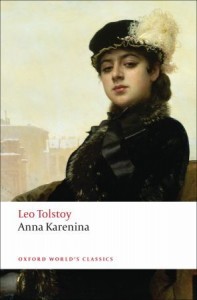
Anna Karenina by Leo Tolstoy

Posted May 28, 2015 by Michael @ Knowledge Lost in Classic, Russian Lit Project / 0 Comments

Anna Karenina by Leo TolstoyTitle: Anna Karenina (Goodreads)
Author: Leo Tolstoy
Translator: Aylmer Maude, Louise Maude
Published: Oxford World's Classics, 1873
Pages: 831
Genres: Classic
My Copy: Personal Copy

Buy: AmazonBook DepositoryKindle (or visit your local Indie bookstore)

Anna Karenina is the tragic story of the socialite’s marriage to Karenin and her affair with the wealthy Count Vronsky. The novel begins in the midst of their families break up due to her brother’s constant womanising; a situation that preferences her own situation throughout the novel. Running in parallel to this story of Konstantin Levin, a humble country landowner that wishes to marry Kitty, who is Anna’s sister in-law. Anna Karenina is a pinnacle piece of realist literature, exploring a wide range of family issues.

At over 800 pages, Anna Karenina can be a daunting novel to pick up; the large cast of characters does not make it any easier. I look at this classic novel as an exploration into melodrama that just about every family experiences. Born in 1828, Lev (Leo) Nikolaevich Tolstoy was born into a large and wealthy Russian landowning family, and has often been suggested that Anna Karenina is based on a similar social upbringing. While there are vast differences, issues with wealth, religion, farming and morality are issues that seem to parallel between reality and fiction. The story arch of Levin is considered to be autobiographical; Tolstoy’s first name is Lev (although in English he is known as Leo) and the Russian surname Levin actually means Lev.

Leo Tolstoy has been known for adding real life events into his fiction as a way with dealing with current political and social issues. Within Anna Karenina, events like the liberal reforms initiated by Emperor Alexander II of Russia and the judicial reform are used as the backdrop for the novel. This allows him to explore current issues, like the developing of Russian into the industrial age and the role of agriculture in these changing times. Also Tolstoy questions the role of the woman in this changing society and (the ever popular in Russian lit) class struggles.

The story of Anna Karenina is probably the most interesting for me and I enjoyed reading the struggle between love and the public opinion. She was trapped in a marriage and wanted to divorce but Karenin, who was a politician cared more about his public image. Then there is the fact that Anna’s brothers womanising destroyed the family and now she is faced with a similar situation that could cause the same damage. Adultery becomes a big theme within the book and seems to be a common theme within Russian literature to this day. However with Nathaniel Hawthorne’s The Scarlet Letter (1850) and Gustave Flaubert’s Madame Bovary (1857), these three novels seemed to start a fascination in exploring the themes of passion and adultery in the mid to late nineteenth century.

There is a lot to explore within this book, and re-reading Anna Karenina was such an enjoyable experience. I know big books often scare me but there is something about going back to a much-loved novel that I find enjoyable. Leo Tolstoy intentionally made this novel long, he wanted to replicate life’s journey and the struggles people face along the way. I think he was able to capture that struggle and Anna Karenina will remain a favourite on my shelves and in Russian literature. There are so many more themes that could be explored within the novel but I will leave that for others to discover on their own.


The Stranger by Albert Camus

Posted May 2, 2015 by Michael @ Knowledge Lost in Classic / 6 Comments

The Stranger by Albert CamusTitle: The Stranger (Goodreads)
Author: Albert Camus
Translator: Matthew Ward
Published: Vintage, 1941
Pages: 123
Genres: Classic
My Copy: Paperback

Buy: AmazonBook DepositoryKindle (or visit your local Indie bookstore)

The Stranger (also known as The Outsider or L’Étranger) tells the story of Meursault, an unsympathetic French Algerian, who after attending his mother’s funeral, finds himself killing an Arab man. The novel follows a first-person narrative that explores the events before and after this murder. Albert Camus said is best when he said “I summarised The Stranger a long time ago, with a remark I admit was highly paradoxical: ‘In our society any man who does not weep at his mother’s funeral runs the risk of being sentenced to death.’ I only meant that the hero of my book is condemned because he does not play the game.”

On the surface The Stranger is the story of an emotionless protagonist; Meursault does not care about anything and could be considered a sociopath. However, this novel is often cited as an example of Camus’ philosophy on the absurd and existentialism. So in order to fully grasp the intent behind this classic novel, we must look into just what existentialism is and more practically absurdism.

The absurd is often referring to the conflicting philosophy that humans have a tendency to seek out value and meaning in life. However absurdism believes it is logically and humanly impossible to find any meaning of life. Philosophers may have very different doctrines but they generally believe that philosophical thinking begins with the human subject. Though existentialism comes from the disorientation or confusion that we are living in a meaningless (or absurd) world.

For Albert Camus, The Stranger is an exploration into the meaning of life and if life has no meaning what is the purpose of morality. Meursault’s detachment from the world is a result of his conclusion that life is meaningless; “The chaplain knew the game well too, I could tell right away: his gaze never faltered. And his voice didn’t falter, either, when he said, ‘Have you no hope at all? And do you really live with the thought that when you die, you die, and nothing remains?’ ‘Yes,’ I said.” Paradoxically, it was only after being sentenced to death, that Meursault was able to obtain some sense of happiness.

Without an understanding of Albert Camus’ philosophical ideas, I do not think that the reader will have any hope in truly understand or appreciating this novel. However I have heard that The Stranger has been an option for high school students (especially in America) to study. I wonder how many students fall into the trap of picking this novel thinking it was short only to discover how difficult it is to analyse. I do not have enough of an understanding of absurdism or existential philosophy to full appreciate The Stranger. However re-reading this novel has helped me understand this enough to enjoy the Camus’ philosophical ideas.


Kafka on the Shore by Haruki Murakami

Posted April 29, 2015 by Michael @ Knowledge Lost in Book of the Month, Magical Realism / 0 Comments

Kafka on the Shore by Haruki MurakamiTitle: Kafka on the Shore (Goodreads)
Author: Haruki Murakami
Translator: Philip Gabriel
Published: Vintage, 2002
Pages: 480
Genres: Magical Realism
My Copy: Library Book

Buy: AmazonBook DepositoryKindle (or visit your local Indie bookstore)

Kafka on the Shore tells the story of a fifteen year old book named Kafka who runs away from home to find his mother and sister. Although the alternate chapters tell the story of Nakata; a strange old man who has the ability to talk to cats. Like many of Haruki Murakami’s books, Kafka on the Shore blends pop culture with magical realism in order to explore the psyche of the characters involved.

It is often hard to try and give an overview of a Murakami book because they tend to come out weird and I do not want to give the impression that his novels are not worth attempting. For Kafka on the Shore, the magical realism allows the reader to explore the psychological mind of fifteen year old Kafka Tamune. Not only is Kakfa a young man discovering his sexuality, Sigmund Freud would probably suggest that he also has an Oedipus complex and has developed an unhealthy obsession with his mother and sister.

According to Freud, an Oedipus complex stems from the unconscious mind and normally caused by the repression of a mother (or father) figure. Freudian psychoanalysis theory suggests that this is a key psychological experience needed for normal sexual development. However if it is unsuccessful at resolving it may lead to neurosis, paedophilia, or homosexuality. Without going into the problematic thinking of Sigmund Freud, this does make for an interesting analysis of Kafka’s journey throughout the book, especially with his interactions between Sakura and Miss Saeki.

If we continue looking at this novel through the lens of psychoanalysis theory, we might even get some interesting insights into Nakata. I always thought the loss of mental faculties was due to the psychological trauma, he experienced as a young boy. He was one of sixteen schoolchildren picking mushrooms in a field trip towards the end of World War II, when they were all rendered unconscious from a mysterious light in the sky. However it has also been suggested that maybe Kafka and Nakata are two different parts of the same person.

Every time I read a Haruki Murakami, I am reminded of his brilliance (with the exception of 1Q84), and I want to explore more of his works. I am also reminded that I need to learn a whole lot more about psychoanalytical theories, and how much it would help with books like Kafka on the Shore. For me this was a bildungsroman book about sexual development and memories. However, I found myself more interested in the chapters centred on Kafka over those about Nakata but maybe that was because I understood them a little better.

Yet again Haruki Murakami has impressed me with Kafka on the Shore and I am eager to pick up more of his books. I know magical realism can be scary for some people but I love the way Murakami uses it to explore the mind. My only real criticism of this book is that it was a little bloated and could have been trimmed down a little and still achieve the same. This might be due to an aversion to big books that I really need to overcome and not a true reflection on Murakami. I highly recommend giving this author a go if you have never tried him but Kafka on the Shore is not a good starting point; may I suggest trying Norwegian Wood first.


The Yellow Wallpaper and Other Stories by Charlotte Perkins Gilman

Posted April 28, 2015 by Michael @ Knowledge Lost in Short Stories / 0 Comments

The Yellow Wallpaper and Other Stories by Charlotte Perkins GilmanTitle: The Yellow Wallpaper and Other Stories (Goodreads)
Author: Charlotte Perkins Gilman
Published: Dover Thrift, 1892
Pages: 70
Genres: Short Stories
My Copy: Personal Copy

Buy: AmazonBook DepositoryKindle (or visit your local Indie bookstore)

In the title story “The Yellow Wallpaper” Charlotte Perkins Gilman tells the story of a woman on the verge of a nervous breakdown. A specialist recommends that she takes rest cure; a treatment in which has her lying in bed all day and only allowed two house of intellectual activities a day. After a few months of staring at the walls, things are far from improving.

While this is a collection of short stories, I am focusing on the title story simple because it gives you a sense of what to expect when reading Charlotte Perkins Gilman. “The Yellow Wallpaper” explores the decline of the protagonist’s health, both physically and mentally. Written in a series of diary entries, the story not only looks at depression but, on a deeper level, gender roles. The doctor and her husband are portrayed as repressors; while their intentions are to help her heal they never take into account her own opinion.

This in turn critiques that position of the woman, especially when it comes to the institution of marriage. Gilman looks at marriage as a hierarchy; the male is actively working and knows what is best for the house, while the wife is put in charge of the domestic jobs (cooking, cleaning and so on). The wife becomes a second class citizen; a servant only there to serve her husband. When the protagonist of “The Yellow Wallpaper” gets sick she is demoted further and her role becomes similar to a petulant child.

While I have focused on the story “The Yellow Wallpaper”, these similar themes are found throughout this collection. What I found so satisfying is the way Charlotte Perkins Gilman uses irony to express her opinions. The use of both verbal and dramatic irony is found in all her stories but I enjoyed the sarcasm the most. There is a lot of symbolism and motifs within the stories well worth exploring that really empathises her point.

I loved this collection of short stories by Charlotte Perkins Gilman, there are so many interesting topics worth exploring and I used “The Yellow Wallpaper” to emphases and provide a glimpse into what you can expect. I am determined to read a whole lot more of Gilman’s works, I fell in love with her writing style and got so much pleasure out of reading these stories. The Yellow Wallpaper and Other Stories is a collection of stories well worth picking up and adding to your personal library.


The World According To Garp by John Irving

Posted April 14, 2015 by Michael @ Knowledge Lost in Contemporary / 6 Comments

The World According To Garp by John IrvingTitle: The World According To Garp (Goodreads)
Author: John Irving
Published: Black Swan, 1978
Pages: 603
Genres: Contemporary
My Copy: Library Book

Buy: AmazonBook Depository (or visit your local Indie bookstore)

This is the story of T.S. Garp, named after his biological father Technical Sergeant Garp. His mother, Jenny Fields was a determined nurse who wanted a child but not a husband. She eventually becomes a feminist icon before being killed by a crazed man for what she said in her autobiography A Sexual Suspect. Garp went on to become a writer as well and The World According to Garp tells the story of his life.

This is my first attempt into the writing of John Irving’s writing and I was impressed with what I read. Many people recommend starting with some of his other books (A Prayer for Owen Meaning or The Cider House Rules) but I think I made the right choice with The World According to Garp. What stood out to me within the book was the constant struggle that T.S. Garp experienced his entire life. Even his decision to become a writer was made in the effort to get a girl. This was a struggle with lust and the way it took over his whole life. It was like he had no control over his own sexual desire but then again he never really tried. Lust took over everything within Garp’s life but other characters also struggled as well. I really enjoyed the way that Irving explores the beauty and destructiveness of sex and desire.

This is not just a novel the focuses on lust, this is also a book that explores life and death. It is fair to say that T.S. Garp had a fascination with death, especially when his book The Pension Grillparzer saw seven of the nine main characters die. Even his third novel The World According to Bensenhaver featured many death scenes. There are so many more scenes about death, you can look at the death of Garp and his mother and see the similarities and symbolism.

There were moments where I was worried that this book would turn transphobic but the way John Irving treated the character Roberta was done really well. Gender roles play a big part in this book, starting from Garp’s mother rejecting a man and deciding to raise her child alone. The novel also explores feminism, the women’s rights movement and misogyny.  What I loved about this book is that there are so many issues tacked within the pages, when I thought I understood the major theme it offers something different.

I like how The World According to Garp explored the whole life of Garp from birth to death. Written like Garp was telling the story, it still covers parts of his life that he could not possibly know, including his birth and his death. I was really impressed with John Irving’s style of writing that I plan to read so many more of his books. I hear A Prayer for Owen Meaning is the next book I should tackle but I would love other suggestions too.