Source: Library Book

Tinker, Tailor, Soldier, Spy by John le Carré

Posted January 30, 2014 by Michael @ Knowledge Lost in Book of the Month, Thriller / 0 Comments

Tinker, Tailor, Soldier, Spy by John le CarréTitle: Tinker, Tailor, Soldier, Spy (Goodreads)
Author: John le Carré
Series: George Smiley #5
Published: Sceptre, 2009
Pages: 422
Genres: Thriller
My Copy: Library Book

Buy: AmazonBook DepositoryKindle (or visit your local Indie bookstore)

Tinker, Tailor, Soldier, Spy is my second John le Carré novel, the first being The Spy Who Came in from the Cold (which I may need to read again). I remember never really feeling the need to go out and read some more, which would have been a huge mistake. My reasoning for reading Tinker, Tailor, Soldier, Spy was mainly came from the need to have the book read before seeing the movie adaption. John le Carré does a great job writing complex spy plots, but sometimes it gets too confusing and makes it hard to keep up.

The story follows George Smiley (le Carré’s most famous protagonist), a retired intelligence officer working for MI6 (often referred to as “The Circus”) on a quest to discover a mole within the organisation. The characters in the book are so well written, I had to admire the way they all seem so secretive and full of mystery. This is what I expect from a spy novel and John le Carré does a brilliant job in handling them on paper. There is a fine line in how to handle characters like this; too much one way they feel over the top and cheesy and too much the other the mystery will be gone.

The complexity of a novel like this does cause a bit of an issue but in the end isn’t that what you really want? With the twists and turns, you are left never really sure what everyone’s motivations are. John le Carré has a way of under developing characters but never in a way you are annoyed by it; the idea is to keep so much of someone’s character a mystery, with inconsistences that it makes them feel like a real spy. It’s an interesting technique, one that wouldn’t work in most other genres.

Have to give John le Carré credit for the way he builds atmosphere, in a complex plot with numerous characters he still manages to bring a glimpse of London life. Not being to London before, I couldn’t tell you how realistic his depiction is but it feels real. Another thing he does really well is dialogue, nothing feels forced or fake; it all feels seamless and natural.

Now the movie adaptation of this film was particularly interesting. Having read the book beforehand, I really enjoyed it. I had an idea of what was going on, but my wife didn’t, she struggled with the plot. Personally I think overly complex plots make for better spy movies and books, but I think it really helped to have read the book before seeing this adaptation. It was a faithful and enjoyable movie full of all you expect from the book and Benedict Cumberbatch with bad hair.

I’m not going to rush out and read a John le Carré novel anytime soon, but I will come back to him at a later date. I did enjoy this novel; I just feel that the complexity makes it a very difficult book to read. I will have to take my time with his novels, but I’m excited to see what happens in his other books. I’m not sure where to start, do I just read a recommendation, start at the start of the series or just check out his latest book?
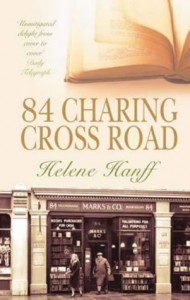

84 Charing Cross Road by Helene Hanff

Posted January 18, 2014 by Michael @ Knowledge Lost in Non-Fiction / 0 Comments

84 Charing Cross Road by Helene HanffTitle: 84 Charing Cross Road (Goodreads)
Author: Helene Hanff
Published: Virago, 1970
Pages: 230
Genres: Non-Fiction
My Copy: Library Book

Buy: AmazonBook Depository (or visit your local Indie bookstore)

84 Charing Cross Road documents twenty-year of correspondences between Helene Hanff and Frank Doel. Helene was an American writer while Frank the chief buyer of Marks & Co, an antiquarian bookseller located at the eponymous address in London, England. Starting out as a request for obscure classics, the book follows the blossoming relationship with Helene and the people of Marks & Co. Followed by The Duchess of Bloomsbury Street, a collection of diary entries of Helene’s trip to England and the tour of bookshops.

Helene noticed an ad in the Saturday Review of Literature and first contacted the shop in 1949. This started a beautiful love story found in this book, not between Helene and Frank but rather a love of books. This is the type of book you read if you are a book lover; it makes me wish I could correspond with a bookstore (or a book lover) about books. Can you imagine this happening with Amazon or Book Depository? Nowadays we have twitter (which I’m always on talking about my love of books) but 140 characters sometimes are not enough to say what you want to say.

I went into this book a little unsure, a collection of letters between a book lover and a bookseller, how great can this book really be? What I found was that the silver tongue and wit of Helene Hanff really made this book for me. You know that feeling in writing where you not sure if the person is being sarcastic or not, I started off wondering this but so found she had a wicked sense of humour and I’m so glad the people of Marks & Co never took offense (or they didn’t appear to). This might have been their (Frank Doel and the others that wrote to Helene) professional nature that slowly changed into a friendship, once they started to get to know each other and understood her sense of humour.

One of the major problems I had with this book is not really a problem but a personal preference, which has to do with grammar and formatting. I understand they tried to keep the writing the same as the letters but I wouldn’t mind if they fixed it a little to add punctuation and correct it. Another thing that throws me was the missing letters, I know things get lost but when you are absorbed in a conversation about a book (like Pride and Prejudice) it is disappointing to not know what happened.

The edition of 84 Charing Cross Road I borrowed from the library also came with The Duchess of Bloomsbury Street. This is the travel diary of Helene Hanff’s time visiting London. Looking at details of this book the term ‘zesty memoir’ is mentioned a few times, but I felt it to be a disappointment in comparison. It was entertaining but it didn’t have the banter or wit I expected, it just felt like a step by step play of everything Helene did while visiting London. While these two books work as companion pieces The Duchess of Bloomsbury Street was too one sided for my taste. Think of it like a sequel, once you finish 84 Charing Cross Road you’ll probably want to know what happened on her trip to London.

84 Charing Cross Road has been made into a movie and a stage play; I’ve not seen them but I’m interested to see how this book translates into another medium. I love how the book is promoted with the line “so begins a love affair”; this is a love affair with books. I managed to write this entire review without mentioning this is an epistolary book that I feel the need to mention my achievement. Highly recommend that you get your hands on both novels and reading them, especially if you are a lover of books.


The Explorer by James Smythe

Posted December 18, 2013 by Michael @ Knowledge Lost in Literary Fiction, Science Fiction / 3 Comments

The Explorer by James SmytheTitle: The Explorer (Goodreads)
Author: James Smythe
Series: The Anomaly Quartet #1
Published: Harper Voyager, 2013
Pages: 260
Genres: Literary Fiction, Science Fiction
My Copy: Library Book

Buy: AmazonBook DepositoryKindle (or visit your local Indie bookstore)

Cormac Easton has been selected to be the first journalist in space, sent to document the flight of Ishiguro into deep space. When the crew wakes up from hypersleep they discover their captain died in his allegedly fail-proof safety pod. One by one the rest of the crew died and Cormac was left alone; or so he thinks.

This is going to be difficult to review this book without giving spoilers; there are some big reveals within this novel that need to be left unmentioned. For those people that don’t read much science fiction don’t let the fact this is set in space put you off. This is literary sci-fi, the novel explores humanity. Also for those that think this sounds similar to my recent review of The Martian, they are completely different, while they both have a protagonist isolated in space that is pretty much the only thing they have in common.

I can’t really talk much about the plot, you just have to go out and read it; I want to talk a little about Cormac Easton. Whether you like him or not (I didn’t) there is something I found really interesting about this protagonist. James Smythe shows the reader just how to write an unreliable narrator. You spend most of this book trying to work out if Cormac is leaving things out because he is human and forgot or if it is on purpose, you also question everything he says, what is true and what is a lie. This works really well and I found it added to the tension and thrill of the novel.

Similar to The Martian I can’t help but comparing this to the movie Moon but when you get further into the book you can see some similarities to science fiction movies from the 80’s and 90’s (the one I’m thinking of might be too much of a spoiler). In the world of books, I’m reminded of classic science fiction; those books that have so much to say about humanity. I would probably compare Smythe to an author like Robert A. Heinlein; In fact I think I made a similar comparison to classic sci-fi in my review of The Machine.

James Smythe has been a great discovery for me, I love how he explores humanity in his novels. It might be weird but I think both The Machine and The Explorer may end up in my Best of 2013 list. I want to read more books by this author and have in fact started the sequel to this one (The Echo) already. I’m also looking forward to trying his first novel The Testimony and eagerly anticipating his currently untitled book that comes out mid-2014. Smythe seems to be a machine, two books released in 2013 and two being released in 2014, at this rate I’m never going to run out of his books to read.

I hope I didn’t reveal anything important in this novel; it is hard to write a review and say nothing. I also hope I’ve said enough to make people want to read The Explorer (and all of James Smythe’s novels). It is always great when you discover an author that writes the perfect books for your taste and I think I’ve found that here, I will try a few more novels but I feel confident. The Echo is the next book in this series, I believe there will be another two more as well but I felt like this worked well as a standalone novel. Highly recommend both The Explorer and The Machine and hope more people check out this great author.


NW by Zadie Smith

Posted December 6, 2013 by Michael @ Knowledge Lost in Literary Fiction / 8 Comments

NW by Zadie SmithTitle: NW (Goodreads)
Author: Zadie Smith
Published: Hamish Hamilton, 2013
Pages: 296
Genres: Literary Fiction
My Copy: Library Book

Buy: AmazonBook DepositoryKindle (or visit your local Indie bookstore)

Living in the Caldwell housing estate found in North West London, the only plan was to get out and go somewhere else. Thirty years later, Caldwell kids have all moved on with their varying degrees of success. Living streets apart, their worlds collide, showing them that the people they once were and are now, can suddenly unravel.

NW has been labelled as a tragicomedy, which means the author will try to cut overly dramatic and tragic lives will a bit of humour and possibly a happy ending. I felt like this revealed too much about the novel; I always expected everything to turn out well for these four Londoners.  The term recherché postmodernism (or hysterical realism) was coined by literary critic James Wood to describe this type of contemporary fiction, in particular the works of Zadie Smith. Has states, this is “a literary genre typified by a strong contrast between elaborately absurd prose, plotting, or characterisation and careful, detailed investigations of real specific social phenomena.”

This gives us a sense of what to expect in a Zadie Smith novel “[and] turn fiction into social theory” (James Wood, 2000). I have to admit that this is the first of Smith’s novels that I read and picked this as my first simply because it was the first time I heard of her and it was available at my local library. In hindsight, maybe starting with White Teeth might have been a better choice but at least I know I’ve experienced Smith’s style without going to her most celebrated novel.

This felt like an experimental novel that had a lot to offer and has some interesting insights into a low social economical part of London. It tried to analyse the social progress of the four main protagonists as they try to be successful in life. Not the easiest book to read while I was struggling to remain focused and climb out of a slump. There are a lot of ideas jammed into a novel full of ever changing styles; yet NW remained lyrical and poetic through it all.

I wish I had better focus through this book, I feel like there was a lot I missed out, what I did get from the book was enjoyable. It is a weird experience enjoying a book but not feeling like reading at the same time. I think it does affect my opinion of NW but I’m trying hard to avoid letting personal opinions cloud my judgment on great writing. Sure, reviewing and enjoyment of a book are based on person opinions but I feel that I need to remove emotions and read more critically. NW was interesting and I hope to read more Zadie Smith in the future.


How Proust Can Change Your Life by Alain de Bottom

Posted December 4, 2013 by Michael @ Knowledge Lost in Non-Fiction / 6 Comments

How Proust Can Change Your Life by Alain de BottomTitle: How Proust Can Change Your Life (Goodreads)
Author: Alain de Bottom
Published: Picador, 1997
Pages: 215
Genres: Non-Fiction
My Copy: Library Book

Buy: AmazonBook DepositoryKindle (or visit your local Indie bookstore)

À la recherche du temps perdu or In Search of Lost Time by Marcel Proust is probably the one book all bookish people are afraid to tackle. It is only a few pretentious people that have actually read it, and I plan to be one of them. Alain de Bottom has put together a collection of essays on what Proust can offer to today’s readers.

In my reading slump, which I’m debating whether it was real or not, I only felt like reading non-fiction. I picked this book because I felt like this would be a quick read and I was interested to know more about Proust and the book In Search of Lost Time. This book doesn’t really offer any good insights  to   these two topics. I think this is a book designed to try and convince people into reading In Search of Lost Time but I feel that anyone reading this one would have or are planning to read it anyway.

There is a little about the life of Marcel Proust, but only enough to give you a small taste. This left me more intrigued by the man and wanting to read a biography. De Bottom left me confused about the life of Proust and I had too many questions left unanswered. This really didn’t help this book at all, especially since Proust is an enigma (to me) and the tiny parts he shared about his life didn’t explain anything.

When it came to talking about À la recherche du temps perdu I was left thinking about the Monty Python skit about the “Summarise Proust Competition” where each contestant is given 15 seconds to try and summarise In Search of Lost Time (all seven volumes). In fact this skit was mentioned in this book as well, but trying to condense 4,000+ pages in 200 pages is not effective. My understanding of In Search for Lost Time, is that it is incredibly complex, intricate and descriptive, not a book you can summarise.

I feel like this was almost pointless, it left me with too many unanswered thoughts and no real answers. I’m none the wiser about Proust or In Search of Lost Time. There were some antidotes that were interesting but all in all, I feel like I wasted my time. I want to work my way through the seven volumes of In Search of Lost Time but I’m not sure if I can manage it. I wonder if anyone has any tips; reading this book wasn’t the answer.


Harvest by Jim Crave

Posted November 20, 2013 by Michael @ Knowledge Lost in Historical Fiction / 0 Comments

Harvest by Jim CraveTitle: Harvest (Goodreads)
Author: Jim Crave
Published: Picador, 2013
Pages: 272
Genres: Historical Fiction
My Copy: Library Book

Buy: AmazonBook Depository (or visit your local Indie bookstore)

A group of strangers arrive in the woodland borders and put up a make-shift camp. That same night a manor house is set on fire. Following that the harvest is blackened by smoke, the strangers are cruelly punished and there is suspicion of witchcraft afoot. Harvest tells the story of the economic progress following the Enclosure Acts that disrupted the pastoral paradise of a small remote English village.

Jim Crave uses the tragedies, pillaging and other disruptions in an effort to evoke the effects of England’s fields being irrevocably enclosed. I never really knew when this book was set but upon researching the Enclosure Acts I’ve since found that this novel is most likely set sometime between 1750 and 1860. This Act basically removed the existing rights the locals had to carry out activities like cultivation, cutting hay, grazing animals, using other resources such as small timber, fish, and turf.

While some people saw these acts as the building blocks to a capitalist future, others thought of this as an attack on the peasantry. You know the old complaint, parliament are only looking after the major landowners; the rich get richer. Sometimes the enclosures were carried out with force and extreme measures were used.

In Harvest we read about a pastoral idyll as it starts to unravel with the major changes in land rights. Jim Crave’s look on the subject is done in an interesting way; I didn’t read this book as a depiction of changes in land rights. I read this as a community so cut off from the rest of the world that it started imploding as soon as outsiders were introduced. Sure, the whole point of the book was the Enclosure Acts; my brain just took a different direction.

While this book felt a little dark, like life was harsh and cruel; all the things I enjoy in a novel, it just didn’t feel right. I felt the grittiness and yet I felt a little bored and disappointed by Harvest. I’m not sure if it was a problem with the novel, I felt like I was in a reading slump and I was forcing myself to complete the book before I needed to return it to the library.

Then again, the first impression is often the correct one. I spent a lot of time thinking if this was a problem with the novel or a problem with me at the time. In any case, it doesn’t matter, I didn’t enjoy it and I’m not sure revisiting it later will change my mind. Well written with the normal historical fiction tropes, but I felt like the novel dragged on. This should have been catnip for me but I just couldn’t find a connection.


A Tale for the Time Being by Ruth Ozeki

Posted November 10, 2013 by Michael @ Knowledge Lost in Contemporary, Magical Realism / 7 Comments

A Tale for the Time Being by Ruth OzekiTitle: A Tale for the Time Being (Goodreads)
Author: Ruth Ozeki
Published: Text, 2013
Pages: 422
Genres: Contemporary, Magical Realism
My Copy: Library Book

Buy: AmazonBook Depository (or visit your local Indie bookstore)

Sixteen year old Nao lives in Tokyo and has decided to take her own life. Her life isn’t great, being bullied in school, her parents are depressed but before she ends her misery she has one task to complete. She wants to document the life of her great-grandmother Jiko. She writes a diary to tell the story of her life. On the Pacific coast of Canada, a few months after the tsunami that hits Japan, Ruth finds a Hello Kitty lunchbox on the beach, inside there was a diary.

Starting with the story of Nao, A Tale for the Time Being was a fascinating look at the Japanese modern culture with references to pop-culture. It made me want to read more books like this; the Japanese culture, while similar is very different and unusual. The only problem with Nao was the fact I didn’t believe she was a struggling teenage girl, all references to being bullied or having a hard life seem to come across as non-issues. I think if someone is struggling to the point of suicide then these issues would be a major focus and never downplayed. This really became the underlining issue with this novel.

I expected this to be brutal and dark but it felt like it wasn’t taken seriously in the effort to make the book light hearted and humorous. The writing was beautiful but I felt it was too flowery and at times preachy. Ruth Ozeki is not just a novelist; she is also a Zen Buddhist priest. Now I have nothing against Buddhism and I think we need religious equality for all people but for some reason this felt heavy. I like books that teach me something I don’t know and A Tale for the Time Being does just that but I felt like it overdid this. I get that Ozeki is passionate about Zen Buddhism, it really showed, there is nothing wrong with that, just a little priggish.

As for the other major character (Ruth), which I couldn’t see as anything else but the author was rather dull in caparison. Nao’s story was fascinating, learning about Jiko was interesting but Ruth felt full of self-pity and two dimensional. I found myself wanting to skip over her story and return to Nao. Personally I think the Ruth character played no real part in the novel and cutting her chapters out completely would have worked just as well.

While the Zen Buddhist element did feel preachy the major downfalls were the believability of Nao’s struggle and Ruth. This is just too light and whimsical for me this really became a distraction from the themes and ideas the novel was trying to achieve. There was so much going for this but the negatives started to outweigh the positives. I must be one of the few that thought this novel wasn’t amazing.


New Moon by Stephenie Meyer

Posted October 28, 2013 by Michael @ Knowledge Lost in Romance, Young Adult / 2 Comments

New Moon by Stephenie MeyerTitle: New Moon (Goodreads)
Author: Stephenie Meyer
Series: Twilight #2
Published: Little Brown and Company, 2006
Pages: 565
Genres: Romance, Young Adult
My Copy: Library Book

Buy: AmazonBook DepositoryKindle (or visit your local Indie bookstore)

The most important thing in Bella Swan’s life is Edward Cullen (eye roll). So much so that college is plan B, but now he is gone, in an effort to keep her safe. But she is not safe, there are vampires out for revenge and since the Cullen’s are no longer around, Bella is their target. In comes Jacob Black; young, handsome and willing to protect Bella.

If you have read my review on Twilight, you must be wondering why I decided to read New Moon. Torture, joining the social commentary or most likely peer pressure. If you follow me on twitter or have read my post on reading Twilight then you know the fun I had with live tweeting the entire book in all its weirdness. This is what happened again with New Moon (see below for a full read of those tweets) and I think this was the only reason why I decided to continue, because truth be told, I hated the books but really enjoyed making sarcastic remarks about them.

Let’s have a quick look at the book. I’m not going to go into deep analysis of New Moon; I would have to read the book closer for that and really I only skimmed it to race through it. This is not to say I didn’t read the book, I am well aware of the plot and the key themes but this book had so much padding that skimming was the only real way to get through it. There was a paragraph dedicated to the voice of Edward Cullen and almost a full chapter where Bella and Alice flew to Europe (nothing else happened on the flight).

Bella is as always so co-dependent that it makes me sick; when Edward left she latched on to Jacob. She tells herself that she is not capable of falling in love again, like a whiny heartbroken teenager that thinks this is the end of her life and yet she is happy to lead Jacob on. There even was a time when it felt like she was going to be co-dependent on Alice; this would have made it more interesting.

Jacob started off as a whiny little lovesick puppy following Bella around everywhere. Then when it was revealed he was a werewolf he turned into a real asshole, too cool to hang out with a girl because he was in a gang. He went from one extreme to another and I just hated Jacob, there was a joke made by one of my Twitter followers of this being character development and it is sad to say this is the extent of development in the entire novel.

Apart from the constant angsty whining (and I normally love angst) this novel never really went anywhere, it was just 500 pages of treading water. The major problems I had with New Moon are (and I’m picking my top couple out of a long list), firstly the lack of consistency. Twilight and New Moon seem to contradict each other in so many ways; in book one Bella got sick at the smell of blood but in New Moon she was bleeding all over the place frequently and never seems to get sick. Then there was the fact that Stephenie Meyer, instead of doing a little research,  ignored any mythology and just made up her own. This really annoyed me, some slight changes in the vampire/werewolf mythology is acceptable if you are going to use it but to make a vampire sparkle so you can spend pages on how much Edward is like diamonds is ridiculous.

I hate to say this but I will probably read Eclipse and Breaking Dawn just to live tweet them, I don’t expect to like the books but I can’t help reading them. Obviously I pay them out but I do try to analyse them to see if there is anything interesting there; wishful thinking. I will need long breaks in between the novels but you can look forward to reading my thoughts in the very distant future. I doubt I will ever like this series but at least I have evidence to back up my claims.

Read More


If on a Winter’s Night a Traveler by Italo Calvino

Posted October 27, 2013 by Michael @ Knowledge Lost in Classic / 4 Comments

If on a Winter’s Night a Traveler by Italo CalvinoTitle: If on a Winter's Night a Traveler (Goodreads)
Author: Italo Calvino
Translator: William Weaver
Published: Everyman's Library, 1979
Pages: 254
Genres: Classic
My Copy: Library Book

Buy: AmazonBook DepositoryKindle (or visit your local Indie bookstore)

If on a Winter’s Night a Traveler is an experimental classic that follows two protagonists, the Reader and the Other Reader. The Reader buys a fashionable new book that opens with those famous lines “You are about to begin reading Italo Calvino’s new novel, If on a Winter’s Night a Traveler. Relax. Concentrate. Dispel every other thought.” Thirty pages or so into the book he realises his copy is corrupt and consists of the same thing over and over again. Returning to the book store he discovers that what he thought was Calvino was a book by a Polish writer Bazakbal. Given the choice between the two he goes for the Polish book, as does the Other Reader, but his book turns out to be yet another novel by a different writer, as does the next, and the next.

Trying to write a synopsis for this book is tricky, there is no way I can do the novel justice in a paragraph.  This Italian surrealist novel (1979) was translated in 1981 to critical acclaim. The novel is best known for its structure. The odd number chapters are written in second person, but you have to ask yourself is it possible to have a novel in second person. As you read along eventually the narrator “you” does something that will take the reader out of the equation and turning them into a character called You. For instance, in this novel You is male, this will rule out about 50% of the readers in one hit.  This doesn’t take away from the enjoyment of this novel but is something I was deeply aware of throughout this book. There were times where I felt like the novel was in first and third person as well, so you end up with characters called You, I and He/She.

This whole book is subjective, I’m sure some people get different things out of If on a Winter’s Night a Traveler than I did but that is just what makes for a great novel. I want to talk a little about post-structuralism as I believe this novel is a great example of this literary theory. Firstly you need to understand structuralism, which is a theory that states that in order to understand a piece of literature you need to understand its relationship with the bigger picture, the overarching system or structure. You need to look into its influences, the genre, narrative and any other elements that might be relevant. The problem with this is you going further and further back eventually you might lose sight of the original text. Basically this is a set of specific rules that govern literature. Post-structuralism is basically taking those rules (they often study and analyse the rules) then setting out to critique the premises. It isn’t really throwing out the rules, more demonstrating how the rules don’t always apply.

Italo Calvino doesn’t stop at narrative modes and post-structuralism, the novel explores many more literary themes; the most obvious is the use of metafiction; a book within a book. You won’t find Outside the Town of Malbork by Tazio Bazakbal on Goodreads, I’ve checked. Then you have intertextuality, pastiche, post-modernism and so on. If you are interested in exploring literary theories this novel might be a good way to experience a whole range of different concepts in one hit. I don’t know much about literary theory so I hope my understanding on these concepts have come across as accurate and I haven’t missed it completely. I would love to attend a series of lectures where this book is deconstructed and looked at in real detail; I think that would be incredibly interesting.

Don’t worry, this isn’t a dense or hard-to-read book and I’m aware that talking about literary theory might turn people off this novel but please reconsider. This book is not only devilishly clever but it is beautifully executed. I took my time with this novel because I wanted to re-read sections, write done quotes and just talk about the book to anyone that would listen. If I didn’t borrow this from the library I would have highlighted the entire books (seriously, every line is just that great). I have brought my own copy now (yes, I broke my book buying ban) and I hope to be able to re-read this again. I’m not sure if reading this with others will help but the whole experience of reading this novel is worth sharing.

I’ve heard Italo Calvino is heavily influenced by Vladimir Nabokov which makes a lot of sense to me, the writing style does feel similar, even the humour and wit. A literary labyrinth that is so masterfully executed that the novel needs to be read again and again. I won’t go into any more details as there are a few things you just need to experience. I’m jealous of anyone that gets to read this novel for the first time as that is an experience I will never have again.

 I have to wonder why the Vintage classics cover of the word “Traveller” written correctly but throughout the book it is written in the American (wrong) spelling. I have to wonder if there is anything in that. I wonder if there is a reading companion to If on a Winter’s Night a Traveler that you can read alongside this book (similar to Infinite Jest) to discover the brilliance of this novel. I really enjoy Post-Modern literature but there is so much that I’m probably missing.

All book lovers should experience If on a Winter’s Night a Traveler, there is nothing like that feeling of pure joy when you read a beautifully clever novel. You never want it to end, that ecstasy is like a drug and you immediately want to read it again only to find that feeling is just not the same. This is a masterpiece, I know I didn’t talk much about the plot but this was so I don’t give anything away. Go read it.


Monster by Dave Zeltserman

Posted October 25, 2013 by Michael @ Knowledge Lost in Horror / 0 Comments

Monster by Dave ZeltsermanTitle: Monster (Goodreads)
Author: Dave Zeltserman
Published: Duckworth Overlook, 2012
Pages: 222
Genres: Horror
My Copy: Library Book

Buy: AmazonKindle (or visit your local Indie bookstore)

Friedrich Hoffman (also known as the monster) recounts the false accusations of killing his fiancée and the other gruesome ‘crimes’ he has been accused of committing. He awoke hideously deformed on the table of Victor Frankenstein, without any real idea of what is going on. He now embarks on a single minded quest for revenge on Frankenstein for all the damage he has done.

This plot feels completely redundant; if you want to read a book from the perspective of Monster Frankenstein you read Frankenstein; this is nothing new, not interesting, and just cashing in on the same story. Sure this novel is different but there is nothing interesting about it, it is full of the typical horror tropes and doesn’t really offer an interesting perceptive. I cannot help but think of this as something like fanfic and I struggle to work out why I read this one; I seem to pick up all novels that try to do something with the Frankenstein story.

I will admit there were parts of the novel that really fit the Frankenstein plot, tiny little points to prove that the author had indeed read and been heavily influenced by this masterpiece. I am just not sure why this would be published; a re-imagining, change in perspective (assuming it wasn’t covered in the original book), prequel/sequel or modernisation I can understand but this was the exact same story with minor differences. This feels like the author loved Frankenstein so much that he rewrote the book in his own words, like a writing exercise that is never meant to be published. He has a good style even if he follows a very formulaic horror or gothic theme but the novel did indicate his talent. In an original novel he might have better luck but for me this was just ripping off a classic piece of literature.

When it comes to using classic literature as the basis of your own novel, I am normally a tough judge; you better do something unique and interesting or I will hate the novel. If you are trying to retell Frankenstein then I will be strict, this is my all-time favourite; I have read this multiple times and will be reading it many more, and I am more likely to notice every flaw. Monster and This Dark Endeavour have probably been the two novels that I’ve judged the harshest, since starting this blog and you can see the similarities.

When you look at something like The Machine which isn’t really a Frankenstein reimagining but rather you can see the influence. Some themes and messages are the same and I loved this book, it is in my top five for the year. I guess you are better off reading a book like Machine; I really wish I knew why I keep going for Frankenstein remakes. I think people should read Frankenstein and not bother with this book, but I am curious so see how Dave Zeltserman is as a novelist in something original; I hear Small Crimes is good.