Source: Library Book

In Cold Blood by Truman Capote

Posted August 30, 2014 by Michael @ Knowledge Lost in Book of the Month, Non-Fiction / 0 Comments

In Cold Blood by Truman CapoteTitle: In Cold Blood (Goodreads)
Author: Truman Capote
Published: Penguin, 1965
Pages: 336
Genres: Non-Fiction
My Copy: Library Book

Buy: AmazonBook DepositoryKindle (or visit your local Indie bookstore)

In 1959 a farmer from Holcomb, Kansas was killed along with his wife and two of his four children by a couple of two-bit thieves. This brutal crime spawned a desperate search for the killers who left bloody footprints at the murder scene. From petty crime to mass murder, In Cold Blood tells the story from murder to the gallows where they were executed by hanging.

In the Truman Capote literary masterpiece, it is easy to consider In Cold Blood a crime novel; it has shades of pulp and southern gothic throughout the book. However this journalistic investigation has often been cited as the first and best example of the non-fiction genre known as true crime. While there have been true crime books before In Cold Blood, this book did redefine the genre. Capote likes to call his book a non-fiction novel which he defined in an interview with The New Your Times as “a narrative form that employed all techniques of fictional art, but was nevertheless immaculately factual”.

However this is not just a book about the brutal murder of the Clutter family; we also get a Capote’s depiction of rural America. Outside the details of the crime, the author paints a descriptive backdrop of Kansas, the way he sees it. Religion, masculinity, femininity, the nuclear family and small town communities all play a big part in developing the scene. When he talks about the crime, the reader gets to explore the psychological motivations of murder and awaiting execution.

There is the issue of mental illness that needs to be explored when talking about In Cold Blood. It is almost like Truman Capote wants to challenge the reader to consider if Perry and Dick suffered from an untreated mental illness. There are shade of delusional, depression, schizophrenia and a sociopathic personality that comes through when talking about these two people but as this is 1959 I expect no psychological consult or treatment were given to these men; the court rejected the request.

I expected a true crime book but I feel like In Cold Blood was trying to do something similar to One Flew Over the Cuckoo’s Nest by Ken Kesey and The Bell Jar by Sylvia Plath. I was very impressed with this book and I feel like Capote may have ruined true crime and even narrative non-fiction for the rest of the authors in these genres. Capote’s investigational skills and mastery over the written word is what makes this book a masterpiece.


Grasshopper Jungle by Andrew Smith

Posted August 9, 2014 by Michael @ Knowledge Lost in Science Fiction, Young Adult / 3 Comments

Grasshopper Jungle by Andrew SmithTitle: Grasshopper Jungle (Goodreads)
Author: Andrew Smith
Published: Hardie Grant Egmont, 2014
Pages: 441
Genres: Science Fiction, Young Adult
My Copy: Library Book

Buy: AmazonBook DepositoryKindle (or visit your local Indie bookstore)

Sixteen-year-old Austin Szerba is just a normal teenager, who spends most of his time hanging out with his best friend Robby and his girlfriend Shann. There isn’t much to do in this small Iowa town except skate, smoke and dream of the day they can escape; that was until Austin and Robby accidentally brought on the end of the world. Now there is an unstoppable army of six-foot tall praying mantises on the rise that could end the existent of humanity.

“History is full of decapitations, and Iowa is no exception.”

Grasshopper Jungle is told as the history of the end of the world from the perspective of Austin Szerba. Unlike a diary, Austin prefers to document the entire history, interweaving the story of the story of his Polish legacy with the ending of the world, feeling it is important to have an account of what happened in this small town. This young adult novel is a cheesy sci-fright survival story, full of outlandish monsters and comical situations.

The beauty of this novel doesn’t come from the wacky plot it is with the protagonist himself. While the world is ending, Austin is struggling with his hormones and sexuality. At the heart of this novel is just a sixteen-year-old kid trying to make sense of his feelings; his hormones are always racing and everything under the sun seems to make him horny. Stuck in a small town mid-western where his Christian school had harsh words to him for reading The Chocolate War by Robert Cormier because it featured masturbating Catholics makes for an interesting backdrop. You have a situation where no one wants to talk about sexuality, but condemning masturbation and gay-bashing is perfectly acceptable.

“Stupid people should never read books.”

This is the type of book I like to read; it may have a bizarre plot happening but then it is also exploring an internal struggle. For Austin and most teenagers, their budding sexuality can be a confusing time; emotions are running wild and it is very easy to confuse on feeling for another. Robby has identified himself as a homosexual and it becomes clear in the novel that he has feeling for Austin. This makes it tricky; who does Austin talk to about his confusing feelings? He can’t ask his best friend, his girlfriend, a teacher or most adults. There was an awkward and funny scene within the novel where he attempts to ask his father.

One of the biggest things I took away from this novel is to do with labels; Robby identifies as a homosexual but doesn’t let that term define him. For obvious reasons he has to keep his sexual preferences a secret from the town but is out to the people he trusts. While Austin is struggling it has been suggested on a few occasions not to stop trying to define his sexuality and just be himself. This is a beautiful theme to have within this book and I would love to see the entire world take this on board. Obviously as a straight male, my sexuality was never a defining feature and I’m probably not the right person to be advocating this, but it is a great message.

“Do you think I’m queer, Rob?” I asked.
“I don’t care if you’re queer,” Robby said. “Queer is just a word. Like orange. I know who you are. There’s no one word for that.

I’m glad to have found a YA novel exploring such an important issue and I wish I knew of more like this. I feel like the majority of YA novels are not offering the help that a teenager might need. As an adult, it was interesting to see just how this book explored the topic of sexuality and continuously suggested to not let it define Austin. Sure, there is still a struggle and he is facing conflicting emotions; as a reader we watch him bumble along and make a fool of himself countless times, but this captures teenage life. I find myself being very impressed with Grasshopper Jungle, it is a fun and enjoyable read but at the heart of it, it has an important message.


The Fictional Woman by Tara Moss

Posted July 19, 2014 by Michael @ Knowledge Lost in Non-Fiction / 0 Comments

The Fictional Woman by Tara MossTitle: The Fictional Woman (Goodreads)
Author: Tara Moss
Published: Harper Collins, 2014
Pages: 352
Genres: Non-Fiction
My Copy: Library Book

Buy: Book Depository (or visit your local Indie bookstore)

Tara Moss is probably best known as a person you hate; she seems to succeed in everything she puts her mind to. Starting her career early at 14 as a model, she always dreamed about being a writer. People don’t encourage others to be writers but they do tell girls that they should be a model. Eventually she did and it took her around the world and taught her so much; the experiences may not have been all good but it helped shape her life. Eventually she did start writing and her Makedde Vanderwall become a huge success and she created this character as a way to explore her interests in forensic science, psychology and other topics. Now with nine fiction novels under her belt Moss is giving us her first non-fiction book, The Fictional Woman.

The title comes from the idea that people tend to dismiss and stereotype others. Tara Moss is no stranger to this; she even took a polygraph test to prove she wrote her books. While this book starts off as a memoir it is important to know that this is a social critique on the world and feminism. The book begins as a memoir to provide context, an understanding of Tara Moss’ struggles and her life helps to see where The Fictional Woman is coming from. Historical context is also an important part of understanding feminism as well, especially when it comes to gender equality and pop culture. There have been plenty of Spiderman (too many), Zorro and James Bond movies but there has never been a Wonder Woman movie. In literature, the female archetype stems from fairy tales and medieval fiction, heroines tend to face off another woman, often older and depicted as witches. Cinderella type stories require a man in order to live happily ever after and even chick-lit often portrays a gender inequality.

The Fictional Woman explores this imbalance in pop-culture and society and looks at where these archetypes come from. It is impressive to see the amount of research and information Tara Moss puts into this book; it really was eye opening. I highly recommend people read this book but I need to warn everyone it may contain triggers. I’m surprised to see that the imbalance is so prominent in today’s society and I am trying to make more of an effort to read a balance of authors. The problem I found is I tend to pick up books without taking notice on of the author, sure it sometimes easy to know their gender but I don’t research authors before starting a book. I try to make more of an effort and it is an area I need to work on.

I’m really impressed with Tara Moss, she seems to succeed in everything she does; sure I’m a little jealous that she is so talented but I still feel motivated. For those interested, I recently wrote a piece about an author event with Tara Moss on Boomerang Books if you are interested, I talk in a lot more detail about The Fictional Woman. I have never spent so much time thinking about feminism, I plan to do a lot more of it, even read some more books on the topic. I might even incorporate it into my critical reviews; it is an important topic that needs to be addressed.


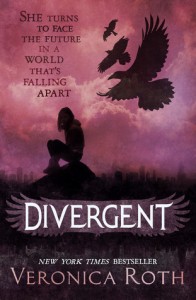
Divergent by Veronica Roth

Posted June 29, 2014 by Michael @ Knowledge Lost in Book of the Month, Dystopia, Young Adult / 6 Comments

Divergent by Veronica RothTitle: Divergent (Goodreads)
Author: Veronica Roth
Series: Divergent #1
Published: Harper Collins, 2011
Pages: 489
Genres: Dystopia, Young Adult
My Copy: Library Book

Buy: AmazonBook DepositoryKindle (or visit your local Indie bookstore)

A futuristic, post-apocalyptic Chicago is where the dystopian world of Divergent is set; where everyone is divided into five factions. At 16 you are required to take an aptitude test; this will determine which faction you are best suited for. Abnegation are selfless, Amity are peaceful, Candour are honest, Dauntless are brave and Erudite are intelligent. Following the aptitude test comes the Choosing Day (terrible name) where you are required to pick which faction you wish to belong to based on your score and personal preference. For some, like Celeb Prior this means giving up his family and moving from Abnegation to Erudite.

The novel, Divergent follows Beatrice Prior (later known as Tris) who is one of those rare people who have to hide the fact that the aptitude test was inconclusive. In this world she is known as divergent and would be considered an outcast and a danger to society if this was to come out. Tris’ test shows she has an aptitude towards three factions; Dauntless, Erudite and Abnegation. She picks Dauntless where she is trained up to be courageous and reckless, tools she believes maybe useful if her test scores ever come out.

I read this novel as a social critique; the idea of cliques and groups taken to the extreme. You know what I’m talking about; society likes to create rivals, in sports teams, smart phones, gaming consoles, etc., but more importantly when it comes to DC verse Marvel comic’s social-political stands. In this world the Abnegation are the governing body, since they are the selfless they are tasked with looking after everyone. However the Erudite are conspiring to take control, and a step that they believe will advance the world both socially and technologically.

This makes the novel sound more complex that it actually is; in reality I found that Veronica Roth liked to wave the symbolism in the readers face forcing them to take notice. It is like a child who is proud at what she has produced; jumping up and down and explaining everything detail over and over again in the hopes that we will think she is brilliant. The symbolism is prominent in the story, she didn’t need to try and draw extra attention to it. Most readers are smart enough to figure it out and those who don’t are only interested in the plot.

Take the title of the novel and the factions, if you look at abnegation, amity, candour, dauntless, erudite and divergent in the dictionary you pretty much how the entire book worked out already. However Roth reminded us again and again what each word meant. Reminds me of that old writing tip ‘show, don’t tell’. While this is not always true, I feel within the context of Divergent, it would have been a better solution.

There are a lot of interesting themes within the novel and I really wish Roth had let people discover them on their own; I don’t like having everything pointed out to me. The whole concept of social structures and classes would have given a literary theorist in the school of Marxism a lot to work with. There are other themes including courage verse recklessness, power, choices, secrets and even guilt that made the novel bearable.

While the novel has a protagonist fighting against a totalitarian state, the book is full of Christian themes and concepts. At times you can see Abnegation being depicted as weird/cult-like faction in the back drop of a controlling society but then they come through as righteous and merciful. There is a Christian misconception that stems from the Age of Enlightenment, which seems relevant in some radical churches that still believe that intellectualism is a dangerous thing. This comes across in the novel as well as some other Christian ideals. Veronica Roth states she is a Christian but has also claimed that Divergent is not a religious novel. She even believes that most Christians would consider the novel to be profane. It is unclear if Roth is an advocate for intellectualism or warning the reader of its dangers.

Yet another issue I found with Divergent was the characters and world building felt a little flat; I think Roth spent too much time explaining everything that the plot and the setting suffered. I didn’t care what happened to any of the characters; in fact thought they were all two dimensional, which is possibly the case with most of the characters. The idea of each faction just acting like a giant cookie cutter, forcing everyone to fit into that mould is clear.  The divergents (I’m not going to name them) should have been richer, more fleshed out characters. The dystopian world borrows heavily from 1984 and The Hunger Games although it sometimes forgets this and reverts back to a more generic present day world. Then realising the book has gotten off track reverts to borrow again from previous dystopian novels.

Finally I would like to focus a little on the feminist qualities of Divergent, since reading The Fictional Woman this seems to be an area of focus for me. The concept of a woman trying to figure out her place in the world is a positive step for equality; however Divergent also reverts to two old archetypes that need to stop. I’m talking about the idea of a wise intelligent older woman being depicted as a witch or evil character and the female heroine needs to have a female enemy. Divergent does tackle the idea of what happens to a woman when she becomes more successful than the men she is competing against, and while it is not pretty it is a very real issue that needs to be looked at more often.

I would have liked this novel a lot more if the message was subtle and ambiguous; I just feel like everything got over done. As a reader I like to look for the messages but if the author hits me over the head with it and then proceeds to explain everything I lose interest. Dystopian fiction has a unique ability to tackle social issues and just because a book is aimed for a young adult audience doesn’t mean they need to be everything explained to them. I have to wonder how many YA lovers read the book for the themes rather than the plot. I suspect the majority of them read for the story and they probably prefer not to be stepped through themes either. If Veronica Roth left the themes in place and focused on the plot, this may have been a better book.


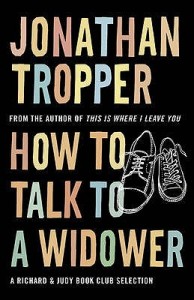
How to Talk to a Widower by Jonathan Tropper

Posted June 7, 2014 by Michael @ Knowledge Lost in Contemporary / 4 Comments

How to Talk to a Widower by Jonathan TropperTitle: How to Talk to a Widower (Goodreads)
Author: Jonathan Tropper
Published: Orion, 2007
Pages: 341
Genres: Contemporary
My Copy: Library Book

Buy: AmazonBook Depository (or visit your local Indie bookstore)

“I had a wife. Her name was Hailey. Now she’s gone. And so am I.”

This one reoccurring line not only serves as a mantra for Doug Parker, it also sums up the essence of How to Talk to a Widower. A year ago Doug lost his with in a plane crash and he has been grieving ever since. The people around him tend to think that it is time for him to move on, he is only twenty-nine, and he still has a whole life ahead of him. For Doug, that is not the case, his wife is gone, and so is he. On the surface this novel feels like it has the makings of a bad sitcom, with a blend of humour and melodrama; however there is so much going on the under the surface worth exploring.

Essentially How to Talk to a Widower is a study into grief and the emotions behind losing someone close. However I feel like this novel explores the idea of holding onto grief. How long can we hold on? At some point the grief becomes a part of us and it not only controls us but it defines us. We can fall into an endless spiral without any hope of escape; it felt like Doug was trapped in this endless spiral at time but then we get these little glimpses of hope. Not sure if he is healing or it is just false hope.

Doug Parker is an interesting character; he is so flawed and there is something so genuine about him. Grief has defined him and he often uses it as an excuse for his self-destructive ways. Doug loves women, to an extent where it felt like he has an attraction to every woman he meets; they were all beautiful. “Sometimes you walk past a pretty girl on the street there’s something beyond beauty in her face, something warm and smart and inviting, and in the three seconds you have to look at her, you actually fall in love, and in those moments, you can actually know the taste of her kiss, the feel of her skin against yours, the sound of her laugh, how she’ll look at you and make you whole. And then she’s gone, and in the five seconds afterwards, you mourn her loss with more sadness than you’ll ever admit to.” While we know that Doug loves and misses his wife, Jonathan Tropper has the ability to strip his characters bare and expose every part for their personality.

When Doug lost his wife he was only 29; Hailey was eleven years older and had a teenage son from a previous family. Her son, Russ is suffering just as much as Doug; he feels he not only lost his mother but his stepfather has also abandoned him. He was shipped off to live with his father who is bad news. He acts up and does everything to get some attention. Like I’ve said before, this novel is so melodramatic but it is all bittersweet.

I love the complexity that is found in this novel, not just with Doug and Russ, but even Doug’s sister Claire and his family are all so complicated that reading the drama in this book is both enjoyable and often sad. Even the woman Doug starts sleeping comes with her own set of flaws and complexities. “She was smart and funny and vulnerable and just so goddamned beautiful, the kind of beautiful that was worth being shot down over.” She is such a mystery; I wanted to know what is her motivation? Why is she attracted to Doug? She is just a sexual output for the protagonist and there doesn’t seem to be any reason behind her motivation. This mystery is what I’m drawn to; I want to know more. I like how she is described as voluptuous and she seems to have an air about her I can’t help but want to explore.

Even though there is so much drama in the novel, there is humour that runs throughout How to Talk to a Widower. I can’t help but get a sense of irony from this novel. The title alone makes the book sound like a self-help book and then he is writing a column in M magazine with the same title. One suspects that the column is an advice column as well but it is just an output for his grief. The humour that is tangled up in the grief and melodrama really brought this novel together, like the glue that holds it all together.

Think of this novel like dick-lit (chick-lit from a male perspective), think of it as something the Nick Hornsby may write, however I think this was better. The drama was touching, intense and executed beautifully. All the relationship dilemmas, his off kilter family, and the grief all was balanced wonderfully in How to Talk to a Widower. I laughed, cried and wanted to reread read all the wonderful lines. I know this novel isn’t going to be for everyone but I’m so glad I read it. I will be reading more Jonathan Tropper’s books and I must check out Banshee, which he co-created with David Schickler (who wrote an amazing memoir).


The Magicians by Lev Grossman

Posted April 29, 2014 by Michael @ Knowledge Lost in Book of the Month, Fantasy / 4 Comments

The Magicians by Lev GrossmanTitle: The Magicians (Goodreads)
Author: Lev Grossman
Series: The Magicians #1
Published: Thorndike Press, 2009
Pages: 691
Genres: Fantasy
My Copy: Library Book

Buy: AmazonBook DepositoryKindle (or visit your local Indie bookstore)

Quentin Coldwater is about to graduate high school; his future is catching up with him.  Suddenly an offer to a very exclusive private college has become a real possibility, but this is no ordinary university, this is a school of magic. Not only will Quentin have the normal college experience of sex, love, booze and friendship, he will also discover his magical abilities. Not just a coming-of-age novel, Quentin will also discover that the world of Fillory from a children’s fantasy series he obsesses over is very real.

Lev Grossman’s The Magicians on the surface reads like a cliché fantasy novel but there is something deeper here. If you think of The Magicians as a homage to series like Harry Potter, The Golden Compass and Narnia, you can focus on the coming-of-age element of the novel. I found similarities to The Neverending Story but if I looked deeper I would say this is more of a magical version of The Catcher in the Rye. Quentin Coldwater follows the Holden Caulfield archetype, full of angst, self-loathing and all the normal teenage boy awkwardness, almost to the point where he could be considered an antihero.

Quentin not only has to work through his new found magical abilities, this only takes a side plot to what is really happening in The Magicians. The novel depicts and often amplifies the prototypical teenage boy experience, the depression, angst and emotional carelessness. The idea of magic being a gift turns out to be more a curse for Quentin. Unlike Harry Potter this novel looks at the magic being a curse, choosing Brakebills to get an education was possibly a downfall in his adolescent life, or at least that would be how Quentin will view it.

This is not an escapist novel; in many cases The Magicians is anti-fantasy. Viewing magic as a curse was an interesting way to view life and the fantasy genre. While it does this in a very interesting way, the homage to children’s fantasy novels was a bit over the top, while trying to avoid being a cliché; it ended up falling face first into the formulaic. I would have liked to explore the ideas of education and growing up with a gift/curse more than the actual fantasy elements but that might have risked alienating the target audience.

The Magicians is not without its flaws; in fact this novel could have been so much better if it took a more focused approach. The coming of age elements were interesting, the homage and Fillory parts of the novel were annoying and I think it would have worked out better without them. If the next books in the series continue to explore magic as a curse, I will gladly read it but I’m not interested in the Fillory story arch.


Big Bad Wolf by Nele Neuhaus

Posted April 17, 2014 by Michael @ Knowledge Lost in Crime / 0 Comments

Big Bad Wolf by Nele NeuhausTitle: Big Bad Wolf (Goodreads)
Series: Bodenstein & Kirchhoff #6
, 2014
Pages: 404
Buy: Book Depository (or visit your local Indie bookstore)

After finishing The New York Trilogy I needed something light, something I didn’t have to analyse. I picked up Big Bad Wolf because I enjoyed Snow White Must Die so much. I’m not saying that I can’t analyse a novel like this one (you can analyse every text), I just think at times some light reading is needed. Big Bad Wolf tells the story of a crime that happened on the river Main near Frankfurt. Investigators Pia Kirchhoff and Oliver von Bodenstein are back to investigate the crime, as the case progresses they find it taking them into a pit of evil and cruelty in the midst of a middle class utopia.

I am trying to make an effort to read more translated fiction; I loved Snow White Must Die which is book four in the series but only the first one to be translated into English. This is book six in the same series and I have to wonder why a publisher would publish books in such a weird order; this was a similar issue that happened with Jo Nesbø. I understand that a publisher would want to translate the novels that will sell the best but if Nele Neuhaus’ popularity continues to grow at this rate we will have another Nesbø situation.

Everything I loved about Snow White Must Die is absent in Big Bad Wolf; I think the problem is that Pia Kirchhoff and Oliver von Bodenstein are considered the main protagonists while Snow White Must Die focused more on the life of a man who served ten years for a crime he didn’t commit. That is what fascinated me but Big Bad Wolf is just another crime novel.

I’ve read so many great crime novels now that I find most of them clichéd and formulaic, Big Bad Wolf isn’t that bad but I’m looking for books that do something different and fresh with the genre. There are some decent moments in Big Bad Wolf, some unexpected twists but I wanted more. The novel is darker than most popular crime novels but keeps to the standard formula. One thing I did find difficult about this novel was the amount of view points, making it difficult at times to understand what was going on but this is an acceptable method for building suspense.

I highly recommend Snow White Must Die, if you haven’t tried some German translated crime before then this might be a good starting point. As for Big Bad Wolf, I’m disappointed with the end result but others might enjoy it more than I do. I hope Nele Neuhaus’ other novels are more like Snow White Must Die but I won’t be in a hurry to try her works again.


On Such a Full Sea by Chang-rae Lee

Posted March 6, 2014 by Michael @ Knowledge Lost in Dystopia, Literary Fiction / 0 Comments

On Such a Full Sea by Chang-rae LeeTitle: On Such a Full Sea (Goodreads)
Author: Chang-rae Lee
Published: Little Brown and Company, 2014
Pages: 352
Genres: Dystopia, Literary Fiction
My Copy: Library Book

Buy: AmazonBook DepositoryKindle (or visit your local Indie bookstore)

Dystopian literary fiction is an often under-appreciated and underutilised literary tool. Chang-rae Lee steps away from the historical novels he normally writes to give us On Such a Full Sea, a dystopian novel set over a hundred years into the future. The novel tells the story of a teenage girl Fan who works in the high walled, self-contained labour colony know as B-Mor (formally the city of Baltimore) who goes searching for the man she loves as he has mysteriously disappeared.

I often enjoy a novel that disguises political discourse with the dystopian fiction genre. Think 1984’s message on totalitarianism, Fahrenheit 451 on censorship, Super Sad True Love Story on Globalisation. On Such a Full Sea also has a political message but it is far more subtle. The thing about literary criticism and political discourse is that you can often find differing opinions; was this novel on the harsh reality of immigration, slavery, human trafficking, removal of individuality or something more? I’m not going to go into too much detail on this; you can discover that on your own.

I want to have a quick look at the dystopian world that Lee has created as it follows a similar style to that of George Orwell’s 1984. These walled communities are more like labour camps, designed to keep people in rather than out. The workers are being watched and controlled by fear; rather than by governmental oversight, the labours are been monitored by The Charters, which to me feels like middle management. In this future most of the American cities have been abandoned due to crushing debts and disease and the Chinese cities are suffering from major air and water pollution. The solution, to relocate and occupy America; this is why Fan and the others are found working in B-Mor.

The harsh realities of this dystopian world are often drowned out by the beauty in Chang-rae Lee’s writing. You can spend so much time being swept away by the writing that the plot really does take a back seat. This works only because the plot isn’t really as strong as I would have liked it to be. There are times I found myself enjoying the writing and not really paying enough attention to the plot only to have something shocking happen that snaps me back to attention. I would have liked a stronger plot, it really was a big downfall for me, not that plotless books are bad it’s just the particular story called for it.

I picked up this book because Chang-rae Lee mentored my current literary obsession Gary Shteyngart and helped him get his first book published. My first thought was On Such a Full Sea sounds very similar to Super Sad True Love Story. I expected to read a similar book about the struggles of Chinese immigrants but I’m happy to see the two novels are very different. There are a few similarities but not enough to compare them; Shteyngart uses satire and humour where Lee takes a more serious approach.

The plot may sound basic but On Such a Full Sea is a stunning yet surprising novel. This is actually my first Chang-rae Lee novel and while I enjoyed this novel, I’m not in a hurry to read his back list. Lee joins the ever growing list of serious novelists trying their hand at genre fiction. I for one am happy to see an increase in literary genre fiction; you can do some interesting things with genre fiction and blend that with the discourse of literary fiction the results are often amazing.


The Last Girlfriend on Earth and Other Love Stories by Simon Rich

Posted February 14, 2014 by Michael @ Knowledge Lost in Humour, Short Stories / 0 Comments

The Last Girlfriend on Earth and Other Love Stories by Simon RichTitle: The Last Girlfriend on Earth and Other Love Stories (Goodreads)
Author: Simon Rich
Published: Serpent's Tail, 2013
Pages: 224
Genres: Humour, Short Stories
My Copy: Library Book

Buy: AmazonBook DepositoryKindle (or visit your local Indie bookstore)

The Last Girlfriend on Earth is a collection of skits (no quite short stories) about love and matters of the heart. Simon Rich was one of the youngest writers to work on Saturday Night Live, which explains the short bizarre stories. For a man only just 30, Rich has had an impressive career already, receiving a two-book contract with Random House prior to graduating from Harvard University. The Last Girlfriend on Earth is his fifth book, but it is the first one I’ve had the opportunity to read.

These skits/stories are a lot of fun, and I was entertained from start to finish. Highlights include, ‘Unprotected’ the story told entirely from the perspective of a condom, ‘Magical Mr. Goat’ tells the story of a girl’s imaginary friend stuck in the ‘friend-zone’, and there is even one about a dog’s missed connections. There are some stories that are just so bizarre that you wonder how he thought them up, like dating Mother Teresa (she is practically a saint of a woman) or finding out that your ex is dating Hitler. There was even one where a guy wins the MacArthur Fellowship ‘Genius award for having a one night stand.

Simon Rich clearly likes to play with stereotypes and inject some absurdity into his stories, yet they all seem to have something familiar about them. The ideas portrays in this book are that of love and even heartbreak; while expressed in a humorous way, I really enjoyed how there was an element to truth behind them. For example, what happens when the invisible man gets dumped? Naturally he would use his abilities to spy on his ex-girlfriends’ date.  How about when Cupid becomes a teenager and rebels? What kind of game of Jeopardy! would it be if Alex Trebek’s ex-wife was a contestant. All the scenarios are unusual but relatable.

I always find it hard to write a review about a collection of short stories. With The Last Girlfriend on Earth, you’ll be definitely be entertained, think of it as an episode of Saturday Night Live on the topic of love. The humour of Simon Rich was razor shape and just twisted, but that is the kind of thing I enjoy. I’m not sure what his other books are like, but I’m curious to find out.


Books by Charlie Hill

Posted February 3, 2014 by Michael @ Knowledge Lost in Humour / 6 Comments

Books by Charlie HillTitle: Books (Goodreads)
Author: Charlie Hill
Published: Tinder Press, 2013
Pages: 242
Genres: Humour
My Copy: Library Book

Buy: AmazonBook Depository (or visit your local Indie bookstore)

When two tourists drop dead, it peaks neurologist Lauren Furrow’s interest and seeks out indie bookseller Richard Anger to help her uncover this mystery. What they find is something unexpected. Have you ever read a book so mediocre that your brain stops working? Best-selling author Gary Sayles’s books are doing just that. Charlie Hill’s Books will take a satirical look at the state of our book industry today.

This novel starts out with Richard Anger, an angry book seller with the best bookshop ever mentioned in a novel. “A bookshop full of long-forgotten noir fiction, modernist classics, chapbooks, transgressive experimentation, translated erotica, minimalism, short stories, satires, samizdat, surrealist poetry and smut.” This is the kind of book shop I would love to spend my time in, it’s the type of store I would love to own; it just sounds amazing. Is it bad that I identified and really enjoyed the character of Richard Anger? I just thought his whole attitude and personality really tied the book together, offsetting the humour with some bitterness.

As this is a satire, I paid closed attention at what Hill was parodying. A particular favourite of mine was the literary critic, who was a blogger. As a book blogger I’ve heard it so many times, people calling blog reviews into question and while running a blog gives you more freedom to explore your own style and voice but that doesn’t mean what we say is less relevant. This tiny dig at literary criticism amused me greatly but then again I enjoyed the many little pokes being made at the book industry.

As an overview of this novel, Books is satire on the sheer amount of books that are extremely similar being published. You know the styles, I won’t point out books but there are heaps of examples of books that feel very much like a carbon copy of a similar book that was popular. There are genres out there that have the same thing being published over and over again because they sell. Books takes a look at this practise and just made fun of it.

People are devouring these books that are so similar that they all die from SNAPS (Spontaneous Neural Atrophy Syndrome).  Books reads similar to a thriller but there are so many laugh out loud moments. I love how on the surface this novel seems like a genre-based novel but if you explore it a little deeper you see so much. You can spend a lot of time trying to dissect Books and seeing everything Charlie Hill is doing here.

If you are a fan of books and want a good laugh at the expense of the book industry, then Books is for you. I had so much fun reading this book and equally as much fun thinking about what is written. I picked up this book because I love books about books and satire and I was not disappointed. This could be on my best of 2014 list but it is way too early to tell. Highly recommend Books, it is fun to read and you’ll enjoy the fun it made at the book industry.