Source: Library Book

The Complete Polysyllabic Spree by Nick Hornby

Posted November 27, 2014 by Michael @ Knowledge Lost in Non-Fiction / 0 Comments

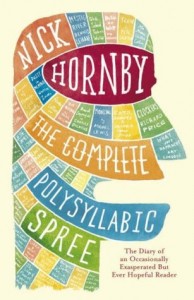
The Complete Polysyllabic Spree by Nick HornbyTitle: The Complete Polysyllabic Spree (Goodreads)
Author: Nick Hornby
Published: Viking, 2005
Pages: 278
Genres: Non-Fiction
My Copy: Library Book

Buy: AmazonBook Depository (or visit your local Indie bookstore)

While Nick Hornby is best known for his fiction that includes books like High Fidelity and About a Boy, some maybe familiar with his column in The Believer called Stuff I’ve Been Reading. The Complete Polysyllabic Spree is the combination of two U.S. titles from his column, The Polysyllabic Spree and Housekeeping vs. the Dirt. The title is a reference to the Dallas choral rock band The Polyphonic Spree, a group with over twenty members in it. Hornby often describes the works of The Believer in this way; “all dressed in white robes and smiling maniacally, sort of like a literary equivalent of The Polyphonic Spree.”

In fact, The Believer is a literary magazine created by Dave Eggers and part of the McSweeney’s company; it also focuses on other forms of the arts and general culture. It started in 2003 and releases nine issues a year; this book takes Hornsby’s column from September 2003 to mid-2006. Each article follows the same basic format, first listing books he bought that month, and then the books he read. However due to The Believers guidelines all books he hated must be listed as untitled. This is followed by an essay talking about these books and future reading plans, often between 500 to 2000 words.

What I thought was interesting is the fact that Nick Hornby took a very simple formula and worked within the confines of it successfully. As stated in a previous What I Think about When I’m Not Blogging post, this has inspired me to write more personal essays. However I have to say, I was a little disappointed by this book, simply because he kept to the same formula and never grew or evolved as a reader or writer. I like the idea but I would have liked to see some growth or experimentation; I also think if you don’t mention the books you don’t like can’t really give a true representation of your reading life, but I do understand their policy.

I have to also mention that Nick Hornby has a strong aversion to literary fiction and will actively poke at it. The idea that people only read literary fiction to become literary snobs felt a little off colour; I embrace my pretentious nature but I read literary fiction because I love the proses. His reading tastes are very narrow and focus mainly on popular fiction; this type of article would be far more interesting if the writer was interested in exploring all types of literature. I am fascinated by books about books and learning about someone’s reading journey but this was like watching someone run in the same spot. There was no risk-taking and no changes from article to article; to make matters worse I did not add a single book to my TBR as a result of reading this.
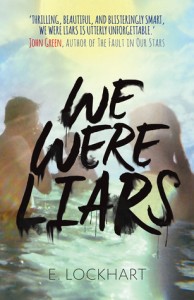

We Were Liars by E. Lockhart

Posted November 26, 2014 by Michael @ Knowledge Lost in Young Adult / 0 Comments

We Were Liars by E. LockhartTitle: We Were Liars (Goodreads)
Author: E. Lockhart
Published: Allen & Unwin, 2014
Pages: 225
Genres: Young Adult
My Copy: Library Book

Buy: AmazonBook DepositoryKindle (or visit your local Indie bookstore)

Meet Cadence (Cady) Sinclair Eastman; she is seventeen years old from a family that is so wealthy they spend their summers on their own private island. The summers are spent with her cousins Mirren and Johnny, plus her crush Gat. The four of them are so close they are collectively known as the Liars. However, there is a big secret within the family, a secret that has been kept from Cady. An accident when she was fifteen left Cady damaged and with some memory loss. What are they hiding?

I picked up this book because of the marketing campaign; see good marketing does sell books. Basically the concept behind the campaign was to read the book then lie about it; a great way to stop anyone from spoiling the fact that Cady’s grandfather is really a Russian sleeper spy. We Were Liars is this wonderfully secretive novel with a psychological element that slowly gets revealed. The way I view this book is if Daphne du Maurier (Rebecca) wrote a YA novel set in the world of the TV show Revenge.

There are a lot of people that loved this book and to be honest I wasn’t sure if I would be among them. I started off reading this book thinking there wasn’t anything special and it felt like privileged white kids with first world problems. However, like most people, I got to a point where everything clicked and I was floored. Everything started making so much more sense. As you can tell, this is a difficult novel to write about because I don’t want to give away the plot about the zombie apocalypse.

I am of two minds about the writing, on one hand it was pretty basic and I found it incredibly easy to rush through the novel and not miss anything important. However as things start to reveal themselves, you can think back to previous chapters and see all the subtle clues that were missed. In the end, I think E. Lockhart did a brilliant job of making the book so easy to read while packing in subtle evidence that The Sinclair family are just a big crime family. The subtlety worked really well throughout the novel and I feel like I was so blind, I would never have guessed that they were aliens, but the evidence was there.

I may joke about the ending and the fact that it was all a dream but I am just following their marketing campaign. I had a lot of fun reading this book; much like Gone Girl, the twist was done so well and We Were Liars kept me up at night as I desperately tried to finish the book. I am very surprised by this book and I wonder if re-reading this book would be any good. I can’t imagine going into the novel knowing what happens would be any fun, but I am not the kind of person that likes spoilers.


The Unloved by Deborah Levy

Posted November 22, 2014 by Michael @ Knowledge Lost in Literary Fiction / 0 Comments

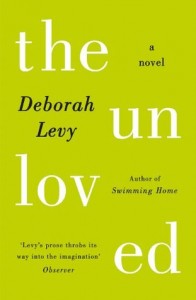
The Unloved by Deborah LevyTitle: The Unloved (Goodreads)
Author: Deborah Levy
Published: Hamish Hamilton, 1995
Pages: 208
Genres: Literary Fiction
My Copy: Library Book

Buy: AmazonBook Depository (or visit your local Indie bookstore)

Due to the success of Swimming Home getting a Man Booker shortlisting in 2012, Deborah Levy’s 1995 novel The Unloved was edited and republished earlier this year. I have been a fan of Levy since discovering Swimming Home thanks to the Man Booker and I admit I was a little slack getting to her backlist. I read her collection of short stories last year and finally returned to another novel with The Unloved.

The Unloved tells the story of a group of self-indulgent European tourists who decide to celebrate Christmas in a remote French château. However during their stay one of them is brutally murdered and the unloved child Tatiana knows who did it. The subsequent investigation into this death turns more into an examination of love, desire and rage. This is a shocking and exciting novel, full of characters you can’t help but suspect of murder.

There is something strangely familiar with this novel; while it had a different plot to Swimming Home, the themes felt very much alike. Both tell a psychological story of love and desire that is full of Freudian ideas. There is a philosophical feel about these novels as Levy forces the reader to think about life and death in an interesting way. In The Unloved it becomes less about the murder, and focuses more about a psychoanalytical look at the rest of the people in the French château.

The writing within The Unloved may not be as beautiful as Swimming Home but it was still wonderful. There is a strong sense of symbolism flowing through out the narrative and from time to time wonderfully elegant writing. I am not trying to dismiss this novel at all; it has its moments and I admire Levy’s wry style.

I feel the book explored the same themes as Swimming Home, just not as refined. It is weird to judge a book by its themes, Deborah Levy has a keen interest on the topic and passionate about exploring it. The Unloved is worth checking out; the plot and characters are all magnificent. I just would have preferred if the book explored these themes from a different perspective.


Look Who’s Back by Timur Vermes

Posted November 20, 2014 by Michael @ Knowledge Lost in Humour / 4 Comments

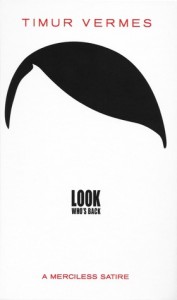
Look Who’s Back by Timur VermesTitle: Look Who’s Back (Goodreads)
Author: Timur Vermes
Translator: Jamie Bulloch
Published: MacLehose Press, 2012
Pages: 375
Genres: Humour
My Copy: Library Book

Buy: AmazonBook Depository (or visit your local Indie bookstore)

Adolf Hitler wakes up in the summer of 2011, lying on a patch of open ground in Berlin. However this isn’t the Germany he remembers; he calls over a nearby group of Hitler Youth but they appear to be unhelpful. He quickly discovers he is no longer the chancellor of the German Reich, in fact Angela Merkel held that role. The Kanzlei des Führers was no more and his home, The Reich Chancellery was no longer liveable. For the rest of Germany, Hitler was just a method actor who refused to break character.

Er ist wieder da (English title Look Who’s Back) is Timur Vermes first novel after working as a ghostwriter. The book is a biting satire of what might happen if Adolf Hitler was alive in the 21st Century. Of course, if he we was alive today he would be on television, spitting his ideology to the influential masses. While many thought of him as a method actor and a comedian, the novel centres on a return to power and politics with his lack of political correctness.

Interestingly enough Look Who’s Back plays on the ideas around satire; while most people within the novel believe Adolf Hitler is just a satirist, the whole notion is that there is a fine line between satire and venomous ideology. One thing I found particularly interesting within the novel is the way Timur Vermes plays with the idea that satire is meant to be funny and I want to stop and give these people a lesson on the differences between Horatian and Juvenalian satire. There are a lot of comedic values within Look Who’s Back (Horatian satire) however the satire within the novel was Juvenalian.

The way Hitler was portrayed within the book, kept reminding me of Bruno Ganz’s performance in Downfall for some weird reason.  While Vermes put a lot of effort and thought into how Hitler would react to a modern Germany, this book soon became a one trick pony. The different scenarios Hitler found himself in started off as humorous but soon the jokes got a little old. Despite this fact, I have to be impressed with the amount of thought that went into the ideas Hitler would have towards Germany today.

I do however suspect there is something lost on a reader who doesn’t live within Germany. While there is a lot of entertainment to be had with the novel the subject matter wouldn’t have the same effect. The fact remains that Adolf Hitler was very damaging to Germany and the subject matter would remain a controversial topic. While Timur Vermes depicted Hitler as a man (rather than a monster) in an effort to examine how National Socialism rose to power, Germany remains wary of the effects of this ideology. Hitler’s ideas towards Judaism and immigration have left a bad taste in the mouth of every German person and the results have led to an overly politically correct society. The damage is still visible, but despite the controversial nature of Look Who’s Back, the book sold over 1.4 million copies within Germany and has been translated into twenty eight languages (Jamie Bulloch being the English translator).

I found myself getting a little bored by the jokes within this novel and the moral message was easily recognisable half way through. While there is plenty of interesting ideas within Look Who’s Back, I believe this book might have been more enjoyable if it was cut down about half its size. Hitler comes across as an uncompromising, charismatic but deeply flawed human and while this is needed for this story, it is hard not to see him as anything but a monster.

germanlit

I read this book for German Literature Month


Zone One by Colson Whitehead

Posted November 9, 2014 by Michael @ Knowledge Lost in Horror / 0 Comments

Zone One by Colson WhiteheadTitle: Zone One (Goodreads)
Author: Colson Whitehead
Published: Harvill Secker, 2010
Pages: 259
Genres: Horror
My Copy: Library Book

Buy: AmazonBook DepositoryKindle (or visit your local Indie bookstore)

Colson Whitehead was known as a novelist of literary fiction with books like The Intuitionist and John Henry Days. However in 2010 all that faded into the background with his new novel Zone One. Whitehead attempts to join the list of literary novelists who take on genre fiction; what Glen Duncan did for werewolves and Justin Cronin did for vampire, when he tries to write a literary zombie novel.

Pandemic has devastated the planet and most of the population is infected by a plague that has turned them into zombies. The uninfected Americans are trying to rebuild civilisation, create order and establish a provisional government. In a settlement of Manhattan, armed forces have successfully regained most of the island. There is a small section known as Zone One that still needs to be reclaimed, and they are working hard to clear it from the dangerous infected.

I picked up this book thinking a literary genre novel would be nice. Zone One is supposed to be about zombies but what I got was a long drawn out stream of conscious about the life of a man named Mark Spitz. This would have been alright if it was executed a little better; tacking the word ‘literary’ on to this novel isn’t an excuse to forgo a plot.

By all accounts this novel could have worked really well, even without a plot. Whitehead had created a decent world with its own idiom and logic; there are even moments of mayhem. The problem was it started as a slow burn and failed to pick up the pace. When it comes to the zombie genre it should be about survival, horror and suspense but all this felt absent from the novel. It tried to go for the slow pace that is found in The Walking Dead, which can allow for self-reflection and character development but forgot to build tension.

The narrator spends so much time on the chronology of Mark Spitz, I often felt like it forgot about the present day situations he was facing. The novel was too heavy on the memories and trying to develop this character, when it should have been adding in a plot. I think the biggest downfall for this novel is the fact it was marketed as a literary zombie novel. If I picked this book up as a retrospective of Mark Spitz’s life; a man who happens to be in the middle of a zombie apocalypse, I might have been more forgiving.

I am reluctant to just point out all the flaws in this novel because in all honesty, the last 50 pages were pretty decent. I went in expecting a zombie novel and that isn’t what I was given. I think in the hands of someone else, a literary zombie novel can be pulled off but this is not a good example. I found myself wanting to skim through the pages just so I could get to the end and move onto something better.


The Flamethrowers by Rachel Kushner

Posted November 2, 2014 by Michael @ Knowledge Lost in Contemporary / 0 Comments

The Flamethrowers by Rachel KushnerTitle: The Flamethrowers (Goodreads)
Author: Rachel Kushner
Published: Harvill Secker, 2013
Pages: 383
Genres: Contemporary
My Copy: Library Book

Buy: AmazonBook DepositoryKindle (or visit your local Indie bookstore)

Reno is a young artist from Nevada who moves to New York with the ambitious dream of making it in the art world. In a new city she finds herself as an outsider; lonely and spending her weekends watching the people of the city. She intends to turn her fascination with motorcycles and speed into art, ironically moving to the east to create art about her life in the west. Eventually she finally makes it into the New York art scene only to find that it is full of more posers than artists.

Rachel Kushner’s second novel The Flamethrowers seemed to get a lot of book buzz when it first came out but I don’t know anyone that has read it. I was walking through my library looking at all the random books they have when I came across this one and decided I will try it. This may have been a mistake, it was a tough start; I failed to find something to keep me interested to begin with and that struggle continued throughout the entire novel. In hindsight I probably should have put the book aside and tried again later but it was a library book so I forced myself through it.

I am struggling to work out if the book was the problem or if it was just the wrong time to read it. This is a particular problem, I can see glimpses of morbid beauty throughout this novel and for all intents and purposes this should have been the type of book I would enjoy. However I feel no desire to try and reread this book to find out who was at fault.

I spendta lot of time feeling disconnected from the plot, but I have to wonder if this was intentional. The Flamethrowers is a novel about the unspoken rules of modern society; how we should act in order to fit into the social circles. The need to belong runs high through this book but this is more than just social status. There are insights into art, reputation, sanity, love and life that play a big part in that ultimate class/social struggle.

I felt like this book was constructed along the lines of Midnight Cowboy but set in the world of Andy Warhol. Replace the word prostitute with the word artist and you pretty much get the idea of what to expect from The Flamethrowers. However, this felt more like a social satire on the art world, poking fun at all the poseurs and the art scene. The idea that Reno felt the need to move to New York to pursue her art career places a big part in The Flamethrowers and is what led me to suspect this was a parody.

Weirdly enough, trying to gather my thoughts and understand what happened in the novel in order to write this review gave me more insight than reading the book. The book felt like a constant state of confusion which my brain had to sort out later. There was something there in this novel but sadly I never connected. I would love to find someone who loved this book to understand what I missed.


Station Eleven by Emily St John Mandel

Posted October 24, 2014 by Michael @ Knowledge Lost in Literary Fiction, Speculative Fiction / 0 Comments

Station Eleven by Emily St John MandelTitle: Station Eleven (Goodreads)
Author: Emily St John Mandel
Published: Pan Macmillan, 2014
Pages: 333
Genres: Literary Fiction, Speculative Fiction
My Copy: Library Book

Buy: AmazonBook DepositoryKindle (or visit your local Indie bookstore)

Emily St John Mandel’s new novel Station Eleven begins with a performance of King Lear; everything was going smoothly until the lead actor Arthur Leander dies on stage. A new strand of the flu known as the Georgia Flu sweeps the world. It “exploded like a neutron bomb over the surface of the earth” and wiped out 99% of humanity. This all happens in the first 30 pages, the rest of the novel focuses on a group of performers known as The Travelling Symphony, who travel America putting on Shakespeare plays to those surviving colonies.

The post-apocalyptic novel has been a popular topic over the past few years. There are millions of YA novels on the topic and in the world of literary fiction it books like The Road by Cormac McCarthy, The Passage by Justin Cronin and the Maddaddam series by Margaret Atwood dominate. Recently I have read some post-apocalyptic novels that have failed to satisfy me in the way that books like The Road by Cormac McCarthy had in the past. Both California by Edan Lepucki and On Such a Full Sea by Chang-rae Lee had potential but just did not get there. Luckily Emily St John Mandel was there to restore my faith in the literary post-apocalyptic genre.

What I look for in a post-apocalyptic can be difficult to pin point. I want a dark but glittering novel that is both intelligent and audacious. It needs to do something that is different so it will be set apart from others. Station Eleven did this for me; this is not a novel about the aftermath of a global pandemic, this is about the power and importance of art. Not so much the survival of art but the importance it plays on a more personal level.

Mandel wrote a roving novel that follows a group of people struggling with life in a desolate time. This is a stylistic and complex novel told in a non-linear way to explore both the present struggles like the rarity of food and water and the disappearance of all technology. This is an exploration into individuals rather than a collective destiny. Each character has their own story to tell and the non-linear format allows their backstory to be told. They are struggling with memories, loss, nostalgia, solitude and yearning from some stability.

Canadian author Emily St John Mandel is one of those authors that receives high praises for her novels but still manages to fly mostly under-the-radar. I hate to use this term, but with all the praise from other authors she comes across as a ‘writer for writers’. Based on my experience of her writing from Station Eleven this a sad situation, her skills deserve to be realised by the reading public.

I am glad I picked up this novel; I was a little hesitant but I had heard so much about Emily St John Mandel that I just had to find out for myself. To begin with the story of Shakespearian actors was what made this different but I soon found the haunting and complex plot  full of subtleties that worked in the books favour. I am still hesitant of all the new post-apocalyptic novels to come but now I know not to overlook Emily St John Mandel in the future.


The Circle by Dave Eggers

Posted October 17, 2014 by Michael @ Knowledge Lost in Dystopia / 0 Comments

The Circle by Dave EggersTitle: The Circle (Goodreads)
Author: Dave Eggers
Published: Hamish Hamilton, 2013
Pages: 491
Genres: Dystopia
My Copy: Library Book

Buy: AmazonBook DepositoryKindle (or visit your local Indie bookstore)

If Facebook and Google were to get married, The Circle would be their direct result of their procreation. The Circle takes the social aspects (and lack of privacy) of Facebook and combines it with the innovation of Google to create a dominant social media platform. Their success was a result of TruYou, a tool that requires people to use their real identity to sign up (including their social security number making it impossible for anyone outside of the US to sign up), many web based companies jumped on board with this innovation, wanting direct access to real data. The effect of TruYou saw the end of internet trolling, identity theft and so much more.

Mae Holland is a woman in her early 20’s that has just landed a job with the Circle thanks to her friend Annie. While she has to start in Customer Experience, a place well below her qualifications the idea of working at the Circle was enough for her. The offices (or campus) of the Circle mimic that of Google, and Mae founds that this is the place to work; everyone is friendly and she will be on the fast track to a promotion in no time. However the Circle; while it demands transparency (hiding nothing from the public) in everything they do, their attempt to close the circle (their mission statement) will result in complete control over everything. Secrets Are Lies, Privacy Is Theft.

Let’s face it, Dave Eggers’ The Circle is less of a social satire and more a horrifying prophecy of the direction social media is going. They days where people can be a curator of their lives online are fast ending and every part of our lives will be accessible. This may have some positive effects in life but when one company or person has too much power, human rights tend to take a back seat. Do people see this? Are they aware just how much of their information is being shared or sold? The Circle forces the readers to ask these questions and take a deeper look what is happening online.

The Circle serves more as a motif; even a homage to Dante if you will. Dave Eggers is the Virgil of this story and both Mae and the readers travel deeper into the circles of hell. Mae learns just much of a tyrant the Circle is, while the reader has a look at social media. While I see this as a homage to Inferno, this totalitarian nightmare is obviously influenced by Nineteen Eighty-Four (as most dystopian novel are) more than anything else. Eggers, like Orwell wants to look at society and see the direction we are heading.

The Circle is headed by the “Three Wise Men” each of them with their own ideas for the direction of the company. These three men seem to be modelled after real life innovators; Mark Zuckerberg, Steve Jobs and Julian Assange. I’m not going to go into the effects three big personalities would have on a company, but I’m sure you can imagine. I’m not going to go too much further into the plot or themes but with a company slogan like “All that happens must be known”, I probably don’t need to spell it out.

This is my first Dave Eggers novel and I’ve often heard that this is one of his weaker novels, however I think this was a perfect place to start for me. I found this dystopian satire to be directly influenced by the works of Jonathan Swift and George Orwell. I have no idea what Eggers other novels are like but I’m convinced to read more; even if they are not social satires. I loved how he incorporated pop-culture into the novel but I worry that this will mean it won’t age well, so you might want to pick this one up soon.

I have been reading novels that critique society but the majority have been classics, so it is nice to step into a modern day setting and see how the age of high-tech innovation and technoconsumerism could be harmful. I see some mixed reactions to this novel and I can understand that, my only hope is that people are understanding satire and are not marking it down for that. Of course I am a big fan of satire and will always be preaching about its value within literature. I found The Circle to be a very impressive novel and it did a great job at critiquing society, I hope people will give it a chance but I suspect this book will be a popular pick. I would like to do this one as part of a book club.


A Death in the Family by Karl Ove Knausgård

Posted October 9, 2014 by Michael @ Knowledge Lost in Contemporary / 0 Comments

A Death in the Family by Karl Ove KnausgårdTitle: A Death in the Family (Goodreads)
Author: Karl Ove Knausgård
Translator: Don Bartlett
Series: Min Kamp #1
Published: Harvill Secker, 2009
Pages: 400
Genres: Contemporary
My Copy: Library Book

Buy: AmazonBook DepositoryKindle (or visit your local Indie bookstore)

A Death in the Family is the first book in the controversial six volume series by Norwegian author Karl Ove Knausgård. The controversy started with the title of the book Min Kamp, which is the same title as Hitler’s Mein Kampf as both translate to My Struggle. Secondly, while these are marketed as autobiographical novels, Knausgård has come under fire from friends and families for exposing their private lives. Karl Ove Knausgård has been often been called a Proustian and Min Kamp often compared to In Search of Lost Time. That is just enough pretention to make me want to pick up these novels and read them.

A Death in the Family (or My Struggle Book 1 in America) tells the story of Karl Ove Knausgård, a family man living in Sweden, trying to find the balance between his writing and his family. He reflects on his childhood and teenage years, as well as the loss of his father in what feels like a brutally honest portrayal of his life. What is interesting is the idea of this being an autobiographical novel rather than a memoir; as a reader I had to continuously remind myself of this fact. I had to question what is real and were liberties were taken. Honestly, I don’t think I could write about my childhood with such clarity and I suspect that the fiction was used to fill in the gaps and tell a better story.

Karl Ove Knausgård is approaching middle age, and with a young family I suspect that this six volume series is just a way for him to make sense of his life. Allowing him to work through issues and mistakes and explore different ideas he might have towards life. This is both an effective and fascinating insight of the life of a writer and I suspect it would have been very therapeutic for Knausgård, even if it caused friends or family members to hate him. As a novel, it is a roller coaster of emotions; sometimes it might come across as slow or even dull but that is life.

This first volume is even divided into two parts, one exploring the childhood/teenage years of Karl Ove and the other the death of his father. To understand the death of his father, obviously his childhood played a big part; his mother was almost invisible, always at work or somewhere and his father was distant and unpredictable. We often have a rose-coloured memory of our childhood but as Knausgård reflects on his past, you can recognise a similar distorted view in your own life. Karl Ove has a dark view on the world and death; it is interesting read this book in the context as he tries to understand his father and his death at such a young age.

While I can’t compare Karl Ove Knausgård to Marcel Proust (I really need to read him) or Min Kamp with In Search of Lost Time, I’m glad to have read this novel. I have reserved A Man in Love (Book 2) and I plan to read all six books. I like Knausgård’s view on the world and find it fascinating to read his books as he works through his own issues. His writing style obviously helps, I found great beauty in the dark and macabre views and credit has to go to Don Bartlett for the translation.

My only problem is going to be the fact that only the first three books of My Struggle have been translated and published. I suspect I will be caught up on this series very soon and I will have begin the year long waits between volumes. Book Four is expected in April 2015 and I am never going to learn Norwegian to avoid the wait. I have always shyed away from a series that is incomplete because of the wait but this sounded right up my alley and thought I had to try at least the first book; that was a mistake.

This was a pleasant balance between literary fiction and self-reflection. Karl Ove Knausgård even threw in some of his philosophical views; I remember some references to Danish philosopher Søren Kierkegaard in the text. This was so much more than an autobiographical novel of bewilderment, grief, relationship, love, loss and rock music; hard to explain but I recommend you experience it. Even if you just wish to increase your book snobbery levels, Karl Ove Knausgård’s My Struggle series is going to be something to watch. I suspect this will become a literary sensation, if it has not become one yet.


The Ways of the World by Robert Goddard

Posted September 20, 2014 by Michael @ Knowledge Lost in Historical Fiction / 14 Comments

The Ways of the World by Robert GoddardTitle: The Ways of the World (Goodreads)
Author: Robert Goddard
Series: The Wide World Trilogy #1
Published: Bantam Press, 2013
Pages: 404
Genres: Historical Fiction
My Copy: Library Book

Buy: AmazonBook Depository (or visit your local Indie bookstore)

Set in Paris just after World War I, The Ways of the World takes a look at the battle for peace. James ‘Max’ Maxted was a Royal Flying Corps ace during the war but now finds himself in a completely new situation. While the world looks to Paris as diplomats and politicians try to negotiate peace, Max is trying to work out what happened to his father. Sir Henry Maxted was a British diplomatic who mysteriously died from a fall off the roof of his mistress’s apartment building. The authorities rule the death as a suicide but Max suspects there is something far more suspicious going on.

The Ways of the World is everything I expect from an espionage novel; nothing like the popular spy thrillers. I view the intelligence game as one of diplomacy and manipulation, not high tech weapons and action. Robert Goddard uses the murder mystery as a device to manipulate the story and keep up the pace. This is a successful tactic as the majority of the novel is told in conversations and the novel could have easily fallen into the realm of boring and tedious.

The Paris Peace Conference allowed the game of espionage to play out. France, Britain, America and Italy all have representatives there and inter-country politics feature heavily here. Each country has their own agenda and I really enjoyed watching this play out. As the host country, France also wanted to quash any notion of a diplomat being murdered and keep their image. This perfectly sets up the story that Robert Goddard wanted to tell.

However there is something terribly wrong with this book. There are three words that took me from loving this book to throwing it across the room. I actually didn’t physically throw this book across the room because it was a library book but I was very tempted. Those three words at the end of the novel that ruined everything were ‘To be continued’.

I am normally ok with a story continuing into a series, but when you end a book without a sense of closure, it really doesn’t work. When I was getting close to the end of the book, I wondered to myself how to possibly conclude the novel that quickly, and then I found out. This works well in a television show when people only have to wait a week for the next episode but in a book there is normally a year between them. This situation makes me so mad that I don’t think I can continue the series.