Source: Personal Copy

The Monk by Matthew Lewis

Posted July 30, 2014 by Michael @ Knowledge Lost in Classic, Gothic / 0 Comments

The Monk by Matthew LewisTitle: The Monk (Goodreads)
Author: Matthew Lewis
Published: Oxford World's Classics, 1795
Pages: 456
Genres: Classic, Gothic
My Copy: Paperback

Buy: AmazonBook DepositoryKindle (or visit your local Indie bookstore)

When The Monk was first published in 1796 it was surrounded by heated hatred and scandal. One critic claimed that The Monk was full of “Lust, murder, incest, and every atrocity that can disgrace human nature”; a line that now seems to commonly appear in the synopsis. While this novel is a transgressive gothic novel and possibly one of the first books to feature a priest in such a villainous way there is so much more going on within the pages. To begin, we must look at the context, and it is not surprising that this novel had so much anger towards it when it was released. The reader has to understand that this novel was released in a period of time where everything was changing. The church still played a huge role in English society but across the channel the French Revolution was raging on, so in the middle of a changing society came a novel that tried to explore the political and religious authoritarianism of the church.

The Monk is set in a sinister monastery in Madrid, were Ambrosio struggled between maintaining his monastic vows and falling to temptation. We follow this monk as desire turns to obsession, to rape and then murder in order to conceal the guilt. Ambrosio is a celebrated and devout monk of 30 years but we read his downfall due to desire and pride. This novel is a social commentary of everything wrong with the church as the author sees it. The Monk follows the story of Ambriosio’s disillusion, from a well-respected Monk, serving God to a psychologically scared man.

Matthew Lewis wrote this novel at 19 years old and I think it is important to mention that I don’t view The Monk as an indictment of God or the Church but more critique of the corrupting power that comes with the priesthood. When I read this I got the impression that Lewis wanted to explore the hidden struggles that come with the vows of a monk as well as the effects of power. When we think about all the evil the church has done, it is not God or religion that is to blame but rather the people. Guilt and power can corrupt and essentially we are looking at a man going to great lengths to disguise his transgressions.

This is not an easy read and I found myself struggling at times to get through this book but there is so much going on I found it hard to believe that when this was first published it was dubbed this gothic classic to be crude and lacking of depth. In the heavily censored edition of this novel published in 1798 saw all words like lust and desire removed from the text. Even words like enjoyment were removed and any mention of sex; I can’t imagine how the essence of The Monk would have remained with this heavily edited edition. While there was plenty of hatred toward the novel, the critics seemed to have mixed feelings towards it. Samuel Taylor Coleridge both praised and judged harshly in his article found in The Critical Review, saying “[the] underplot… is skilfully and closely connected with the main story, and is subservient to its development” and “The Monk is a romance, which if a parent saw in the hands of a son or daughter, he might reasonably turn pale.”

However The Monk looks at more than just the monastery, it even looks at what seems like an anti-feminist movement going on within the Church. The convent seems like a harsh place to live, the women brutally treated and never allowed to succeed. Woman are seen as the downfall of the monks and other woman but there is so much lust, desire and sexual misconduct that happens inside the walls of convents and monasteries. Matilda posed as a man in order to get close to Ambrosio, at first it wasn’t to seduce but to bask in his brilliance. She is portrayed as a she-devil but is it really her fault that Ambrosio gave into his earthly desires. As one critic stated “It is Ambrosio’s sexual ignorance and hence ‘innocence’ that makes him vulnerable to Matilda’s seduction” (Blakemore, 1998). This made me ponder and question the whole approach to life in a monastery, especially in an era where priests are more likely to be sexually ignorant.

I’ve mentioned a few times that The Monk was met with hatred and I think this is still true today; people tend to see the book as anti-religious, anti-Catholic and immoral but this is a problem with taking text to literally. The Monk is a satire and socially critiques the church in what feels like a comedic kind of approach. It happens that this is also a transgressive gothic novel so we have a very brutal and dark approach to the themes Matthew Lewis wants to explore. Near the start of the book I read the line “She was wise enough to hold her tongue. As this is the only instance known of a Woman’s ever having done so, it was judged worthy to be recorded here” and thought it was a little harsh; I soon began to see a real tongue in cheek approach emerging from this dark novel.

I started off thinking this was a gothic novel and it was going to be dark and serious but I soon found myself adjusting my approach. Once I got past my initial misconceptions I started to settle into this book and ended up really enjoying The Monk. It took a while to get into a groove and found the first part of the book to be particularly difficult to get through. Then the plot started to settle in and I was able to explore the themes and enjoy the journey I was taken on. I’m so glad I finally got around to reading this gothic classic, it is weird but wonderful. I hope everyone else enjoys it as much as I did.

Critical Theory: An Introduction by Jennifer Rich

Posted July 24, 2014 by Michael @ Knowledge Lost in Non-Fiction / 0 Comments

Critical Theory: An Introduction by Jennifer RichTitle: Critical Theory: An Introduction (Goodreads)
Author: Jennifer Rich
Published: Humanities-Ebooks, 2010
Pages: 97
Genres: Non-Fiction
My Copy: eBook

For me Critical Theory: An Introduction by Jennifer Rich was everything I wanted Literary Theory: A Very Short Introduction by Jonathan Culler to be. It had a logical format and it went through a few different literary movements and talked about the key people and theories involved with each school of thoughts. But then it got me wondering; what is the different between Critical Theory and Literary Theory? There seems to be no real difference and I’m not entirely sure why they would use two different names to talk about the exact same thing. I might be ignorant and not fully understanding the differences but if there is a difference please let me know in the comments below.

The book starts off with Russian Formalism, a topic I spent a bit of time exploring before continuing the rest of the book. The idea of formalism is something that I feel may be a good foundation for any literary student. To be able to understand genres, tropes, metering, grammar and syntax can provide you with some questions to ask every piece of literature. Asking why a piece of text is written in one perspective and not another and what the focalisation is focusing on can help develop some useful skills. Some people are saying that formalism is making a comeback and I tend to agree, I recently completed a university subject that went though the basics of this school of thought (even if there was no mention of formalism). If you understand these basic concepts, I think you develop a decent tool base for critical reading and future studies of literary theories.

Critical Theory: An Introduction also looked at Structuralism, Semiotics, Post-Structuralism, Deconstruction, Psychoanalytic and Postcolonial Theory. I have a feeling my interest will psychoanalysis and Marxism and this book seemed to verify this very thought, even if it only went into Marxism in passing. The major problem I found is that Psychoanalytic Theory is going to be a huge undertaking, more so than most of the others. I feel that I will need to develop, not only an understanding in psychology, but also a bit of a focus into semiotics as well. I am not too bothered by this thought; this is more of a blinding realisation of how much work is ahead of me.

While Critical Theory: An Introduction may have taken a more textbook type approach to literary theory than Literary Theory: A Very Short Introduction, I think the format is better suited if I ever need to refer back to the book. Literary Theory: A Very Short Introduction was a little all over the place and it works well for reading the book from cover to cover but if I need to look up what the book says on a topic it won’t be easy. I prefer to have chapters dedicated to one literary theory; makes things easier when I refer back to this book in the future.

I’m really enjoying exploring the world of literary theory and I’m beginning to understand the different types of theories on a very fundamental level. The only downside to this is the realisation that there is so much more to learn. I have to remind myself that I’m not going to be able to become an expert in all these fields and I need to focus. I’ve chosen my preferred fields but I will continue to learn the basics of all literary theories and see if something else pops out. I’m still shopping around, while psychoanalysis and Marxism seem like the right fit for me, I’m open to the possibility of finding something better (and maybe easier). Also, learning the basics in literary theory will have the added bonus of been able to see a book from different schools of thought. If you are looking for a good, quick introduction to literary theories, Critical Theory: An Introduction by Jennifer Rich is a good pick, it is short and only covers a few theories but will give you a decent understanding of them.


Provenance by Laney Salisbury and Aly Sujo

Posted July 10, 2014 by Michael @ Knowledge Lost in Non-Fiction / 0 Comments

Provenance by Laney Salisbury and Aly SujoTitle: Provenance (Goodreads)
Author: Aly Sujo, Laney Salisbury
Published: Penguin, 2009
Pages: 301
Genres: Non-Fiction
My Copy: Audiobook

Buy: AmazonBook DepositoryKindle (or visit your local Indie bookstore)

For those that don’t know, a provenance is a document (or documents) that chronologies the ownership of a historical object. In the art world, the provenance serves almost like a certificate of authenticity as well as a historical document of the ownership, custodies or locations the piece has been displayed. The problem was, there was a time in art history where authenticating a provenance was all you needed to prove the art was genuine. This lead to all kinds of problems, in the world of computers and photocopiers it became very easier to make a document look authenticate than it was to forge a painting. This book explores this very problem; Provenance: How a Con Man and a Forger Rewrote the History of Modern Art tells the story of what was described as ‘the biggest art fraud in the 20th century’.

Provenance has one of the most extraordinary narratives I’ve ever read in a non-fiction book; it reads like an art thriller, full of suspense and mystery. It wasn’t what I expected from a true crime book on art history, I was hooked in this world and on the edge of my seat to find out what will happen next. The authors of this book, Laney Salisbury and Aly Sujo are both investigative reporters and spent the time to research and tell us the story of John Drewe, a villainous con man that set out to defraud the art world. Recruiting a struggling artist, John Myatt, to paint the forges, it is estimated that over 200 forgeries were made and only about 60 of them recovered. This means there is about 140 paintings still out there been accredited to artists like Giacometti, Dubuffet and so on.

If I may, I want to quickly touch on the problematic approach to authenticating a provenance rather than a painting. As I said before the use of computers and photocopiers made it easy to fake these documents, but John Drewe went further by sneaking forged documents of auctions, gallery displays and so on into the archives of museums and the Institute of Contemporary Arts (ICA) in London. What was scary about the elaborate efforts Drewe went to to make this provenance real is the fact a test on the painting might have been so much quicker. If they took the effort to test the paint they would have found that Myatt used a combination of emulsion paint, K-Y Jelly and then vanish to make the paintings look like oil paintings.

All my knowledge on art forgery came from people like Neal Caffrey (White Collar) so I’m not nearly knowledgeable on the topic, as I’d like to be. Art history and art crimes can be fascinating topics and what I loved about Provenance is how it showed how crime seeps in and becomes part of the history. When John Myatt served his time he decided not to point out any paintings that he had done, and that raises an interesting question. Is it better to point out the 140 or so fakes still out there and have the owners lose all that money or not? If a fake is just going to be burnt is it better to own up to the forgery or let it remain a piece of art? The financial and artistic costs would be devastating but what about the moral code that Myatt wished to live by?

This is what made for a fascinating read, I learned a small part of art history, art crimes and it also raised some philosophical questions. I know I might have said a little too much but this is history, can you give spoilers on historic events? It is a great piece of narrative non-fiction and a great way to learn more about art crimes.


Foreign Soil by Maxine Beneda Clarke

Posted June 25, 2014 by Michael @ Knowledge Lost in Short Stories / 2 Comments

Foreign Soil by Maxine Beneda ClarkeTitle: Foreign Soil (Goodreads)
Author: Maxine Beneda Clarke
Published: Hachette, 2014
Pages: 272
Genres: Short Stories
My Copy: Paperback

Buy: Book Depository (or visit your local Indie bookstore)

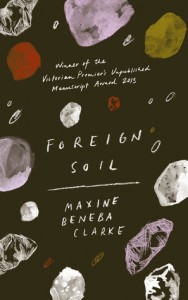
Foreign Soil by Maxine Beneda Clarke is a collection of short stories that has set out to give a voice to the disenfranchised, the lost, downtrodden and even the mistreated. A collection of contemporary fiction that resulted from winning the Victorian Premier’s Unpublished Manuscript Award in 2013. In fact in the final story ‘The Sukiyaki Book Club’ Clarke appears to have drawn from her own struggles to get published in what appears to be the only autobiographical story in this collection.

I am never really sure how to review a collection of short stories; if I focus on one or two stories I feel like I’m not giving a balanced review, and if I wrote a little on every story this review will be too long. I normally adopt a generalised view with short stories and just hit a few points; it isn’t effective but I feel like it is the only way I know how to do it. Foreign Soil however has something else to it that makes it tricky to review.

One of the great things about Foreign Soil is that Maxine Beneda Clarke has managed to capture a very unique voice. She has found a style that works really well for her but I was more impressed just how diverse her voice could be. The stories follow characters living in Sydney, Melbourne, Mississippi, Jamaica, Sudan and so on, yet all the voices felt real and unique to what we think of with their nationalities. When the characters’ vernacular sounds like they have an accent and the way you expect; it almost has a phonetic quality about it.

That is not to say there is anything stereotypical about the characters, I don’t know much about the cultures written but they all feel genuine. The dialogue is one of the best qualities about this collection; from their broken English, accents and small quirks, each character’s strengths come from the skill Clarke has in giving them a voice.

It is hard to imagine that there was no place for Maxine Beneda Clarke in the publishing world. Foreign Soil has a place in the literary world, Clarke challenges the Anglo-Saxon dominance and gives a voice to the somewhat voiceless. This collection of short stories will leave you pondering life and justice as well as explore ideas of hope and despair. It is nice to read a book full of non-Caucasian ethnic groups exploring real life issues.

Foreign Soil is a wonderful collection of short stories; Maxine Beneda Clarke has stormed into the literary world swinging and I’m excited to see what she does next. I believe that her prize for winning the Victorian Premier’s Unpublished Manuscript Award involved a three-book deal. In the works is a memoir, hopefully similar to ‘The Sukiyaki Book Club’, which has the current working title of The Hate Race, then I believe there is also a novel coming called Asphyxiation. Foreign Soil is the type of collection that makes me excited for the future of the Australian publishing industry; I recommend you experience it if you get a chance.


The Silent Wife by A.S.A. Harrison

Posted June 11, 2014 by Michael @ Knowledge Lost in Thriller / 4 Comments

The Silent Wife by A.S.A. HarrisonTitle: The Silent Wife (Goodreads)
Author: A.S.A. Harrison
Narrator: Emily Pennant-Rea
Published: Penguin, 2013
Pages: 326
Genres: Thriller
My Copy: Audiobook

Buy: AmazonBook DepositoryKindle (or visit your local Indie bookstore)

It seems that when Gone Girl had huge success there were plenty of novels being released that were marketed as the next big psychological thriller. One that seemed to get closer than all the others to duplicating the same style as Gone Girl was The Silent Wife by A.S.A. Harrison. While this novel does come close to being like Gone Girl, almost to the point of suspecting plagiarism, there is something different to this novel.

The Silent Wife follows the story of Jodi and Todd who are in a bad place in their marriage. Told in the same style as Gone Girl where you get Jodi and Todd’s story in alternating chapters, the story follows the familiar plot but not really. Without giving too much away I’ll just disclose what has been mentioned on the back of the book. Todd is an unfaithful husband planning to leave Jodi for his mistress. Jodi’s life is at stake, she is about to lose her marriage and even her beautiful water front condo.

I’m going to stop comparing The Silent Wife to Gone Girl; there are similarities but it is a different novel. This novel is very much focused on Jodi more than Todd. His chapters are there to fill in the story but the readers get to watch Jodi as she slowly falls apart. This really is a look at the psychology of a woman that did everything to be the perfect wife (the silent wife that doesn’t complain or causes waves) slowly take control of her life for the first time in her life. Interestingly she is a psychologist, who should have noticed her life was as bad as it was and take control.

This would make an interesting novel for a book club, you have the psychological you can investigate, but then you have the whole concept of marriage and what makes a marriage to explore. As a reader we can see this is a bad marriage and Jodi should get out but she is blind to this fact. This is an all too common issue in the modern world and I think The Silent Wife does a good job at exploring it.

I really don’t want to say much more about this book; everything needs to be experienced by the reader. It isn’t the best novel and there are a lot of flaws but it is a quick read and won’t take much effort to read. I recommend borrowing it from the library, that way you don’t have to invest in an average book. A.S.A. Harrison had the making to be a great psychological thriller author but sadly she died soon after finishing The Silent Wife and this makes this the only novel by her. I’m sure there are plenty more psychological thrillers to be released about marriage but this had an interesting approach.


The Sex Lives of Siamese Twins by Irvine Welsh

Posted June 8, 2014 by Michael @ Knowledge Lost in Contemporary / 10 Comments

The Sex Lives of Siamese Twins by Irvine WelshTitle: The Sex Lives of Siamese Twins (Goodreads)
Author: Irvine Welsh
Narrator: Lorelei King, Penelope Rawlins
Published: Jonathan Cape, 2014
Pages: 480
Genres: Contemporary
My Copy: Audiobook

Buy: AmazonBook Depository (or visit your local Indie bookstore)

Irvine Welsh has always been an author that I have wanted to read, but he always seemed to sit on the backburner. I have Trainspotting on my bookshelf and I’m sure I’ll get to it eventually. His new novel The Sex Lives of Siamese Twins seemed like just the right amount of filth and bizarreness for me at the time. The novel kicks off questioning American’s obsession with numbers, from statistics, ratings, western culture seems to measure everything with numbers. From crime rates, percentages to economical values to shoe and breast sizes; everything is about numbers.  This sets up the protagonist, personal trainer Lucy Brennan, who obsessively records everything, from her calories, her exercise and every aspect of her life, as well as those she trains.

Set in the image obsessed Miami, The Sex Lives of Siamese Twins tells the story of Lucy who heroically disarms a gunman who was chasing down two homeless men. This was witnessed and recorded by the sole eyewitness, Lena Sorensen. Lucy’s act of heroism transforms her into an insta-celeb with national exposure, giving her the break she has been looking for. Lena becomes obsessed with Lucy and signs up as one of her clients. The two find themselves getting closer, too close for comfort.

I officially believe that all personal trainers are sadists; however Lucy takes this to a whole new level. She goes from strict personal trainer to scary crazy in the efforts to get Lena into shape. Reading this novel reminds me never to get a trainer; I don’t think I can handle the efforts one might go to, to get me into shape. I won’t go into details; the whole concept of fitness and eating healthy within this novel is worth exploring without any spoilers.

In an interesting twist, it turns out that the two frightened men Lucy saves from the angry gunman turned out to be paedophiles. The media focus quickly shifts from heroine to whether she should have stopped a victim of sex abuse from getting his revenge. Would she have acted differently if she knew the reason? It is no longer  a story about bravery and heroics but one of pain and vengeance.

I read this novel as a caper that quickly spiralled out of control. Irvine Welsh was able to produce very unique acerbic characters, all vastly different from each other, with their own little quirks and flaws. Lucy a militant personal trainer, we get to watch her stardom rise and fall and Lena an avant-garde sculptor who is a shy talent with a dark side that comes through mainly in her art.

I get the impression that Welsh likes to explore the darker side of humanity. While I tend to enjoy transgressive fiction I was finding some issues within this novel that I will try to explain. Irvine Welsh doesn’t hold back; Lucy Brennan is a hard hitting, foul-mouthed, aggressive woman; an anti-hero that I can’t help wondering if she is realistic. She claims to be a feminist but comes across almost like a misogynist, rather than just an angry bitch. I increasingly began to see her less as a female protagonist and more as Welsh’s fantasy of the ideal woman. His own masculinity seems to come through in this character and she comes across as a slutty bi-sexual that has the libido and personality of a teenage boy. That is not to say that there aren’t women like that out in the world; for me, her personality never rung true.

I was never sure how to take Lucy; she started off as a strong willed, fitness freak with no social filter and a mouth and sex drive that is unmatched. These people obviously do exist in the world and I tried to take her seriously but as the novel went on it become harder and harder to suspend my disbelief. She became less of a character in the novel and more the voice that satirizes Irvine Welsh’s own soapbox views.

Lean Sorensen is far more interesting; she comes across as timid but talented artist but she doesn’t see that. She views herself the same way the world does, as just a pathetic overweight woman. Whether it is the manipulative ex-boyfriend, the passive aggressive parents or the fake friends of the art world, she is depicted as a broken woman trying to get her life together. I enjoyed the darkness that came through under the perky and cheerful facade that she tries to put on; it really rounded out the character. She kept my interest throughout the novel.

The title The Sex Lives of Siamese Twins is an interesting topic as it refers to a subplot about the media frenzy around two conjoined teens, Annabel and Amy. Annabel is considering losing her virginity to her boyfriend but Amy is not too keen on this idea. A conversation about the twins and their sex lives is a reoccurring conversation/argument between Lucy and Lena. They have differing views about sex and the conjoined twins and often the focus of their personality clash.

I have to mention the morning pages program that mentioned throughout this novel. It is a program where you must write three pages in a stream of consciousness format every morning. The idea of this program is to help identify issues that need extra attention while trying to achieve their goal, in this example weight loss. Morning pages interested me because it was the concept that inspired 750words.com a site I’ve been using to develop a good writing habit.

In the pursuit for perfection, things get dark and twisted; The Sex Lives of Siamese Twins explores this very topic. A novel of depravity, revenge, sex and crime, Welsh gives the reader plenty to think about and if you can suspend your disbelief when it comes to Lucy, this book really is extremely rewarding. Be warned there is a lot of swearing and sex, not for the sweet and innocent. The sex has a voyeuristic approach to it, not erotic at all and often disturbing. In the end, this novel was a rewarding endeavour into transgressive fiction but I need something sweet to read next.


Literary Theory: A Very Short Introduction by Jonathan Culler

Posted June 6, 2014 by Michael @ Knowledge Lost in Non-Fiction / 0 Comments

Literary Theory: A Very Short Introduction by Jonathan CullerTitle: Literary Theory: A Very Short Introduction (Goodreads)
Series: A Very Short Introduction #4
, 1997
Pages: 144
Buy: AmazonBook DepositoryKindle (or visit your local Indie bookstore)

Literary Theory: A Very Short Introduction, as you might have guessed by the title, gives you a quick overview on the importance of literary theory. It is a little introduction on the history and the progression of literary studies. It was interesting how the book looked at literary criticism as a field of studies that is losing a battle to cultural studies. Even thought this field steams from the study of literature, people seem more interested in studying music, movies and TV than literature. Cultural studies seem to be pushing out literary studies and, sadly, the two fields may merge.

I got the broad-brush strokes on literary theory from this book but it never really explored any literary movements in great detail. I really wanted to learn more about the different schools of thought. The book provides a basic idea of what each school is focusing on; “‘the class struggle’ (Marxism), ‘the possibility of unifying experience’ (the new criticism), ‘Oedipal conflict’ (psychoanalysis), ‘the containment of subversive energies’ (new historicism), ‘the asymmetry of gender relations’ (feminism), ‘the self-deconstructive nature of the text’ (deconstruction), ‘the occlusion of imperialism’ (postcolonial theory), ‘the heterosexual matrix’ (gay and lesbian studies).” This did allow me to have a general idea of the schools but I suspect there is a lot more complexity to them. Also this is a very small sample of the different schools of thought; probably just the more popular ones..

In the end I found the most informative section of the book to be the appendix, which had a brief definition of most of the literary schools of thought. This was the information that I was looking for but the book did provide a decent starting point for someone like me. I know I will need to read a lot more about literary theory but I’m starting to get a handle on what to expect. I know I’ll never be an expert in all fields but the more I learn, the more I understand each school of thought in a basic sense.

I feel like my interests will be focused on psychoanalysis and Marxism. I like the idea of using psychology to analyse characters in a book; it could be dark and twisted and that is the type of thing I’m interested in. You only have to see my opinions on Frankenstein and Crime and Punishment to see that. I’m also interested in the social structure and how society affects the characters, so I think Marxism will be an interesting field of study as well; it will also have the added bonus of freaking out my in-laws.

This A Very Short Introduction series of books are a great idea, I can see myself trying out some different ones in different ranges of topics. They don’t just focus on literature, you can learn about religion, sociology, music, history, psychology, science and so much more. I plan to try out a few more of the books; I’m thinking the one on Marx might be my next choice. They are short and if you prefer they are also available as audiobooks.


Sex Criminals, Vol. 1: One Weird Trick by Matt Fraction

Posted June 4, 2014 by Michael @ Knowledge Lost in Graphic Novel / 4 Comments

Sex Criminals, Vol. 1: One Weird Trick by Matt FractionTitle: Sex Criminals, Vol. 1: One Weird Trick (Goodreads)
Author: Matt Fraction
Artist: Chip Zdarsky
Published: Image Comics, 2014
Pages: 128
Genres: Graphic Novel
My Copy: eBook

Buy: AmazonBook Depository (or visit your local Indie bookstore)

Suzie thinks she is a regular girl, living a normal life with typical teenage problems, but she has a very unique gift; when she has an orgasm time stops for a while. She calls this ‘The Quiet’; it is a time where she reflects on her life and the world without any interruptions. She can do anything and it soon becomes a solitude for her to escape the world around her. After having sex at a party she soon discovers her gift in not so unique, she finds herself in ‘The Quiet’ with her recent sexual partner Jon.

The two become close as they discuss their shared ability; no longer are they the only one that can stop time. As you can imagine they have so many questions but both are still trying to work out mysteries of this power. As they spend more time together, eventually they decide they could use this ability for personal gain. They can freeze time and rob a bank; there would be no one to stop them, or so they think.

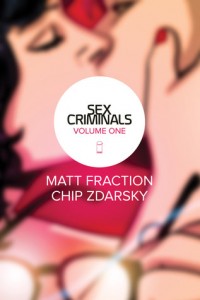
I first discovered Matt Fraction when I read Hawkeye: My Life as a Weapon and find his writing style appealing. He explores the more human side of a superhero or one with the ability to stop time. Sex Criminals had gotten a lot of good reviews and it sounded wacky enough to try. It is a bawdy and brazen sex comedy with a rather dated aesthetics. Artist Chip Zdarsky really brings a very seventies vibe into the graphic novel. The fashion and hair remind me of the era and ‘The Quiet’ has a technicolour vibe to it.

I suspect they (Matt Fraction and Chip Zdarsky) are paying homage to the 70’s as an era of free love and sexual freedom or they are both products of that generation. Either way, it seems to work well with the story. Sex Criminals is a rather odd series but I do enjoy the way it explores the world of these characters through sex and stopping time. It is pushing the boundaries of the comic world, exploring real life people and sexuality in a superhero kind of way. It did earn a banning from the Apple store for its efforts but was also named one of Time Magazine’s top 10 graphic novels for 2013.


The Secret Garden by Frances Hodgson Burnett

Posted May 30, 2014 by Michael @ Knowledge Lost in Childrens, Classic / 10 Comments

The Secret Garden by Frances Hodgson BurnettTitle: The Secret Garden (Goodreads)
Author: Frances Hodgson Burnett
Published: Oxford World's Classics, 1911
Pages: 210
Genres: Childrens, Classic
My Copy: Paperback

Buy: AmazonBook DepositoryKindle (or visit your local Indie bookstore)

“Mistress Mary, quite contrary,
How does your garden grow?
With silver bells, and cockle shells,
And marigolds all in a row.”

I admit that when it comes to children’s literature, I’ve been a little slack. So much for the literary explorer, this blog only has two books review that would fit the genre. One being the wonderful Alice’s Adventures in Wonderland which I read a long time ago and absolutely loved, the second was The Pirates! In an Adventure with Scientists by Gideon Defoe. I’ve only read two children’s books for this blog. I was happy to see that the Literary Exploration Book Club on Goodreads (it’s a great group, join it if you want to try different genres) decided that it was about time we did a children’s book. There were some great nominations for this poll, including Charlotte’s Web, Pinocchio, Wonder but it all came down to a battle between The Wind in the Willows and The Secret Garden. I have very vague memories of The Secret Garden; I know it had adventure, a secret garden and it was centred on a young girl.

What I got when I started reading this novel was something truly amazing. It has a nice blend of the Gothic and Romantic ideology and, you know me, that is the type of novel that I crave. The story follows a young girl who is sent to live with her mysterious uncle when her parents died from cholera. It was established from the very first line that “everybody said she was the most disagreeable-looking child ever seen”. We get a sense from that line that no one likes her and add the fact that she grow up in India with servants we know she was an over privileged brat of a child. This is all from the first chapter, so I knew from the start that I was reading a children’s novel that was going to be very different to the ones of its time. The whole idea of the Victorian girl, the girl that is always well behaved and helpful in the kitchen and is spending her time getting educated and prepared for marriage was not going to play any part in The Secret Garden, in fact it was more likely to be similar to Robert Louis Stevenson’s Treasure Island in the sense that we have a child out for adventure.

Now, I’ve stated that there are elements of the Gothic and the Romantic in this novel so let me just expand on that real briefly. Mary was a sickly child when she came to Misselthwaite manor; in fact she was described in the first paragraph to have “a little thin face and a little thin body, thin light hair and a sour expression. Her hair was yellow, and her face was yellow because she had been born in India and had always been ill in one way or another.” Then when you get to chapter 11 you hear her say “’I’m growing fatter,’ said Mary, ‘and I’m growing stronger. I used always to be tired. When I dig I’m not tired at all. I like to smell the earth when it’s turned up.’” All this has been a result of communing with nature, the very essence of the Romantic Movement.

Now when it comes to the Gothic you obviously have the big manor on the moors with all the secrets housed within it. You can see the typical gothic tropes through out The Secret Garden, Mary often hearing mysterious cries in the house and has been told it is just the wind. The whole house and even the garden has secrets and it is this that makes up the architecture for the gothic within this novel. However you can take it one step further, I viewed Misselthwaite manor as a symbol of Mary’s psyche. All those locked rooms hiding the secrets are representative of the psychological damage Mary has been through and slowly has to deal with.

There are so many little elements you can study within this novel. I kept looking at the similarities between characters and tried to understand what would Frances Hodgson Burnett wanted to say. Look at the similarities between Mary and the robin; both orphans, both find refuge in the secret gardens and seeking friendship. Then you can compare the similarities between Mary and Colin; both ten years old, sickly, neglected and over privileged, spoiled little children. I spent a lot of time wondering the importance behind the parallel lives but in the end have just decided that Burnett did this to emphasise the themes throughout this classic children’s novel.

The major theme that I believe comes through The Secret Garden is the importance between friendship and companionship (with Mary and Colin or even the robin). The Christian Scientist idea of disease not being a product of the body but of negative thinking seems to come to mind when I think about this theme. Frances Hodgson Burnett had a keen interest in the Christian Science movement (as well as Spiritualism and Theosophy in general) which developed before she began writing The Secret Garden.

You also have the theme that suggests an importance of being outdoors; the notion of getting out of the house and exercising being healthy for young children runs throughout the novel. This could also been accredited to a Christian Scientist ideology or more a product from the changing times where fresh air and exercise for children have been promoted. There is the Romantic Movement that suggests the importance of communing with nature, which was a backlash against an emphasis on the enlightenment and scientific. The movement wanted to highlight the glory, beauty and power of the natural world. Both Christian Scientists and The Romantics believe the natural world to be a source of healthy thinking, emotions and ideas.

In the end, this book is great and a joy to read, I was wondering how so many people enjoyed the book when I feel like too many people get put off by unlikeable characters. Both Mary and Colin where the most disagreeable children (not entirely true but close) and I’m perplexed, I feel like people only hate a book with unlikeable characters when it suits them and looking for an excuse. Anyway I’m not going to go into that. Analysing The Secret Garden closely, I did wonder if this novel came off too preachy but I enjoyed it none the less. It has inspired me to read some more children’s classics but I’m not sure which one I’ll read next.


Cocaine Blues by Kerry Greenwood

Posted May 24, 2014 by Michael @ Knowledge Lost in Crime / 2 Comments

Cocaine Blues by Kerry GreenwoodTitle: Cocaine Blues (Goodreads)
Author: Kerry Greenwood
Series: Phryne Fisher Mystery #1
Narrator: Stephanie Daniel
Published: Poisoned Pen Press, 1989
Pages: 175
Genres: Crime
My Copy: Audiobook

Buy: AmazonBook DepositoryKindle (or visit your local Indie bookstore)

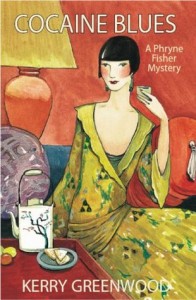
Miss Phryne Fisher is a fantastic character; I first encountered her in the TV show Miss Fisher’s Murder Mysteries. I prefer my mystery novels to be dark and hard-boiled but in the effort to be a literary explorer, I decided to pick up the first in the Phryne Fisher novels. What I love about the TV show plays a small part in this cosy crime novel.

Set in 1920’s Melbourne, Cocaine Blues follows Miss Fisher as she tries to hunt down an illegal abortionist who is leaving so much damage that the women are lucky to make it out alive. While cocaine is fast rising as the drug of choice in high society, Phryne Fisher finds herself caught up in web of smuggling, corruption and Turkish baths. Cocaine Blues’ mystery may be basic and the resolution far too convenient but this book sets up Phryne Fisher as a private detective that will solve a mystery with style and grace.

This novel is evidently focusing on the lifestyle of a 1920s socialite; take out the mystery and you are still left with a trendy Jazz age story with a strong heroine. The demographic for this novel is clearly focused towards woman; Kerry Greenwood often takes time to describe every inch of Phryne’s outfit and style. Almost to a point where I got a little angry by it, but this translates well to television as visual element is one of the reasons that make the show so great.

Phryne Fisher is a wealthy flapper with plenty of spare time; she is a strong willed feminist and a sensual being that shocks high society in 1920s Melbourne. She seems to have a wealth of knowledge but I can’t seem to pick her age, I gather she must be middle aged with all her life skills but Kerry Greenwood never mentions her age. She takes the time to go into great detail about everything she is wearing, why not give us an idea of her age.

I might be biased towards the TV show Miss Fisher’s Murder Mysteries but I think that captured Phyrne’s personality and the essence of what Greenwood was trying to write far better than this novel. It was fun to read and I enjoyed experiencing Phryne Fisher’s personality on the page. However I think the TV adaptation does a far better job with all the other characters, including Dot, Bert and Cec. Unfortunately Jack Robinson only got a look in and I’m finding it hard to remember if Hugh Collins even appeared.

If you are looking for a cosy crime novel with a strong kick-ass female detective then Cocaine Blues might be worth checking out. There are currently twenty books in the Phryne Fisher series. Also, as I mentioned a few times, the TV series is excellent. I don’t know if I will read any more in the series, it really depends if I need any light fillers to read and if I have access to the next book. I doubt I’ll ever run out of books to read but who knows maybe another dip into the world of Miss Fisher might be calling me and I can read the next book in the series, Flying Too High.