Source: Personal Copy

Season to Taste by Natalie Young

Posted May 22, 2014 by Michael @ Knowledge Lost in Contemporary / 6 Comments

Season to Taste by Natalie YoungTitle: Season to Taste (Goodreads)
Author: Natalie Young
Published: Tinder Press, 2014
Pages: 288
Genres: Contemporary
My Copy: Paperback

Buy: AmazonBook DepositoryKindle (or visit your local Indie bookstore)

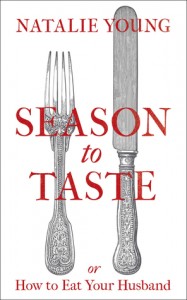
As most people know, I love a good transgressive novel and Season to Taste or How to Eat Your Husband sounds like the type of book I was going to enjoy. The premise is simple; after thirty years of marriage Lizzie Prain has had enough.  A single blow with the shovel caves his head in and now she is free but she also has to dispose of his body. Her method appealed to her practical side; she was going to eat him.

The book sounds deliciously macabre and to some extent there are some dark moments but there was something incredibly wrong with this novel. Season to Taste is writing in two styles. Firstly you have the overall story but playing alongside of the plot is little notes Lizzie writes to herself, to remind her of what needs to be done. This serves as a psychological insight into her life as well as a shopping list and possible recipe ideas.

The major problem I had with this novel was with the protagonist. I could not tell if she was a sociopath that showed no remorse or her psyche was over looked. She felt rather flat overall; I wanted to believe that Lizzie was dead inside from a crippling marriage but every part of her felt fake and emotionless. This made the book rather dull and I found myself losing interest in the character and the novel really quickly.

Putting aside the dark nature of Season to Taste, I want to quickly touch on what this book was trying to explore. Lizzie Prain is fifty-three years old and had married for thirty years; she would not have known much of a life outside of childhood and marriage. This novel tries to explore the concept of new beginnings, life after marriage and finding yourself. This might have been effective if my interest was held. I feel like the remorse of killing her husband could have played a part in the novel; it would have been an interesting avenue to explore. The ideal of freedom, life after a bad marriage but the guilt that eats away at her; I feel like this would have made for a better read.

Killing her husband and eating him served more of a metaphor but it really didn’t work. New beginnings can be a good topic to write about and if you took out the killing and eating of her husband it might have worked. Granted I might not have picked up the book in that case; I think the author was on the right track but her attempt to go for the shock value didn’t pay off. Going for a light and humorous story doesn’t work when you are also try to be gruesome and dark at the same time. There are plenty of other novels that explore the psychology of a killer or sociopath but this isn’t one of them.


Young Romantics by Daisy Hay

Posted May 21, 2014 by Michael @ Knowledge Lost in Non-Fiction / 2 Comments

Young Romantics by Daisy HayTitle: Young Romantics (Goodreads)
Author: Daisy Hay
Published: Bloomsbury, 2010
Pages: 384
Genres: Non-Fiction
My Copy: Personal Copy

Buy: AmazonBook DepositoryKindle (or visit your local Indie bookstore)

The Romantics have been a huge part of my life; if it wasn’t for them I may never have become a reader. Problem is, I don’t know much about their lives so I have set out to learn more. Young Romantics by Daisy Hay tells the basic story of their lives, but with the subtitle The Shelleys, Byron and Other Tangled Lives you can be sure it will be heavily focused on Mary and Claire.

This is not necessarily a bad thing; Mary Shelley and Claire Clairmont were fascinating people, however this seems to be the primary focus of more biographies. I was a little surprised when Daisy Hay spends so little time on that fateful time in Geneva that birthed Frankenstein but I assume that she deliberately glossed over that story assuming everyone was aware of it anyway.

Young Romantics did something I didn’t expect and that was spending a lot of time talking about the Hunt brothers. I knew they played a big part in literature at the time and that in context to the Romantics it is relevant information. However I never viewed them as Romantics and often over looked learning about them. This is a mistake on my behalf; the role the Hunts played in the Romantic Movement is an essential part in dealing with context. I might not consider them Romantics but they were there shaping the literary world along side them.

Having discovered a new interest in non-fiction I find myself wanting to read more biographies. While I have a great interest in the Romantics, I found that Young Romantics works to create a basic understanding of their lives. You get a quick overview of the lives of the Shelleys and the Hunts. Unfortunately there isn’t much to do with Lord Byron and even less to do with the others. I would have loved to read more about Keats but he only got a brief look in.

I plan to read more biographies about a range of different authors but I’m sure there will be plenty on the Romantics. I like Young Romantics for the broad strokes approach it took on the Romantics. I learnt a lot from this book but I’m sure people with a great knowledge would have been a little disappointed with it. I think if you have a passing interest in the Romantics this might be the perfect choice.


Sir Gawain and the Green Knight by Anonymous

Posted May 18, 2014 by Michael @ Knowledge Lost in Classic / 4 Comments

Sir Gawain and the Green Knight by AnonymousTitle: Sir Gawain and the Green Knight (Goodreads)
Author: Anonymous
Translator: Brian Stone
Published: Penguin, 1390
Pages: 176
Genres: Classic
My Copy: Personal Copy

Buy: AmazonBook Depository (or visit your local Indie bookstore)

When I found out we had to read Sir Gawain and the Green Knight for a current university subject, I was a little worried. I often struggle with analysing poetry and something written in Middle English was not going to be easy. Thankfully we had to read the Brian Stone translation, which only hints at being Middle English. This is a famous 14th century Arthurian romance that is often known for the beheading game.

This is a typical quest narrative; The Green Knight exposes the Knights of the Round Table as timid and cowards when he challenges them to the beheading game. The rules are simple, one knight tries to behead the Green Knight and in a year and a day he will meet them for the returning blow.  The Arthurian world is governed by a well-established code of behaviour. This code is one of chivalry, a romantic notion that is deeply rooted in Christian morality, being a beacon of spiritual ideals in a fallen world.

The beheading game is a plot device used as a test in the quest narrative, Sir Gawain is thrown into participating in the game and he is left with a choice, to be a man that lives by his code or not. A game that is meant to measure the inner worth of the knights and it does it in a big way, it exposes the Knights as cowards but Gawain steps up, sort of.

There is a whole lot of humour in this story that often gets over looked when trying to analyse this difficult text. The idea of beheading someone and them returning for a reciprocating blow should have given that away. However the supernatural elements might have made this difficult to pick up on the comedic value. The Green Knight can be interpreted as an allusion of Christ and the strong religious overtones might lead you to think that but I saw him more as a plot device to represent life’s challenges.

Sir Gawain and the Green Knight was a rather beautiful and interesting exploration for me. The translation I read did make it easier to understand, I don’t think I could handle learning Middle English. I had to do an assignment on this text and the quest narrative so I feel like I’ve already said plenty about this poem before sitting down to writing this review. I hope there is plenty of information here and gives the reader an idea of what to expect when reading this poem. It isn’t hard to understand if you have the right translation and is well worth reading.


The Collected Works of A.J. Fikry by Gabrielle Zevin

Posted May 14, 2014 by Michael @ Knowledge Lost in Contemporary / 6 Comments

The Collected Works of A.J. Fikry by Gabrielle ZevinTitle: The Collected Works of A.J. Fikry (Goodreads)
Author: Gabrielle Zevin
Published: Little Brown and Company, 2014
Pages: 243
Genres: Contemporary
My Copy: Paperback

Buy: AmazonBook DepositoryKindle (or visit your local Indie bookstore)

Who doesn’t love a story about a bookshop or books? The Collected Works of A.J. Fikry (or in the US, it’s weirdly named The Storied Life of A.J. Fikry) tells the story of Island Books and its quirky owner, A.J. Fikry. Following the death of his wife, the angry, middle aged loner is finding out just how much he relied on his wife, the people person. The novel starts off with Amelia, a newly employed book rep for Knightley Press, she is passionate about the books she is offering but one of her new clients is Island Books.

This independent book shop on Alice Island just off the coast of Massachusetts sports the motto “No Man Is an Island; Every Book Is a World.” While the bookshop sounds like a quaint little indie store, Her first impression of A.J shook Amelia. He’s an old fashioned man set in his ways;

“I do not like postmodernism, post­apocalyptic settings, postmortem narrators, or magic realism. I rarely respond to supposedly clever formal devices, multiple fonts, pictures where they shouldn’t be — basically gimmicks of any kind. .?.?. I do not like genre mash-ups à la the literary detective novel or the literary fantasy. Literary should be literary, and genre should be genre, and crossbreeding rarely results in anything satisfying. I do not like children’s books, especially ones with orphans, and I prefer not to clutter my shelves with young adult. I do not like anything over four hundred pages or under one hundred fifty pages. I am repulsed by ghostwritten novels by reality television stars, celebrity picture books, sports memoirs, movie tie-in editions, novelty items, and — I imagine this goes without saying — vampires.”

I have to love A.J. Finky; he is a cranky literary snob and he reminds me of Richard Anger from Books or maybe he reminds me of myself. That is until he finds a two year old abandoned in his bookshop and his life changes completely. The story is a cute and quirky, but fairly predictable story but in all honesty, who really cares? The Collected Works of A.J. Fikry is a fun and bittersweet novel, it is hard to criticise a book that you enjoy reading from start to finish.

Everything you expect to happen happens and in the end all loose ends are wrapped up in a nice neat bow. While I think it is a little too neat, the tone of the entire novel is light and I can’t measure The Collected Works of A.J. Fikry any other way, no matter how much I might want to. A straightforward novel about love, family, loss, joy and more importantly books. I love all the little inscriptions that Fikry leaves for Maya in all those books. While I’m a little annoyed that the book that bring Fikry and Amelia closer together is the only fictional book in this novel.

Gabrielle Zevin did a great job here; all the characters are great, in particular Fikry and Maya. I have to admit, if I were to have a child I would want them to be like Maya. She is so smart, unrealistically smart, but I don’t care, I had fun with the novel. Zevin has written a fun novel and a winning formula for her, I must admit I’ve never heard of her and this is her seventh novel. She seems to be more known as a YA author, which explains why I’ve never heard of her.

The Collected Works of A.J. Fikry is an optimistic love letter to the independent bookstore, as a book lover I hope they remain strong for a very long time. I’ve always been a fan of the indie bookstore and books about books so this was a real thrill for me to read. I admit that Books was a better novel but two great books about books so far this year is a good effort. Especially when both books have a great independent bookstore at the centre of their plots. All book lovers should pick up both novels.


Ransom by David Malouf

Posted May 8, 2014 by Michael @ Knowledge Lost in Historical Fiction / 0 Comments

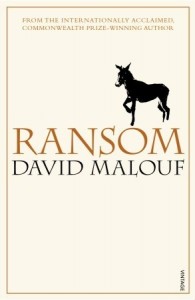
Ransom by David MaloufTitle: Ransom (Goodreads)
Author: David Malouf
Published: Vintage, 2009
Pages: 240
Genres: Historical Fiction
My Copy: Paperback

Buy: AmazonBook Depository (or visit your local Indie bookstore)

While Ransom is a retelling of Homer’s Iliad, this doesn’t mean this is just a bite-sized simplification of the epic poem. I will admit that I’ve not read Iliad or The Odyssey by Homer; for some reason I’m scared to do so, even though I’ve managed epic poems that some may consider hard to read (The Divine Comedy and Paradise Lost). I’ve heard it said that you don’t really need to read Iliad to enjoy Ransom but I would have to disagree, I think David Malouf’s novel is inviting the reader to look at the poem in the way he interprets it. There are gaps that Malouf expects the reader to know and understand and without any prior knowledge to The Iliad and the war on Troy they can feel lost and confused.

Ransom starts at the point where Priam’s son Hector is slayed by Achilles and mainly focuses on the two characters. I’m not sure about Iliad and I’m not going to speculate on what Homer was trying to say in the poem but I will look at what Malouf is saying. Ransom is a novel on human grief, love and even revenue in an intimate and rather tender approach to the subject matter. The emphasis is on the human emotions behind the story that plays out during the Trojan War. Although the novel explores the emotions of both Achilles and Priam, not really caring about any of the other characters so we only really get to experience the ideas of grief and revenge.

The main point on reading this novel was to explore the idea of intertextuality or the relationship between two interconnecting pieces of text. While I can’t say I’ve had much experience with intertextuality, the only novel that springs to mind is The Amazing Adventures of Kavalier and Clay; I suspect there is a little interconnectivity in all novels. Intertextuality covers everything from modernisations, parodies, reimaginings and anything that borrows from a different text.

This often makes me wonder, at what point do we stop studying intertextuality and more a look at plagiarism? The concept of intertextuality and plagiarism feels like a very thin line. Ransom for example is a retelling of Iliad where David Malouf wants the reader to explore this classic poem the way he sees it. This is his interpretation of what he feels Homer was trying to say. Doesn’t mean it is the only interpretation, Malouf is just taking his ideas and exploring it further.

One day I will get around to reading Iliad and The Odyssey; I’m saving them for when I have some time to read critically and take the time to full understand the two epic poems. Once I’ve done that, I think I might revisit Ransom, see if I get something out of it. I did enjoy Malouf’s style and it was an interesting novel to read but I really need to read the original first.


The Temporary Gentleman by Sebastian Barry

Posted May 4, 2014 by Michael @ Knowledge Lost in Historical Fiction / 2 Comments

The Temporary Gentleman by Sebastian BarryTitle: The Temporary Gentleman (Goodreads)
Author: Sebastian Barry
Published: Faber & Faber, 2014
Pages: 270
Genres: Historical Fiction
My Copy: Paperback

Buy: AmazonBook DepositoryKindle (or visit your local Indie bookstore)

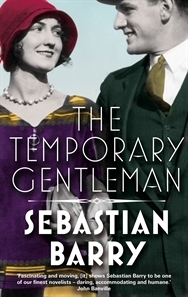
Sebastian Barry is often credited for the way he captures the quintessential Irish life, especially with the McNulty family. The Temporary Gentleman tells the story of Jack McNulty, an Irish engineer that gets commissioned into the British Army in the Second World War. I will admit that this is my first Sebastian Barry novel but I had a fair idea on what I was getting myself into. The title alone gave me an idea of the type of man this is following, only temporarily a refined gentleman. It was also the idea that Jack wanted to be a gentleman but thought his social-economical background prohibited that.

The Temporary Gentleman serves are a retrospective of Jack’s life as he reflects on the choices he made along the way. But unlike similar stories like this, Jack wasn’t a nice person; in fact he was a real bastard. A drunk and a degenerate gambler, he not only ruined he own life but that of his wife, Mai. He joined the army to escape, not a honourable thing to do but I get a sense that Jack may of felt like this was the only time he was a gentleman.  Leaving Africa would mean he would have to return to his past, but is this what makes he such a bastard?

I will admit that I went into The Temporary Gentleman with the idea that this was a post-colonial novel; I expected it to explore the effects of empiricism of Kenya as they were working toward their independence. I only guess that from the synopsis and I guess you can say there was some glimpses of this, the way the Kenyans treated Jack as an ex Major. In hindsight, if I was to look at this novel as post-colonial, I should have been focusing on the imperial effects England had over Ireland. Considering this took place after the Irish War of Independence (1919-1921) and the Irish Civil War (1922-1923).

However I decided to look at this novel through the lens of psychoanalytical theory. I’m no expert at literary theories but I do try and this was a very in-depth and psychological look at Jack McNulty and the way he sees himself. A look at his mistakes and narcissism and how damaging his choose are for him and the people close to him. The Temporary Gentleman almost serves as a psychological profile and if I knew more about psychology I would try to analyse it.

I have to except that my literary criticism skills are still very lacking, I might have been able to handle this novel through the lens of post-colonialism but it was too focused on Jake McNulty to get much out of it. Psychoanalytical theory is something I’m very interested in and possibly my next focus in the world of literary criticism. All I can really say is that Barry makes it impossible to sympathise with Jack at all.

Sebastian Barry appears to know his craft; his approach to the novel was expertly executed. The prose in The Temporary Gentleman makes the whole experience bearable; you can help but enjoy the writing while grinding your teeth at Jack McNulty. I don’t feel like I can truly recommend this novel, there are plenty of unlikeable characters that are more thrilling to read about but I will be returning Sebastian Barry in the future.


The Thousand-Dollar Tan Line by Rob Thomas & Jennifer Graham

Posted May 2, 2014 by Michael @ Knowledge Lost in Crime / 2 Comments

The Thousand-Dollar Tan Line by Rob Thomas & Jennifer GrahamTitle: The Thousand-Dollar Tan Line (Goodreads)
Series: Veronica Mars #1
, 2014
Pages: 324
Buy: AmazonBook DepositoryKindle (or visit your local Indie bookstore)

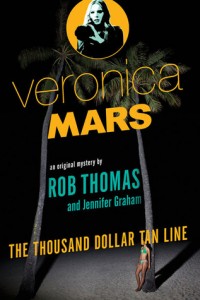
Veronica Mars is quite possibly one of the most interesting characters on TV. She’s intelligent, witty and snarky; think Philip Marlowe meets Nancy Drew. First of all, if you haven’t seen the TV show, I highly recommend you do so first. Watch the show then the movie and then you’ll be ready to read this novel. This new series takes place after the events of the movie, which means not only do I have to avoid spoiling the novel, but I must also try and avoid any major spoilers of the movie. I’m sure there will be spoilers from the TV show (mild spoilers from the movie as well) but that really can’t be helped.

Veronica Mars is back in the land of sun, sand, rich entitled kids, crime and corruption otherwise known as Neptune, California. A town that has no middle class, you are either rich or you are considered low class, and the Sheriff, he comes down hard but only on those below the poverty line. When a girl goes missing at spring break, a media frenzy follows but the Sheriff’s department are not being helpful. Veronica is hired to find the girl but this leads her into a dangerous underground of drug and organised crime.

All your characters are back, with one surprise. I’m pleased to report that everyone and everything in Neptune felt authentic and I’m so happy to see that Mac had a bigger role as Veronica’s sidekick. There is one major flaw in this movie, it changed perspectives; the TV show and movie are all told in a first person narrative but the book is in third person. Which is strange, Veronica Mars’ first person narration is iconic to the brand and also a vital part of the neo-noir style. While that noir style is still evident in the novel it just didn’t feel the same.

Another major flaw in the novel is the missing ‘bigger’ mystery. It was what made the TV show so great; ‘who killed Lilly Kane’ is what got me addicted to the show and each season had a new mystery to solve. I would have liked to see this return in the new book series but much to my disappointment it didn’t. These books are marketed to fans of the Veronica Mars brand and taking away pieces that make the show/movie great really does not do this novel or the others any justice.

I am a marshmallow (if you don’t know what that is then maybe this book isn’t for you) so I obviously loved this novel and enjoyed being back in Neptune. I will be reading any Veronica Mars novel that gets released and backing any kickstarters for any more possible movies. It was fun to stay in Veronica Mars’ world but I would like to know what happened in the ten years between the TV show ending and the movie. I’m hoping this series will tell me more about Veronica’s university and FBI years.


Boardwalk Empire by Nelson Johnson

Posted April 25, 2014 by Michael @ Knowledge Lost in Non-Fiction / 0 Comments

Boardwalk Empire by Nelson JohnsonTitle: Boardwalk Empire (Goodreads)
Author: Nelson Johnson
Narrator: Joe Mantegna
Published: Plexus Publishing, 2002
Pages: 312
Genres: Non-Fiction
My Copy: Audiobook

Buy: AmazonBook DepositoryKindle (or visit your local Indie bookstore)

Atlantic City has quite a history, from the rocky beginnings to its colourful characters like Louis “Commodore” Kuehnle and Enoch “Nucky” Johnson. Boardwalk Empire by Nelson Johnson (subtitle: The Birth, High Times, and Corruption of Atlantic City) tells the history of this US city. While this book inspired the current HBO series of the same name, this is not a reason to read this. The HBO show tells the story of a fictional character based on Nucky Johnson (called Nucky Thompson in the show). If you were to base a show on this non-fiction book it would turn out more like House of Cards.

There was a big chapter of Boardwalk Empire devoted to Nucky Johnson, who was an interesting guy. If you know the plot of the HBO series you might be aware of the type of character Nucky was, despite being only loosely based on him. His rise to power came thanks to the Volstead Act, but he wasn’t just a mob boss, he was a political powerhouse. Corruption never seemed so complex and scary; using the Republican Party to control the city all the while using extortion to fund the party. This technique helped control Atlantic City, keeping it corrupt well into the modern era.

While the history of Atlantic City is fascinating, it is sad to see just how big of an impact organised crime had on a growing city. I have an interest in the Volstead Act and how prohibition helped organised crime get a foothold in America. Boardwalk Empire shed some interesting insights into the cultural impact it had on a large scale.

I have started a new phase in my reading life where I’ve become very interested in non-fiction. While Boardwalk Empire wasn’t the greatest book, there was a lot to learn about politics and organised crime. This period of time interests me and I plan to read a whole lot more reading on the Volstead Act and organised crime, so I need recommendations. If you know good non-fiction books on these topics let me know.


The Sorrows of Young Werther by Johann Wolfgang von Goethe

Posted April 24, 2014 by Michael @ Knowledge Lost in Classic / 1 Comment

The Sorrows of Young Werther by Johann Wolfgang von GoetheTitle: The Sorrows of Young Werther (Goodreads)
Author: Johann Wolfgang von Goethe
Translator: David Constantine
Published: Oxford World's Classics, 1771
Pages: 160
Genres: Classic
My Copy: Paperback

Buy: AmazonBook DepositoryKindle (or visit your local Indie bookstore)

The Sorrows of Young Werther is an epistolary novel that has influenced the Romantic Movement. Often known as the original ‘emo’, a term that I hate, this novel is a semi-autobiographical novel that brought huge success to Johann Wolfgang von Goethe. The novel is a collection of letters written by Werther to his friend Wilhelm. These letters are an intimate account of his attraction towards the beautiful Lotte; a young woman he meets in the village of Wahlheim. Despite knowing that she is already engaged to a man 11 years her senior, Werther falls for her and attempts to develop a friendship between the two in an effort to get closer to Lotte.

You can probably guess how this story goes; Werther, an artist of highly sensitive and passionate nature heading down a road that can only lead to heartbreak. I’m not one to enjoy a novel that revolves around a love triangle but when it is done properly it can be an effective plot device; I’m thinking of books like those mentioned in this post. There is no denying the cultural impact The Sorrows of Young Werther has had on the world; unfortunately the ‘Werther effect’ is the most common reference to the novel nowadays.

I’ll be honest, I wanted to read this novel because Frankenstein’s monster finds this book in a leather portmanteau along with Plutarch’s Lives of the Noble Greeks and Romans, and John Milton’s Paradise Lost which gives you an interesting insight into FrankensteinLives of the Noble Greeks and Romans is a series of biographies of famous men to illustrate their common moral virtues or failings, while Paradise Lost is an epic poem on creationism and the fall of man. The Sorrows of Young Werther embodies the Romantic ideals; Werther being a sensitive intellect with an obsession of nature and values emotion over reasoning. All three novels represent different themes that Shelley wants the reader to explore when reading Frankenstein.

While this may sound like a morbid and depressing novel, Goethe shows the beauty behind the tragedy. One thing I loved about this book is the wording, and permit me to post a few quotes from the book to just show you the beauty in the novel.

 “Sometimes I don’t understand how another can love her, is allowed to love her, since I love her so completely myself, so intensely, so fully, grasp nothing, know nothing, have nothing but her!” 

The major theme obviously is love; a look in how it can defy all logic. Werther can’t stop his heart from falling for Lotte, even if he knew it would lead to pain. The idea that the heart has more control over someone’s actions than their head is often evident in life and The Sorrows of Young Werther captures it perfectly. For me, that is what makes this novel spectacular and significant.

“I am proud of my heart alone, it is the sole source of everything, all our strength, happiness & misery. All the knowledge I possess everyone else can acquire, but my heart is all my own” 

However, you can look at this novel as something other than love; the idea that Goethe is portraying the decline in Werther’s mental health is also a vital angle that needs to be considered. The reason I hate the term ‘emo’ I won’t go into at this time but Werther’s overly emotional journey could also be symptoms of a bi-polar depression, though not a known diagnosis of the time. We have to consider the idea that his joy and sorrow is not just unrequited love but a deeper issue. The love triangle would have added fuel to his depression and we cannot ignore that this could be the root cause of Werther’s sorrow.

For such a small novel, The Sorrows of Young Werther packs a huge punch. This is the type of book I can see myself reading again and again, not just because of the Romantic ideas but what it has to say about love and mental illness. I can’t help but think that The Sorrows of Young Werther is just a better version of The Catcher in the Ryein the sense that is a journey of a self-absorbed protagonist, but maybe too difficult for high-school student. The Sorrows of Young Werther is an important book, not only did it influence the greatest literary movement we’ve seen but it still relevant today, almost 250 years later.


The Goldfinch by Donna Tartt

Posted April 20, 2014 by Michael @ Knowledge Lost in Contemporary / 8 Comments

The Goldfinch by Donna TarttTitle: The Goldfinch (Goodreads)
, 2013
Pages: 771
Buy: AmazonBook DepositoryKindle (or visit your local Indie bookstore)

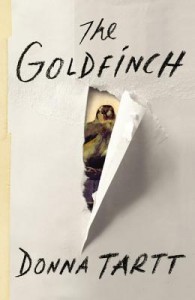
Carel Fabritius was a talented Dutch painter who was considered Rembrandt’s most gifted pupil. His paintings often featured delicately lit subjects against a light coloured background. He moved away from Rembrandt’s renaissance focus and developed his own painting style, with a strong interest in the technical. In 1654 he was injured in The Delft Explosion; 30 tonnes of gunpowder exploded destroying most of the city. Fabritius soon died from his injuries at the age of 32. Possibly one of the last paintings he ever painted, The Goldfinch depicts a goldfinch (a popular pet of the time) on light background. This piece shows his control over a heavily loaded brush as well as demonstrates his interest in lighting and texture.

Donna Tartt’s new novel The Goldfinch tells the story of Theo Decker, who survived a terrorist attack on a New York museum. Moments before the explosion his mother was pointing out Fadritius’ painting and telling Theo why she loved it; in all the confusion Theo manages to take the painting. Orphaned and alone, Theo struggles to find his place in this world while also trying to avoid being taken by the city.

While The Goldfinch is essentially a coming of age story, there are some interesting social observations being played out with the help of the stolen painting. On one hand, the painting represents Theo’s love for his mother and his need to hang on. I also feel that the painting represents that part that you keep hidden from the world; the secrets and shames that you tend to think will destroy friendships if revealed. This also serves a purpose when it comes to Theo’s friendship with Boris further in the novel.

While this is a novel about art and its seedy underbelly, I found myself a little disappointed in the lack of art history, art forging or art heists (technically there is a heist but that wasn’t thrilling). When I discovered my love of literature and learning, I also discovered an interest in art and art history, an itch that I’ve not scratched. I was hoping that Tartt’s novel would give me both entertainment and art history lessons but I was left disappointed. I expected Desperate Romantics but all I got was a bulky Catcher in the Rye.

I’m not saying that I didn’t like The Goldfinch, my expectations for the novel was different to what I got. Donna Tartt spends a lot of time looking at the idea of terrorist attacks and the lasting effects they have on the families of the victims and survivors. This grief serves as a baseline for Theo throughout the novel. Often it can be forgotten about but then you catch glimpses of the scars that remain and while they don’t justify his behaviour it really serve as evidence of the emotional rollercoaster he is stuck on. Tartt’s character development is the key to this book; she has created richly complex and flawed characters that feel so real. Theo, in particular, serves as both the narrator and protagonist; his voice throughout the novel manages to be both direct and reflective.

Donna Tartt’s The Goldfinch is complex but over padded; there is a lot that could be cut out to make this a shorter book. I can appreciate the way she captured the life of Theo Decker; making this a sweeping saga, packed with emotion and growth, still would be achievable with a hundred or more pages removed. This is a tragicomedy in every sense of the word but my biggest problem was that there were some situations where things resolved themselves a little too conveniently; it happens but not that often.

 In the end, I found myself sitting on the fence with The Goldfinch. On one hand the characters and development of this novel was spectacular. The other hand is the fact my initial expectations weren’t met and the novel dragged on too much. I know that expectations should never get in the way of a good book and my head is telling me that I should jump on the bandwagon, however my heart just isn’t in it. I’ve heard good things about The Secret History but I have reservations about it now.