Tag: Classic

True Grit by Charles Portis

Posted October 12, 2012 by Michael @ Knowledge Lost in Classic, Western / 0 Comments

True Grit by Charles PortisTitle: True Grit (Goodreads)
Author: Charles Portis
Published: Overlook, 1968
Pages: 224
Genres: Classic, Western
My Copy: Personal Copy

Buy: AmazonBook DepositoryKindle (or visit your local Indie bookstore)

True Grit is a classic Western novel that seems to have stood the test of time. True Grit follows fourteen-year-old Mattie Ross who sets out to avenge the shooting of her father. She hires Marshall Officer Rooster Cogburn to help her track down the killer Tom Chaney. However, most people will know this story from the John Wayne movie or the recent adaptation directed by the Coen brothers.

This book would be nothing if it wasn’t for narrator and protagonist Mattie Ross. She is a thrifty, strong minded girl that doesn’t let any of the men walk all over her. Her wit and strong personality is the driving force of this novel and you can’t help but root for her when she outsmarts or stands her ground throughout the book. This is a typical western, which means it is a tough environment and the men expect women to know their place, so when a loud mouth, bratty little girl decides to take charge then expect some personality clashes and an enjoyable read.

While Cogburn and Texas Ranger LaBoeuf are two interesting characters with very different styles of tracking down Tom Chaney, their personalities don’t really come through as well as Mattie and while she seems to like Rooster Cogburn for helping her, both men are outshined. This is a very short novel that surprisingly jams everything it needs to in fewer than two hundred pages.

Charles Portis’ writes the book masterfully; the pages are jammed pack with this adventure and this doesn’t detract from the fabulous prose. While this book sometimes feels very blunt and straightforward, I had so much fun reading about Mattie’s adventures and her commentary. I’m not much for westerns but I really did enjoy every minute of reading this book.


As I Lay Dying by William Faulkner

Posted September 28, 2012 by Michael @ Knowledge Lost in Book of the Month, Classic / 0 Comments

As I Lay Dying by William FaulknerTitle: As I Lay Dying (Goodreads)
Author: William Faulkner
Published: Vintage, 1930
Pages: 267
Genres: Classic
My Copy: eBook

Buy: AmazonBook DepositoryKindle (or visit your local Indie bookstore)

As I Lay Dying is a classic American novel that was written by William Faulkner. This book follows the journey of fifteen different characters as they set out to fulfil the wishes of the recently deceased Addie Bundren who is to be buried in Jefferson.  Faulkner shifts between the fifteen narrators throughout book, one of them is even the deceased, who is expressing her thoughts from the coffin. As the book continues you can see the characters develop with each narrator’s perceptions and opinions.

This book is best known for its stream of consciousness writing technique which can be one of the biggest struggles with this book. It’s a dense read and if you don’t pay enough attention and try to delve deep into this book you will struggle to enjoy it. I made the mistake of starting reading book out as like a novel and it took me a while to pull myself up and approach this novel in the right mindset. But eventually I did start enjoying this book for what it is; and that is as a piece of literature that helped pioneer the stream of consciousness narrative and the interior monologue.

Faulkner was never an easy author to read but I hear this is his most accessible novel so I’m worried about reading anything else of his. I did enjoy exploring his literary style and just seeing the techniques he used for this novel but this really isn’t everyone’s idea of a fun read. There are some interesting characters in As I Lay Dying and some very ironic and dark elements to the story. As for the plot and scenery I did find it lacking but that really wasn’t what Faulkner was trying to achieve.

William Faulkner has famously said that he wrote the novel in six weeks and that he did not change a word of it. This in itself is a pretty impressive statement but if you look at the techniques and the novel as an overall piece of high literature, this statement is more impressive that I originally thought; it makes me feel like a failure. As I Lay Dying is not going to be for everyone, it is a dense novel but for lovers of literature it is interesting to dive into something that has been analysed deeply. I’m not going to go into this side of the book because I doubt I could really do it justice.  The style of this book is interesting, the prose is worth a deeper look and overall this book is just fascinating.


The Master and Margarita by Mikhail Bulgakov

Posted August 30, 2012 by Michael @ Knowledge Lost in Book of the Month, Classic, Magical Realism / 0 Comments

The Master and Margarita by Mikhail BulgakovTitle: The Master and Margarita (Goodreads)
Author: Mikhail Bulgakov
Translator: Larissa Volokhonsky, Richard Pevear
Published: Vintage, 1967
Pages: 384
Genres: Classic, Magical Realism
My Copy: Personal Copy

Buy: AmazonBook Depository (or visit your local Indie bookstore)

I’m going to be honest; I have no idea how to review a book like The Master and Margarita. I was looking forward to reading another Russian classic but I don’t think anyone can be fully prepared for a book like this. The whole book is based around a visit by the Devil to two passionately atheistic Russians. While this is an overly simplified synopsis it really is basis of the entire book; if I really want to write a fully detailed overview of this book it would include a black cat, an assassin, a naked witch, Jesus and Pontius Pilate in one very bizarre novel. I read this book about a week ago but I’m still trying to wrap my head around it, there is a lot going on within the book to really be able to give this a review that would give it justice.

To simplify this book I’m going to break down the book into three different elements; the Professor’s talk with the Berlioz and Bezdomny, the section involving the Master and his lover Margarita and lastly the novel about Pontius Pilate. At first glance all these sections may seems like they don’t link together, but when the Professor or the devil challenges the two’s concepts of atheism the conversation leads to the book about Pilate which happens to be a novel written by the Master and the book comes together in a weird, philosophical novel with shades of slapstick comedy.

I tend to write short reviews because I don’t want to spoil novels and want to write easy, accessible reviews; so if I write anything more about the plot I would have to write  a lot, too much for a short review so I’m going to stop talking about the book and start talking about my opinions of it. While reading this novel I was completely absorbed in the writing, but this meant I continued reading without stopping to really think about the book. In the end my head was swimming with so many thoughts of this book I wasn’t sure how I felt. Now that I’ve sorted my thoughts all I really can say it’s one of those books you just have to read to fully understand the effect of it.

While it took me a while to fully sort my thoughts of this book, I really did enjoy it. It’s one of those books like Slaughterhouse-Five where you can’t really rate or review it until you have had a good long think about all the concepts this book is trying to get across. I highly recommend experiencing this novel; it is like nothing I’ve ever read before. The wacky nature of this book will keep you reading but the philosophical ideas will help you enjoy this novel. I don’t think any review will ever do justice to this classic; especially not mine so my only advice and the only thing you really need to know about this book is ‘Just read it.’


The Trial by Franz Kafka

Posted August 20, 2012 by Michael @ Knowledge Lost in Classic / 0 Comments

The Trial by Franz KafkaTitle: The Trial (Goodreads)
Author: Franz Kafka
Translator: Willa Muir
Published: Vintage, 1925
Pages: 224
Genres: Classic
My Copy: Personal Copy

Buy: AmazonBook Depository (or visit your local Indie bookstore)

I decided to read The Trial was because I saw that next week’s lecture made reference to this book as well as Orwell’s 1984. These books weren’t required reading but I’ve read 1984 and I thought it would be a good excuse to read The Trial, because I’m pretentious like that. I really enjoyed Kafka’s The Metamorphosis so I was excited to have an excuse to read his famous unfinished novel. The Trial tells the story of Josef; a chief financial officer for a bank who finds himself being arrested and prosecuted by the authorities. The twist in the book is that the nature of his crime is never revealed to the accused or the reader.

Kafka appears to like to write philosophical novels; in The Metamorphosis he explored the idea of human identity and social acceptance. With The Trial, I get the feeling maybe this is a look at religion and the idea that life is just a big trial. Or maybe this is just an existential novel. In any case there are a lot of different aspects this book offers for exploration and these books were you can pull out different interpretations are often books I tend to love.

This is a quick read and now that I’ve read my second Kafka novel, I now understand his appeal. I’m not sure what to read next but I can’t wait to explore some more of his works. Like many classics the descriptive prose’s takes you away and you just find yourself being immersed in the story. This helps with a book that really requires your full focus.

Overall I’m satisfied with the ending of this unfinished novel, the last chapter does feel like it brings the story to an end but I can’t help but wonder where Kafka would have gone next. There was a bit of inconsistency throughout this book, with the timing and narrative but this never seemed to be a problem, it just added to the dark and gloominess of this novel. If you’ve not read Kafka, I highly recommend you give him a go, there is such a joy in reading a novel like this.


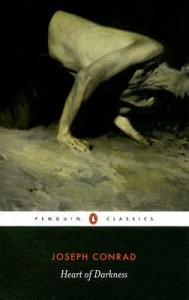
Heart of Darkness by Joseph Conrad

Posted July 6, 2012 by Michael @ Knowledge Lost in Classic / 0 Comments

Heart of Darkness by Joseph ConradTitle: Heart of Darkness (Goodreads)
Author: Joseph Conrad
Published: Penguin, 1899
Pages: 200
Genres: Classic
My Copy: Paperback

Buy: AmazonBook Depository (or visit your local Indie bookstore)

When you think of books required to consider yourself ‘well read’, one book that is often in that list is Joseph Conrad’s Heart of Darkness. I’ve been told that watching Apocalypse Now doesn’t count; however if you have read the book and seen the movie, fun can be found spotting the similarities. Heart of Darkness is a difficult book to read but if you stick with it, there is a certain elegance in the novel, as well as the fact that it’s heavily symbolic.

One of the more interesting aspects of this novel is the narrative style. It’s not narrated by the protagonist Marlow but an unnamed listener of his stories. Almost like the narrator is the reader, standing there listening to Marlow tell his tales. This is happening while the boat is anchored on the River Thames near London, though his tales are of him captaining a steamship in Africa.

The blend of feeling like a shipmate listening to the tales, and the fact that Marlow struggles to talk about the torments, makes this an excellent representation of the duality of human nature. While it was a fantastic book, the writing style did make it difficult to enjoy this book as much as I wanted.


The Picture of Dorian Gray by Oscar Wilde

Posted June 28, 2012 by Michael @ Knowledge Lost in Book of the Month, Classic, Gothic / 0 Comments

The Picture of Dorian Gray by Oscar WildeTitle: The Picture of Dorian Gray (Goodreads)
Author: Oscar Wilde
Published: Barnes & Noble Classics, 1890
Pages: 248
Genres: Classic
My Copy: Personal Copy

Buy: AmazonBook Depository (or visit your local Indie bookstore)

I feel perplexed about The Picture of Dorian Gray by Oscar Wilde. On one hand, the story is well written about a young man being moulded and shaped. On the other hand, this book was incredibly flowery and doesn’t really start for 100 pages. Dorian doesn’t really know about life and meets an artist and an aristocrat that help him though his journey into manhood. The artist paints his portrait, subsequently making him keep his youth. The aristocrat had the biggest influence on Dorian Gray, though Lord Harry Wotton is very annoying. He talks and talks the whole way through this book, thinking he’s so witty.

Dorian Gray starts off in this novel as a blank slate, an easily influenced young man. Throughout the rest of the story he gets moulded and pushed into shape. After Basil paints his portrait Dorian starts to unravel, afraid to show the picture, he locks it way in a room and never lets anyone see it, protecting it at all costs. The whole thing symbolising the way we hide our real selves from the rest of the world, scared of what they may think.

The Picture of Dorian Gray would have been controversial in its day, with strong homosexual themes. Though the book itself is more about the life and morality, Oscar Wilde did a brilliant job of capturing this element of the book. For me the biggest downfall of this book was that Lord Wotton was too loud and dominates throughout the entire book.


We by Yevgeny Zamyatin

Posted June 10, 2012 by Michael @ Knowledge Lost in Classic, Dystopia, Speculative Fiction / 0 Comments

We by Yevgeny ZamyatinTitle: We (Goodreads)
Author: Yevgeny Zamyatin
Translator: Clarence Brown
Published: Penguin, 1921
Pages: 226
Genres: Classic, Dystopia, Speculative Fiction
My Copy: Library Book

Buy: AmazonBook Depository (or visit your local Indie bookstore)

Yevgeny Zamyatin wrote his seminal dystopian novel We (1921) based on his personal experiences during the two Russian revolutions (1905 and 1917) and the first World War. The book ended influencing dystopian authors like Aldous Huxley and George Orwell. This book not only influenced the dystopian genre but could also be the influence towards the post-apocalyptic genre as this was set in a world where all was wiped out but “0.2% of the earth’s population”.  The book is set in ‘One State’ which has been organised to be a workers’ paradise; everything has to work like clockwork and everything is based on logic and mathematics. This society is heavily surveillanced, has martial law and is heavily censored; a totalitarian world.

The protagonist, D-503, is an engineer who begins writing a journal (much like in 1984) to document Integral, the spaceship being built to invade other planets. D-503 is under constant surveillance by the Bureau of Guardians (the secret police) as is everyone else. He is assigned a lover O-90, but ends up having an uncontrollable attraction to I-330. This leads to nightmares and furthermore into what could be considered a mental illness. I-330 reveals to D-503 a world that was previously unknown to him. Will he hang onto hope or will reason get the better of him?

We was an impressive novel; not only with the themes that it explores but also with the technology and the simple fact that it was years and years ahead of its time. While some say We was released in 1920 and others 1921, there is no denying that, because of the subject matter, this was an impressive piece of literature. If it wasn’t for this book we may never of been able to enjoy Aldous Huxley’s Brave New World (1932), George Orwell’s Nineteen Eighty-Four (1949) or even Kurt Vonnegut’s Player Piano (1952). By today’s standards this book would be overlooked but something innovative and so complex to be written so long ago makes this worth a read.


ArmchairBEA 2012: Best of 2012

Posted June 5, 2012 by Michael @ Knowledge Lost in ArmchairBEA / 0 Comments

As I try to explore books both old and new, a best of 2012 list is difficult. Do I do a list of the best books released in 2012 or just pick from the books that I’ve read in 2012? I took some time to think about what I wanted to do and I decided to would be best to give my top five books I would recommend to read based on the books I’ve read this year. So here they are;

5. Please Ignore Vera Dietz by A.S. King

I picked this book because there are so many great YA novels out there but it’s nice to read a book with a protagonist full of angst not only having to deal with her teenage years but also having to deal with love and lost.

4. Weird Things Customers Say in Bookshops by Jen Campbell

For all book lovers out there, this is just a fun read. Some great and interesting things have been said in a book store but my favourite from this book would be; “Do you have this children’s book I’ve heard about? It’s supposed to be very good. It’s called Lionel Richie and the Wardrobe.”

3. A Wrinkle in Time by Madeleine L’Engle

I wanted to pick a classic piece of literature but it’s hard to pick something that you can recommend to everyone.  But A Wrinkle in Time is probably a book that everyone should at least read and I think most people would enjoy.

2. The Fault in Our Stars by John Green

I do hate that I’ve got two YA novels in this list but when it comes to recommendations they are probably the easiest to recommend because they are a gateway read into the world of finer literature. John Green is a brilliant writer and this book is a touching; it’s hard not to have it as a recommendation.

1. Angelmaker by Nick Harkaway

My favourite book of the year (so far). Combining a plot made for a Bond movie with a writing style that has been compared to Charles Dickens; I think this is an exciting Victorian style adventure well worth reading.

While there are other books I thought were better than some of these books, including Into the Darkest Corner by Elizabeth Haynes, When Gravity Fails by George Alec Effinger, Talulla Rising by Glen Duncan and Crime and Punishment by Fyodor Dostoyevsky they really aren’t books you can recommend to everyone for many reasons.

ArmchairBEA is a virtual convention for book blogger who can’t attend Book Expo America and the Book Blogger Convention. Banner by Nina of Nina Reads and button by Sarah of Puss Reboots


Reading Cycles

Posted June 3, 2012 by Michael @ Knowledge Lost in Literature / 0 Comments

Have you ever noticed that you read in cycles? I have; I’ve found that I tend to get entrenched with an author at times but most of the time it with genres. While I like to say I read anything and everything, I know this is not true.  I do find it interesting to look over my reading history and see just how it progresses.

I’ve said it before and most people already know that I only started reading in the middle of 2009 and while it was a slow start I gradually got better and better at reading that now I’m aiming for 100 books a year. While I would like to talk about reading challenges sometime in the future, for now I want to look at my reading cycle. I call it a cycle because I know that eventually I will go back to these genres and immerse myself with them again and again.

While I often just read on a whim, when I do an overall look at my reading habits the cycle looks like this;

  • Classics – My reading started with Frankenstein and I read a lot of classics as a way to catch up on the book I’ve missed out on. At the same time I was also trying to catch up on the Dexter series by Jeff Lindsey.
  • 1001 Books to Read Before You Die – when I discovered this list of books, I set out to read books from this list as a good way to try out genres and styles with the knowledge that the books must be good because they made the 1001 list.
  • Sci-Fi – I’m not sure why I moved onto Sci-Fi, but there were so many books that looked interesting in this genre that it felt like the natural progression.
  • Mystery – I have a love for the macabre and crime that it wasn’t much of a surprise that I begin reading a lot of books in this genre.
  • Hard-Boiled/Noir – I finally found the style and genre in the mystery/crime genre that I like the most. Hard-Boiled and Noir will always have a special place in my heart. I love the era and the style of these novels.
  • YA – I started trying out YA because of this blog post about What is Wrong with Dark YA Novels and during the time I found my favourite YA author John Green, which meant I needed to read all of his novels (still have one to read) plus other novels that are supposedly similar to his writing style.
  • Literary Fiction – I often wonder if this was a result of my book blog or just because I wanted to read something with a little more literary merit after reading so much YA. But now it feels like I’m reading so many literary novels.

I don’t know where my reading will go from here but feel free to make a prediction. I’m happy to let my reading take me where ever it wants to go. I’m happy with where it has taken me so far. I would love to know if other people have reading cycles and what they are.


Monthly Review – May 2012

Posted May 31, 2012 by Michael @ Knowledge Lost in Monthly Reading / 0 Comments

What a great month we have had here at Literary Exploration. The site was officially launched on the 1st and we have been releasing a new post every one to two days. I really hope we can keep up this momentum and I’ve been working hard to get more and more content on the site for your enjoyment.  You might have noticed some older books being reviewed on the site as well as some new releases and ARCs. I hope you are enjoying the mixture of old and new as well as the different genres because we plan to read books and put up content of all types of books. We are proud to have a guest post up already as well as two books that I’m hoping people will enjoy when they are released in June.

On the forums on Goodreads we have been reading the classic detective novel; The Adventures of Sherlock Holmes by Arthur Conan Doyle. This was the first time I’ve ever read this book and I’m still trying to work out why it took me so long to read it. Next month we will be reading another classic novel, when we read the Victorian novel; The Picture of Dorian Gray by Oscar Wilde. I hope you can join in the discussions on Goodreads and have your say on what books we will read in the future.

My reading has been going really well this month, from trying out my first book in the popular Harry Hole series, to the laughs of the weird things customers say in bookstores. Highlights for me included the Russian classic Crime and Punishment which may be a massive book; it was just a beautiful crime novel and a real joy to read. Talulla Rising by Glen Duncan which will be released on the 26th of June is an exciting follow up to The Last Werewolf; it’s dark, gritty, over sexed and I highly recommend it. As well as Beat the Reaper by Josh Bazell and Drive by James Sallis which are both great crime novels.

May’s Books