Tag: Translated Literature

Best Books of 2023

Posted January 31, 2024 by Michael @ Knowledge Lost in Literature / 4 Comments

One of my favourite things about the end of December and the beginning of January is seeing everyone’s best of lists. It seems like the only times I have posted on my blog are to share my best of lists of 2022 but once again, I am hoping to get back into posting more frequently. The most important first post of the year will be my best books of 2023. I am trying not to complain about my reading lately, and my goal for 2024 is just to have fun and enjoy my reading experiences. I do wish I read more in 2023 but I do have to say that I am very happy with this top 10 list.
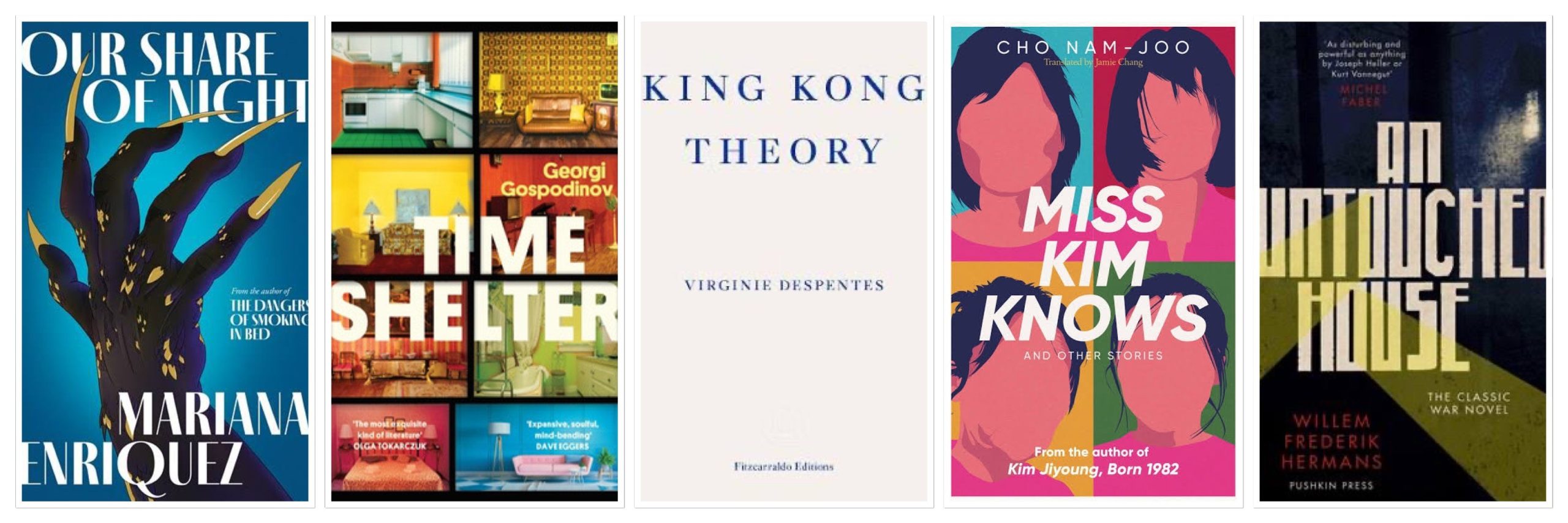
10. Our Share of Night by Mariana Enríquez (translated by Megan McDowell)
I absolutely love Mariana Enríquez’s short stories; they are a blend of gothic horror told from a feminist viewpoint that depict the harsh sociopolitical realities that women face every day. Our Share of Night is her first full length novel to be translated into English and it is an overly ambitious one. This is a 700+ horror novel that is set through out the different Argentinean dictatorships. Enríquez uses the horror genre to explore the horrific nature of dictatorships and the effects they have on the people. If I was able to understand more of what each metaphor or scene symbolised, I am sure I would have loved this book more, but those horrors still sit in my brain, and I know I will need to reread in the future.

9. Time Shelter by Georgi Gospodinov (translated by Angela Rodel)
The winner of the International Booker Prize this year and I had a lot of fun with this, even if I think it kind of waned in the last few chapters. I think this is an exciting novel about human connection, it focuses on a clinic designed to help people with dementia and other memory issues. But this clinic uses a relic that makes their patients believe they are living in the world of their younger selves. This novel may be clever but, sometimes I think it is too clever for its own good.

8. King Kong Theory by Virginie Despentes (translated by Frank Wynne)
This is a manifesto of pure feminist rage. Drawing from her own experiences, Despentes investigates sex work and porn, through a feminist lens. This is a book about the exploitation and sexual assaults on women, not just in sex work but all over the world. This is a gritty, emotional collection of essays and one that will sit with me forever. No words of mine could ever do this book any justice, so I will leave a quote from the author; “I write from the realms of the ugly, for the ugly, the frigid, the unfucked and the unfuckables, all those excluded from the great meat market of female flesh, and for all those guys who don’t want to be protectors, for those who would like to be but don’t know how, for those who are not ambitious, competitive, or well-endowed. Because this ideal of the seductive white woman constantly being waved under our noses – well, I’m pretty sure it doesn’t exist.”

7. Miss Kim Knows and Other Stories by Cho Nam-joo (translated by Jamie Chang)
Kim Jiyoung, Born 1982 remains a favourite of mine, it was one of those books, I finished and wanted to reread right away. In fact, I found the audiobook and listened to it with my wife while we travelled. It was a powerful book and when I saw this collection of short stories based around the book, I picked it up right away. I didn’t even know this existed until I randomly saw it in my local indie bookstore. This is what I loved about Kim Jiyoung, Born 1982 but expended to different age groups, a mixture of different microcosms; a story set in a school, a work place, even one that is capturing growing old. I think Cho Nam-joo has found her style and I want to see more stories like this.

6. An Untouched House by Willem Frederik Hermans (translated by David Colmer)
This is a novel I knew nothing about, but it was so mesmerising and haunting that I think maybe Hermans should be judged alongside authors like Joseph Heller and Kurt Vonnegut. Set in World War II, this book follows a Dutch soldier that is so exhausted from the war, that he finds an abandoned hour and just decided to inhabit it. This is a dark meditation on survival, the horrors of war and I found it both profound and unsettling.
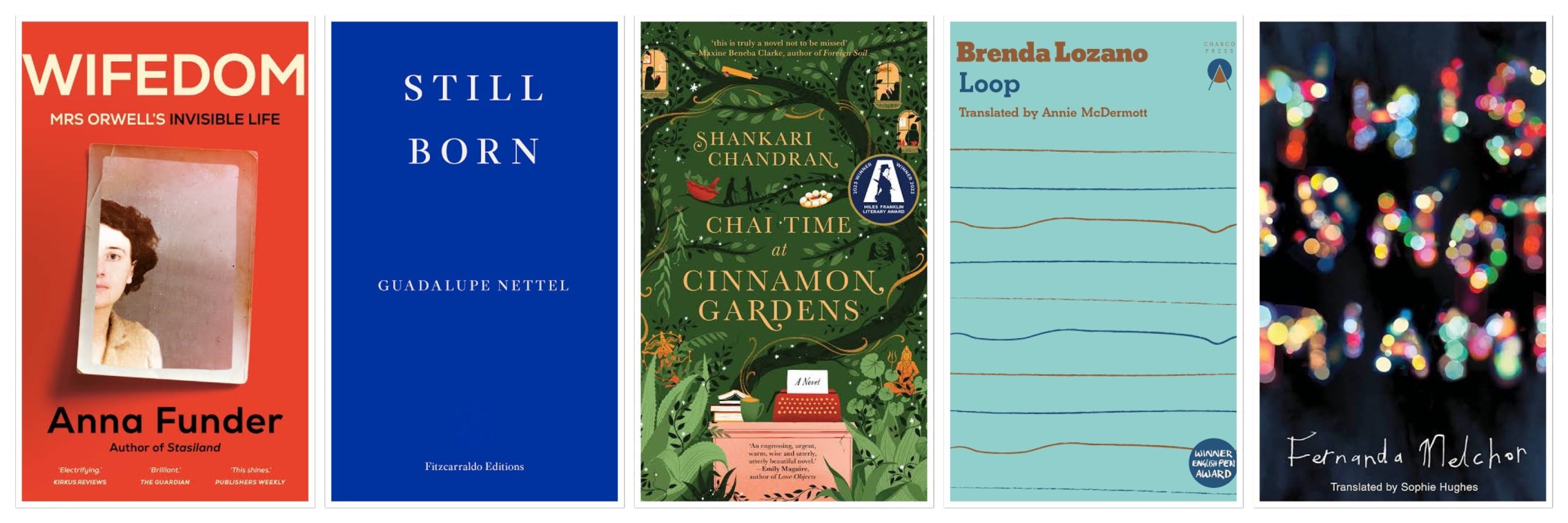
5. Wifedom: Mrs. Orwell’s Invisible Life by Anna Funder
We all know who George Orwell is, but how much do we know about his wife Eileen O’Shaughnessy? Anne Funder decided to research more about her and what she found was very depressing. Of the six biographies she read that were written about George Orwell, there is little to no information about his wife. Almost like she had no importance, and yet the more Funder researched the more she how just how much of an impact Eileen had in shaping some of the greatest works written by Orwell. This is an exploration of just one of many unsung women whose work goes unnoticed and never mentioned in the background of these so-called great men’s lives.

4. Still Born by Guadalupe Nettel (translated by Rosalind Harvey)
I probably only read about half of the International Booker Prize longlist of 2023, but this is the one that I wanted to win. It reminded me of Ariana Harwicz’s Die, My Love, but maybe less depressing. This is a novel of Alina and Laura who have decided they didn’t want to have children; they wanted to enjoy life. Although, things change for Alina and then we are struck with the horrors of a complicated pregnancy. This is a very emotional book, and so much is happening in this novel. I have only read one other book from Guadalupe Nettel (After the Winter) which I also recommend but I know I want to read them all.

3. Chai Time at Cinnamon Gardens by Shankari Chandran
Normally when I get given a book to read from my book club, I’m a little nervous. Not that I hate most of them, I just tend to like what everyone else dislikes. Chai Time at Cinnamon Gardens was the winner of the Miles Franklin Award this year, so I knew this was a popular pick, so I went in a little worried, but this was an extraordinary book. It is very Australian, but it also really focuses on the systemic racism that has been built into the Australian culture. Looking at the way the White Australia Policies of the past has started to really shape the country now and the effects that racism has on a small Sri Lankan run retirement home. This is not a feel good read as the cover and title might lead you to believe.

2. Loop by Brenda Lozano (translated by Annie McDermott)
It is so hard to explain this novel, so much is happening, but nothing is happening. This is a narrative following the life of a woman waiting for her boyfriend to return from his trip from Spain. She buys a notebook and begins writing down her every thought and feelings. On the surface it just feels like an insight into her diary, but there is something deeper happening here. We are getting a look into her thoughts on the world, love, relationships, music and her writing process.

1. This is Not Miami by Fernanda Melchor (translated by Sophie Hughes)
This is my first experience with the literary genre known as cronicás, a genre that blends journalism with fiction. I now need to read more of this style of writing. There is something about the way these stories blend humour with facts, but is told it in almost a conversational tone, I need more of this, and I need recommendations. Fernanda Melchor delivers her usual dark and creepy style but because of this literary genre, this might be my favourite of her books (so far).


Earthlings by Sayaka Murata

Posted January 13, 2021 by Michael @ Knowledge Lost in Contemporary / 2 Comments

Earthlings by Sayaka MurataTitle: Earthlings (Goodreads)
Author: Sayaka Murata
Translator: Ginny Tapley Takemori
Published: Granta, 2020
Pages: 247
Genres: Contemporary
My Copy: Paperback

Buy: AmazonBook DepositoryKindleWordery (or visit your local Indie bookstore)

What I really loved about Sayaka Murata’s Convenience Store Woman is the way she writes about social norms. She looks at social situations and asks the question, “What do we consider normal, and why it is so important?” Keiko was happy with her situation as a convenience store attendant, but the world and even her family wanted to push her to want more from her career and life. Murata seems to take this idea one step further in Earthlings.

The novel follows Natsuki, who even from a very young age felt like she did not belong here on earth. Both Natsuki and her cousin Yuu considered themselves to be aliens from another planet left on earth. Even when she got older, Natsuki had this viewpoint, and considered earth to be just a baby making factory. To keep her family off her back she married and hoped to just have a quiet life with her husband. However, her family kept demanding she have children and the pressure continuously grew to unhealthy levels.

Earthlings is a weird book; it explores the social pressures of reproducing but it does take a disturbing turn. I like the way Sayaka Murata looks at social issues and pushes the boundaries to show just how damaging they can be but I am also not a fan of the way this book ended. I do not think it is worth discussing the ending and if you have read the book, you know what I mean. I feel that the focus should be on how alienating social norms can be, and the way it made Natsuki feel. I have been married for eleven years and I know how frustrating it is when people ask me and my wife why we do not have children. This question is none of their business and tend to lead to awkward moments if you do decide to share the reasons. This novel plays with the social expectations of reproduction by constantly referring to the world as a baby making factory, like life has no value except creating children.

Sayaka Murata loves to push the boundaries with her characters and I am not going to try and diagnose these people in her books. I have seen far too many people claim Keiko was autistic in Convenience Store Woman, but does that really matter? You could probably label both Natsuki and her husband as asexuals in Earthlings, but it feels weird to label a fictional character. I am not a psychologist, so I do not want to diagnose Keiko with autistic and while I understand it is useful to show representation or to use psychoanalysis to analyse a book, I often find myself questioning the motives. If the author has not mentioned it, are we just projecting ideas onto a character? Granted this can be useful for understanding but it can also mean we are pushing these characters into a label and not letting them show us the problems with the world around us.

The writing of Sayaka Murata might not be for everyone, but I am looking forward to seeing what Ginny Tapley Takemori translates next. I want to read more books like this, where the author challenges social ideas and does it in interesting ways. This is a dark but very entertaining novel, and I am glad that Murata has done so well for herself in the English speaking world.


Vernon Subutex Trilogy by Virginie Despentes

Posted September 24, 2020 by Michael @ Knowledge Lost in Contemporary / 2 Comments

Vernon Subutex Trilogy by Virginie DespentesTitle: Vernon Subutex Trilogy (Goodreads)
Author: Virginie Despentes
Translator: Frank Wynne
Published: MacLehose Press, 2017-2020
Pages: 1088
Genres: Contemporary
My Copy: Paperback

Buy: AmazonBook DepositoryKindleWordery (or visit your local Indie bookstore)

How many translated series can you think of? Apart from Proust, or Elena Ferrante or Karl Ove Knausgård. Maybe, there are more than I expected; Virginie Despentes’ trilogy Vernon Subutex is currently the most talked about, with book three just being released in English. This trilogy started off as a cutting-edge look into the punk sub-culture of France but slowly, with each book the focus shifted, stepping away from the music industry, towards a mystery in book two and finally the third novel focusing more on a cult-like community. While Vernon Subutex is the focus of this trilogy, I found that the different styles of each novel become a little disconcerting for myself.

Virginie Despentes draws from her own career in these books, I suspect using some of her own experiences to drive the plot. Before becoming a novelist, she worked in a few fields including as a sex worker and a pornographic film critic. While these careers play a part in the Vernon Subutex trilogy along the way, it started with her experiences as a salesclerk in a record store and a freelance rock journalist. It is these aspects that I found the most fascinating, my love of music (particularly punk rock) really drew me to this series in the first place.

I loved how the first novel focused on the music, Vernon Subutex started working in this record store in his twenties. The store was legendary back in the days, but now thanks to the internet and digital music it is struggling. Even Vernon Subutex himself has a cult-like status (which plays out more later in the series) with people on the internet speculating that he owned the last recordings of musician Alex Bleach. What I loved the most about Vernon Subutex 1 was reading about the industry and exploring the dark side of the punk culture, from the violence and drug abuse often associated with this culture to the less talked about racism and sexism.

Unfortunately, the books slowly digressed away from exploring the punk scene, and maybe my interest did as well. That is not to disregard books Two or Three, my interest was the scene and I was less interested in following the character Vernon Subutex. The first novel focused on the punk scene, whereas book two focused on this one character and a small group of people around him, a group that have banded together at a bar in the Parc des Buttes-Chaumont. While the plot of Vernon Subutex 2 focuses more on what happened to the lost tapes of Alex Bleach, I was more interested in themes than plot, so this became a book about class struggle.

This group of people hanging in the Parc des Buttes-Chaumont turned into a cult, which leads to the third novel of this trilogy, where Vernon Subutex has become a spiritual leader to the group. The final book in the series, for me is the weakest, but it was clear Virginie Despentes knew what she was doing and where she wanted to take this journey. There was a strong focus on social struggles that plays out here, focusing more on homelessness and the way these people banded together. The cast of characters slowly shrinks with each book, but I really like how Despentes brings in new characters and then they disappear after a short period of time. This might frustrate many, but I found it natural; sometimes you meet someone, and they are only in your life for a small period of time, they might make an impact but then they are gone.

Vernon Subutex 3 was more political, with the 2015 Charles Hebdo shootings playing a part of the plot. The satirical papers controversial depictions of Muhammad are believed to be the cause of that attack. However, it was Michel Houellebecq that was on the cover of the magazine when this attack happened. I bring this up because I find Virginie Despentes and Houellebecq have similar styles. Both are satirical French authors that make me question myself and their writing style. They leave me with an unease while reading them and I spend time contemplating their satirical nature. I even find myself wondering if they are actually satirical or just overdoing the transgressive. This is not easy reading and knowledge of the punk scene and modern French history became vital aspects of my appreciation of Vernon Subutex.

When I think about the writing of Virginie Despentes, I have a similar feeling as when I think about Michel Houellebecq, I am unsure how I feel about them as authors. I have read five Despentes novels and while I enjoyed the Vernon Subutex trilogy, I find it hard to fully appreciate her works. Her writing is a combination of the thriller genre, but it tends to be overly transgressive. I am not trying to be negative, just not the style of literature I tend to enjoy. I am curious to know more about Despentes’ life and might read her feminist manifesto King Kong Theory, which like the Vernon Subutex trilogy has been translated by the legendary Frank Wynne.


Love in the New Millennium by Can Xue

Posted April 26, 2019 by Michael @ Knowledge Lost in Contemporary / 0 Comments

Love in the New Millennium by Can XueTitle: Love in the New Millennium (Goodreads)
Author: Can Xue
Translator: Annelise Finegan Wasmoen
Published: Yale University Press, November 20, 2018
Pages: 288
Genres: Contemporary
My Copy: eBook

Buy: AmazonBook DepositoryKindleWordery (or visit your local Indie bookstore)

Longlisted for the Man Booker International Prize 2019
Longlisted for the BTBA 2019

There is something about Love in the New Millennium that I was not able to connect with.  Out of the entire Man Booker International longlisted books for 2019, this is the one that I struggled the most with. It was not because of the unlikeable characters or toxic relationships, there was just something that did not work. I spent a lot of time wondering if I felt disconnected from the cultural aspects of this novel, but I have come to the conclusion that me and Can Xue do not agree, or at least with this book.

The premise of this book is basically love stories of the new millennium. It is a collection of interconnected stories that center around a few different characters. Love in the New Millennium is meant to be an exploration into modern day romance, dating and relationships, however there is nothing inherently modern about this novel. Has the author adopted same for a magical realism where modern people are living in a world void of technology? I do not remember a single mention of the internet or cell phones in the entire book. I know this a Chinese novel, so culturally things are different, but I find it hard to believe that technology does not play a part in their lives. Can Xue is 66 years old, so it felt like she did not truly understand how young people live.

“People like us, more dead than alive, always indecisive.”

Having said that, this book was packaged as a dark comical look at a group of women living in a world of constant surveillance. I went into this thinking maybe this will be an exploration into women living in a world of social media. An Orwellian look at dating in the computer age. However, this book feels more like Middlemarch in a sense that it is not the surveillance cameras that people have to worry about, it is the gossip from other people.

The main problem with Love in the New Millennium for me what probably the fact that I built this book up differently in my head. Generally I prefer not to know too much about the books I plan to read, but since this was longlisted for the Man Booker International Prize, as well as the BTBA, I felt like I needed to know more about this book in order to join in on the conversations before actually reading it. I was hoping for a satirical look into dating in the new millennium, as well as some insights into modern day China, but this novel delivered none of that.

“Before entering a dream, she thought, a little enviously, they must be so happy. In her dream, she heard the couple outside referring to her as “the orphan.” When she heard these two syllables, or—phan, her tears rolled down in waves, soaking the pillow. Her dreamscape was passionate, with two silvery forms always floating around her. She saw milkvetch all around, honeybees everywhere, to her right the houses of the disappearing village, and the maple leaves burning like fire.”

Having said all that, there is this weird dream-like, almost surreal quality to the novel that played a small factor in not abandoning this book completely. My main reason for sticking to the book was because it was nominated for the Man Booker International Prize. The writing was never really bad, Annelise Finegan Wasmoen did a great job of translating this into English. For me, my main verdict came down to the subject matter and my disappointment in not exploring these very important issues. There are so many different socio-political, philosophical and psychological avenues that were left unexplored.

When Can Xue is blurbed as the “most important novelist working in China today” and is also known as an avant-garde writer, I expected something more from Love in the New Millennium. She is also a literary critic who has written about Dante, Jorge Luis Borges, and Franz Kafka, so you cannot judge me for expecting so much more. Love in the New Millennium left me wanting a very different book, and I think that might have been what disappointed me the most about this novel. I have no idea why it made the longlist for both the Man Booker International Prize and the Best Translated Book Award, but clearly others see something in this book that I could not see.


The Longlist for the 2019 Best Translated Book Award

Posted April 15, 2019 by Michael @ Knowledge Lost in Literature / 0 Comments

Adding the longlist for the Best Translated Book Award (BTBA) to track which books I have read. As the longlist for fiction is 25 books long, I will not be trying to complete the entire list, but I would love to complete as many as possible. It is a great list, which is to be expected from the BTBA.

Here is the longlist for fiction;

  • Congo Inc.: Bismarck’s Testament by In Koli Jean Bofane, translated from the French by Marjolijn de Jager (Democratic Republic of Congo, Indiana University Press)
  • The Hospital by Ahmed Bouanani, translated from the French by Lara Vergnaud (Morocco, New Directions)
  • A Dead Rose by Aurora Cáceres, translated from the Spanish by Laura Kanost (Peru, Stockcero)
  • Love in the New Millennium by Xue Can, translated from the Chinese by Annelise Finegan Wasmoen (China, Yale University Press)
  • Slave Old Man by Patrick Chamoiseau, translated from the French by Linda Coverdale (Martinique, New Press)
  • Wedding Worries by Stig Dagerman, translated from the Swedish by Paul Norlen and Lo Dagerman (Sweden, David Godine)
  • Pretty Things by Virginie Despentes, translated from the French by Emma Ramadan, (France, Feminist Press)
  • Disoriental by Negar Djavadi, translated from the French by Tina Kover (Iran, Europa Editions)
  • Dézafi by Frankétienne, translated from the French by Asselin Charles (published by Haiti, University of Virginia Press)
  • Bottom of the Sky by Rodrigo Fresán, translated from the Spanish by Will Vanderhyden (Argentina, Open Letter)
  • Bride and Groom by Alisa Ganieva, translated from the Russian by Carol Apollonio (Russia, Deep Vellum)
  • People in the Room by Norah Lange, translated from the Spanish by Charlotte Whittle (Argentina, And Other Stories)
  • Comemadre by Roque Larraquy, translated from the Spanish by Heather Cleary (Argentina, Coffee House)
  • Moon Brow by Shahriar Mandanipour, translated from the Persian by Khalili Sara (Iran, Restless Books)
  • Bricks and Mortar by Clemens Meyer, translated from the German by Katy Derbyshire (Germany, Fitzcarraldo Editions)
  • Convenience Store Woman by Sayaka Murata, translated from the Japanese by Ginny Tapley Takemori (Japan, Grove)
  • After the Winter by Guadalupe Nettel, translated from the Spanish by Rosalind Harvey (Mexico, Coffee House)
  • Transparent City by Ondjaki, translated from the Portuguese by Stephen Henighan (Angola, Biblioasis)
  • Lion Cross Point by Masatsugo Ono, translated from the Japanese by Angus Turvill (Japan, Two Lines Press)
  • The Governesses by Anne Serre, translated from the French by Mark Hutchinson (France, New Directions)
  • Öræfï by Ófeigur Sigurðsson, translated from the Icelandic by Lytton Smith (Iceland, Deep Vellum)
  • Codex 1962 by Sjón, translated from the Icelandic by Victoria Cribb (Iceland, FSG)
  • Flights by Olga Tokarczuk, translated from the Polish by Jennifer Croft (Poland, Riverhead)
  • Fox by Dubravka Ugresic, translated from the Croatian by Ellen Elias-Bursac and David Williams (Croatia, Open Letter)
  • Seventeen by Hideo Yokoyama, translated from the Japanese by Louise Heal Kawai (Japan, FSG)


Here is the longlist for poetry

  • The Future Has an Appointment with the Dawn by Tenella Boni, translated from the French by Todd Fredson (Cote D’Ivoire, University of Nebraska)
  • Dying in a Mother Tongue by Roja Chamankar, translated from the Persian by Blake Atwood (Iran, University of Texas)
  • Moss & Silver by Jure Detela, translated from the Slovenian by Raymond Miller and Tatjana Jamnik (Slovenia, Ugly Duckling)
  • Of Death. Minimal Odes by Hilda Hilst, translated from the Portuguese by Laura Cesarco Eglin (Brazil, co-im-press)
  • Autobiography of Death by Kim Hysesoon, translated from the Korean by Don Mee Choi (Korea, New Directions)
  • Negative Space by Luljeta Lleshanaku, translated from the Albanian by Ani Gjika (Albania, New Directions)
  • Scardanelli by Frederike Mayrocker, translated from the German by Jonathan Larson (Austria, Song Cave)
  • the easiness and the loneliness by Asta Olivia Nordenhof, translated from the Danish by Susanna Nied (Denmark, Open Letter)
  • Nioque of the Early-Spring by Francis Ponge, translated from the French by Jonathan Larson (France, Song Cave)
  • Architecture of a Dispersed Life by Pable de Rokha, translated from the Spanish by Urayoán Noel (Chile, Shearsman Books)

At Dusk by Hwang Sok-yong

Posted April 12, 2019 by Michael @ Knowledge Lost in Contemporary / 0 Comments

At Dusk by Hwang Sok-yongTitle: At Dusk (Goodreads)
Author: Hwang Sok-yong
Translator: Sora Kim-Russell
Published: Scribe, 2018
Pages: 192
Genres: Contemporary
My Copy: Library Book

Buy: AmazonBook DepositoryKindleWordery (or visit your local Indie bookstore)

Longlisted for the Man Booker International Prize 2019

On the outside, Park Minwoo was the poster boy for success. Born into poverty, his parents owned a small fishcake store. He worked hard and now he is the director of one of Korea’s biggest architectural firms. However, Park thinks maybe he have missed the point of life. He has followed the ideal path to become wealthy but at the cost of his childhood love Cha Soona.

At Dusk is a quiet exploration into the life of a modern Korean businessman and his success, but it also reflects on the modernisation of Seoul. It is an obvious allegory; while Park doubts his success is the true meaning of a well lived life, the author begins to question the modernisation of Korea. The cost of progress really is the driving force behind the novella. As a Westerner, I feel like we are led to believe that all progress is good. The US goes to war with many countries because their values are different. We are forcing westernisation onto the rest of the world, and we are led to believe this is for the good of the country.  However, it is books like At Dusk that often help me explore a different argument.

Park Minwoo’s family lived a simple life running a small business, while Cha Soona’s parents were noodle makers. Modernisation means the end of these small businesses. Mass production and making money is the only thing of value. Noodle houses quickly become franchised coffee houses. The Korean culture is dying, leaving only Taekwondo and K-Pop behind.

This was a simple little novel, just a quiet yet urgent meditation on the effects progress has on its people and their culture. I feel the author could have done more but I have heard that Park Minwoo appears in other Hwang Sok-yong books. While it is longlisted for the Man Booker International Prize, I cannot see it making the shortlist. This feels more like a quick read the judges put into the list to get people to think more about the topic of westernisation and progress, what it means to the people, the country and also their culture.


Mouthful of Birds by Samanta Schweblin

Posted March 25, 2019 by Michael @ Knowledge Lost in Short Stories / 4 Comments

Mouthful of Birds by Samanta SchweblinTitle: Mouthful of Birds (Goodreads)
Author: Samanta Schweblin
Translator: Megan McDowell
Published: Oneworld Publications, 2019
Pages: 240
Genres: Short Stories
My Copy: ARC from Netgalley

Buy: AmazonBook DepositoryKindleWordery (or visit your local Indie bookstore)

Longlisted for the Man Booker International Prize 2019

Samanta Schweblin has almost become a household name. Her novella Fever Dreams has been one of the most talked about books in translation in recent years. It won so many awards, including the Shirley Jackson Award (2017), The Tournament of Books (2018), it made the Man Booker International Prize shortlist (2017) and the Warwick Prize for Women in Translation longlist (2017). Needless to say, when it was announced Mouthful of Birds was getting an English translation there was plenty of buzz surrounding it.

I first discovered Samanta Schweblin from the New York Review of Books podcast, they were talking about three Argentinean authors about to take the world by storm, Pola Oloixarac, Mariana Enríquez and Samanta Schweblin. Naturally I had to read the three books that came out around the same time. Random tangent, both Samanta Schweblin and Pola Oloixarac have books out this year, so where is the next Mariana Enríquez? Out of the three it was Fever Dreams that got all the attention, but for me Things We Lost In The Fire was the true highlight.

I feel like the buzz now for Mouthful of Birds is just people projecting their love for Fever Dreams onto it. There is something rugged and unfinished about this collection of short stories that did not sit right with me. I think a truly great short story collection have the stories complements each other and often share an overarching theme. Take Things We Lost In The Fire by Mariana Enríquez (also translated by Megan McDowell) for example. Each story delivers a powerful punch and complement the collection as a whole. Now looking at Mouthful of Birds, it does not have that same feeling, it is just a group of stories anthologised for the purpose of publishing.

I see so many people loving this book and it always seems to be referencing the same stories, like the one with the merman. My opinion is they liked the individual stories they reference but nothing is really said about the complete collection. I know what I like and fairytale retellings and mythological based stories are not for me, so this is the main reason Mouthful of Birds did not work for me. I know short story collections are hard to review as a whole collection, so people point out the stories they love. I prefer to read something where the stories all work together and offer so much more than a good tale.

Mouthful of Birds will serve well for the readers interested in the whole creative process. This is a collection of her earlier short stories. There are fragments of ideas that are being explored in Mouthful of Birds that could blossom into future novels. I see elements of Fever Dreams taking form in this collection and get the feeling this collection was only published because of all the hype surrounding Samanta Schweblin. While this was not the book for me, I know many people will enjoy reading more from Schweblin. I personally recommend picking up Things We Lost In The Fire by Mariana Enríquez instead.


The 2019 Man Booker International Longlist

Posted March 13, 2019 by Michael @ Knowledge Lost in Literary Prizes / 0 Comments

This post will serve more as a place to link all my reviews together. Much like last year I do plan to read the entire longlist. I read all by one last year, leaving Going, Went, Gone for later, which turns out might mean never. This was an interesting selection, and I managed to only predict two of the thirteen books. So far I have read two already, which means I only need to read another eleven.

Most of my writing about the Man Booker will be over on Translated Lit before I post them here.

  • Jokha Alharthi (Arabic / Omani), Marilyn Booth, Celestial Bodies (Sandstone Press Ltd)
  • Can Xue (Chinese / Chinese), Annelise Finegan Wasmoen, Love in the New Millennium (Yale University Press)
  • Annie Ernaux (French / French), Alison L. Strayer, The Years (Fitzcarraldo Editions)
  • Hwang Sok-yong (Korean / Korean), Sora Kim-Russell, At Dusk (Scribe, UK)
  • Mazen Maarouf (Arabic / Icelandic and Palestinian), Jonathan Wright, Jokes For The Gunmen (Granta, Portobello Books)
  • Hubert Mingarelli (French / French), Sam Taylor, Four Soldiers (Granta, Portobello Books)
  • Marion Poschmann (German / German), Jen Calleja, The Pine Islands (Profile Books, Serpent’s Tail)
  • Samanta Schweblin (Spanish / Argentine and Italian), Megan McDowell, Mouthful Of Birds (Oneworld)
  • Sara Stridsberg (Swedish / Swedish), Deborah Bragan-Turner, The Faculty Of Dreams (Quercus, MacLehose Press)
  • Olga Tokarczuk (Polish / Polish), Antonia Lloyd-Jones, Drive Your Plow Over The Bones Of The Dead (Fitzcarraldo Editions)
  • Juan Gabriel Vásquez (Spanish / Colombian), Anne McLean, The Shape Of The Ruins (Quercus, MacLehose Press)
  • Tommy Wieringa (Dutch / Dutch), Sam Garrett, The Death Of Murat Idrissi (Scribe, UK)
  • Alia Trabucco Zeran (Spanish / Chilean and Italian), Sophie Hughes, The Remainder (And Other Stories)

Man Booker International Predictions

Posted March 6, 2019 by Michael @ Knowledge Lost in Literature / 6 Comments

There is a part of me that looks down at literary prizes. I have been thinking about this since reading The Parrots by Filippo Bologna (translated by Howard Curtis), the politics that goes into selecting a list and a winner really detracts from literary merits. I agree there needs to be a better balance in representation when making a longlist for a prize, but every judge has their own tastes and opinions, it becomes more about compromise than merit. Is there a perfect solution? No, we have to do the best with what we have.

At the same time, I love to be part of the conversation, I want to read the Man Booker International list and talk about the books selected. Whether it is to just to speculate, or just complain. It is just nice to be part of a community talking about the same books. My love for books in translations, means that it isn’t often that I am able to talk about the same books as other people. This is why I follow a prize like the Man Booker International Prize.

I get the feeling that the longlist will feature the few translations that have actually had more of a commercial success. From the deserving (Convenience Store Woman), to the not so deserving (The Last Children of Tokyo) and everything in between (Codex 1962). Haruki Murakami might make the list for simply having a book translated this year, Killing Commendatore. Olga Tokarczuk won last year’s prize, which could mean Drive your Plow over the Bones of the Dead is longlisted.

After that, there are just some books that will make the longlist because it will help balance things out. For your gritty, hard hitting bro-lit, you might see Vernon Subutex 2 make the longlist. We need a book from the Middle East, so let’s add The Baghdad Clock. There is nothing from the Americas so in goes The Shape of the Ruins. Finally, for something considered high art, add Tell Them of Battles, Kings and Elephants.

Or you can save yourself all some time and just give the Man Booker Prize to the deserving Disoriental. This book feels like the perfect winner. It has a multi-generational story and deals with both immigration and LGBTQI themes. Besides all that, it is just an amazing novel.

I wanted to share my predictions for the Man Booker International prize as well as try to express my opinions about literary prizes in general. This post did not turn out the way I expected, more tongue in cheek than intended but then again, we can take this prize too seriously. I do not know if I will read the entire longlist, but I will try and be a part of the conversation. I hope I have read enough books that make the longlist, to ease the pressure of trying to complete 12-13 books. Also, please do not let Karl Ove Knausgård make the longlist.

Read More


My Favourite Reads of 2018

Posted January 1, 2019 by Michael @ Knowledge Lost in Literature / 15 Comments

I went into 2018 with no real reading goals; I wanted to see where that would lead me. It, in fact, pushed me into my own corner of the bookish world. I love translated literature and I want to promote it more than I already do. Reflecting back on the year, all my favourite books were works of translation. Just over 75% of my reading was translations and it probably would have been higher if it was not for book clubs. From that 75%, I did focus on trying to keep a gender balance and it seems that I achieved that, with 52% being women in translation. I am happy with the direction of my reading in 2018 and I am hoping to see a continuation in 2019.

Now is that time where people start posting their favourite lists. I am tempted to do a count down with music, films and television shows but I am unsure those lists will be as interesting as this post. So, for now here are my favourite reads from 2018.

15. The Door by Magda Szabó (translated by Lex Rix)

Episode four on my podcast, my wife and I listened to the audiobook while on a road trip. Magda Szabó is a great writer and I loved the way she blended auto fiction with what I read as an allegory of the state of Hungary under a collapsing Soviet rule. I am yet to pick up more Szabó but I know she is someone that I need to get back to in the near future (but I am sure I could say the same about many authors.

14. Purge by Sofi Oksanen (translated by Lola Rogers)

I had read Sofi Oksanen in the past and I found her writing overly complex, to the point where I almost dismissed her for the future. Not that When the Doves Disappeared was a bad book, I just felt like I was not smart enough and the writing fragmented in a weird way. Purge, on the other hand, was a much better book; a literary thriller, which is right up my alley, which you will soon discover from the rest of this list.

13. Flights by Olga Tokarczuk (translated by Jennifer Croft)

Winner of the Man Booker International Prize means this book hopefully is getting the attention it deserves. I read this while trying to complete the entire longlist and what drew me to this novel is the unique blend of travel writing and philosophical musing. Sure, this is a work of fiction in the loosest way possible, but who cares, this was just a joy to read. I have my next Olga Tokarczuk ready and waiting, and I have high hopes, 2019 is going to be a great reading year.

12. The Sound of Things Falling by Juan Gabriel Vásquez (translated by Anne McLean)

Can I call 2018 the year of Juan Gabriel Vásquez? I read two amazing novels by this author and I now consider myself a huge fan. There is something about the way he writes himself into his novels about Colombian history. In The Shape of the Ruins we get to learn about the political history of Colombia, and The Sound of Things Falling explores the effects the cartels had on him and Colombia. I am now watching Narcos just to learn more.

11. Convenience Store Woman by Sayaka Murata (translated by Ginny Tapley Takemori)

A book I still think about and it pleases me that it has plenty of literary buzz around it. I am not sure if this is auto fiction but I know Sayaka Murata worked in a convenience store, that is beside the point. Keiko Furukura is happy in her role as a convenience store woman, but social pressures expect more from her. This book challenges social expectations and tries to remind us that we should never judge anyone, not even a fictional character.

10. The Unwomanly Face of War by Svetlana Alexievich (translated by Richard Pevear and Larissa Volokhonsky)

There is not enough translated non-fiction on my list, and I know I need to read more. The Unwomanly Face of War was such an amazing book, but my love for Svetlana Alexievich might make me bias. I really like the way Alexievich collects stories from the people to create a narrative. In this one, we explore just how many women helped Russia in World War II despite the amount of criticism they received from the men around them. Truly these are the unsung heroes of war, stepping up to serve and help in any capacity possible.

9. La Bastarda by by Trifonia Melibea Obono (translated by Lawrence Schimel)

Episode five on my podcast, & quite possibly on of my favourite episodes, but maybe that is because my wife & sister-in-law did most of the talking. The first novel by an Equatorial Guinean woman to be translated into English is an accomplishment alone, but to have this book explore the queer journey from an African view point makes it extra special. I do not know much about Fang culture, their struggles are not that different to those of a Westerner. Even looking at coming of age journey from a western perspective, there is so much to get from this novel.

8. Die, My Love by Ariana Harwicz (translated by Sara Moses and Carolina Orloff)

I have probably talked about my love for Argentinian literature too much, but this short little novel is a great example of why I love it. In under 150 pages Ariana Harwicz was able to pack so much more raw emotion into her book than I thought was possible. This is so intense & emotional, it will hit you hard, but I think it is worth it. I have never experienced post-natal depression/psychosis, but I now have a small idea of what it must feel like. Female Argentinian writers are doing amazing things for the literary world, I recommend you pay them attention.

7. Aetherial Worlds: Stories by Tatyana Tolstaya (translated by Anya Migdal)

Yes, this was another episode of my podcast (episode seven), thank you for noticing. Tolstaya must be living in the shadow of her family name, can she ever compare to Leo Tolstoy? She has proven to me at least that she can carry this huge legacy. Her stories are unique in the way it combines her own thoughts with the aetherial world. The highlight in this book will have to be Smoke and Shadows, it really brings out her wicked sense of humour.

6. Fever and Spear (Your Face Tomorrow 1) by Javier Marías (translated by Margaret Jull Costa)

This may only be book one in the Your Face Tomorrow trilogy but there is something about the writing that makes me want everything ever written by this author. I love a good literary thriller but there is so much more to this novel. It is a metaphysical novel with some of the most elegant writing I have ever read in a thriller-like novel. At times you are not sure if you are reading a spy novel or a work of philosophy and I loved every moment I had with this book.

5. Disoriental by Négar Djavadi (translated by Tina Kover)

If you ask me, the wrong book won the first National Book Award for Translated Literature. Disoriental was my pick and I did read the entire longlist. Not to argue but if you are going to debut a new literary prize, your first winner really speaks to the tone of the award. Obviously, Flights could never win because the National Book Foundation needed to distinguish themselves apart from the Man Booker, but you picked the same author that won the inaugural Warwick Prize for Women in Translation last year. I am not bitter about this choice.

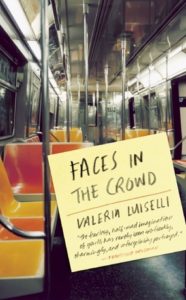
4. Faces in the Crowd by Valeria Luiselli (translated by Christina MacSweeney)

Yes, this was episode two on my podcast, do you see a trend? I think I just love being able to talk about books with people. This book feels like it is diving into the world of translating and as you can see, I read a lot of books in translation. You can see plenty of trends in my reading from this list along, women in translation and Latin American literature for example. When the first page has a line like “I worked as a reader and translator in a small publishing house dedicated to rescuing ‘foreign gems.’ Nobody bought them, though, because in such an insular culture translation is treated as suspicion. But I liked my work and I believed that for a time I did it well.” I know I am hooked.

3. The Seven Madmen by Roberto Arlt (translated by Nick Caistor)

This Argentinian classic has an afterword by Roberto Bolaño, which gives you a sense of the style and was the reason I picked this book up. The gritty pulp-like writing, is one of my favourite styles of writing to read. What elevated it to the top of my list is just how relevant this book is, ninety years later. Exploring the fanaticism of extremist politics, the book is described as “an uncanny prophesy of the cycle of conflict which would scar his country’s passage through the twentieth century” but really this feels prophetic to the rest of the world as well.

2. Sphinx by Anne Garréta (translated by Emma Ramadan)

I have a top fifteen list prepared for the end of the year, but then I read Sphinx and good bye Out by Natsuo Kirino (trans. by Stephen Snyder). I was so close to putting this at number one, it is that good. Sphinx is a non-binary love story from one of the few female members of Oulipo. I love experimental literature and Garréta challenged my gender expectations by never revealing the gender of the narrator or their love interest. Impressive, but can you imagine trying to avoid genders when you write in French?

1. The 7th Function of Language by Laurent Binet (translated by Sam Taylor)

Have you ever read a book and thought this was written just for me? This is how I feel about The 7th Function of Language. This is a literary thriller that explores the world of literary criticism. Roland Barthes, Jacques Derrida, Umberto Eco, Gilles Deleuze, Michel Foucault, Judith Butler, and Julia Kristeva all play a role in this book and I love the way Binet explores literary criticism without making it difficult for the reader to follow along. I am sure a literary expert might get annoyed by all the explanations of literary theories, but I really appreciated it.