Tag: Translated Literature

Organising My New Book Shelves

Posted December 13, 2018 by Michael @ Knowledge Lost in Literature / 4 Comments

My new bookshelves

A week ago, I was made redundant, a feeling from which I have still not fully recovered. For the last four weeks I was told that I had to show up to work and prepare for this transition. It is meant to be a time where the company can offer support and help try and find new work. Basically, it is a period of time where you are stuck feeling unwanted, not wanting to do any work and waiting to exit from the company. I thought that maybe I could use this time to write and catch up on my blogging or reading but this was not the case. The emotional rollercoaster left me feeling like I was in a slump and not wanting to do much of anything. Every call I got to check up on my felt like I was on suicide watch. It was far more difficult that I could even put into words.

However, I knew I did not want to be there, I was somewhat excited to leave this company. I have been there for twelve years and it felt like the only way I would step out and try something new. So I was excited for the change as well as constantly feeling unwanted. It was a weird cocktail of emotions. It was never really worried about my future, I think I have a plan, I just have to see how it plays out. It was never about the unemployment, I was actually looking forward to some time off, and I had plenty of tasks I wish to complete. It was just the complete combination of everything else and not really knowing how to express everything going on in my head.

Writing about it is not even helping. Usually I find that I am able to fully understand my thoughts when I try to write them down. I have often realised that I felt a particular way while writing. It is weird to discover an emotion you did not know you were having. I am just not very good at expressing myself. Maybe growing up as an outsider has dulled my ability to fully understand my emotions. I know I am not very good at social interactions, so maybe there is a connection.

One of the main tasks for the first week of my redundancy was to sort out some bookshelves. My wife gave me a new bookshelf for my birthday and I had decided to use the two bookshelves in the study as my primary shelves. These are the shelves you see when I film a video for BookTube, so maybe I should fill them with all my books in translation. Obviously, I am new to this niche, so I have combined it with books I love and books I know I want to read. However, the majority of the books on these shelves, I have not read yet, so it pretty much my TBR shelves. I do have a priority pile of books to read in the bedroom, but these are all the other books I want to read. Let’s call it my aspirational reading list.

I added all these books to the shelves in alphabetical order, and it filled up quicker than I expected. The plan is to cull the English books first, but I am hoping this will be a way to start building my library. In other words, if all my other books were to be culled, I would be okay with that. These are the ones I want to keep more than the others. Obviously, I am not going to cull my other books, there are three other shelves full of books, but I am planning to do a major purge. I know I have changed as a reader, and some of these books are never going to be read.

This is my starting point, and I already realise there are gaps that need to be filled. I am missing some Bulgakov, Dostoevsky, and Bolaño. These are authors I love and want to read everything they have written. I have discovered books I have completely forgot about, books I want to re-read right now and books that bring back good memories. A collection of John Keats poetry that remind me of my honeymoon, a Dashiell Hammett novel that I read in Paris, or a beautiful edition of Frankenstein that my wife gave me for our wedding anniversary. These memories and books are all safe together.

My other shelves were never organised in any way and I just love looking through the shelves not knowing what I will discover but with these new shelves I did want the organisation. During the process of sorting the books, I left a whole shelf for a letter that I expected to fill up quickly, like the M’s and N’s but it was never those selves that took up so much space. It was the K’s or the B’s that I was surprised to find the most books. I know it is going to be a lot of work to sort when adding new books to the shelves, but part of the pleasure is going through my shelves.

My dream would be to sort my books out by continent, but I do not own enough books for that, yet. I would easily fill a bookshelf of North American literature but my focus in books in translation would be neglected. I know Europe would be easy to manage but I never want to forget about the rest of the world. I have been focusing on South America lately, but I think more of the books I have read came from the library. Which I will have to start to do more now I do not have a regular income, but these two shelves are there to remind me that I need to read these books and that I need to start filling the gaps. Which will mean, eventually I will need more bookshelves and then I may have enough to sort by continent. These are dreams and goals with my books, I might even have to go through and categorise all these books like a library. Keep track of them in a database, I have the time to do that.

One of the things I love to do is to go to my shelves and look at the books, I know it does not help me keep to my own reading plans, but I just like to be distracted by other books. I am that kind of nerd that is obsessed with literature. You know I am just looking for new ways to talk books with the world.


The Door by Magda Szabó

Posted August 28, 2018 by Michael @ Knowledge Lost in Classic / 2 Comments

The Door by Magda SzabóTitle: The Door (Goodreads)
Author: Magda Szabó
Translator: Len Rix
Published: NYRB Classics, 1987
Pages: 262
Genres: Classic
My Copy: Audiobook

Buy: AmazonBook DepositoryWordery (or visit your local Indie bookstore)

Magda Szabó is one of those authors I have wanted to read for a very long time; her novel The Door seemed like the perfect place to start. This Hungarian modern classic explores the relationship between two very different women. Our narrator Magda is a writer and intellectual who is constantly in and out of favour with the government, while Emerence is her strong and opinionated house keeper. The novel starts with Magda waking up from a dream to face a haunting fact, that she killed Emerence.

The first thing that sticks out to me in this novel is the relationship between Magda and Emerence. I am drawn to the raw approach Magda Szabó took to explore this relationship. There are times where there was heat and toxicity between the two but then there were other times of affection and love. It is rare to read a relationship written so well. I often feel like the nuances of a relationship are never explored to any satisfactory level. In The Door we get to experience the ups and downs of this relationship. There are many times I felt frustrated by their actions but that ends up just being their different personalities butting heads.

Throughout the novel, a door is used as a metaphor to give the reader a more in depth look at these two characters. At times the door is a symbol of secretiveness, especially when it comes to Emerence. However there are times that it is used to symbolise the current state of their friendship. Whether they were actively distancing themselves from each other or they were close enough to share in a secret. The effect of the door becomes an important symbol of understanding Emerence. The fact that she would greet her guests outside and never let them inside shows just how close the two have become when she lets Magda inside.

Set between 1960 and 1980 in Hungary, it is important to know that this was when the Hungarian Socialist Workers’ Party was in control. If you explore this relationship of Magda and Emerence under a Marxist lens you will see where I am going here. We have Magda representing the intelligentsia and Emerence is a symbol of the working class. The idea behind the Bolshevik Revolution was to make sure people were treated the same. Without the working class, the October Revolution would have never happened. However it was the intelligentsia that took leadership, essentially creating a new social class system, thus negating their whole revolution.

In the end of The Door we are left we are left with the emptiness of losing Emerence. This woman seemed to possess inhuman strength and drive and her death left such a big hole not only Magda’s life but the whole community. If I was to compare Emerence death with the state of Hungary at the time of writing this novel. I would say that this is a reflection of the Hungarian economic and political reforms which let the country into mounting foreign debts. The cause of this points to Hungary’s outdated manufacturing facilities the inability to produce goods that were saleable on world markets.

It might be my love for Soviet literature, but my approach to this was very much a Marxist approach. Like many books in the Soviet era, I think The Door explored so many interesting elements of the country’s political and social issues. From religion to the class struggle and then the death of the working class. Analysing a novel and looking at the historical context really opens up the book for me. I know some people do not appreciate literary theories but for me it is a way to bring the text to life. Marxism and psychoanalysis are the two methods I seem to use the most, but I do not think I am equipped to fulling analyse Emerence. Although Magda might be easier, same name as the author, a writer, an enemy to the Communist Party, sounds autobiographical to me. Which makes me wonder, what was she trying to say with the death of Emerence?


Convenience Store Woman by Sayaka Murata

Posted August 24, 2018 by Michael @ Knowledge Lost in Contemporary / 4 Comments

Convenience Store Woman by Sayaka MurataTitle: Convenience Store Woman (Goodreads)
Author: Sayaka Murata
Translator: Ginny Tapley Takemori
Published: Portobello Books, 2016
Pages: 176
Genres: Contemporary
My Copy: Paperback

Buy: AmazonBook DepositoryKindleWordery (or visit your local Indie bookstore)

Longlisted for the BTBA 2019

The latest literary sensation seems to be Convenience Store Woman, this book is everywhere but maybe because it is currently WITMonth (Women in Translation Month). This is a dark comedy that explores the life of Keiko, who never felt like she fit in with society. She took a job in a convenience store and now eighteen years later she feels like this is where she belongs. Thanks to the convenience store manual she knows exactly how she is meant to act and behave.

Convenience Store Woman dives into society and starts questioning what we consider social norms. For Keiko she feels comfortable working in a convenience store. However for everyone else, they think something is wrong with her. To them, she should have moved on to a better job, gotten married and had kids. This is a brutal look at how damaging social norms can be as the reader follows Keiko dealing with these outside pressures that society have put on her.

The novel is constantly questioning this idea of what people call ‘normal’ and wants us to consider why it is so important. Keiko seemed like a happy person, she liked the structure and the routine of being a convenience store worker. She may be socially awkward or odd but why would that matter to everyone else in the world? We see the damage social pressure puts on this woman.

I loved this novel because it explored this important social issue so flawlessly. There is constant pressure put on people that is so unnecessary. For example, I have been married for almost nine years now and the question of children is always being asked. What if we do not want children? Or what if we cannot have children? I have witnessed this pressure and how damaging it can be. You are basically saying, ‘this person is not human because they will not conform to my expectations of what makes a person normal’. That whole attitude makes me so angry. People should be able to live their own lives the way that choose to do so.

As you can see, Convenience Store Woman has had an effect on me. It was such a pleasure to read this dark and humorous book but the feeling of anger still runs strong within me. I am pleased to see this novel getting so much attention, and I hope this is another small step towards allowing others to live their own true self.

Unrelated but I need to memorialise this event, when telling my wife that I had finished reading Convenience Store Woman, she thought I said I inconvenienced all women.


The True Deceiver by Tove Jansson

Posted August 21, 2018 by Michael @ Knowledge Lost in Literary Fiction / 0 Comments

The True Deceiver by Tove JanssonTitle: The True Deceiver (Goodreads)
Author: Tove Jansson
Translator: Thomas Teal
Published: Sort Of Books, 1982
Pages: 201
Genres: Literary Fiction
My Copy: Paperback

Buy: AmazonBook DepositoryKindleWordery (or visit your local Indie bookstore)

My first experience with Tove Jansson was reading Fair Play last year, but for some reason I never wrote a review. I enjoyed the book thoroughly, particularly the relationship between Mari and Jonna. I believe that the novel was autobiographical as it share similarities with the life she shared with Tuulikki Pietilä. I mention Fair Play because The True Deceiver shares similarities but portrays a vastly different relationship between the two women. In the deep winter snow, a young woman fakes a break-in of an elderly artist in order to persuade her that she needs companionship. A novel of both deception and friendship, The True Deceiver is a chilling tale of an unorthodox friendship.

This is a quiet little novel of two social outcasts who develop a relationship in the most unconventional way. The book explores the idea of finding truth behind deception. Katri convinces the rich illustrator Anna to take her and her brother in so they could care for the house. While the plot is not that interesting in the grand scheme of things, it is the character development that makes this a brilliant book. There are similarities between Katri and Anna, both social outcasts, both lonelier than they would want people to believe and it is their relationship that drives this novel.

I admit that Katri’s deception made me dislike her, but it was hard to keep that attitude towards her. Katri was witty and sharp tongued, and I quickly fell in love with her for those qualities. I admit I love characters that rail against social norms and once I got past her deception to Anna, I appreciated her brutal honest attitude. Then there is Anna, who I identified with as an eccentric recluse. The chilliness of the weather and the coldness of the deception combined with the relationship between Katri and Anna brought everything together wonderfully.

It is often hard to review a novel like The True Deceiver or even Fair Play. I feel like these types of novels need to be experienced firsthand. It is a character driven novel that will stay with you for a long time. As much as I enjoyed Fair Play, I do think The True Deceiver is a stronger book, and I would recommend starting with it, if you have never tried Tove Jansson’s adult novels. The next Jansson pick would have to be The Summer Book, it seems to be the one everyone talks about.


Lullaby by Leïla Slimani

Posted August 17, 2018 by Michael @ Knowledge Lost in Contemporary / 2 Comments

Lullaby by Leïla SlimaniTitle: Lullaby (Goodreads)
Author: Leïla Slimani
Translator: Sam Taylor
Published: Faber & Faber, 2016
Pages: 224
Genres: Contemporary
My Copy: Paperback

Buy: AmazonBook DepositoryKindleWordery (or visit your local Indie bookstore)

At the beginning of the year Lullaby by Leïla Slimani (The Perfect Nanny in North America) was getting a lot of attention. It tells the story of Myriam, a French-Moroccan lawyer who is anxious to get back to work after giving birth to her second child. Before doing so, they must find the perfect nanny to take care of their children. Louise is a polite and quiet woman who goes above and beyond looking after the two children but is she really the perfect nanny?

Leïla Slimani is a French-Moroccan journalist who lives in Paris with her two young children. My interpretation of this novel is that Leïla Slimani let all her insecurities about leaving her children with a nanny play out on the page. There is a constant feeling of fear and jealousy that it explored inside Myriam’s mind. It is this realism that makes Lullaby a novel worth reading.

Lullaby won the Prix Goncourt in 2016 which is one of France’s most prestigious literary awards. Winners of this prize include Marcel Proust for In Search of Lost Time, Simone de Beauvoir (The Mandarins), and Marguerite Duras with her amazing novel The Lover. With this type of prestige behind the prize, it is not surprising that Leïla Slimani’s Chanson douce was translated so quickly.

The baby is dead. It only took a few seconds.

This is a dark glimpse into the mind of motherhood, something I would pair with Die, My Love. It must have been very therapeutic for Leïla Slimani to write out this novel and explore the feeling of returning to the work force. I do not know if this is autobiographical in any way, I just base my assumption on the similarities of Myriam and Leïla. I understand why North America called this novel The Perfect Nanny but honestly the French title Chanson douce translates to soft song. Sam Taylor is the translator for both, I am just a little wary about the accuracy of the text when the title is vastly different from the original. Lullaby is a quick and thrilling read that will make you feel uncomfortable. This is not for everyone but for fans of dark fiction, it is worth checking out.


Soviet Milk by Nora Ikstena

Posted August 14, 2018 by Michael @ Knowledge Lost in Literary Fiction / 2 Comments

Soviet Milk by Nora IkstenaTitle: Soviet Milk (Goodreads)
Author: Nora Ikstena
Translator: Margita Gailitis
Published: Peirene Press, 2015
Pages: 192
Genres: Literary Fiction
My Copy: Paperback

Buy: AmazonBook DepositoryKindleWordery (or visit your local Indie bookstore)

Most people are aware that I am a fan of Soviet literature, reading about people living through political turmoil fascinates me. So I knew I had to pick up Soviet Milk. This novel explores the effects of Soviet rule on one person. This nameless woman attempts to live her life in Soviet Latvia and pursue her dreams of becoming a doctor. However the state has other plans for her. Soviet Milk chronicles her journey as the state deprives her of her profession, her identity, and her family.

This is my first Latvian novel, and I will admit to having a very limited understanding of the Baltics. However I have read my fair share of Soviet literature so I was prepared. While this is a novel very focused on one individual, it does spend a lot of time exploring the mother/daughter relationship. This nameless woman has to struggle through so much, due to an unfortunate incident with a soldier in St. Petersburg. Reflective in tone, the novel is constantly searching for the answers. Switching between the bitter tone of the mother to a more curious tone with her daughter. It is a constant struggle between trying to hide the suffering from her daughter and her daughter trying to understand the depression of her mother.

Motherhood and milk are a constant theme throughout this novel. As a reader we are in this constant fragile state as we witness attempts of protection, anger, curiosity and sadness between the two women. This is a complex look into a mother/daughter relationship that says far more about Soviet and Latvian life that we might realise. Having conversations about this novel with Latvian blogger Agnese from Beyond the Epilogue, I know there is so much more to explore with Soviet Milk. I hope with many re-reads that I am able to start to understand more and more.

I believe this is autobiographical in many ways, giving us a little insight into Nora Ikstena’s own life. Margita Gailitis did a brilliant job translating this complex novel into English. I read this during a particularly stressful time at work and this lead me to struggle through this novel. I have a great appreciation for Soviet Milk but I review this knowing full well that I need to revisit this novel. I think it is worth checking out and I have continually been thinking about what Nora Ikstena was trying to do with Soviet Milk but I had to add a disclaimer as I struggled through the reading of this one. Not the book’s fault, just picked up at the wrong time.


The Sound of Things Falling by Juan Gabriel Vásquez

Posted July 24, 2018 by Michael @ Knowledge Lost in Historical Fiction / 2 Comments

The Sound of Things Falling by Juan Gabriel VásquezTitle: The Sound of Things Falling (Goodreads)
Author: Juan Gabriel Vásquez
Translator: Anne McLean
Published: Bloomsbury, 2011
Pages: 298
Genres: Historical Fiction
My Copy: Library Book

Buy: AmazonBook DepositoryKindleWordery (or visit your local Indie bookstore)

I have been meaning to try some Juan Gabriel Vásquez for some times now, he seemed like the type of author I like. The Sound of Things Falling has been the one that was repeatedly recommended to me so it seemed like the perfect place to start. The novel is narrated by law professor Antonio Yammara, who explores the past and present state of Colombia and the effects Pablo Escobar and the drug trade has had on the country. However this is more of a personal journey as well, looking at how it has affected his life, from the loss of friends, the injuries received from being shot, and a broken marriage.

What really stuck out to me is the way Vásquez uses memory as a method of developing the character as well as examining the state of Colombia. The memories play a key role in this novel, as it is closely tied to Antonio Yammara’s own post-traumatic stress disorder. This was so well executed that auditory memory is worked into the narrative so effortlessly. It is hard to find examples where auditory memory is written so well, I find it often comes off as clunky and really breaks up the narrative. In The Sound of Things Falling the relationship between memory and trauma is masterfully done.

I cannot say I knew much about the history of Colombia. Pablo Escobar is such a notorious figure, but the impact on the country was all new to me. I have not seen Narcos, but after reading this novel I feel like I should. I appreciate the way Juan Gabriel Vásquez took elements of Colombian history that outsiders are aware of and then used the personal approach to examine the lasting effects. I have to wonder how much of this novel was auto-biographical. I know Vásquez studied law, but do not know much else about him.

Interesting enough while Juan Gabriel Vásquez does consider Gabriel García Márquez an influence on his writing, The Sound of Things Falling has no magical realism in it at all. I like to compare it more to the style of Roberto Bolaño as it is more hyperrealism, although with a disproportionate focus on the violence of Colombian history. I know this comparison does not quite work as Bolaño has used elements of magical realism more than this novel but I am thinking more in the style and feel of The Savage Detectives.

I have spent a lot of time reading Latin American literature this year and I must say, this may be a new obsession for me. I like the gritty nature, mixed with the historical turmoil. It reminds me of Russian literature but with more of a darker style. Reading fiction that looks at the effects of political mismanagement is something that I am interested in and I like the style of Latin American writing, it reminds me more of the pulp writing of 1920s North America. Juan Gabriel Vásquez’s latest book to be translated into English, The Shape of the Ruins is waiting for me at the library so I shall see if I have discovered a new favourite author.


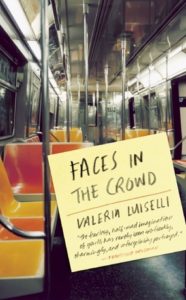
Faces in the Crowd by Valeria Luiselli

Posted July 21, 2018 by Michael @ Knowledge Lost in Contemporary / 0 Comments

Faces in the Crowd by Valeria LuiselliTitle: Faces in the Crowd (Goodreads)
Author: Valeria Luiselli
Translator: Christina MacSweeney
Published: Coffee House Press, 2011
Pages: 146
Genres: Contemporary
My Copy: Paperback

Buy: AmazonBook DepositoryKindleWordery (or visit your local Indie bookstore)

Faces in the Crowd is the story of a young mother living in contemporary Mexico City who is trying to write a novel. She recounts her time living in New York as a translator. Her novel is based on the bohemian life of Mexican poet Gilberto Owen, mainly focusing on his time in Harlem. Valeria Luiselli’s first novel to be published into English, Faces in the Crowd is a spectacular novel dealing with multiple perspectives and a shifting reality.

I have already recorded and released a podcast about this novel, with Lia from Hyde and Seek but I felt that I needed to put in a short review as well. If you are interested, most of my thoughts about this book are better discussed on that episode. Needless to say, I loved this book. Faces in the Crowd is the second Luiselli novel I have read. Having read The Story of My Teeth last year but this one stood out more. This is the novel that turned me into a fan and made me determined to read everything she has written, assuming it has been translated into English.

“…a horizontal novel told vertically”

The different perspectives made for a unique reading experience, one that made me slow down and take my time trying to understand what was going on. This really is a horizontal novel told vertically in the sense that you read down the page but there are so many layers of which you need to keep track. First you have her life as a married woman with a child in modern Mexico. Then you have her time as a translator in New York. The third thread is around Gilberto Owen’s life. However the narrative fractures and reality shifts, and the narrative threads get complicated, leaving the reader to try and decide between reality and fiction, the fiction that this unnamed woman is writing.

I knew I loved this novel from the start because it felt like a real approach to translated literature. “I worked as a reader and translator in a small publishing house dedicated to rescuing ‘foreign gems.’ Nobody bought them, though, because in such an insular culture translation is treated as suspicion. But I liked my work and I believed that for a time I did it well.” This statement happened on page one, and I felt like Valeria Luiselli had captured something real. I often feel that people treat translations as suspicious or something inaccessible.

I treated this novel as a peek into the world of translations and I felt like it captured it well. I think there was so much more going on that helped me fall in love with Faces in the Crowd and I hope that more people pick it up. Like I said earlier, check out the Lost in Translations episode on this book. I do not want to put too many details into my review because I legit want people to listen to the podcast. I have Sidewalks on my shelf, which is also translated by Christina MacSweeney, so I will probably pick that up soon.


The Impostor by Javier Cercas

Posted July 10, 2018 by Michael @ Knowledge Lost in Historical Fiction / 4 Comments

The Impostor by Javier CercasTitle: The Impostor (Goodreads)
Author: Javier Cercas
Translator: Frank Wynne
Published: MacLehose Press, 2014
Pages: 430
Genres: Historical Fiction
My Copy: eBook

Buy: AmazonBook DepositoryKindleWordery (or visit your local Indie bookstore)

Longlisted for the Man Booker International Prize 2018

One of the problems I faced with reading the entire Man Booker International longlist is that the judges tended to pick similar types of books. This year there was a real focus on novels that blurred the line between fiction and memoir. This means that some of the picks felt too similar. Take for example, The Imposter by Javier Cercas (translated by Frank Wynne), which I read right after reading Like a Fading Shadow by Antonio Muñoz Molina which was translated by Camilo A. Ramirez. Both books seem to be a hybrid that deal with real historical events as well as the author’s life.

The Imposter is centred on Enric Marco, a man who claimed he was a prisoner in Nazi German concentration camps Mauthausen and Flossenbürg during World War II. He was awarded the Creu de Sant Jordi (one of the highest civil distinction awards) by the Catalan government, as well as writing a book about his experience. He even became the president of Spain’s leading Holocaust survivor movement. However, it was a lie, in which he responded by saying “I am an impostor, but not a fraud”. A decade later Javier Cercas is investigating Spanish history and then looks into the impact Enric Marco had on the world.

This is a look into human nature and self-deception, while a fascinating concept, this just fell flat for me. This was one of the books I was looking forward to reading on the longlist. The idea of digging yourself into such a lie fascinated me. I truly think I picked this one at the wrong time. It became a struggle to read and I am unable to tell if it was the book itself or the timing. Both The Imposter and Like a Fading Shadow just blended together completely.

I am really unsure if I will re-read this book at a future date, but it has made me rethink reading the Man Booker International longlist in the future. Ideally, I would have read a few of the books on the long list before it is announced. I am getting more and more into books in translations and I hope in 2019 when the longlist is announced I will already have some of the books crossed off. Have you had this experience before? For those who have read this one, is it just a case of bad timing? I am curious to know from others.


Like a Fading Shadow by Antonio Muñoz Molina

Posted May 16, 2018 by Michael @ Knowledge Lost in Historical Fiction / 4 Comments

Like a Fading Shadow by Antonio Muñoz MolinaTitle: Like a Fading Shadow (Goodreads)
Author: Antonio Muñoz Molina
Translator: Camilo A. Ramirez
Published: Tuskar Rock, 2017
Pages: 320
Genres: Historical Fiction
My Copy: Library Book

Buy: AmazonBook DepositoryKindleWordery (or visit your local Indie bookstore)

Shortlisted for the Man Booker International Prize 2018

In 1968, James Earl Ray evaded the authorities after shooting Martin Luther King Jr. by using a fake passport and making his way to Portugal. During his last days of freedom, he wanders around Lisbon rehearsing his fake identities. In Like a Fading Shadow, Antonio Muñoz Molina reconstructs Ray’s final days, but it is also a meditation on the city that also inspired his first novel A Winter in Lisbon. Turning this into a blend of historical fiction and memoir, Muñoz Molina’s tries to weave his own experiences in with that of a man on the FBI’s Most Wanted list.

Everything about this novel sounded so appealing from the premise but reading it was so difficult. First of all, I thought the idea of having the James Earl Ray narrative interwoven with that of Antonio Muñoz Molina’s did not work as well as the author might have hoped. In hindsight, it would have been better to just read A Winter in Lisbon and then search the internet about Earl Ray’s final days. Secondly, I felt like this book kept going in circles and never really progressing in any satisfactory way. Which is disappointing because I think this was one of the books on the Man Booker International Prize longlist that I was excited to read.

This is so disappointing, the idea to make a fictionalised account of what might have happened when James Earl Ray was in Portugal sounds amazing. I was fascinated that he was able to sneak across the border to Canada and use a fake passport to get to London and eventually make it all the way to Lisbon. He spent his time trying to get to Angola, which alone would have made for an interesting narrative; why is a pro-white supremacist trying to get to Africa? Then you have this memoir-like narrative of Antonio Muñoz Molina trying to write his first novel, A Winter in Lisbon. Separately this could be stimulating to explore the writer’s process and the emotions behind creating a novel. However, as a combination it ended up to be too little of each and together it never came together.

The Man Booker International Prize longlist has been focusing on narratives the blend fiction and non-fiction and I can see why this book was picked but I do not see the appeal for it to make the shortlist. I wanted to love this book; I went in with high expectations but I ended up struggling through this. Between this and The Imposters (which is very similar in many ways) I almost found myself in a reading slump. Thankfully Flights by Olga Tokarczuk was there to save me.