Source: Personal Copy

Mr. Kiss and Tell by Rob Thomas & Jennifer Graham

Posted May 6, 2015 by Michael @ Knowledge Lost in Crime / 0 Comments

Mr. Kiss and Tell by Rob Thomas & Jennifer GrahamTitle: Mr. Kiss and Tell (Goodreads)
Author: Jennifer Graham, Rob Thomas
Series: Veronica Mars #2
Published: Random House, 2015
Pages: 336
Genres: Crime
My Copy: Paperback

Buy: AmazonBook DepositoryKindle (or visit your local Indie bookstore)

Veronica Mars is back, and this time she is investigating what might be her most challenging case. The Neptune Grand has hired her to investigate a woman’s claims of assault and rape in one of their hotel rooms. This is a high-profile scandal that has the potential to ruin this ritzy hotel. Mr. Kiss and Tell is a mystery that finds Veronica working for the ‘big guy’ investigating something she has personally experienced, how will she cope with this type of case?

Most may be aware that I am a big fan of the Veronica Mars series and I was so excited that they were continuing the story in book form. Now the books are slightly different, switching from first person to third, but the characters and setting are all there. If you have seen the TV series you know that sometimes Veronica can get involved in a case that can challenge her own values. The show and book have an interesting exploration into the class struggle and Mr. Kiss and Tell has Mars working for the people (this time Neptune Grand) with the money.

What I enjoyed about this book is the way that Rob Thomas and Jennifer Graham explored that struggle between Mars’ own personal experiences and the nature of the case. Rob Thomas often did this in the TV show and it was nice to see this conflict returning for the book series. Veronica Mars is a strong independent woman and I love this about her but I like to see that little bit of vulnerability coming through in this book, it really helps humanise her.

It is hard to talk about mystery novels without giving away the plot but what I will say is that I did not enjoy this one as much as The Thousand Dollar Tan Line. This book does feature a lot more of Logan Echolls but I always ship Veronica Mars and Mac Mackenzie (who featured heavily in book one). I am so happy to read more about Veronica’s life and I will be anxiously waiting for the next book in this series.


The Stranger by Albert Camus

Posted May 2, 2015 by Michael @ Knowledge Lost in Classic / 6 Comments

The Stranger by Albert CamusTitle: The Stranger (Goodreads)
Author: Albert Camus
Translator: Matthew Ward
Published: Vintage, 1941
Pages: 123
Genres: Classic
My Copy: Paperback

Buy: AmazonBook DepositoryKindle (or visit your local Indie bookstore)

The Stranger (also known as The Outsider or L’Étranger) tells the story of Meursault, an unsympathetic French Algerian, who after attending his mother’s funeral, finds himself killing an Arab man. The novel follows a first-person narrative that explores the events before and after this murder. Albert Camus said is best when he said “I summarised The Stranger a long time ago, with a remark I admit was highly paradoxical: ‘In our society any man who does not weep at his mother’s funeral runs the risk of being sentenced to death.’ I only meant that the hero of my book is condemned because he does not play the game.”

On the surface The Stranger is the story of an emotionless protagonist; Meursault does not care about anything and could be considered a sociopath. However, this novel is often cited as an example of Camus’ philosophy on the absurd and existentialism. So in order to fully grasp the intent behind this classic novel, we must look into just what existentialism is and more practically absurdism.

The absurd is often referring to the conflicting philosophy that humans have a tendency to seek out value and meaning in life. However absurdism believes it is logically and humanly impossible to find any meaning of life. Philosophers may have very different doctrines but they generally believe that philosophical thinking begins with the human subject. Though existentialism comes from the disorientation or confusion that we are living in a meaningless (or absurd) world.

For Albert Camus, The Stranger is an exploration into the meaning of life and if life has no meaning what is the purpose of morality. Meursault’s detachment from the world is a result of his conclusion that life is meaningless; “The chaplain knew the game well too, I could tell right away: his gaze never faltered. And his voice didn’t falter, either, when he said, ‘Have you no hope at all? And do you really live with the thought that when you die, you die, and nothing remains?’ ‘Yes,’ I said.” Paradoxically, it was only after being sentenced to death, that Meursault was able to obtain some sense of happiness.

Without an understanding of Albert Camus’ philosophical ideas, I do not think that the reader will have any hope in truly understand or appreciating this novel. However I have heard that The Stranger has been an option for high school students (especially in America) to study. I wonder how many students fall into the trap of picking this novel thinking it was short only to discover how difficult it is to analyse. I do not have enough of an understanding of absurdism or existential philosophy to full appreciate The Stranger. However re-reading this novel has helped me understand this enough to enjoy the Camus’ philosophical ideas.


The Yellow Wallpaper and Other Stories by Charlotte Perkins Gilman

Posted April 28, 2015 by Michael @ Knowledge Lost in Short Stories / 0 Comments

The Yellow Wallpaper and Other Stories by Charlotte Perkins GilmanTitle: The Yellow Wallpaper and Other Stories (Goodreads)
Author: Charlotte Perkins Gilman
Published: Dover Thrift, 1892
Pages: 70
Genres: Short Stories
My Copy: Personal Copy

Buy: AmazonBook DepositoryKindle (or visit your local Indie bookstore)

In the title story “The Yellow Wallpaper” Charlotte Perkins Gilman tells the story of a woman on the verge of a nervous breakdown. A specialist recommends that she takes rest cure; a treatment in which has her lying in bed all day and only allowed two house of intellectual activities a day. After a few months of staring at the walls, things are far from improving.

While this is a collection of short stories, I am focusing on the title story simple because it gives you a sense of what to expect when reading Charlotte Perkins Gilman. “The Yellow Wallpaper” explores the decline of the protagonist’s health, both physically and mentally. Written in a series of diary entries, the story not only looks at depression but, on a deeper level, gender roles. The doctor and her husband are portrayed as repressors; while their intentions are to help her heal they never take into account her own opinion.

This in turn critiques that position of the woman, especially when it comes to the institution of marriage. Gilman looks at marriage as a hierarchy; the male is actively working and knows what is best for the house, while the wife is put in charge of the domestic jobs (cooking, cleaning and so on). The wife becomes a second class citizen; a servant only there to serve her husband. When the protagonist of “The Yellow Wallpaper” gets sick she is demoted further and her role becomes similar to a petulant child.

While I have focused on the story “The Yellow Wallpaper”, these similar themes are found throughout this collection. What I found so satisfying is the way Charlotte Perkins Gilman uses irony to express her opinions. The use of both verbal and dramatic irony is found in all her stories but I enjoyed the sarcasm the most. There is a lot of symbolism and motifs within the stories well worth exploring that really empathises her point.

I loved this collection of short stories by Charlotte Perkins Gilman, there are so many interesting topics worth exploring and I used “The Yellow Wallpaper” to emphases and provide a glimpse into what you can expect. I am determined to read a whole lot more of Gilman’s works, I fell in love with her writing style and got so much pleasure out of reading these stories. The Yellow Wallpaper and Other Stories is a collection of stories well worth picking up and adding to your personal library.


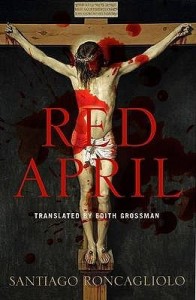
Red April by Santiago Roncagliolo

Posted April 18, 2015 by Michael @ Knowledge Lost in Crime, Thriller / 2 Comments

Red April by Santiago RoncaglioloTitle: Red April (Goodreads)
Author: Santiago Roncagliolo
Translator: Edith Grossman
Narrator: Jonathan Keeble
Published: Atlantic Books, 2011
Pages: 288
Genres: Crime, Thriller
My Copy: Audiobook

Buy: AmazonBook DepositoryKindle (or visit your local Indie bookstore)

Associate District Prosecutor Felix Chacaltana Saldivar does everything by-the-book, he is organised and knowledgeable on the laws of the land but this tends to rub people the wrong way. When a body is found burnt beyond recognition, Chacaltana’s life is never going to be the same. The investigation into this unique murder leads the associate District Prosecutor to question the choices the government are making. Set during Holy Week in Peru, Red April is a chilling political thriller that explores a twisted murder and a morally bankrupt government.

Red April takes place during Lent 2000, mainly in the Peruvian city of Ayacucho and follows a methodical prosecutor as he investigates a bizarre crime. These were the final days of Alberto Fujimori who vacated the presidency and fled the country in November 2000 due to a major corruption scandal and allegations of human rights violations. When Fujimori came to power in 1990, Peru was dominated by two terrorist organisations, the Maoist group Sendero Luminoso and the Marxist-Leninist organisations known as Túpac Amaru Revolutionary Movement (MRTA). It was not until about 1997 when most of this internal conflict resolved, but this was achieved by the Grupo Colina, which was a death squad made up of members of the Peruvian Armed Forces.

Set in the early 2000s, this novel explores that period of time where people loved Alberto Fujimori for making them feel safe but corruption is becoming a big problem. Even the main protagonist struggled with the idea of not supporting the president. Saying something like “the terrorist killed my mother, brother and sister but since the president took office, no one else from my family has been killed. Why would I vote for somebody else?” This hold on the past is something that runs strong throughout the novel, particularly with Associate District Prosecutor Felix Chacaltana Saldivar who holds on to the memory of his mother. The book is set during Lent and then Holy Week which is a time of reflection and to remember the past, when Christ died for the sins of the world.

Peru is a very religious country, in the 2007 census only 2.9% identified as non-religious, with 81.3% claiming to be Roman Catholic. The Catholic Church is a very important part of the country, even Article 50 of its constitution states that “[the Church is] an important element in the historical, cultural, and moral development of the nation.” The city of Ayacucho, in which the majority of this novel is set. lays claim to 33 Catholic Churches (one for every year of Jesus’ life) and hosts a large religious celebration during Holy Week every year. When reading Red April you quickly learn just how important religion is to the Peruvian people and the plot of the novel.

One of the things that fascinated me about Red April is the culture depicted within the book. Santiago Roncagliolo did not shy away from depicting the dark themes or the problematic political situation that Peru faces. He questions the counter-terrorism strategies of the Fujimori government but also depicts the overall sense of relief that the people had when terrorist organisations were dealt with. The corrupt government and the bureaucratic nightmare that Felix lived through all gave a sense of the political landscape. The Associate District Prosecutor did everything to the letter of the law, including sending rapists to prison; however this made him an outcast, even the rape victims got angry that they were unable to marry their attackers and get their reputation intact.

One reason I read a lot of translated fiction is because I find it interesting to explore different cultures and worlds. The Peru depicted in Red April is so foreign to me that I could not help but be spellbound by the cultural differences. Red April was the 2011 winner of the International Foreign Fiction Prize (IFFP), a literary award I have started to follow closely now that I read more books in translation. The novel was translated into English by Edith Grossman and is a book that I picked up in order to read more books from South America. I am very glad to have read Red April, not only is it an excellent mystery/thriller but as you can see it was an interesting insight into Peru.


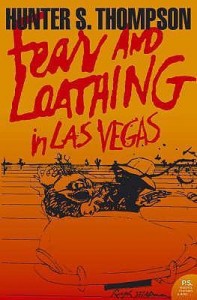
Fear and Loathing in Las Vegas by Hunter S. Thompson

Posted March 30, 2015 by Michael @ Knowledge Lost in Book of the Month, Classic / 2 Comments

Fear and Loathing in Las Vegas by Hunter S. ThompsonTitle: Fear and Loathing in Las Vegas (Goodreads)
Author: Hunter S. Thompson
Artist: Ralph Steadman
Published: Harper Perennial, 1971
Pages: 230
Genres: Classic
My Copy: Paperback

Buy: AmazonBook Depository (or visit your local Indie bookstore)

Journalist, Raoul Duke heads to Las Vegas with his attorney Dr Gonzo in order to cover the Mint 400 motorcycle race. After experimenting with some recreational drugs, LSD, ether, cocaine, cannabis and alcohol, their assignment was quickly abandoned. What follows is a series of hallucinogenic trips that end in disaster from trashed hotel rooms, car wrecks and much more. Fear and Loathing in Las Vegas: A Savage Journey to the Heart of the American Dream is a roman à clef, with autobiographical elements in which Hunter S. Thompson writes a retrospective of the 1960s countercultural movement.

Hunter S. Thompson was a journalist, but he was best known for his novel Fear and Loathing in Las Vegas. While working in Journalism he coined the term Gonzo journalism which is a writing style he adopted for his first person narratives. The style is a combination of fact and fiction that allows Thompson a more personal approach to his articles. Combining elements of sarcasm, humour, exaggeration and profanity it allowed a first person look into social criticism. Fear and Loathing in Las Vegas was a result of Gonzo journalism and was originally published as a two part series in Rolling Stone magazine in 1971.

When thinking about the life of Hunter S. Thompson, I find it hard to imagine him as someone who  critiques the 1960s counterculture. I think of him saying things like “I hate to advocate drugs, alcohol, violence, or insanity to anyone, but they’ve always worked for me.” Thompson has often stated that this novel was an exploration into the death of the American Dream but his views on counterculture are so fascinating. Drawing inspiration from his two favourite novels The Great Gatsby and On The Road, Thompson combines ideas of travelogue and the American Dream and goes on to show the reason why drug use was not the answer to social problems.

Fear and Loathing in Las Vegas is a pretty confronting novel; the descriptions of drug-induced hazes and lurid hallucinogenic trips are very vivid and confronting. I am pretty sure I have read this book in the past but I had not marked it as read on Goodreads, LibraryThing or even the spreadsheet I keep. However going into the novel everything felt so familiar and I cannot tell if it was due to the movie adaptation or if I have actually read the book before.

The experience of reading Fear and Loathing in Las Vegas is enhanced by the illustrations done by Ralph Steadman. My edition of the book stated in the introduction that Hunter S. Thompson requested the art to be done by Steadman because he believed this illustrator really understood the concept of Gonzo journalism. The novel is an interesting book and well worth exploring, and I was interested to see the satirical side and surprised at the way Thompson criticised his own lifestyle in this autobiographical novel.


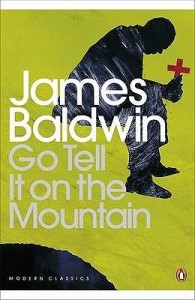
Go Tell It on the Mountain by James Baldwin

Posted March 22, 2015 by Michael @ Knowledge Lost in Classic / 0 Comments

Go Tell It on the Mountain by James BaldwinTitle: Go Tell It on the Mountain (Goodreads)
Author: James Baldwin
Narrator: Adam Lazarre-White
Published: Penguin, 1953
Pages: 256
Genres: Classic
My Copy: Audiobook

Buy: AmazonBook Depository (or visit your local Indie bookstore)

Go Tell It on the Mountain is the first major release by James Baldwin and is a semi-autobiographical novel about growing up in Harlem. James Baldwin never knew his biological father and his stepfather was a strict Baptist minister. Go Tell It on the Mountain mainly follows the character John Grimes (who is the autobiographical character in the novel) but really shifts focus to other characters, to allow the exploration of John’s immediate family.

It took James Baldwin ten years to write Go Tell It on the Mountain and he has often stated that it was not a book he wanted to write but a book he felt he had to get out of his system before he would write anything else. This is a semi-autobiographical novel that focuses mainly of the hypocrisy within the community. James Baldwin’s stepfather was a minister and the way he acted in church was vastly different than when he was at home. He was a strict and abusive parent and this hypocrisy was evident within this novel.

However, there is so much more to this novel than just exploring how different people act when at church. Baldwin has a lot to say about the community and, while racism plays a big part within this debut novel, it was some of the other themes that interested me the most. The struggle between life and faith is a topic that I am fascinated in and while it is not the same as found in the memoir The Dark Path, this is explored in an interesting way within this novel. John Grimes had a spiritual awakening as a teenager and went onto become a preacher, however the hypocrisy he found within the church disheartened him and eventually he walked away from that life.

Yet Go Tell It on the Mountain goes a little deeper in exploring the hypocrisy of the church with subtle references to Baldwin’s sexuality. This is not explored in great detail within this book but it is a major theme in Giovanni’s Room. The way this novel explores the church life is fascinating and he shows great care for his characters; take for example John’s stepfather Gabriel, he may be hypocrite but he still requires some sympathy. He married John’s mother and raised him even if their union would be considered controversial within the church. I love how this novel plays with the religion and the way people differ between their church and home life.

This was my first James Baldwin novel but I have had the opportunity to read some of his short stories in the past. On the surface Go Tell It on the Mountain does sound like it is just focused on the hypocrisy of the church but I love the depth James Baldwin put into this book. The characters are so well crafted that even if you want to hate them you still feel a little compassion towards them. I cannot put my finger on James Baldwin’s writing style; at times it reminds me of dirty realism but all I know is that it makes me want to read more of his novels.


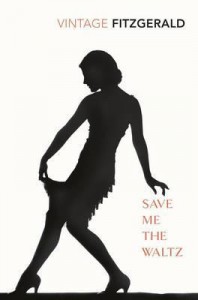
Save Me the Waltz by Zelda Fitzgerald

Posted March 14, 2015 by Michael @ Knowledge Lost in Classic / 2 Comments

Save Me the Waltz by Zelda FitzgeraldTitle: Save Me the Waltz (Goodreads)
Author: Zelda Fitzgerald
Narrator: Jennifer Van Dyck
Published: Vintage, 1932
Pages: 225
Genres: Classic
My Copy: Audiobook

Buy: AmazonBook DepositoryKindle (or visit your local Indie bookstore)

Save Me the Waltz is the story of Alabama Beggs, a young Southern girl who meets and falls in love with David Knight during World War I. The two inevitably get married and David goes on to become a successful painter, before moving their family to the French Riviera. However Alabama is determined to find her own success and takes up ballet. When she lands her first solo debut in the opera Faust the cracks in their marriage become evident.

After an episode of hysteria in 1932, Zelda Fitzgerald was admitted to the Johns Hopkins Hospital in Baltimore for treatment. Dr Adolf Meyer, an expert on schizophrenia was her doctor and as part of her recovery routine he got her to write at least two hours a day. Save Me the Waltz was written over the course of six weeks and was the first and only novel to be published by Zelda Fitzgerald. Her husband was outraged that she took so much of their personal life and added it into this novel. Despite the fact that the majority of F. Scott Fitzgerald’s novels are also autobiographical and he used the same material for his novel Tender is the Night.

I wanted to read Save Me the Waltz after reading Tender is the Night to compare the similarities. The problem I soon discovered is that Save Me the Waltz has possibly been whitewashed by F. Scott Fitzgerald. Apparently he helped Zelda revise her book and the amount that has been changed is unknown because her original manuscript has been lost. However Scott went from being irate to writing to Maxwell Perkins at Scribner (their publisher) “Here is Zelda’s novel. It is a good novel now, perhaps a very good novel—I am too close to tell.” I am inclined to believe that he has made sure he comes across better than originally written but without the original that is purely speculation.

The major theme within Save Me the Waltz is around the intense desire for Alabama/Zelda to succeed for themselves. It was not enough for either person to be the wife behind a successful man, and it explores the problems faced in doing this in a male dominated society. When Alabama gets her dream job in Naples with the San Carlo Opera Ballet Company, David does not want to move. Considering that he is a painter and could really work from anywhere, it says a lot about their marriage. This does not hinder Alabama from perusing her dreams and she goes to Naples anyway, leaving her husband to look after their child alone. Now this move may make people uneasy but it really plays with the power dynamic of marriage. Zelda Fitzgerald wants to challenge the conceptions people had of the role of a wife in a marriage and ask why it was alright for a man to go away for work but not the woman.

This can be a very difficult novel to read, knowing the historical context and history behind the story. Comparing this book with Tender is the Night does not leave F. Scott Fitzgerald in pleasant light but then again his novel did not do that either. One of the most powerful lines in this novel can be found right near the end and it beautifully wraps up the whole book into a few lines. “Emptying the ashtrays was very expressive of myself. I just lump everything in a great heap which I have labelled ‘the past,’ and having thus emptied this deep reservoir that was once myself, I am ready to continue.”

While I cannot say that Save Me the Waltz is a strong novel, it was a fascinating exploration into the lives of the Fitzgeralds. I am glad to have read and compared this book to Tender is the Night but I think it has only fuelled my interest into this couple. I still need to read a biography or two on the Fitzgeralds but I am beginning to get a better idea of their lives. I think if you are going to read Tender is the Night, you need to read Save Me the Waltz so you can have perspective on the autobiographical elements; even if they were tainted by F. Scott Fitzgerald’s edits.


Deeper Waters by Jessie Cole

Posted March 12, 2015 by Michael @ Knowledge Lost in Contemporary / 0 Comments

Deeper Waters by Jessie ColeTitle: Deeper Waters (Goodreads)
Author: Jessie Cole
Published: Harper Collins, 2014
Pages: 384
Genres: Contemporary
My Copy: Paperback

Buy: Book Depository (or visit your local Indie bookstore)

Meme has been enjoying the simple life in Northern News South Wales; that was until she saves the life of Hamish in a heavy summer downpour. Cut off from the rest of world Hamish discovers a world cut off from technology. During this time with this stranger in the house, Meme also learns about the world outside of her own.

Jessie Cole’s novel Deeper Waters is a coming of age story about the sexual awakening of twenty-something year old Meme. However it is also a culture clash novel between the lifestyle people in the city (Hamish) are used to and just how different the rural outback can be. Both Meme and Hamish are from the same country but their lives are very different. Growing up with technology, it is hard to see a world without it and interestingly enough Deeper Waters manages to capture this perfectly. At times you think you are reading a book set in the 1970s or early 1980s but then the mention of technology reminds you that this is a book set in current times.

This was a book club pick and not something I would generally pick up on my own but it did make an interesting choice to discuss. However, I found the character development a little problematic; Meme was well developed but Hamish was very two dimensional and her best friend Anja was just a pile of clichés. The book did show a lot of promise for this emerging Australian author, her writing was solid and atmospheric but she could have developed all the other characters a whole lot more.

I really did enjoy the culture clash but after that the book did fall a little short. There was one thing that was mentioned in our book club discussion that I did not pick up on but now seems to bother me. Meme has a clubfoot (congenital talipes equinovarus) which is a birth defect that you do not really hear about these days, due to the advancement of medical treatments. However this might be a sign of the area Meme grew up in but all I can think now is that Hamish travelled back to the 1970s.

Deeper Waters is an interesting book to discuss however there are so many novels about the sexual awakening that explore this topic so much better. I am glad I read this Australian novel but I feel like Jessie Cole had the opportunity to do a lot more with the book but didn’t take it. Having said that, it is still a good read and Cole is an author worth watching. I have heard from multiple reviewers that Jessie Coles has improved greatly since her first novel, so that must mean her next book will be well worth checking out.


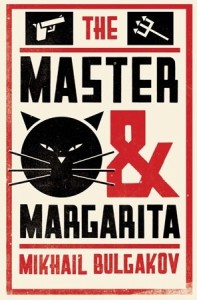
The Master and Margarita by Mikhail Bulgakov

Posted March 10, 2015 by Michael @ Knowledge Lost in Classic, Magical Realism / 2 Comments

The Master and Margarita by Mikhail BulgakovTitle: The Master and Margarita (Goodreads)
, 1967
Pages: 403
Buy: AmazonBook Depository (or visit your local Indie bookstore)

When I first read The Master and Margarita by Mikhail Bulgakov back in 2012 I had no idea how to review it. Now that I have re-read the book, I am still at a loss. The Master and Margarita is often considered as one of the best novels of the 20th century by critics and cited as the top example of Soviet satire. Like most of Mikhail Bulgakov’s bibliography, this author never saw the effect that this novel had on the world; it was written between 1928 and 1940 but was first published in 1967, long after his death.

One of the things I love about Russian literature is the social commentary and satirical nature found in a lot of their books. During the Soviet era there was a lot written about the political state of the country but these were often heavily censored before publication. There was a distribution practise happening at the time call called samizdat, which is when individuals reproduced censored publications and passed them out to readers. The term samizdat comes from the Russian words, sam which roughly means “self” and izdat “publishing house”, so possibly the first use of self-publishing. If it wasn’t for this underground practice we may never have the uncensored editions of Russian classics like Doctor Zhivago by Boris Pasternak, the majority of Aleksandr Solzhenitsyn books and of course The Master and Margarita.

The novel starts out with Berlioz and Bezdomny talking at the Patriarch ponds when a mysterious professor appears and strikes up a conversation. This professor is actually Satan and he was talking to them about the existence of God, the idea being if God doesn’t exist, can Satan?. Russia at the time was an atheist state, in fact communism and religion often do not go hand in hand. During the Stalinist era the Soviet government tried to suppress all forms of religious expression. Bulgakov’s commentary on religion and the government is an interesting one and while there are other interpretations of the novel this was what I took away from the novel this time round.

The ideas of censorship of religion continues with the Master’s book about Pontius Pilate, which was rejected and he was accused of pilatism. Though pilatism is found throughout the book The Master and Margarita as well, Pilate is not only in the Master’s novel but appears in Satan’s stories as well as dreams. The Master has poured his heart and soul into it his novel and having rejected sent him into a tailspin. This satirisation of censorship and religion plays though out the entire novel.

The idea of pilatism is an interesting one since in Christianity Pontius Pilate is the seen as the one that sentenced Jesus (referred to by his Hebrew name Yeshua Ha-Nozri in this novel) to die on the cross. Pilate becomes a symbol of humanity’s evil within religion and The Master and Margarita but you can argue that it is possible that he was a victim of society. Pilate’s ruling on Yeshua Ha-Nozri was due to pressure from the people and the high priests, he literally (and symbolically) washed his hands of the situation. I got the impression that Mikhail Bulgakov was comparing this idea of pilatism with the soviet government at the time. Human nature is apparently evil but it is also very influential of society, and what does that say about the atheist state?

There is so much going on within this novel and I would love to talk about the influences of Goethe’s tragic play Faust on the book. However I think I would need to re-read Faust to be able to compare it with The Master and Margarita. I would have also liked to explore the constant changes on narration, from an omniscient observer to the characters within the book but not sure what else to say about that. I re-read this book as part of a buddy read, my first buddy read in fact and I had a lot of fun doing this but I think I wasn’t a good reading partner. This time I read the Hugh Aplin translation of The Master and Margarita and I think I enjoyed it more than the Pevear/Volokhonsky translation I read last time. This may have been because I got more out of the book or maybe there is something about Richard Pevear and Larissa Volokhonsky translations I didn’t like, I tend to avoid their translations.

I hope I have made a coherent review, I focused mainly on censorship and religion because this book is weird and all over the place so I needed to stick to one topic to make sense of what I have read. I do plan to re-read The Master and Margarita sometime in my life, I might even try a different translation again (any suggestions?). I got so much out of this book this time around and has really made me appreciate the value of re-reading. I ended my last review of this book telling people to ‘just read it’ and I think that sentiment still stands.


Broken Homes by Ben Aaronovitch

Posted March 6, 2015 by Michael @ Knowledge Lost in Fantasy / 2 Comments

Broken Homes by Ben AaronovitchTitle: Broken Homes (Goodreads)
Author: Ben Aaronovitch
Series: Peter Grant #4
Narrator: Kobna Holdbrook-Smith
Published: Orion, 2013
Pages: 324
Genres: Fantasy
My Copy: Audiobook

Buy: AmazonBook Depository (or visit your local Indie bookstore)

Peter Grant has gotten himself an arch-nemesis; a twisted magician known as the Faceless Man is reeking having on London’s underground. On the case of a suspected serial killer named Robert Weil, Peter Grant has discovered a deeper conspiracy involving his nemesis and weirdly enough a neo-brutalist housing estate. Will Peter finally stop the Faceless Man? Can he work out just how he feels about his partner Lesley Mai? Or can he make it through one case without destroying a major landmark?

As most people know, I am a fan of the Peter Grant series and Broken Homes (the fourth book) did not disappoint. Ben Aaronovitch has created a great world that mixes police work, urban fantasy and humour together perfectly. So much so, that as soon as I finished Whispers Under Ground, which is book three, I picked up Broken Homes.

The best thing about this series is the overarching story that unfolds. This does mean you have to read the books in order but it is something that I found was missing in many crime series and The Dresden Files. I enjoy watching the characters grow and discovering new details about this world. So much so that I was ready to pick up book five, which is called Foxglove Summer right away. I haven’t done that but I suspect it will happen soon.

In every book there is something that is revealed about the world or characters that really helps cement my love for the series and the world that has been created. This time there was more around Inspector Nightingale’s back story including the elite wizardry school he attended when he was young; which means plenty of Harry Potter jokes to be told.

I have talked a lot about this series, since I have reviewed every book but one thing I find hard about reviewing a series, especially a crime one, is how to avoid spoilers. There is so much to love about these books and I highly recommend them but I cannot say much about them. This does make it difficult to recommend them or convince people to read them but know that I enjoyed Whispers Under Ground so much that Foxglove Summer will probably be read very soon. Then I will have to wait til November for The Hanging Tree (book six) to be released.