Source: Personal Copy

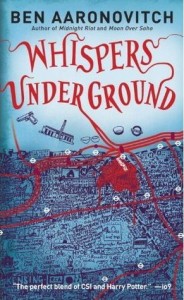
Whispers Under Ground by Ben Aaronovitch

Posted February 25, 2015 by Michael @ Knowledge Lost in Fantasy / 4 Comments

Whispers Under Ground by Ben AaronovitchTitle: Whispers Under Ground (Goodreads)
Author: Ben Aaronovitch
Series: Peter Grant #3
Narrator: Kobna Holdbrook-Smith
Published: Orion, 2012
Pages: 303
Genres: Fantasy
My Copy: Audiobook

Buy: AmazonBook DepositoryKindle (or visit your local Indie bookstore)

When a body is found stabbed to death at the far end of Baker Street tube station, it seems like an ordinary murder. The victim is an exchange student at Central St. Martins named James Gallagher and his father is an American senator. The Folly have been called in to assist with the investigation and it is quickly discovers that there is a supernatural component to this crime. This case leads Peter Grant into the secret underground that lies underneath the streets of London.

Peter Grant is back in the third book in the series, still a sorcerer’s apprentice to Inspector Nightingale. The Folly, which is the police department that specialises in the supernatural has grown to three, as Lesley May officially joins the team. Yet again this is a natural progression in the series, Peter doesn’t know many spells and still struggles with his form but he has grown as a police officer, a wizard and a person. What I enjoyed about Whispers Under Ground is the character Dr Abdul Haqq Walid is explored in greater detail. He is a world renowned gastroenterologist and cryptopathologist who works with the Folly and is investigating how magic effects the world. This allows Ben Aaronovitch to build his world a bit more and explores the effects of magic.

While this is an urban fantasy series, it follows the tropes found in a police procedural and Peter Grant never just relies on his magical abilities but rather sticks to his strengths, which he learned from his training. There is a lot of investigational work within the series and sometimes I worry that the police procedural elements will over power the urban fantasy or humour, however Aaronovitch gets the balance right.

If you have not read the series, I would highly recommend it mainly because of the character development, in particular Peter Grant and Nightingale. Peter Grant is a biracial character (his mother is from Sierra Leone and I am pretty sure his father is white) and his heritage and life play a big part in shaping him. This also allows Ben Aaronovitch to play a little with racism but I feel like he handles the whole subject well. Inspector Nightingale is a prim and proper Englishman and the last officially sanctioned English Wizard, having gone to a now defunct private school for wizardry allows for plenty of Harry Potter jokes.

This is a fun series that I am completely immersed in; when I finished Whispers Under Ground I didn’t want to leave the world. I started Broken Homes (which is book four) straight away, which is unusual for me but I needed to know what happened next. For fans of urban fantasy, police procedurals and British humour, I highly recommend the Peter Grant series, I do not think you will be disappointed.


The Secret History of Wonder Woman by Jill Lepore

Posted February 20, 2015 by Michael @ Knowledge Lost in Non-Fiction / 4 Comments

The Secret History of Wonder Woman by Jill LeporeTitle: The Secret History of Wonder Woman (Goodreads)
Author: Jill Lepore
Narrator: Jill Lepore
Published: Scribner, 2014
Pages: 432
Genres: Non-Fiction
My Copy: Audiobook

Buy: AmazonBook DepositoryKindle (or visit your local Indie bookstore)

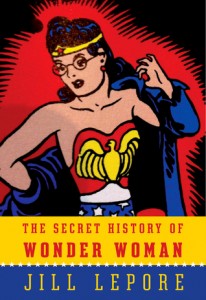
The Secret History of Wonder Woman is the story behind Wonder Woman and her creator William Moulton Marston. The life of Marston is a fascinating and unconventional one, full of contradictions and this book really explores this in a bit more detail. The idea of Wonder Woman grew from the Amazons in Greek mythology and the feminist movement. Wonder Woman first appeared in All Star Comics #8 in 1941 and is now one of the most recognisable superhero’s to grace the comic book pages. Despite this fact, there has not been a major motion picture about Wonder Woman yet, The Lego Movie (2014) has been her first and only film appearance to date.

American psychologist, lawyer and the inventor of the Lie Detector, William Moulton Marston created Wonder Woman under the pen name Charles Moulton, but it is his life that seems to be the biggest influence on this caped crusader. Wonder Woman is a powerful feminist and this may have been a little problematic for the movement. First of all, Marston’s Wonder Woman was a powerful woman but she lost her powers when bound by a man. This could be considered a symbol of the oppressive nature of a male dominated society however the frequency use pointed to his a fixation of bondage and submission.

Originally William Moulton Marston called his character Suprema and she stated that she was a “tender, submissive, peaceloving as good women are, [combining] all the strength of a Superman plus all the allure of a good and beautiful woman”. This in itself shows the problems facing the creation of Wonder Woman and Marston was very controlling of his creation and the vision he had for her. While on the surface Marston was promoting the feminist movement, his personal life contradicted his ideals; living with two women, his wife and his mistress, he expected them to fulfil all there wifely duties at home while his wife was the main source of income for the majority of their lives.

The Secret History of Wonder Woman is an interesting micro-history that explores the life of William Moulton Marston and Wonder Woman. While some of what is revealed within this book is nothing new, Jill Lepore does a good job of bringing feminist history into the world of pop-culture. There is so much worth talking about here and this book asks the question, should Wonder Woman be recognised as a feminist icon? Well worth checking out if you are a fan of this superhero or are just interested in the history behind her.


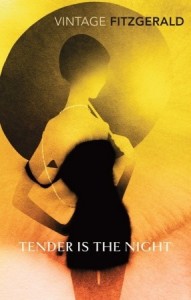
Tender Is the Night by F. Scott Fitzgerald

Posted January 30, 2015 by Michael @ Knowledge Lost in Book of the Month, Classic / 2 Comments

Tender Is the Night by F. Scott FitzgeraldTitle: Tender Is the Night (Goodreads)
Author: F. Scott Fitzgerald
Published: Vintage, 1933
Pages: 344
Genres: Classic
My Copy: Paperback

Buy: AmazonBook DepositoryKindle (or visit your local Indie bookstore)

Rosemary is a young movie scarlet on vacation in the French Rivera, with her mother. It is there that she meets the handsome psychologist Dick Diver and falls madly in love with him. The only problem is Dick is married and his wife, Nicole, a sophisticated socialite is just as lovable. While this magnetic couple draw in admirers and bask in the social spotlight, things are not as perfect as they seem. Tender is the Night is an exploration into a degenerating marriage and the differences between what people project publicly verses what is really happening under the surface.

In 1932 Zelda Fitzgerald was hospitalised for schizophrenia, although there have been huge debates since as to whether she should have been diagnosed with bi-polar disorder (if it was classified back then) instead. While Zelda was being treated at the Phipps Clinic at Johns Hopkins Hospital in Baltimore, she had a burst of creativity. Over six weeks she wrote her only novel Save Me the Waltz which was published the same year. The novel was semi-autobiographical and when F. Scott Fitzgerald read it he was furious that she shared so much of their personal life within the book. Even though Scott shares a lot of their lives in his own novels, the anger may have to do with the fact he planned to use the material for his next novel Tender is the Night. It is hard to tell how much of Scott’s novel is based on real life and how much is just written in anger towards his wife, I will have to read Save Me the Waltz to make up my own mind.

While Nicole Diver is heavily based on Zelda Fitzgerald, it is up to the reader to make up their mind about Dick and if F. Scott Fitzgerald based this character on himself. I personally think there is a lot of Scott in this character and he wants to portray himself as the handsome, intelligent husband that is devoted to his wife, looking after her through her mental illness. However this is where it gets a bit passive aggressive; Tender is the Night chronicles the downward spiral of Dick Diver’s life. As the novel progresses you begin to see just how this lifestyle and his marriage effects Dick to the point where he is nothing but a shell of his former self.

There are some interesting themes worth exploring within this novel; for me I was mostly interested in the ideas of appearance and reading about F. Scott Fitzgerald’s thoughts about being married. There is such beauty within the writing, but then there is so much sadness to be found as well. I found this to be a heart-breaking novel and the fact that this is based so much on his own marriage just makes things worse. I’m planning to read Save Me the Waltz very soon, just so I can compare the two novels.


The Death of Ivan Ilyich by Leo Tolstoy

Posted January 15, 2015 by Michael @ Knowledge Lost in Classic / 0 Comments

The Death of Ivan Ilyich by Leo TolstoyTitle: The Death of Ivan Ilyich (Goodreads)
Author: Leo Tolstoy
Translator: Nicolas Pasternak Slater
Published: Oxford World's Classics, 1884
Pages: 256
Genres: Classic
My Copy: Paperback

Buy: AmazonBook DepositoryKindle (or visit your local Indie bookstore)

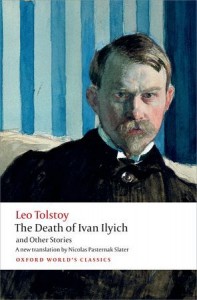
Ivan Ilych’s life revolved around his career; as a high court judge he takes his job very seriously. However after he falls off a ladder, he soon discovers that he is going to die. The Death of Ivan Ilyich is a novella that deals with the meaning of life in the face of death. A masterpiece for Leo Tolstoy written after his religious conversion in the late 1870s.

Something that was fascinating about The Death of Ivan Ilyich is the drastic change in writing style when comparing it to Anna Karenina and War and Peace. I am not just referring to the length, but that does play a big part. I have read somewhere that Tolstoy intentionally made Anna Karenina and War and Peace so long because he wanted to replicate life and the journey the characters face. Allowing the reader to experience every decision and moral dilemma that the character is facing, exploring the growth or evolution of each and every person within the novels.

The Death of Ivan Ilyich takes a more focused approach, dealing with major questions revolving around the meaning of life, death and spirituality. Leo Tolstoy had a major conversion in the late 1870s and the questions in this novel were the questions he was asking himself. Whether or not Ivan Ilyich found the answers he was looking for is up to the reader but it is believed that Leo Tolstoy was still looking for the same answers well after finishing this novella.

There is a lot of pain and torment that appears in this book, which reflects the authors search for answers and that is what really stood out for me. Not only was I reading a spiritual/existential struggle of the protagonist but Tolstoy’s own feeling really came out within the pages. This is what makes this a masterpiece that explores the tortured artist in great detail. I don’t want to say much more, this is the type of book people have to read and make their own mind up about the themes presented, but it is worth reading.


Cherry Bomb by Jenny Valentish

Posted January 10, 2015 by Michael @ Knowledge Lost in Contemporary / 0 Comments

Cherry Bomb by Jenny ValentishTitle: Cherry Bomb (Goodreads)
Author: Jenny Valentish
Published: Allen & Unwin, 2014
Pages: 384
Genres: Contemporary
My Copy: Paperback

Buy: Book Depository (or visit your local Indie bookstore)

Nina and Rose Dall have always dreamed of being rock stars. Influenced by her aunty Alannah Dall, a pop sensation in the 1980’s, Nina along with her cousin started a punk band known as The Bain-Maries until being signed and renamed The Dolls. Cherry Bomb tells the story of The Dolls rise to fame and the wild ride they faced while navigating the Australian music scene.

Cherry Bomb is told much like a memoir, where Nina Dall is recounting the career of The Dolls. This allowed Jenny Valentish the ability to write a coming of age story that mixes a “rise to fame” journey with a social commentary of the music industry. Before writing her debut novel, Valenstish worked as a music publicist and journalist with her time spent as a columnist for NME and an editor for Triple J’s magazine Jmag. This knowledge on the music industry allowed her to write a social commentary that focuses on the way woman are treated within the industry.

I picked up this book thinking it was a contemporary and fun read, which it mainly was; I was pleasantly surprised to find the social criticism. Cherry Bomb has shades of The Love Song of Jonny Valentine by Teddy Wayne and High Fidelity by Nick Hornby throughout the novel but for the most part it felt fresh. I was particularly fascinated by the playlist in the back on the book and would love to see a Spotify (Jenny Valentish does have a Cherry Bomb playlist, but it is different to The Doll’s playlist in the back of the book) playlist just so I can list to all those songs.

While this might be something different from what I normally read, I do try to explore all kinds of literature so hopefully people aren’t too surprised to see me read this one. However I will mention that I picked up this novel because the blurbs for the book were all done by Australian musicians, instead of other authors and I thought that was a unique concept and made me feel that Jenny Valentish may have captured the music industry correctly. Cherry Bomb is an entertaining read full of sex, drugs and rock and roll and I look forward to reading Valentish’s next novel.

EDIT: The good people from Allen and Ulwin have already created the Cherry Bomb Spotify playlist.


In the First Circle by Aleksandr Solzhenitsyn

Posted January 9, 2015 by Michael @ Knowledge Lost in Classic / 0 Comments

In the First Circle by Aleksandr SolzhenitsynTitle: In the First Circle (Goodreads)
Author: Aleksandr Solzhenitsyn
Translator: Harry Willets
Published: Harper Perennial, 1968
Pages: 784
Genres: Classic
My Copy: Paperback

Buy: AmazonBook DepositoryKindle (or visit your local Indie bookstore)

Moscow, Christmas Eve 1949; a man makes a phone call to the American embassy to warn them about the Soviet Atom Bomb project. This call was caught on tape and quickly disconnected by The People’s Commissariat for Internal Affairs (NKVD). A brilliant mathematician named Gleb Nerzhin, was taken as a sharashka (known as zeks) prisoner and ordered to help track down the mystery caller. The zeks know that they have it better than a “regular” gulag prisoners but they are faced with the moral dilemma; to aid a political system they oppose or be transferred to the deadly labour camps.

Aleksandr Solzhenitsyn is a Russian author as well as a historian; he was also a critic of Soviet totalitarianism which found himself in prison much like Gleb Nerzhin. He was accused of anti-revolutionary propaganda under Russian SFSR Penal Code (Article 58 paragraph 10) which is a ‘catch-all’ criminal offence that could be used against anyone that might threaten the government. During the period of Stalinism, the crime of “propaganda and agitation that called to overturn or undermining of the Soviet power” jumped from a six month prison sentence to seven years of imprisonment, with possible internal exile for two to five years. On 7 July 1945, Solzhenitsyn was sentenced to seven years in a labour camp for comments he made in private letters to a friend. After his sentence ended, Solzhenitsyn was then internally exiled for life at Kok-Terek, which is in the north-eastern region of Kazakhstan.

The First Circle was self-censored before Aleksandr Solzhenitsyn even attempted to get it published in 1968. Originally the book was 96 chapters long but the censorship turned the novel into 87 chapters. Some changes included the man telling another doctor to share some new medicine with the French instead of warning the Americans about the atom bomb. All mention of the Roman Catholics and religion was also removed. It wasn’t till 2009 a new English translation (not sure of the details on the Russian editions) saw the book restored and uncensored; now with the title In The First Circle.

The title alone is fascinating and it allows the reader to pick up on the whole metaphor before starting the novel. Looking at Dante’s Inferno, it is easy to find that the first circle of hell is limbo. In the epic poem Virgil introduces Dante to people like Socrates, Plato, Homer, Horace and Ovid. The time between Jesus’ crucifixion and resurrection is often referred to as the Harrowing of Hell, in which he descended into limbo and brought salvation to the righteous. However in Dante’s Inferno this meant that Christ saved people like Noah, Moses, Abraham and King David, but a lot of the intellectuals where left. This is metaphor for the penal institutions, making reference to all the intellectuals and political thinkers arrested under Stalin’s Russia.

This novel made me feel a lot smarter than I actually am, there is a lot of information within In The First Circle however Aleksandr Solzhenitsyn presented them in accessible way. Going into the book I knew a little about Solzhenitsyn’s life and the metaphor in the title was explained in the Goodreads synopsis. So I was able to witness how everything came together without doing any research. The book sometimes goes into Russian history; I was fascinated with everything I learnt.

I have read so many books set in Cold War Russia but I don’t think there have been many actually written by a Russian. Aleksandr Solzhenitsyn has lead an interesting life and I am keen to read more of his novels before attempting The Gulag Archipelago, his three volume book on the history of a gulag labour camp. If you have paid attention to my best of 2014 list you would have noticed that In The First Circle did make the list. This was a wonderful book that was both thrilling and educational, I would recommend it to anyone interested in Russian history, especially the Cold War era.


Jane Eyre by Charlotte Brontë

Posted January 3, 2015 by Michael @ Knowledge Lost in Classic / 4 Comments

Jane Eyre by Charlotte BrontëTitle: Jane Eyre (Goodreads)
Author: Charlotte Brontë
Published: Oxford World's Classics, 1847
Pages: 542
Genres: Classic
My Copy: Paperback

Buy: AmazonBook DepositoryKindle (or visit your local Indie bookstore)

When Jane Eyre was originally published, it was called Jane Eyre: An Autobiography edited by Currer Bell (Charlotte Brontë’s pen-name), which in itself is a fascinating insight into this classic novel. The idea Charlotte Brontë wanted this to be viewed as an autobiography implies this is more of a social commentary more than a classic gothic novel. This is what I want to focus my review on; what did she want to say about the world when she wrote this book?

Most people know the plot of Jane Eyre, so we can skip that and go right into the analysis. Bildungsroman is the primary genre of Jane Eyre, which is basically a coming of age story that documents the psychological and moral growth of its protagonist, which is interesting because on the surface there doesn’t seem to be much growth for Jane Eyre. Apart from the class struggle; Jane Eyre was an educated orphan who always believed she was low class. She constantly discriminates against herself about her class and this ultimately allows Mr Rochester to be the dominating force he is in their relationship. However it isn’t until Jane has money and returns to find Rochester blind and cripple, that she agree to marry him; what does that say about the social balance?

Though there is a whole idea of independence that plays out within this novel as well. I never thought that Jane Eyre and Mr Rochester had any chemistry and the first proposal was forced upon her. Thankfully it was revealed that Rochester was already married and Jane got out of the position she was in. She had to learn independence and the ability to make decisions for herself. This was tested when St. John (which I discovered is meant to be pronounced together like sin-jun) asked her to marry him.

There is a strong sense of religious morality at the core of Jane Eyre, just look at when St. John proposed to Jane Eyre, it allowed her to played with the idea of a moral decision. There is also an equilibrium between moral duty and earthly happiness that comes into play in this scene. Jane sees John as a brother but he tries to pressure her by implying that it is her Christian duty to marry him and work as a missionary in India. Her refusal to marry him but still travel to India as a missionary was met with disdain. John tries to emotionally blackmail her into marriage using God’s will as ammunition, even though there is no love and would only be a marriage of convenience.

I know I may have asked a few too many questions in this review, but there are some interesting thoughts to be had about Jane Eyre. I am not going to go into how Mr Rochester is the Byronic hero, the gothic themes, or how people should view this book as a Romantic novel and not a romantic book. Personally I think there are interesting elements within this classic book but Charlotte Brontë is my least favourite of all the Brontë sisters. This is the first time reading Jane Eyre and I might read it again at some point; but I hope I offered some interesting insights into the book.


Fun Home by Alison Bechdel

Posted January 2, 2015 by Michael @ Knowledge Lost in Graphic Novel, Non-Fiction / 0 Comments

Fun Home by Alison BechdelTitle: Fun Home: A Family Tragicomic (Goodreads)
Author: Alison Bechdel
Artist: Alison Bechdel
Published: Houghton Mifflin Harcourt, 2006
Pages: 234
Genres: Graphic Novel, Non-Fiction
My Copy: eBook

Buy: AmazonBook DepositoryKindle (or visit your local Indie bookstore)

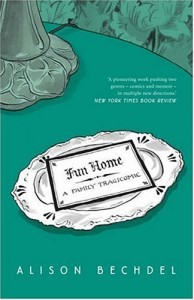
Fun Home: A Family Tragicomic is a graphic memoir that chronicles the childhood of Alison Bechdel, growing up in rural Pennsylvania and her complicated relationships with her father. Alison Bechdel is best known as the person whom the Bechdel test was named after. The Bechdel test is a simple method that can be used to determine if a work of fiction (or movie) is gender biased. To pass the Bechdel test there must be at least two women, who talk to each other about something other than men.

Fun Home is a non-linear account of Alison Bechdel’s childhood with a strong focus on her relationship with her father. A complex relationship, Bruce Bechdel was a funeral director and a high school English teacher. He was obsessed with restoring the family’s Victorian home and often viewed his children as free labour. He was often cold and prone to abusive rage, Alison’s relationship with her father was a difficult one. At 44, he stepped in front of a truck and was killed; while never confirmed, Alison believed her father completed suicide.

After his death, Alison discovered her father was a closeted homosexual who had sexual relationships with his students and babysitters. Alongside this, Fun Home follows Alison’s own struggle with her sexual identity,coming out to her parents before actually knowing her sexual preferences. The graphic novel centres on Alison Bechdel’s thoughts about whether her decision to come out triggered her father’s suicide.

This is a fascinating insight into the mind of Alison Bechdel, not only as a memoir but the struggles that she faced while trying to understand her own identity. Drawn in a gothic style, Bechdel uses blue shading to give her art a dramatic feel. She even uses childhood diary entries to help capture the mood and feel. The dramatic artwork and emotionally charged writing complement each other and really help drive the story.

While I enjoyed Blue is the Warmest Color more as a coming of age story and a struggle with sexuality, Fun Home still remains a wonderful graphic memoir than really packs an emotional punch. Graphic novels and memoirs often get pushed aside and disregarded as works of literature but every now and then comes a work of art that proves this idea wrong. It happened with Art Spiegelman’s Maus and Persepolis by Marjane Satrapi; but Fun Home seemed to be the most common example that comics (I use the term comic as a catch all for graphic novels and memoirs as well) need to be taken more seriously.

I have been reading more comics of late and I have been impressed with the way art and writing can work together to tell a story. I like these graphic novels/memoirs that capture raw emotion, in the writing or art and I am trying to find more like this. While comics by Marvel and DC are a lot of fun, there are so many other works out there that explores this art from an interesting and new way. I really enjoyed Fun Home, it wasn’t a comfortable read but the experience was well worth the effort.


A Christmas Carol by Charles Dickens

Posted December 30, 2014 by Michael @ Knowledge Lost in Book of the Month, Classic / 4 Comments

A Christmas Carol by Charles DickensTitle: A Christmas Carol (Goodreads)
Author: Charles Dickens
Published: Oxford World's Classics, 1843
Pages: 438
Genres: Classic
My Copy: Paperback

Buy: AmazonBook DepositoryKindle (or visit your local Indie bookstore)

When it comes to Christmas books, A Christmas Carol by Charles Dickens is probably the first book that comes to mind. Published in 1843, this novella was an instant success and has been a beloved classic since then. I am not going to go into a plot summary because I believe most people know the story but if you don’t, go watch A Muppet’s Christmas Carol. Told in five staves (similar to stanzas or verses) this book has been adapted so many times that A Christmas Carol has just become a part of the Christmas period.

While compassion, forgiveness and getting into the Christmas spirit is the major theme of this novella, one thing that really stuck with me is Dickens’ ideas of isolation and loneliness. While it is true that Ebenezer Scrooge never indicates he is feeling alone, since the death of Jacob Marley seven years earlier there is a sense that he has falling in despair. Marley died on Christmas Eve and appeared to be Scrooge’s only companion, which leads to a disdain for the holiday period.

Charles Dickens wanted to emphasise the importance of being with friends and family, especially during Christmas. However I got the sense that he may have treated the idea of isolation poorly. Sure, Scrooge was a grumpy old man who was tight with his money but I got no real indication that he was unhappy to be alone. Scrooge could have been an introvert and enjoyed the quiet solitude; is that really such a bad thing?

Then all of a sudden Scrooge is cured from his rationality and becomes an extravert. This is a little strange, Scrooge’s emotional and psychological makeup might not be pleasant or agreeable to the popular worldview but they were his own thoughts. Scrooge was a financial supporter of The Poor Law Amendment Act of 1834 and didn’t want to give money to a charity that worked against his political ideology.

I am not bagging out A Christmas Carol, I do enjoy it but as I was re-reading this novella I kept wondering what this story is saying if we take out the element of Christmas. Basically this is the story of curing someone of his or her personality. I had a lot of fun looking at this book from another point of view, it just gave me a lot more to think about. A Christmas Carol is a nice quick story about the importance of being with your friends and family during this holiday period. Next year I might try Truman Capote’s collection of stories about Christmas.


Middlemarch by George Eliot

Posted December 17, 2014 by Michael @ Knowledge Lost in Classic / 4 Comments

Middlemarch by George EliotTitle: Middlemarch: A Study of Provincial Life (Goodreads)
Author: George Eliot
Published: Penguin, 1872
Pages: 880
Genres: Classic
My Copy: Hardcover

Buy: AmazonBook DepositoryKindle (or visit your local Indie bookstore)

Middlemarch: A Study of Provincial Life was George Eliot’s seventh novel and was originally published in a serial from 1871-72. Set in a fictional town, this novel follows a wide range of characters in interlocking narratives that really do allow the reader to study the provincial life of Middlemarch. As this is broken into eight “books” it would be difficult to summarise the plot and even write a review that could do this book justice. Instead I am going to write down some thoughts and observations I found while reading Middlemarch.

First of all, I think it is beneficial to know a little about George Eliot; an understanding of her life helps put a lot of this novel into perspective. Most people know George Eliot is a pen name for Mary Ann Evans, she used the pseudonym to keep her private life from public scrutiny, as she was in a relationship with a married man, George Henry Lewes with whom she was living with. She picked a male nom de plume to escape the stereotypes placed on woman writers, this allowed her to offer a social critic without being judged on her gender. Raised as an Anglican, Mary Ann struggled with religious doubts and eventually became an atheist. As a young woman (before her relationship with George Henry Lewes), her father threatened to throw her out of the house due to her non-belief, but they seemed to come to a compromise. Mary Ann continued to attend church with her father until he passed away to keep him happy, even if she didn’t believe in a God anymore.

This is a very tiny glimpse at Mary Ann Evans but I wanted to share that information about her as it ties into common themes found throughout Middlemarch. The themes I am talking about here are gossip, marriage, femininity and religion. Living in Victorian England may not be too different to now (people like to gossip), Mary Ann would have been the subject of plenty of gossip and in a small town like Middlemarch it feels like the primary source of information. Throughout this novel, information is continuously being conveyed from an indirect party. George Eliot satirises the idea of gossip by continuously having other characters speak on someone else’s behalf to avoid direct communication. While others will avoid conversations believing that any relevant information will eventually make its way to them. These ideas of gossip feel like Eliot is poking fun at how gossip is used, however as a social commentary it is spot on.

I love what George Eliot has to say on the ideas of courtship and marriage and this is one of the most important parts of the novel. In Middlemarch marriage is never an end result, the happily ever after ending literary trope. While some people do end up being happy, there are plenty of unhappy marriages within the novel. Mary Ann’s lover George Henry Lewes was trapped in an unhappy marriage which he couldn’t get out of and this seems to be the basis of relationships within Middlemarch. There is this exploration of the idea of courtship, and it begs the reader to question these ideas. There are a lot of thoughts on how well we can really know someone before marriage; playing with ideas on being an outsider, deception and even intimacy. Each marriage within Middlemarch is different and it allows the reader to explore these unions as part of a social construct.

While there was a huge focus on marriage within Middlemarch there still were a few unwed woman within the novel. There are well educated women with the book that sometimes appear to be happier than the woman trapped in marriage. Eliot wanted to depict woman as strong individuals who have something to offer the world other than just being wives and mothers. The women in the book are often great and complex personalities but then Eliot plays with the ideas of suppressing themselves for men and the role they play in society. There is some social conditioning within the book but ultimately I kept seeing this idea of women having the ability to make social change.

Finally I want to talk about religion and spirituality; this is an interesting theme that steams from Mary Ann’s own life. I suspect sitting in a church listening to someone talk about a God she didn’t believe in made her think a lot about spirituality and organised religion. I haven’t used any examples but in this case I want to compare Dorothea with Mr Bulstrode. Dorothea has this internal and private spiritual life, the depiction of this is somewhat vague in the novel. This is because as an outsider she doesn’t come across as a spiritual person but internally it is an intimate part of her life. While Mr Bulstrode is portrayed as someone who is more public about his religious beliefs. While not always hypocritical he has a warped opinion; he believes his previous transgressions are part of the providential plan but will openly condemn others for their past misdeeds. Throughout Middlemarch, religion and spirituality is explored in different way and it is interesting to compare it with the ideas of morality within the novel.

There are so many different themes I can talk about, including money, education, vocations, social classes and even self-delusion but that would drag this on too much. I read Middlemarch with the aid of a reading guide called Eliot’s Middlemarch by Josie Billington and I did this because there is so much to offer within this novel I wanted to get as much as I could from the book. This is a smart and intelligent social commentary and I got the sense that there was no wasted moments within the book despite the fact it was 880 pages long. I dipped in and out of this novel for six months and I am glad I choose to read it in this way; it allowed me to ponder what I read before moving on. It is the type of book you need to spend a lot of time with and written in a way that allows you to dip in and out.

I haven’t even talked about the writing or style of Middlemarch and that is probably the most important part. There is a slight detachment within the style, this is probably because the novel is a form of social criticism; a study of provincial life. Having said that, I found Middlemarch very funny; the satirical irony and wit played a big part for me, but you could also say this is a morbid book. The style of the book is psychological, erudite and extremely elegant; I often felt myself being swept away with the writing but still fascinated by the insightfulness.

It is hard to explain how much I loved this book; this a realistic depiction of Victorian life and George Eliot displays a real mastery on human nature. However, even though it sounds like it is nothing but a psychological look at society, Eliot is able to make you feel like you are a part of the story. I am sure you can read this book as just a beautiful Victorian classic but I picked up this book for the social criticism. If you do want to get more out of this book then I recommend Josie Billington’s reading guide Eliot’s Middlemarch. This is the type of book I will need to frequently return to throughout my life and see what I get out of it with a re-read.