Source: Personal Copy

Motherless Brooklyn by Jonathan Lethem

Posted November 12, 2015 by Michael @ Knowledge Lost in Crime / 0 Comments

Motherless Brooklyn by Jonathan LethemTitle: Motherless Brooklyn (Goodreads)
Author: Jonathan Lethem
Published: Vintage, 1999
Pages: 311
My Copy: Paperback

Buy: AmazonBook Depository (or visit your local Indie bookstore)

Frank Minna is a neighbourhood owner of a seedy detective agency, or he was until he was found stabbed to death. Lionel, along with Tony, Danny and Gilbert worked for Frank and were often collectively known as Minna Men. The group grow up together in St. Vincent’s Home for Boys and owe a lot to this small time mobster turned private eye. Lionel is determined to find out what happened by Frank.

This is my first Jonathan Lethem novel and I have been keen to read him for a long time. What I heard about Lethem is his ability to combine genre fiction and explore themes in an interesting way. Motherless Brooklyn does just this; under the vial of a hard-boiled detective novel, this also is a coming of age story as well as exploring life with Tourette’s syndrome. Lionel Essrog has lived with Tourette’s for his entire life, manifesting in physical and vocal tics. He is often referred to as Brooklyn’s human freakshow, which only begins to cover the reactions people to have Lionel’s disorder.

I have to admit I knew very little about Tourette’s syndrome going into this novel, I knew the effects but I did not fully grasp what was going through mind of someone living with the disorder. One of the things I love most about reading fiction is learning about the lives of people living in different cultures or living a different life than my own. Motherless Brooklyn allowed me to explore life living with Tourette, it was an eye opening novel.

On the surface Motherless Brooklyn is a pretty simple hard-boiled detective novel, but exploring growing up as an orphan in an all-boys home with Tourette’s makes this novel great. Jonathan Lethem is a brilliant writer; he takes a typical genre plot and explores just how complex the story can be. I believe The Fortress of Solitude does this with comic books (similar to The Adventures of Kavalier & Clay), Gun, With Occasional Music with science fiction and Chronic City with drug culture. I have not read these books, so I might be wrong; either way I am keen to check them out.

I am so glad to have finally picked up a Jonathan Lethem book and Motherless Brooklyn was the perfect starting point. I wanted to stay in this world for as long as possible, and I ended up slowing down on my reading. I have since discovered to joys of reading slowly with The Valley of the Dolls, but Motherless Brooklyn may have been my starting point. I have no idea which Lethem book to read next, I might have to try to get to all of them. Motherless Brooklyn was a great book and I loved that it was set in a hard-boiled setting. The combination between the genre style and understanding Tourette’s worked really well for this novel; highly recommend Motherless Brooklyn to everyone.


The Green Road by Anne Enright

Posted November 11, 2015 by Michael @ Knowledge Lost in Historical Fiction / 0 Comments

The Green Road by Anne EnrightTitle: The Green Road (Goodreads)
Author: Anne Enright
Published: Jonathan Cape, 2015
Pages: 312
Genres: Historical Fiction
My Copy: Paperback

Buy: AmazonBook Depository (or visit your local Indie bookstore)

Rosaleen Madigan is the matriarch of the Madigan family of County Clare. The Green Road tells the story of this Irish family, from the perspectives of the four children. Each section is dedicated to one child’s perspective from different times of their lives. A unique narrative style, which I believe Anne Enright adopted in her novel The Gathering which won the Man Booker Prize in 2007.

The Green Road explores small fragments of the Madigan family, which can be frustrating for some people but I really enjoyed. I like dipping in and out of this family and their drama. Anna Enright does not make a clear narrative, and leaves a lot to the reader to try and connect the dots. Different readers will make different assumptions from this novel which makes it an interesting book club pick. In fact this was a book club pick for my in-real-life book club.

The novel is emotionally charged and jammed packed full of drama, manipulation and bleak moments which brings together really rich characters and an interesting story. I found Rosaleen to be my favourite character, she is manipulative for what she considers good reasons; all she wants to do is keep the family together. However each section is years apart and we witness this family start out close but slowly drift into strangers.

Anne Enright considers herself a short story writer and it really shows in The Green Road. Each section is tightly compacted and work like little short stories from the same family. Although to read one story and put it down and come back to the next would be a mistake. This book requires the reader to work at making connections and drawing conclusions but I think that is what makes this novel stand out to me. I loved dipping in and out with the Madigan family and just experience the fragments of their lives.


The Lucifer Effect by Philip G. Zimbardo

Posted October 28, 2015 by Michael @ Knowledge Lost in Non-Fiction / 3 Comments

The Lucifer Effect by Philip G. ZimbardoTitle: The Lucifer Effect (Goodreads)
Author: Philip G. Zimbardo
Narrator: Kevin Foley
Published: Random House, 2008
Pages: 571
Genres: Non-Fiction
My Copy: Audiobook

Buy: AmazonBook Depository (or visit your local Indie bookstore)

Ever since reading Frankenstein, I have been interested in the concept of evil. How can perfectly ordinary people become perpetrators of such horrible things? What turns a good person evil? These are the fundamental questions that Dr Philip Zimbardo attempts to answer in the book The Lucifer Effect. In 1971 Zimbardo conducted an experiment at Stanford University funded by the U.S. Navy into the causes of conflict between military guards and prisoners. This experiment is known as the Stanford prison experiment and is wildly studied and found in most psychology textbooks.

Then in 2003, news broke about human rights violations that were happening in Abu Ghraib, including torture and abuse to the prisoners by the United States Army and the Central Intelligence Agency. Philip Zimbardo appeared as a psychological expert during the legal proceedings conducted by the US Supreme Court. This lead to the writing and publication of The Lucifer Effect: Understanding How Good People Turn Evil. With a growing interest in psychology, when this book was recommended to me by a BookTuber (along with others) I knew I had to read this first.

I have already done a blog post on this book, regarding the concept of enclothed cognition. There is a lot of interesting things to learn about psychology within the book. However this was written to help people safeguard themselves; if we can understand just how easy it is to be manipulated and corrupted, we are more likely to notice when it is happening. For me, I felt most manipulated by the American government (this is also a problem with the Australian government as well) with the way they spin things, that lead to the treatment of prisoners. If you look at the trials that came out of the Abu Ghraib incident, many people were punished but people like Donald Rumsfeld, Dick Cheney or even George W. Bush never stood trial for their actions. The fact that Abu Ghraib or Guantanamo Bay are classified as Detention Centres so they do not have to abide by the Geneva Conventions is horrifying and makes me suspect of how my country treats detainees.

The Lucifer Effect is a very interesting book, I feel like I have gotten a lot out of it, although it will need to be re-read in the future. Philip Zimbardo has put a lot of information into the book, but I do wish that there was more information on some of the theories mentioned. I am fascinated by psychology theories and want to learn more on the topics. I have a list of non-fiction books to get through, that might help me develop a better understanding. I recommend The Lucifer Effect to everyone, it is horrifying to read how people treat others, but it is important to understand the situations and work towards building a better solution.


October 2015 Mini Reviews

Posted October 27, 2015 by Michael @ Knowledge Lost in Contemporary, Crime, Literary Fiction, Thriller / 2 Comments

October 2015 Mini ReviewsTitle: World Gone By (Goodreads)
Author: Dennis Lehane
Series: Coughlin #3
Published: William Morrow, 2015
Pages: 416
Genres: Crime
My Copy: Library Book

Buy: AmazonBook Depository (or visit your local Indie bookstore)

Ten years after the events from Living by Night by Dennis Lehane, World Gone By, tells the story of Joe Coughlin in a changing world. Prohibition is now dead, the world is at war again and Joe’s enemies have destroyed his empire and killed his wife. The novel is set in both in Cuba and Ybor City, Florida and World Gone By explores the implications of Joe Coughlin’s past. A novel of crime, revenge and the moral complexity of a criminal past while being a good example for his son.

I am somewhat discontent with the state of popular crime fiction and find myself longing to be surprised. Normally I am a fan of crime novels and like to explore the psychological or gritty nature of the plot. World Gone By seems to offer something different, I did not connect with Living By Night, but the synopsis of its sequel was enough to raise my interest. Sadly, this was unable to deliver, and I felt disconnected to the plot due to the fact that it was overly cliché. I wanted to enjoy this book; the time era and the premise are two elements I love in fiction and I had heard such good things. I need to stop listening to hype, or maybe I should give up on crime fiction all together.


October 2015 Mini ReviewsTitle: Mislaid (Goodreads)
Author: Nell Zink
Published: Fourth Estate, 2015
Pages: 288
Genres: Contemporary
My Copy: Library Book

Buy: AmazonBook DepositoryKindle (or visit your local Indie bookstore)

Set in 1966, at the campus of Stillwater College, Mislaid tells the story of Peggy. A freshman with literary aspirations, Peggy finds herself falling for Lee, a poet and one of her professors. Peggy falls pregnant and the two end up married. The only problem is, Peggy identifies herself as a lesbian and Lee as gay. This turns into some wry joke; they are an odd couple that has been mislaid.

Nell Zink takes it upon herself to explore the complex issue of sexuality with a mismatched pair stuck in a marriage that neither are interested in. The problem with Mislaid, is that this is such a complex issue and Zink was unable to handle the novel in a way it deserves. From the first chapter when the term ‘Mecca for lesbians’ was used, I felt uneasy about the way the GSM (Gender and/or Sexual Minorities) community was being treated. Then the wit found in Mislaid did not work for the majority of the novel. I was less than impressed with this book; it could have been a great story but nothing seemed to come together the way I expected.


October 2015 Mini ReviewsTitle: Bad Nature, or With Elvis in Mexico (Goodreads)
Author: Javier Marías
Translator: Esther Allen
Published: New Directions, 1996
Pages: 57
Genres: Literary Fiction
My Copy: Paperback

Buy: AmazonBook DepositoryKindle (or visit your local Indie bookstore)

I do not know how I found this little gem, I would like to know who recommended it so I could personally thank them. Bad Nature, or With Elvis in Mexico is a short novella that tells the story of Ruibérriz de Torres who is brought in to translate for Elvis Presley who is in Mexico to film Fun in Acapulco. While in town, Elvis and his entourage, find themselves in a seedy bar where they get into a little trouble with a local kingpin.

Javier Marías has managed to create a punchy story that explores a complex life of a translator, on one hand he has a big famous singer/actor that the world idolises and adores but his entourage has got him into trouble with a crime lord that is feared in Acapulco. Ruibérriz de Torres is stuck in the middle unsure if he should be translating the words that could get everyone into a fight. Should he censor the words for either Elvis or the kingpin just to keep the peace? This novella explores the idea of translations and the second hand nature of words, in a very meta way since this novella was translated from the Spanish into English by Esther Allen. This is only fifty pages long, but manages to explore a complex issue in a very interesting way; I have not been able to stop thinking about the ideas found in Bad Nature, or With Elvis in Mexico.


October 2015 Mini ReviewsTitle: Leaving Berlin (Goodreads)
Author: Joseph Kanon
Published: Simon & Schuster, 2015
Pages: 384
Genres: Thriller
My Copy: ARC from Publisher

Buy: AmazonBook DepositoryKindle (or visit your local Indie bookstore)

Almost four years after World War II, Berlin is a mess, divided in two. The east is occupied but the political ideas from the Soviet Union and the Allies are trying to control the west. This power struggle will later divide Germany into two with the erecting of the Berlin wall in 1961. Alex Meier is a young Jewish writer who managed to flee Nazi Germany to find a home in America. Only he found himself in the crosshairs of Joseph McCarthy during his “Red Scare” witch hunts. Alex and his family are now facing deportation; that was until he was given an alternative by the CIA but is this a solution at all?

The setting for Leaving Berlin is fascinating, the rebuilding and restoration of Germany is interesting enough as it is, but then you have the political struggle and influences of America and the Soviet Union as well. The American propaganda towards communism plays a big part in this espionage novel, and reading a book about a country being torn apart by the Cold War was really interesting. I am very interested in the history behind the Cold War, especially when it comes to the way the media was used to manipulate and of course I am interesting in the Soviet Union. As far as this novel goes, it was entertaining and I enjoyed reading it, however the setting and political history interested me more than the plot. I would have enjoyed a non-fiction novel of post-war Berlin more than Leaving Berlin, but that does not mean I regretted reading it.


Interview with the Vampire by Anne Rice

Posted October 2, 2015 by Michael @ Knowledge Lost in Gothic / 2 Comments

Interview with the Vampire by Anne RiceTitle: Interview with the Vampire (Goodreads)
Author: Anne Rice
Series: The Vampire Chronicles #1
Published: Sphere, 1976
Pages: 308
Genres: Gothic
My Copy: Paperback

Buy: AmazonBook DepositoryKindle (or visit your local Indie bookstore)

When people talk about Anne Rice, you can be sure that the first novel in the Vampire Chronicles, Interview with the Vampire, will be mentioned. Easily her most recognisable novel, this 1976 debut tells the story of three very different vampires. Focusing on the two hundred year old, Louis, the book tells how Lestat turned him as well as five-year-old Claudia, and his life as a vampire as he conveys it to a reporter. This breakout novel even spawned the hit 1994 adaptation starring Tom Cruise, Brad Pitt and Kirsten Dunst.

I first read Interview with the Vampire when I first got into reading and really enjoyed it. In that review I gave it high praises, saying, “The whole story is almost philosophical in the way it tells the struggle of Louis and his moral conscience…[A] battle of good and evil is played out in a more evil orientated world… It doesn’t feel forced or predictable it just leaves you thinking how wonderfully complex these characters are.” Looking back on that review with a fresh re-read and five more years of reading experience, I have a very different opinion.

First of all, the vampire mythology is an interesting literary device to explore morality. Looking back on the mythology, all the way to classics like Dracula; novels continue to explore the morality of a powerful vampire sucking the life away from the innocent. What gives them the right to life over everyone else? There is a conflict between morality and the idea of survival. Within Interview with the Vampire it does this in two distinct ways; first you have Lestat who takes life without a care in the world, following the instincts of survival. While Louis is often questioning his survival and the moral implications, often hating what he has become.

The novel spans the life of Louis for the past two hundred years, though Interview with the Vampire is just over 300 pages. For me this becomes the biggest downfall of the book, and the character development, especially the psychological, suffers. There are a lot of interesting topics that this novel could have explored but we never get the opportunity to do so in great detail. Take for example, Claudia; she has many years to live and learn about life, and this could have made for a far greater story. The struggles Claudia went through would have been fascinating, especially the sexual development of a girl stuck in a five-year-olds body.

It is interesting to see how much a few years has changed my view on literature; I feel like I am developing some useful skills to analyse the books. I also feel like I am getting to the point where I am starting to feel like I am ‘well read’ (although there is a long way to go). Having experienced more with the vampire mythology and literature in general, I am enjoying going back to some of the books I read more than five years ago. Sometimes I do not enjoy the novel as much, like I did this time, but other times I find a new found respect for what an author was trying to do (see a future review of The Handmaid’s Tale). Interview with the Vampire could have been so much more, and now I just wish it was.


Mini Review – Books About Books

Posted September 17, 2015 by Michael @ Knowledge Lost in Non-Fiction / 4 Comments

As most people are aware, I am a big fan about books about books. I am fascinated about people’s journeys and relationships with books. As a big fan of books, I like to learn about how people view and write about books; I use this as a way to inspire me to improve as well as give me some new ideas on how to approach this topic. Sadly I am so far behind in my book reviewing so I need to resort to some mini reviews. However it is a good chance to talk about four very different books about books in one hit.
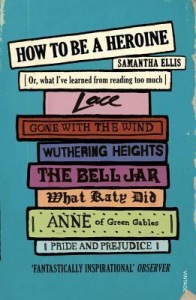
Mini Review – Books About BooksTitle: How To Be a Heroine (Goodreads)
Author: Samantha Ellis
Published: Chatto & Windus, 2014
Pages: 272
Genres: Non-Fiction
My Copy: Library Book

Buy: AmazonBook DepositoryKindle (or visit your local Indie bookstore)

Samantha Ellis is a playwright and journalist who decided to write about the woman in fiction that have influenced her life. The subtitle to How to be a Heroine is “…What I’ve Learned from Reading too Much” and this really encapsulates what Ellis is doing within the book. This is less of a bookish memoir or literary criticism and more of a revisit to some of her favourite books throughout her life and talking about it through the lens of feminism. This book includes references to The Little Mermaid, Anne of Green Gables, Pride and Prejudice, The Bell Jar and Wuthering Heights.

While this is a very important topic to discuss, I felt a bit of a disconnect to the book in general. There was times where I felt that Samantha Ellis was being dismissive and cynical towards literary criticism. Because I am fascinated and passionate about learning literary theory, I felt that her feelings towards the topic really took me away from truly enjoying the book. I did however enjoy the way Ellis analysed the good and bad qualities about each story and told the story about her relationship with the books mentioned. I think if it was not for that one thing that bugged me about How to be a Heroine I might have had a completely different experience while reading this book.
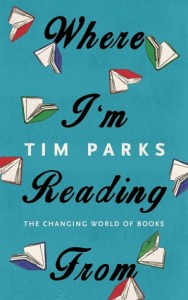

Mini Review – Books About BooksTitle: Where I'm Reading From: The Changing World of Books (Goodreads)
Author: Tim Parks
Published: Harvill Secker, 2014
Pages: 244
Genres: Non-Fiction
My Copy: Library Book

Buy: AmazonBook DepositoryKindle (or visit your local Indie bookstore)

Tim Parks is a translator, critic and even a professor of literature, so when I discovered his book Where I’m Reading From, I was excited to see what he had to say on the topic. I went into this book thinking it was a bookish memoir but found out this was a collection of essays he had written for The New York Review of Books. Some of the topics discussed in this book include, Why we read, Should you finish every book you start?, How is the Nobel Prize like the World Cup?, Why do you hate the book your friend likes? and so many more topics. I was very interested in what he had to say about translations, and the concept of how we are reading a second-hand story.

There is so much within Where I’m Reading From that I did not agree with, but I still found it interesting to read someone else’s perspective on the topics. It really got more thinking about the state of literature and the bureaucracy behind the industry and awards in far greater detail. In a lot of ways this book reminded me of What Is Literature? by Jean-Paul Sartre, although Tim Parks’ book was a lot more accessible and did not make me feel stupid. I also did a video review for this book on my YouTube channel.

Mini Review – Books About BooksTitle: Postmodernism: A Very Short Introduction (Goodreads)
Author: Christopher Butler
Series: A Very Short Introduction #74
Published: Oxford University Press, 2003
Pages: 144
Genres: Non-Fiction
My Copy: Audiobook

Buy: AmazonBook DepositoryKindle (or visit your local Indie bookstore)

I like to think I am a fan of post-modern literature, but ask me to explain it, I will have a hard time. Post-modernism is often referred to when talking about art, films, architecture, music and literature but what does it actually mean? I picked up Postmodernism: A Very Short Introduction in the hopes of understand it a little more but I still do not think I can explain it. For me, I view post-modernism, as a reaction to modernism which seemed to reject past thinking in favour of innovations like stream-of-consciousness. Post-modernism still found value in the past techniques and theories and found interesting ways to use them in new and exciting ways. Post-modernism wanted to invoke thought and criticism; within its literature you might find something bizarre or weird that you just need to talk about.

I know my view on the topic is very broad and it is far more complex but that is what I love about post-modern literature. I want books that force me to think critically about what I am reading and post-modernism forces you to do just that. In Postmodernism: A Very Short Introduction, Christopher Butler tries to equip us with the basic ideas behind post-modernism to allow us to recognise and understand the theories more easily. This is still a very complex movement but I am starting to understand why I love it. This is a good starting point, if you are actually interested in the critical thinking side of this movement.


Mini Review – Books About BooksTitle: My Reading Life (Goodreads)
Author: Bob Carr
Published: Penguin, 2008
Pages: 432
Genres: Non-Fiction
My Copy: Library Book

Buy: AmazonBook Depository (or visit your local Indie bookstore)

Bob Carr is a former Australian politician and member of the Labour Party; during his career he was a Senator, Premier of New South Wales and the Minister for Foreign Affairs. My Reading Life is a literary memoir about the books he has read and have influenced him; this was written during a period where he was not in politics. Carr divides the book into topics, focusing mainly on the political, which is obviously a reflection of his interests.

One of the things I did not like about this book was the way Bob Carr kept his political face on throughout the entire thing. I would have liked him to drop his public persona and just have a more real conversation about books. I understand that he was still political and he became the Minister of Foreign Affairs after publishing this but I would have preferred a more honest look at literature. I do hope that no Russian’s read this book after he become the Minister of Foreign Affairs, because to me it felt like Carr liked Russian lit but hated everything else about this country. There was some interesting insights made within the book and overall a decent memoir, just a little too guarded.


Girl at War by Sara Nović

Posted September 15, 2015 by Michael @ Knowledge Lost in Historical Fiction, Literary Fiction / 0 Comments

Girl at War by Sara NovićTitle: Girl At War (Goodreads)
Author: Sara Nović
Published: Little Brown and Company, 2015
Pages: 336
Genres: Historical Fiction, Literary Fiction
My Copy: Paperback

Buy: AmazonBook Depository (or visit your local Indie bookstore)

Ana Jurić is a carefree young girl, running and playing through the streets of Croatia’s capital city Zagreb. This was the summer of 1991, and this is the summer that will change everything, not just for Ana, but also for all of Croatia. The country has declared its independence from Yugoslavia, which has sparked civil unrest and quickly became the Croatian War of Independence. Girl at War tells the story of Ana as a ten-year-old in 1991 and then ten years later while living in New York City.

The Croatian War of Independence lasted from 1991 to 1995, between the Croat forces local to the government and the Serb-controlled Yugoslav People’s Army (JNA). This war started when the Croatian government declared independence from the Socialist Federal Republic of Yugoslavia (SFRY). The majority of Croatians wanted to become a sovereign state, but Serbs remained loyal to Serbia’s wish to remain apart of Yugoslavia. This cost Croatia between 6,000 – 8,000 soldiers and almost as many citizens were killed (or missing) during the conflict as well. However they estimate about 220,000 people were displaced during this period.

Girl at War is a coming of age story of a girl living through the crumbling soviet state and trying to move on. She founds herself in New York City when 9/11 happens, which forces her to confront her past and deal with the part of her life she has tried to bury. Sara Nović’s debut novel is a perfect novel, reminding me of books like A Constellation of Vital Phenomena by Anthony Marra and All That is Solid Melts into Air by Darragh McKeon. This is an unflinching look at a crumbling Yugoslavia and a country unsure of their future.

This is a heart-breaking debut, that was flawlessly executed, many people might be familiar with my love for novels set in a crumbling soviet state and this was my chance to explore the history of Yugoslavia. I hope there will be many more novels like this released in the future, and I am eagerly anticipating the next Girl at War as well as a new novel by Sara Nović. There is not much about Nović to be found online, but I suspect some autobiographical elements within this novel because the emotions just felt too real. Do you know any other books similar to this that I might enjoy?


The Russian Debutante’s Handbook by Gary Shteyngart

Posted September 12, 2015 by Michael @ Knowledge Lost in Contemporary, Russian Lit Project / 0 Comments

The Russian Debutante’s Handbook by Gary ShteyngartTitle: The Russian Debutante's Handbook (Goodreads)
Author: Gary Shteyngart
Published: Riverhead Trade, 2002
Pages: 476
Genres: Contemporary
My Copy: Paperback

Buy: AmazonBook DepositoryKindle (or visit your local Indie bookstore)

Vladimir Girshkin is not your typical hero, but the unhappy and sickly, twenty-five year old bureaucrat is just that in The Russian Debutante’s Handbook. His mother gave him the nickname “Little Failure”, he spends his days as a clerk for the Emma Lazarus Immigrant Absorption Society. An encounter with an old Russian war hero leads Vladimir on an adventure away from his job on the Lower East Side of New York to Prague. Surrounded by a Prava expat community Vladimir launches a scheme so ridiculous that it is actually brilliant.

Czechoslovakia was a satellite state of the Soviet Union, ever since the coup d’état of February 1948 when the Communist Party of Czechoslovakia seized power of the country with the help of the USSR. The Soviets call this Victorious February but most people are more familiar with the Velvet Revolution of 1989. This non-violent protest against the one-party government of the Communist Party of Czechoslovakia saw the end of a 41 year rule by the Communist party. Then finally the dissolution of Czechoslovakia into Czech Republic and Slovakia as of 1 January 1993. In the 1990s Prague saw an invasion of expats and the city was often referred to as the “Paris of the 1990s” or “the Eastern European Paris”.

As many people are aware, I am a bit of a fan of Gary Shteyngart, he has a way about writing humorous and satirical novels, and I am all too quick to recommend Super Sad True Love Story to anyone that is willing to listen, especially since it is very relevant to today’s society. After reading his memoir Little Failure I was surprised to find just how autobiographical his novels were, I had an idea of some of it but not to this extent. Since reading Little Failure, I was determine to read all of Shteyngart’s novels starting with his debut The Russian Debutante’s Handbook.

This is a highly imaginative novel blending satire with some bizarre humour. I really enjoyed the use of language within this debut but found the rest lacking, although this is a testimony of the growth of Gary Shteyngart as a writer. I have to say that The Russian Debutante’s Handbook is a novel for people that enjoy and know what to expect from Shteyngart and I would recommend starting with Super Sad True Love Story (obviously) or maybe his memoir Little Failure. Shteyngart is a brilliant writer and while I did enjoy The Russian Debutante’s Handbook, now I need to try his next novel, Absurdistan.


Sweetland by Michael Crummey

Posted September 8, 2015 by Michael @ Knowledge Lost in Contemporary / 0 Comments

Sweetland by Michael CrummeyTitle: Sweetland (Goodreads)
Author: Michael Crummey
Published: Corsair, 2014
Pages: 320
Genres: Contemporary
My Copy: Paperback

Buy: AmazonBook Depository (or visit your local Indie bookstore)

Moses Sweetland is a grumpy old retired lighthouse keeper with strong ties to his home and town. For twelve generations, Sweetland’s family have made this Newfoundland town their home; in fact the town is named Sweetland.  However now the fishing industry has dried up and the town is falling apart. The Canadian government has decided it is more cost effective to offer resettlement packages to everyone in Sweetland than try to maintain the town. There is one condition, everyone has to accept the offer for resettlement or no one will get a payout.

This novel was picked for my in-real-life book club, and it is not a book I would have picked up on my own. I started off not loving this novel; I wanted the author to explore all the secondary characters a little more. I thought they were all far more interesting and I could not see why the focus was on Moses Sweetland so much. I knew there was the exploration into the heritage but I thought that a look into a range of characters in this little town would make for a far more interesting novel.

I obviously did not understand what Michael Crummey was trying to do with Sweetland but it was not long before I was fully aboard. The book took a turn and there was something different happening within the novel that I was not expected. If I did some research into the premise of Sweetland, I would have discovered the plot but I like to go into a book not knowing. What I loved about this novel is the way it explores isolation and being haunted by memoires and the past.

I should explain that Moses Sweetland refused to leave Newfoundland and when everyone else left he was stuck in Sweetland alone. As a retired lighthouse keeper he thought he was prepared to live a life or solitude and isolation but that is nothing like living alone. Michael Crummey did a wonderful job exploring the idea of living alone and the descent into madness. Think Cast Away, except done well; sure, that movie did portray madness pretty well but Sweetland is on a whole new level.

I think the way Sweetland surprised me, really affected me more than the book itself. I really appreciated the way Michael Crummey wrote this book and really enjoyed all the themes that he explored. I need to read some more of Crummey’s novels, I think he is a bit of a hidden talent that needs more exposure. I hope all his other books are just as great as Sweetland and I plan to find out soon.


Story of the Eye by Georges Bataille

Posted September 6, 2015 by Michael @ Knowledge Lost in Erotica / 4 Comments

Story of the Eye by Georges BatailleTitle: Story of the Eye (Goodreads)
Author: Georges Bataille
Translator: Dovid Bergelson, Joachim Neugroschal
Published: Penguin, 1928
Pages: 127
Genres: Erotica
My Copy: eBook

Buy: AmazonBook DepositoryKindle (or visit your local Indie bookstore)

Georges Bataille’s 1928 novella Story of the Eye has often been read for the graphic details of an increasingly inexplicable adventures of a pair of teenagers and their sexual perversions. Narrated by an unnamed male in his late teens, the book tells the story of his passionate affair with Simone, his primary partner. Throughout the book their relationship involves other people including a mentally ill sixteen year-old girl and a voyeuristic English émigré aristocrat. To say this book is risqué might actually be an understatement, but is the book really about fornication?

With a little help from French literary theorist Roland Barthes and his accompanying essay “The Metaphor of the Eye”, I quickly discovered that Story of the Eye is far more complex than I originally thought. However if you do read Georges Bataille’s introduction before the book like I did you will discover a few titbits that help decipher the surrealist nature of the novella. In this introduction Bataille talks about his love/hate relationship with his father, a man who went blind on account of neurosyphilis. He shares a memory he remembers clearly in his head of his father urinating and the vacant look in his milky eyes.

The reason this story is important to Story of the Eye is because the novella often references urination and eyes in the midst of the sexual acts. As Barthes explains in his essay, “Although Story of the Eye features a number of named characters with an account of their sex play, Bataille was by no means writing the story of Simone, Marcelle, or the narrator”. The act of sex is often accompanied with some form of violence. The eyes, milk, urine can all be seen as a reference to his memory of his father and any reference to testicles and eggs could be interpreted as metaphors to the creation of life.

While Roland Bathes goes into a far deeper analysis of the metaphors found in Story of the Eye, a slight understanding of the content changes this books topic from sexual perversions to an angry rant directed towards Bataille’s father. There are other reference found in the novella that connect to his life; for example the priest. Georges Bataille went into the seminary in the hopes of becoming a priest, however he had to drop out to find a job to support his mother, killing his dream. A topic I believe is discussed in more detail in his non-fiction book Eroticism.

I found myself being absorbed in Story of the Eye (which was translated by Joachim Neugroschel, Dovid Bergelson); although difficult to read, the symbolism really intrigued me. So much so that I had to order my own copy of the book in the hopes to re-read it soon. I read this as an ebook and I now own a physical copy which features the essays “The Pornographic Imagination” Susan Sontag and of course “The Metaphor of the Eye”. I am fascinated by the surreal erotic style of Bataille; I think he is an author I need to explore in greater details.