Source: Personal Copy

My Brilliant Friend by Elena Ferrante

Posted December 11, 2015 by Michael @ Knowledge Lost in Historical Fiction / 2 Comments

My Brilliant Friend by Elena FerranteTitle: My Brilliant Friend (Goodreads)
Author: Elena Ferrante
Translator: Ann Goldstein
Series: The Neapolitan Novels #1
Published: Text, 2013
Pages: 331
Genres: Historical Fiction
My Copy: Paperback

Buy: AmazonBook DepositoryKindle (or visit your local Indie bookstore)

Elena Ferrante has become a literary sensation lately, with the four-part Neapolitan series. These books are a bildungsroman that explores the lives of friends Elena and Lila. My Brilliant Friend follows their childhoods and teenage years, living in Naples during the 1950s. There are speculations that this series is autobiographical but Elena Ferrante is so secretive and does not do interviews, so no one can know for sure.

First of all, I think I need to point out that Naples in 1950 was a rough time. Naples was the first Italian city to rise up against the Nazi occupation, in fact when American troops landed they found that the city was already liberated. After the war, while Italy was trying to rebuild and recover, a majority of the focus remained in Rome and this southern city did not much get more attention. The Italian Social Movement and neo-fascist movements across Italy caused plenty of political tension.

Having said that, for Elena and Lila, their entire world consisted of the few blocks they grew up in. Not knowing the devastation running across Italy, these two friends focused on their own problems, both having a very tough life with plenty of dark moments seeping into this novel. Do not expect a normal coming of age story, these two brilliant friends have to live through devastating moments and conditions, making this novel not for the faint of heart.

I compared My Brilliant Friend with The Valley of Dolls in the sense that it explores the life of these girls through their up and downs. I loved the experience of exploring their lives and I find myself taking the time with the book, not wanting it to end. Luckily there are three other books in the series and I did indeed move onto The Story of a New Name right away.

My biggest complaint with this book was trying to keep the characters straight. Elena is often called Lenù which can be confusing, and Lila is also called Raffaella. Most people have multiple names and it can be hard to tell who is a part of the Greco, Cerullo, Sarratore or Solara family. Luckily there is a list of characters at the front of the book to help understand who each person is and their relationship to everyone else.

While devastating, I really enjoyed reading My Brilliant Friend, and as I have already said, I started The Story of a New Name right after finishing book one. I enjoyed immersing myself this fictional world of Naples, I need to get all the books in this series. I wish I knew more about Elena Ferrante because I am curious to know how much of this is true to life. Her books seemed to become a sensation overnight, despite the fact that she had written a few books previously including The Days of Abandonment and The Lost Daughter.


Candide: Or Optimism by Voltaire

Posted December 9, 2015 by Michael @ Knowledge Lost in Classic / 0 Comments

Candide: Or Optimism by VoltaireTitle: Candide: Or Optimism (Goodreads)
Author: Voltaire
Translator: Theo Cuffe
Published: Penguin, 1759
Pages: 224
Genres: Classic
My Copy: Hardcover

Buy: AmazonBook DepositoryKindle (or visit your local Indie bookstore)

Candide has lived a pretty sheltered life in an Edenic paradise, madly in love with the Baron’s daughter Cunégonde. His mentor Professor Pangloss taught him the ways of optimism but his adventures may challenge his life philosophy. Candide is a satire from Voltaire, a philosopher of the Age of Enlightenment. The book enjoyed much success, as well as a lot of controversy, being banned for religious blasphemy.

“Everything is for the best in this best of all possible worlds.”

In Candide, Voltaire sets out to challenge the philosophical ideas of optimism, particularly the works of Gottfried Wilhelm von Leibniz. Essentially he used a stripped down idea of optimism and explores it from a religious perspective. The idea is simply, if there is evil in the world would that be a sign that God is not entirely good or not all-powerful?

While Voltaire wrote Candide as a parody of the classic adventure tales, it also satirised organised religion. This was the main reason the novel got banned. Throughout the book all the religious leaders were either corrupt or hypocritical and you even encounter the Pope’s own daughter within the story. Most of the Catholic priests are never celibate, the hard-line Inquisitor has a mistress, and there is a friar who is a thief, despite the fact he is a member of the Franciscan order and has taken a vow of poverty.

For me, the connection between optimism and religion was what stood out the most in Candide. The whole concept of “everything will work out for the best” reminded me of the flawed thinking of some Christians. I grew up in the church, and I have heard people say things like “God will heal me” and never go to a doctor, or “God will provide” and never look for a job. I always thought this was a terrible attitude and a misunderstanding of the Bible. So while reading Candide, I saw this come through so many time and I really enjoyed that element.

This novel was a buddy read with a fellow booktuber (Shut Your Typeface) and her problem was the sexual exploitation of women within Candide. For me I thought Voltaire was trying to demonstrate a real situation effecting woman. The problem with having mistresses, rape, sexual slavery and still wanting women to be chaste and virtuous. I really do think he was trying to show a real problem that is effecting woman; all the women in the book were victims of some form of sexual assault. I might have viewed it one way but I can see how it could be interpreted as chauvinistic and disrespectful towards woman.

There are so many other themes that show up within Candide, from resurrection, wealth, and class. So many interesting topics worth exploring, but I did not want to make this review too long. I would love to talk about the parody of adventure tales, the humour and other themes but maybe I will leave them for the next review I do of this book, after a re-read. Candide was a very interesting and surprisingly easy to read. I had a lot of fun checking this novel out and looking at the depth to be found within the pages.


Valley of the Dolls by Jacqueline Susann

Posted December 6, 2015 by Michael @ Knowledge Lost in Classic / 0 Comments

Valley of the Dolls by Jacqueline SusannTitle: Valley of the Dolls (Goodreads)
Author: Jacqueline Susann
Published: Time Warner Books, 1966
Pages: 467
Genres: Classic
My Copy: Paperback

Buy: AmazonBook DepositoryKindle (or visit your local Indie bookstore)

Pills! Pills will fix everything. Known as dolls, these red, yellow or green pills all serve a purpose. Although the more frequently you take them the more tolerance you build up, requiring more pills in a vicious cycle. Valley of the Dolls is a 1966 cult classic written by Jacqueline Susann, exploring the world of pop culture and Hollywood. This is a roman à clef that explores the life of three friends; Anne, Jennifer and Neely and their aspirations in life.

Jacqueline Susann is very blunt in the Valley of the Dolls and it is painfully obvious what she wants to say. This did not stop me from absolutely enjoying this novel and I found myself slowing down to stay in the world of these three woman. Susann wants to explore ideas of fame, money and even love; showing that just because you have what seems like the perfect life, does not mean it is perfect, particularly when it comes to fame. Each character seems to succeed in their perspective careers and once at the top, there is nowhere left to go but down.

Each of the three characters are different and the shifting perspectives help explore their lives. I really liked Jennifer, she was sassy and head strong. She was considered a great beauty, with big breasts and it was interesting to follow her life. She frequently becomes nothing but a pair of breasts and people often cared about nothing else about her. Anne was the more grounded character and gave a nice balance between Jennifer and Neely. I did not like Neely as a character; a big shot actress and often a difficult diva. I liked how different each character was but I did find myself wanting the sections about Neely to hurry up and end so I could move on to one of the others.

The novel deals with plenty of social issues, and we have to remember that the 1960s was a time of great political and social change. This allowed Jacqueline Susann a chance to express her opinions on sex, sexism, addiction, abortion and mental illness. At times it can be very descriptive and hard to read, especially when it comes to the sexism and slurs. I think this is an important element of the book and really allowed you to feel the negativity that these women had to struggle through.

Valley of the Dolls was such an enjoyable novel, not without its flaws but I found myself sucked into this world. I am glad to follow these three woman, through their ups and downs in life. I find myself become more of a fan of the roman à clef; which is a book about real life disguised as a piece of fiction. I know this novel gets a lot of criticism, mainly about Jacqueline Susann’s bluntness towards the social issues but I found this wonderful and so happy to finally read it.


Quiet by Susan Cain

Posted December 4, 2015 by Michael @ Knowledge Lost in Non-Fiction / 0 Comments

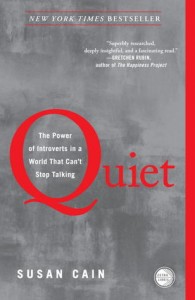
Quiet by Susan CainTitle: Quiet: The Power of Introverts in a World That Can't Stop Talking (Goodreads)
Author: Susan Cain
Published: Broadway, 2012
Pages: 352
Genres: Non-Fiction
My Copy: Audiobook

Buy: AmazonBook DepositoryKindle (or visit your local Indie bookstore)

I tend to think there are many misconceptions around introverts; we live in a world that seems to praise extroverts. Susan Cain tries to help people understand the importance of introverts and why we need a balance between the two personality traits. Susan is an introvert herself and found her job as a lawyer expected an extroverted personality. However embracing her introversion, she was able to prove herself a valuable employer and lawyer; so much so that she went on to become a negotiations consultant.

Quiet is a book that seeks out to explain the need for introverts, while also looking at the history between these two personality types. I myself am extremely introverted and my Myers–Briggs Type Indicator is INTJ (this can change over time but I will not go into that at the moment). I found it useful to understand the history in how society deals with introverts; some of which still feels very relevant today. I remember reading sections focusing on the 1950s and 60s, thinking this happened to me and is still happening in today’s society. This leaves me to think that people do not have an understanding on the personalities and how to manage introverts.

Susan Cain goes into a lot of detail with suggestions on how to fit into such an extroverted world, from developing a pseudo-extroverted personality to finding a quiet place to work. Obviously it does depend on your different situations but I think there were some interesting ideas to implement. She also goes into the problems with open offices and productivity levels as well as the extroverted nature of church. I was surprised by just how much this book covered.

I really enjoyed Quiet and feel like I learnt a lot, however it just makes me want to learn more, especially about the history (it is a vicious cycle). I want to give this book to my parents because I think they might actually benefit in learning about the topic. In fact I want to give this book to everyone, I feel like it is an important topic and we need to know that people are different and need to be treated differently. This is another book to fulfil my passion for learning about psychology and I would happily take some recommendations based on this book.


The Handmaid’s Tale by Margaret Atwood

Posted November 29, 2015 by Michael @ Knowledge Lost in Classic, Dystopia / 0 Comments

The Handmaid’s Tale by Margaret AtwoodTitle: The Handmaid's Tale (Goodreads)
Author: Margaret Atwood
Published: Vintage, 1985
Pages: 324
Genres: Classic, Dystopia
My Copy: Audiobook

Buy: AmazonBook DepositoryKindle (or visit your local Indie bookstore)

Most people would be familiar with Margaret Atwood’s novel The Handmaid’s Tale; a Christian totalitarian theocracy has overthrown the US government and are controlling reproduction. Set in the not so distant future, this dystopian society serves as a platform for Margaret Atwood to explore some real issues. Written in 1985, it is surprising to think that these themes and issues are still relevant thirty years later.

When I read this novel about four years ago, I think I missed the point, saying “I felt like Margaret Atwood spent too much time trying to explain the dystopian world in which The Handmaid’s Tale is set rather than the story itself.” I obviously was reading this book for its plot rather than trying to understand what Atwood wanted to say. To be fair I recognised this, citing “I understand she was trying to create a world that was a metaphor of a totalitarian society and explore the issue of women’s right” but even that makes me sound naive or stupid. One reason I like rereading books is for the fact that it shows me how much I have improved as a reader. I gave The Handmaid’s Tale three stars when I read it in 2011, but it is now clear to me that this is a brilliant novel and needs a much higher rating.

Looking at this dystopian society; the government wants control over reproduction. To do this, women become a political tool, rather than humans. This government was created due to a dramatic decrease in birth rates. Women become the property of their husband or the state. Women are not allowed to vote, have jobs, read or anything else that might make them have individual thoughts.

“There is no such thing as a sterile man anymore, not officially. There are only women who are fruitful and women who are barren, that’s the law.”

This one quote really summed up this novel for me; the whole idea that women are only useful for one thing. Women are considered subhuman and their only use involves their ovaries and womb. Even the main character, Offred reflects in one scene that her body was an instrument of passion and desire but now she has only one purpose; reproduction. She does not consider it rape, because she signed up to be a Handmaid; but what other choice did she have? In fact rape is severely punished and the government believes the women are protected. Yet would it not be considered rape if we take away the women’s rights, including their right to give consent?

There are many layers that could be explored within The Handmaid’s Tale, I would like to explore the novel deeper. I think looking at this book from a religious angle would be interesting as well, and I think I will need to give it a reread before considering that. I am glad to give this book another go; rereading this was eye opening and really highlighted just how much I have grown. One thing I found humorous was that Margaret Atwood set this book in the United States of America and references escaping to safety in Canada. This is an iconic novel and Atwood is an author well worth exploring; having said that, I have only read The Handmaid’s Tale and the MaddAddam trilogy. Lucky for me, I have so many more Margaret Atwood novels to explore.


Bonjour Tristesse and A Certain Smile by Françoise Sagan

Posted November 28, 2015 by Michael @ Knowledge Lost in Classic / 2 Comments

Bonjour Tristesse and A Certain Smile by Françoise SaganTitle: Bonjour Tristesse (Goodreads)
Author: Françoise Sagan
Translator: Heather Lloyd
Published: Penguin, 2013
Pages: 217
Genres: Classic
My Copy: Paperback

Buy: AmazonBook Depository (or visit your local Indie bookstore)

Françoise Sagan become an overnight sensation in 1954 which the publication of her first novel Bonjour Tristesse. At the age of 18, she published the novel she will be remembered for; the story of Cécile, a seventeen year old living with her widowed father and his mistress on the French Riviera. During an uneventful summer, an old friend of her late mother comes and stirs the peaceful balance of their summer villa.

Not knowing much about Françoise Sagan, I could not determine just how autobiographical Bonjour Tristesse might have been. I do know that Sagan, much like Cécile was kicked out of school and both enjoyed the bourgeois lifestyle. Sagan is a pseudonym (real name Françoise Quoirez) that was taken from the character Princesse de Sagan from Marcel Proust’s À la recherche du temps perd (In Search of Lost Time). I expect that much of this novel is semi-autobiographical because she managed to perfectly capture the narcissism, emotions and angst of teenage life.

In 1955, a censored translation of Bonjour Tristesse hit the shelves for English speaking readers. It was only recently with Heather Lloyd’s translation that we able to enjoy an uncensored edition. Not that there was much of a reference to sex in the novel anyway. This new translation also packaged Françoise Sagan’s second novel, A Certain Smile into the one book. A novel about Dominique, who bored with her lover, starts an affair with a much older married man.

I found that Françoise Sagan likes to play with ideas of morality and pleasure, while also exploring just how problematic a wealthy and carefree life can be. She likes to look at the disillusionment of the bourgeois characters and explore the emotions that she must have been facing herself. In a lot of ways, I tend to associate the angsty style of Sagan with The Sorrows of Young Werther. Françoise Sagan and Johann Wolfgang von Goethe both managed to capture the intensity of emotions in their novels that I have not experienced in more recent books.

 Bonjour Tristesse is a stronger novel than A Certain Smile, but I think both books are worth experiencing. I feel like Bonjour Tristesse had a depth that was not found in A Certain Smile. Both come in at about 120 pages each and A Certain Smile might have benefited with more pages, to fill in the plot and characters a lot more. I enjoy the style of Françoise Sagan and I hope to get a chance to read a few more of her other novels. I wonder what age and life experience does to her writing style.


The Little Paris Bookshop by Nina George

Posted November 27, 2015 by Michael @ Knowledge Lost in Contemporary / 0 Comments

The Little Paris Bookshop by Nina GeorgeTitle: The Little Paris Bookshop (Goodreads)
Author: Nina George
Translator: Simon Pare
Published: Abacus, 2015
Pages: 320
Genres: Contemporary
My Copy: Paperback

Buy: AmazonBook DepositoryKindle (or visit your local Indie bookstore)

Jean Perdu is a bookseller, owning a bookstore on a barge floating along the Seine. Often referred to as a ‘literary apothecary’, for Jean Perdu had a unique ability to sense to perfect book to soothe his customers’ troubled souls. The only person he could never cure was himself and for the past twenty-one years he has been nursing a broken heart.

If it was not for the fact that The Little Paris Bookshop was picked for my in real life book club, I may have never picked it up. To be fair, this novel was picked based on the idea of bibliotherapy, without anyone reading it first. I was interested to see if this book was going to be as generic as it sounded as it is a book in translation; translated from German by Simon Pare. I did have hopes that this might end up as enjoyable as The Collected Works of A.J. Fikry, but sadly I was disappointed.

I normally love books about books but from the very start I was bored with The Little Paris Bookshop. It did pick up briefly when there was talked about The Elegance of the Hedgehog and Franz Kafka but this only lasted a few pages. My thoughts on this novel ranged from boring, cliché, overly sweet before cycling back to boring. I struggled to find anything to hold me through this book, the characters were dull, and nothing about the writing impressed me.

I tend to stay away from light reads; I like to be challenged a little, and I like to experience something exciting and explore interesting themes. There is nothing wrong with a light read, and at times it is needed. However The Little Paris Bookshop was not worth completing and if it was not for book club, I would have abandoned it (I should have). This is meant to be a romance/chick-lit type book but I have read so many better novels in these genres, and these are not genres I normally read. I hate to be so negative towards a book, but the only thing positive I can find with this novel is that it mentions other books, like The Elegance of the Hedgehog and the works of Franz Kafka.


You’re Never Weird on the Internet (Almost) by Felicia Day

Posted November 24, 2015 by Michael @ Knowledge Lost in Non-Fiction / 2 Comments

You’re Never Weird on the Internet (Almost) by Felicia DayTitle: You're Never Weird on the Internet (Almost) (Goodreads)
Author: Felicia Day
Narrator: Felicia Day
Published: Sphere, 2015
Pages: 262
Genres: Non-Fiction
My Copy: Audiobook

Buy: AmazonBook DepositoryKindle (or visit your local Indie bookstore)

I’ve been a fan of Felicia Day from when I first saw The Guild. I think she is a talented and quirky actress/writer/content creator. She knew how to use the Internet to her advantage and I have been watching her grow in popularity and in content creation. But let’s face it; her best work is from Dr. Horrible’s Sing-Along Blog, with Dr. Holly Marten from Eureka a close second. Obviously this is subjective and she has been involved with many great projects but those two really stand out for me.

You’re Never Weird on the Internet (Almost) is the first memoir from Felicia Day; it covers broad strokes of life so far. If you follow Felicia on the Internet, a lot of the information within the book is familiar. However it was nice to have everything in the one memoir. While I knew a fair chunk of what is covered in the book, I still enjoyed reading this.

The memoir goes into great depth with the concept of failure. Failure, should never mean the end, or taken so negatively. Felicia Day goes to great lengths to explain the amount of times she failed and the importance to keep going. This is a lesson Felicia had to learn time and time again and she hopes that she can pass on the advice to the readers. However I think this is one of those lessons we all have to learn for ourselves.

I listened to You’re Never Weird on the Internet (Almost) as an audiobook, read by Felicia Day. I think the audio experience enhanced my experience. I really enjoy listening to non-fiction as audiobook, and when the author reads their memoir, that just makes the experience better. Felicia Day is an interesting person but I do not think this book is for everyone. Fans of Felicia Day or people with an interest in content creation might enjoy You’re Never Weird on the Internet (Almost), but for everyone else, there is not much left here to offer.


Bonk: The Curious Coupling of Science and Sex by Mary Roach

Posted November 17, 2015 by Michael @ Knowledge Lost in Non-Fiction / 6 Comments

Bonk: The Curious Coupling of Science and Sex by Mary RoachTitle: Bonk: The Curious Coupling of Science and Sex (Goodreads)
Author: Mary Roach
Narrator: Sandra Burr
Published: W. W. Norton & Company, 2008
Pages: 319
Genres: Non-Fiction
My Copy: Audiobook

Buy: AmazonBook DepositoryKindle (or visit your local Indie bookstore)

Bonk is a look into the history and study of sexual physiology. Mary Roach takes an interesting and humorous look into the world of sex research, exploring the weird methods used and the evolution of the field of study. Mary Roach has a unique style that has turned her into a household name. From a book about cadavers (Stiff), to more recently a look into the digestive track (Gulp).

This is my first Mary Roach book and I was immediately drawn to her writing style. I have never read her before, but I have heard so many good things. It was a toss-up between starting with Bonk or Stiff, but I am happy to finally have a chance to experience her writing. The blend of humour while teaching about science makes her an author I need to read more from. She has a style that I have always been interested in adopting for my blog; a balance between teaching and entertaining. Sadly my blog has been nothing but book reviews lately but I hope this will change in the near future.

I remember reading Perv: The Sexual Deviant in All of Us by Jesse Bering a few years ago and found it completely fascinating. I wanted to learn more about the research side of sex but never read anything since then. While Perv looks at the psychological study of sex, Bonk focuses more on the physiological. There are so many topics to cover on the topic, so my biggest problem with Bonk is the fact that it was a very ‘broad-strokes’ approach to the topic. Although this is a good starting point to understand the science.

I was a little horrified with all the setbacks that happened in the study of sex. Whether they are religious or cultural reasons, there has been a lot of times research falls years behind just to save face. This topic alone would be an interesting one to explore, not just about sex but research in general. I am sure there are many times where science suffers due to public opinion. I wonder if there is a book that covers this topic (if you know of one let me know).

I am glad to have finally read Mary Roach and Bonk, I have discovered a new favourite author and a topic I need to learn more about. The more non-fiction I read, the more I wonder why I had an aversion towards it for so long. It was a non-fiction book that got me into reading and I am pretty much a non-fiction writer. I have so much to learn and I plan to learn more; hopefully this will reflect on my blog in the future. If you have an interest in reading about the research of sex both physiologically and psychologically, I recommend both Bonk and Perv.


Richard Brautigan

Posted November 14, 2015 by Michael @ Knowledge Lost in Literary Fiction, Poetry / 0 Comments

Richard BrautiganTitle: Trout Fishing in America / The Pill vs. the Springhill Mine Disaster / In Watermelon Sugar (Goodreads)
Author: Richard Brautigan
Published: Houghton Mifflin Harcourt, 1964-1968
Pages: 400
Genres: Literary Fiction, Poetry
My Copy: Paperback

Buy: AmazonBook DepositoryKindle (or visit your local Indie bookstore)

Richard Brautigan is an iconic counter-cultural poet and author who is probably best known for his 1967 novel Trout Fishing in America. His novels deploy a unique blend of magical realism, satire and black comedy. I recently read an omnibus that included two novels Trout Fishing in America and In Watermelon Sugar and a collection of poetry The Pill Versus the Springhill Mine Disaster.

I think it is important to understand the life of an author when critically reading their novels. Normally Wikipedia is my starting place and often I find myself going down a rabbit hole of the internet. Richard Brautigan had an interesting life, with interesting ideals. Later in life he was diagnosed with both paranoid schizophrenia and clinical depression, even receiving electroconvulsive therapy as many as twelve times in an effort to treat his condition. Later in his life, he lived life as a recluse and eventually died to a self-inflicted gunshot wound to the head. It is unsure when he died, because his body was found much later.

The reason I think author context is important is evident in Brautigan’s book In Watermelon Sugar. The novel tells the story of iDEATH, a futuristic utopian commune that has found a way to live off the land; specifically watermelon sugar. This is told in a first person perspective and Brautigan could be considered the protagonist. However knowing the context of his life, I think Richard Brautigan saw himself more as the antagonist that is ruining this perfect society. Either way, it makes for an interesting read and In Watermelon Sugar was the highlight of this omnibus.

Trout Fishing in America was just a weird book, I had gotten use to the style of Richard Brautigan and I knew what to expect. However, Trout Fishing still leaves me perplexed. I know this is a social critique, but I never was able to fully grasp what Brautigan was trying to say. The term Trout Fishing in America became a character’s name, a hotel, a place, and becomes a modifier for just about anything. It was a weird novel and I probably need to do a lot more research to fully understand it.

The poetry of Richard Brautigan is just as unique as his novel writing. Most of his poems are short but pack a huge punch. There is so much depth within the poems and sometimes they have the ability to shock. For example, the title poem from this collection The Pill Versus the Springhill Mine Disaster, compares birth control to a mining disaster that killed 75 people. He believes that the pill and the disaster both leave life buried forever. Not all his poems pack a punch like this but I thought this poem was a good example of what to expect.

I do not think I would have read Richard Brautigan, without the encouragement of Jake from the YouTube channel Tales from iDEATH. This may not be entirely true, since Brautigan is on the 1001 Books list, and still need to read Willard and His Bowling Trophies. I appreciate the push to read Richard Brautigan, he is a weird author, but I enjoyed the experience. His style might irritate many people but I liked the surrealist nature of the three books I read in this omnibus.