Tag: Translated Fiction

In the Café of Lost Youth by Patrick Modiano

Posted January 16, 2017 by Michael @ Knowledge Lost in Contemporary / 0 Comments

In the Café of Lost Youth by Patrick ModianoTitle: In the Café of Lost Youth (Goodreads)
Author: Patrick Modiano
Translator: Euan Cameron
Published: MacLehose Press, 2007
Pages: 160
Genres: Contemporary
My Copy: Library Book

Buy: AmazonBook Depository (or visit your local Indie bookstore)

Recently I read my first Patrick Modiano novel, Missing Person which I enjoyed immensely. So much so, that I picked up In the Café of Lost Youth soon after. This book follows three different narrators talking about their memories of a woman named Louki. The four different perspectives (one being Louki herself) paints a detailed portrait of this one woman, Jacqueline ‘Louki’ Delanque. A woman that grew up in poverty, the daughter of a single mother working in the Moulin Rouge, and someone that comes across as well liked and popular.

In the Café of Lost Youth is a wonderful character portrayal, exploring someone that has had a hard life but appears to have it together. However, this novel explores the idea of loneliness while also looking at that perception we put to others. I think Patrick Modiano has this unique ability to capture the feeling of loneliness, especially while surrounded by people. The aggrieved husband, a private investigator hired by said husband and a student in a café all show different sides of this woman and piecing it all together allows you to see the complete picture (or is it?).

I said this in my review of Missing Person as well, Patrick Madiano won the Nobel Prize in Literature in 2014. The committee awarded him this prestigious prize “for the art of memory with which he has evoked the most ungraspable of human destinies”. This is also used as a blurb (or a stripped-down version of this quote) for this novel, and with good reason. The way that In the Café of Lost Youth explores the idea of memory is what drew me to Missing Person as well and one of the reasons Modiano is worth exploring.

One major concern I have about reading In the Café of Lost Youth so close to Missing Person is the fact that they do draw on similar themes. While the plot is very different it still felt the same. I am not saying I did not enjoy In the Café of Lost Youth, rather that I will need to allow some time to elapse before dipping into Modiano again. I still think he is an excellent writer and one worth exploring. The way he explores loneliness and memory are worth checking out.


Voroshilovgrad by Serhiy Zhadan

Posted December 7, 2016 by Michael @ Knowledge Lost in Contemporary / 0 Comments

Voroshilovgrad by Serhiy ZhadanTitle: Voroshilovgrad (Goodreads)
Author: Serhiy Zhadan
Translator: Reilly Costigan-Humes, Isaac Wheeler
Published: Deep Vellum Publishing, 2010
Pages: 445
Genres: Contemporary
My Copy: Paperback

Buy: AmazonBook DepositoryKindle (or visit your local Indie bookstore)

The novel Voroshilovgrad by Serhiy Zhadan was dubbed “Trainspotting set against a grim post-Soviet backdrop” by Newsweek. Having read this tag and with a recommendations from Agnese from Beyond the Epilogue, I knew I had to read this one. It revolves around Herman, who finds himself managing his brother’s gas station, after he mysteriously disappeared. Though it is a story of a bleak industrial city as it is a story of Herman.

Voroshilovgrad is a fascinating exploration into a post-soviet Ukraine. Not only does it explore the effects of communism to an industrial city, but also the power vacuum left behind when the Soviet Union collapsed. The mystery of what happened to Yuri takes a backseat as the novel explores the lives of Herman and his employees Kocha and Injured as they go head to head with a gangster who wants to control the gas station.

This is an interesting novel that appears to blend elements of post-modernism with the writers of the Beat generation, with a splash of Hunter S. Thompson. Serhiy Zhadan himself is a novelist, a poet and a translator. He mainly translates poetry from German, English, Belarusian and Russian but has translated Charles Bukowski into Ukrainian. This knowledge helps understand his influences, and while I still maintain that Voroshilovgrad reminds me of the Beats, I can see some Bukowski coming through.

While Voroshilovgrad was an entertaining insight into a post-Soviet city, I do not think there is many more themes to pull from this novel. I think it explored this idea really well and while I would have loved something deeper, I cannot fault the novel at all. I typically read books in translation to understand a different time and place, and Voroshilovgrad was able to do this perfectly. I love the dark and gritty nature of this novel, and I plan to re-read Voroshilovgrad in the future.


Missing Person by Patrick Modiano

Posted November 29, 2016 by Michael @ Knowledge Lost in Literary Fiction / 0 Comments

Missing Person by Patrick ModianoTitle: Missing Person (Goodreads)
Author: Patrick Modiano
Translator: Daniel Weissbort
Published: Verba Mundi, 1978
Pages: 192
Genres: Literary Fiction
My Copy: Library Book

Buy: AmazonBook Depository (or visit your local Indie bookstore)

I have been wanting to read Patrick Modiano; not only has he won a handful of awards, he is the recipient of the 2014 Nobel Prize in Literature. The Nobel was “for the art of memory with which he has evoked the most ungraspable of human destinies” but the committee also called him the “Marcel Proust of our time”. Unfortunately, not many of his novels have been translated from the French into English, despite the fact that he is so prolific (I counted six English translations prior to winning the Nobel Prize in Literature and a further eight since winning).

Missing Person appeared to be the perfect starting point for me, as it covered two elements that I am drawn to in literature, noir and philosophy. The novel follows Guy Roland, who was been working for Constantin van Hutte in his detective agency for the past eight years. As Hutte has decided to retire, Roland embarks on one last case, to find out who he really is. Guy Roland (a name given to him by Hutte) lost his memories during the war and is essentially a blank slate.

What drew me into this story was the cinematic style; it feels like a French film noir. The French title of the novel is Rue des Boutiques Obscures, which translates to the Street of Dark Shops. This is not a hard-boiled story, as Roland is not hard-boiled in anyway; this is what I would probably call existentialist noir. A perfect blend of the mysterious setting; dark cafes and plenty of wine and cigarettes. With the enhanced feeling of being completely lost, as Roland tries to find out who he really is.

“The sand holds the traces of our footsteps but a few moments.”

Essentially this is a novel exploring the ideas of identity and memories. I like the way Modiano played with the idea of a blank slate. What defines this person? What makes up this man’s character, and will what defined him in the past return to him? An exploration into the way people remember you and how that shapes your character and personality. Roland tries on different personas; in his investigation he may not discover who he really is but he adopts this ideas of people to see if it feels right or sparks a memory. The way memory plays out in the novel is particularly interesting; in one scene he recalls a love affair with a woman, but fifteen years after the breakup she denies that it ever happened. So you are left wondering if it did happen, or is this a distortion of the truth or maybe even a suppression of her past.

This is the type of novel you do not read for the plot. Missing Person is meant to explore an idea, invoke an emotion and get you thinking about identity and memories. The pulp-ish style to this novel really worked for m., I love the idea of investigating yourself; playing with the idea of self-discovery and identity. I will be exploring more from Patrick Modiano; in particular I want to try his novel Honeymoon. I am glad I read Missing Person and I have not been able to stop thinking about the ideas explored in this novel.


Don Quixote by Miguel de Cervantes

Posted July 5, 2016 by Michael @ Knowledge Lost in Classic / 8 Comments

Don Quixote by Miguel de CervantesTitle: Don Quixote (Goodreads)
Author: Miguel de Cervantes Saavedra
Translator: Edith Grossman
Published: Harper Perennial, 1615
Pages: 940
Genres: Classic
My Copy: Paperback

Buy: AmazonBook DepositoryKindle (or visit your local Indie bookstore)

Don Quixote is a staple in western literature, it ushered in the golden age of Spanish literature and it is also is one of the earliest examples of the modern (canonical) novel. The novel tells the story of a Spanish nobleman (Hidalgo) obsessed with the chivalric romance literature of the middle ages, who sets out to try and revive chivalry. With his trusty squire Sancho Panza, he sets out on an adventure to undo all the wrongs and injustices he encounters in the world. Claiming to be a knight. he gives himself the name Don Quixote of La Mancha.

From the very start, we get a sense that maybe Don Quixote is crazy. In psychology the term Quixotism relates to “over-idealism” and is often used in reference to someone with a naïve romanticism towards utopianism. The term “tilting at windmills” refers to a scene near the beginning of the novel where Don Quixote races off to fight giants that were actually windmills. If you consider that Don Quixote went mad from all the books he was reading and set off to try and fix the world, then this could be used as a metaphor towards Miguel de Cervantes Saavedra own feeling toward the same books, but rather than fixing the world he wrote Don Quixote. This brings to mind the quote from Toni Morrison “If there’s a book that you want to read, but it hasn’t been written yet, then you must write it.”

Don Quixote, like many books of the time, was read to children; this is a novel I could never imagine being read to any child now. However one thing that makes this novel so great is that there are so many interpretations to be taken from the text. Harold Bloom (who wrote the introduction to my copy of the book) calls this a work of radical nihilism and anarchy, in the way it glorifies fantasy over reality. Calling him the Sorrowful Knight whose objective is that “He is at war with Freud’s reality principle, which accepts the necessity of dying.” The translator of the edition I read, Edith Grossman, has said, “When I first started reading the Quixote I thought it was the most tragic book in the world, and I would read it and weep”. However when she worked on the translation she remembered “sitting at my computer and laughing out loud.”

After the French Revolution a popular interpretation of the novel was that it was about ethics and righting the wrongs of society.  While later on it was a social commentary which always lead to the discussion of whose side Cervantes was on. You could even pull some religious or feminist themes out of this novel but for me, I read this as a Marxist text. The relationship between Don Quixote and Sancho Panza was a good representation of the class struggle. It is evident that Quixote needed Sancho Panza more than Panza needed him. Sancho Panza was there to rise the ranks of society while Don Quixote was be completely lost without his squire.

I cannot talk about Don Quixote without mentioning the way that Miguel de Cervantes played with intertextuality. This novel is split into two parts; the first part was originally published in 1605. In 1614 a second volume was released by an anonymous author. It is believed that Miguel de Cervantes started writing his second part after this and in 1615 it was released. While part one was a spoof of the literature that annoyed him, part two was more an attack on this unauthorised story of Don Quixote. It even made references to this scandal as Don Quixote explores the concept of someone writing about him.

This is the type of novel that deserves to be read again and again. Every reading will probably offer something different and this review is a reference point of what I got out of reading this book the first time around. If you get the chance, I recommend reading this with someone. I read this with Hilary from Yrrobotfriend and the discussions were the best part of this reading experience. While reading this novel I enjoyed part one the most but on reflection, I think part two offers more.


A Meal in Winter by Hubert Mingarelli

Posted February 13, 2016 by Michael @ Knowledge Lost in Historical Fiction / 2 Comments

A Meal in Winter by Hubert MingarelliTitle: A Meal in Winter (Goodreads)
Author: Hubert Mingarelli
Translator: Sam Taylor
Published: Portobello Books, 2014
Pages: 138
Genres: Historical Fiction
My Copy: Paperback

Buy: AmazonBook Depository (or visit your local Indie bookstore)

Three German soldiers set off early one morning through the frozen Polish country side to search for Jews. If they are successful they will be able to do it again, if not they will have to go back to their job as executioners. Having found a man hiding in the woods they settle in an old abandoned house to warm up and share a meal. Tensions increase when an outspoken Polish man joins them to escape the cold. A Meal in Winter is a highly emotional French novella that is worth checking out.

It is hard to talk about this book, it is a very emotional book. It is the type of book that will rip out your heart, punch you a few times in the face and then end abruptly. Leaving you emotionally and physically drained and having to think about all the themes. I love A Meal in Winter because it really explores so many interesting ideas and themes and leaves you thinking well after finishing it.

This is such a quick read and explores the idea of following orders and issues of mortality. The Jewish man has done nothing wrong and these Nazi soldiers know this, but if they take him back as a prisoner then they might be able to go out searching again. Is it better to hunt or kill, both will end the same for the Jew, but which one would make you feel better about your actions?

I truly love what Hubert Mingarelli did with such a small book like A Meal in Winter. I have not been able to stop thinking about the book since I finished it. I love when a piece of literature leaves me contemplating about life and philosophical questions that I had not considered before. A Meal in Winter did just that and I think this short hundred page novella will stick with me for many years to come.


Numero Zero by Umberto Eco

Posted December 24, 2015 by Michael @ Knowledge Lost in Literary Fiction / 0 Comments

Numero Zero by Umberto EcoTitle: Numero Zero (Goodreads)
Author: Umberto Eco
Translator: Richard Dixon
Published: Harvill Secker, 2015
Pages: 208
Genres: Literary Fiction
My Copy: Library Book

Buy: AmazonBook DepositoryKindle (or visit your local Indie bookstore)

Colonna is a down and out hack-journalist that has just stumbled on an opportunity of a lifetime. Assistant editor for an emerging newspaper, as well as ghost writing a memoir for Simei, the editor and creator of the paper Domani. As he interacts with the team of journalists he learns about a conspiracy theory about Mussolini’s corpse. Umberto Eco returns for another fast paced thriller involving an elaborate conspiracy theory in this short novel, Numero Zero.

Every time I read an Umberto Eco novel, I have been really impressed. He is often referred to as the intellectual Dan Brown, meaning they both share a similar style but Eco packs in a lot more information. The first Eco novel I read (and still my favourite) was Foucault’s Pendulum and it explored ideas of religious and secret organisations and making a conspiracy theory out of it. Conspiracy theories play a big role in his other novels which I have read (The Name of the Rose and The Prague Cemetery). However I feel that Numero Zero seems to be more similar to Foucault’s Pendulum.

While Umberto has the ability to create a fast paced thriller that is both witty and wry, I am always impressed with the amount of information he can pack into his novels. While Numero Zero is a very short novel, sitting under two hundred pages, there are times that it feels like an information dump. Most information or theories are told in dialogue and my biggest problem with this book was the amount of information being provided seem to detract from the historical thriller style.

The narrator of Numero Zero is fifty something year-old Colonna who provides a unique view through the events of the novel. A college drop-out, Colonna is a bitter and cynical protagonist who flitted from job to job. From tutoring, proofreading, being a copy editor and slush-pile reader, he has had his fair share of experience in journalism. The newspaper Domani (Yesterday) intends to deliver the news earlier than all the other papers, creating some backdated issues to experiment with format and methods of reaching the papers ultimate goal. Although Simei is planning to use these back issues as blackmail material to push himself into a high social position.

This allows Umberto Eco to do something different in Numero Zero. I do not remember any of Eco’s previous novels being as satirical as this book. Eco is satirising the media throughout the entire novel. Exploring the ways journalists manipulate the news being distributed to the general public. I did not expect the novel to be satirical but I really enjoyed the way Umberto Eco managed to blend his style and still explore a current social issue.

If you have never read an Umberto Eco novel, I do think Numero Zero makes for a good starting point. Most of Eco’s novels are a lot bigger and this novel allows you to dip into his style without a huge time investment. While this book did have a problem with information dumping, it still makes for a decent starter novel. Not his best book, but if you enjoy Numero Zero then all Umberto Eco’s other novels are for you.


The Lake by Banana Yoshimoto

Posted December 8, 2015 by Michael @ Knowledge Lost in Contemporary / 0 Comments

The Lake by Banana YoshimotoTitle: The Lake (Goodreads)
Author: Banana Yoshimoto
Translator: Michael Emmerich
Published: Melville House, 2005
Pages: 188
Genres: Contemporary
My Copy: Library Book

Buy: AmazonBook DepositoryKindle (or visit your local Indie bookstore)

After the death of her mother, Chihiro moved to Tokyo in an attempt to run away from her grief and start a new life. Tokyo also offered the opportunity to try and kick start her dream career as a graphic artist. It was here, she met and befriended Nakajima, and their friendship quickly blossomed into a relationship. The Lake is a beautiful and mysterious novel about a blossoming relationship and the baggage that comes with it.

I have often heard great things about the writing of Banana Yoshimoto and one day I just thought it was time to find out for myself. I checked my local library and eventually decided to start with The Lake. I decided to read this one for multiple reasons and I was pleasantly surprised with this novel. The best way to describe reading this book is like floating on a lake. It was relaxing and I felt myself drifting through the book. Soon I realised I drifted so far out and into a dangerous situation.

I will not go into the plot in detail; experiencing this novel without any knowledge is highly recommended. Yoshimoto knows how to write a wonderful story that sweeps you away, but not only that, her characters have so much depth to them. The baggage brought into the relationship becomes a prime focus of the psychological elements within The Lake.

While Chihiro was dealing with grief, Nakajima was dealing with something more complex and damaging. What I liked about this novel is the way Nakajima sometimes wanted to try to rise above his issues and other times it was leading him into depression. I think Banana Yoshimoto created a very real depiction of depression, exploring the ups and downs flawlessly.

After one Banana Yoshimoto novel, I can say I am a fan and want to read everything she has written. Well, everything translated from Japanese into English (The Lake being translated by Michael Emmerich).  I have heard many people rave about Kitchen and it might be the next Yoshimoto novel I pick up; it will depend on my library. Do yourself a favour; pick up a Banana Yoshimoto novel, and experience her writing for yourself.


October 2015 Mini Reviews

Posted October 27, 2015 by Michael @ Knowledge Lost in Contemporary, Crime, Literary Fiction, Thriller / 2 Comments

October 2015 Mini ReviewsTitle: World Gone By (Goodreads)
Author: Dennis Lehane
Series: Coughlin #3
Published: William Morrow, 2015
Pages: 416
Genres: Crime
My Copy: Library Book

Buy: AmazonBook Depository (or visit your local Indie bookstore)

Ten years after the events from Living by Night by Dennis Lehane, World Gone By, tells the story of Joe Coughlin in a changing world. Prohibition is now dead, the world is at war again and Joe’s enemies have destroyed his empire and killed his wife. The novel is set in both in Cuba and Ybor City, Florida and World Gone By explores the implications of Joe Coughlin’s past. A novel of crime, revenge and the moral complexity of a criminal past while being a good example for his son.

I am somewhat discontent with the state of popular crime fiction and find myself longing to be surprised. Normally I am a fan of crime novels and like to explore the psychological or gritty nature of the plot. World Gone By seems to offer something different, I did not connect with Living By Night, but the synopsis of its sequel was enough to raise my interest. Sadly, this was unable to deliver, and I felt disconnected to the plot due to the fact that it was overly cliché. I wanted to enjoy this book; the time era and the premise are two elements I love in fiction and I had heard such good things. I need to stop listening to hype, or maybe I should give up on crime fiction all together.


October 2015 Mini ReviewsTitle: Mislaid (Goodreads)
Author: Nell Zink
Published: Fourth Estate, 2015
Pages: 288
Genres: Contemporary
My Copy: Library Book

Buy: AmazonBook DepositoryKindle (or visit your local Indie bookstore)

Set in 1966, at the campus of Stillwater College, Mislaid tells the story of Peggy. A freshman with literary aspirations, Peggy finds herself falling for Lee, a poet and one of her professors. Peggy falls pregnant and the two end up married. The only problem is, Peggy identifies herself as a lesbian and Lee as gay. This turns into some wry joke; they are an odd couple that has been mislaid.

Nell Zink takes it upon herself to explore the complex issue of sexuality with a mismatched pair stuck in a marriage that neither are interested in. The problem with Mislaid, is that this is such a complex issue and Zink was unable to handle the novel in a way it deserves. From the first chapter when the term ‘Mecca for lesbians’ was used, I felt uneasy about the way the GSM (Gender and/or Sexual Minorities) community was being treated. Then the wit found in Mislaid did not work for the majority of the novel. I was less than impressed with this book; it could have been a great story but nothing seemed to come together the way I expected.


October 2015 Mini ReviewsTitle: Bad Nature, or With Elvis in Mexico (Goodreads)
Author: Javier Marías
Translator: Esther Allen
Published: New Directions, 1996
Pages: 57
Genres: Literary Fiction
My Copy: Paperback

Buy: AmazonBook DepositoryKindle (or visit your local Indie bookstore)

I do not know how I found this little gem, I would like to know who recommended it so I could personally thank them. Bad Nature, or With Elvis in Mexico is a short novella that tells the story of Ruibérriz de Torres who is brought in to translate for Elvis Presley who is in Mexico to film Fun in Acapulco. While in town, Elvis and his entourage, find themselves in a seedy bar where they get into a little trouble with a local kingpin.

Javier Marías has managed to create a punchy story that explores a complex life of a translator, on one hand he has a big famous singer/actor that the world idolises and adores but his entourage has got him into trouble with a crime lord that is feared in Acapulco. Ruibérriz de Torres is stuck in the middle unsure if he should be translating the words that could get everyone into a fight. Should he censor the words for either Elvis or the kingpin just to keep the peace? This novella explores the idea of translations and the second hand nature of words, in a very meta way since this novella was translated from the Spanish into English by Esther Allen. This is only fifty pages long, but manages to explore a complex issue in a very interesting way; I have not been able to stop thinking about the ideas found in Bad Nature, or With Elvis in Mexico.


October 2015 Mini ReviewsTitle: Leaving Berlin (Goodreads)
Author: Joseph Kanon
Published: Simon & Schuster, 2015
Pages: 384
Genres: Thriller
My Copy: ARC from Publisher

Buy: AmazonBook DepositoryKindle (or visit your local Indie bookstore)

Almost four years after World War II, Berlin is a mess, divided in two. The east is occupied but the political ideas from the Soviet Union and the Allies are trying to control the west. This power struggle will later divide Germany into two with the erecting of the Berlin wall in 1961. Alex Meier is a young Jewish writer who managed to flee Nazi Germany to find a home in America. Only he found himself in the crosshairs of Joseph McCarthy during his “Red Scare” witch hunts. Alex and his family are now facing deportation; that was until he was given an alternative by the CIA but is this a solution at all?

The setting for Leaving Berlin is fascinating, the rebuilding and restoration of Germany is interesting enough as it is, but then you have the political struggle and influences of America and the Soviet Union as well. The American propaganda towards communism plays a big part in this espionage novel, and reading a book about a country being torn apart by the Cold War was really interesting. I am very interested in the history behind the Cold War, especially when it comes to the way the media was used to manipulate and of course I am interesting in the Soviet Union. As far as this novel goes, it was entertaining and I enjoyed reading it, however the setting and political history interested me more than the plot. I would have enjoyed a non-fiction novel of post-war Berlin more than Leaving Berlin, but that does not mean I regretted reading it.


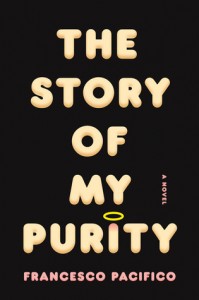
The Story of My Purity by Francesco Pacifico

Posted October 10, 2015 by Michael @ Knowledge Lost in Contemporary / 0 Comments

The Story of My Purity by Francesco PacificoTitle: The Story of My Purity (Goodreads)
Author: Francesco Pacifico
Translator: Stephen Twilley
Published: Hamish Hamilton, 2010
Pages: 293
Genres: Contemporary
My Copy: Library Book

Buy: AmazonBook DepositoryKindle (or visit your local Indie bookstore)

Thirty year old Piero Rosini wants to live a life of purity, wholly dedicated to God with a dream of become a modern day saint. Living in a sexless marriage, Piero spends his days working in a conservative Catholic publishing house. Although this publishing house was not conservative enough; they plan to publish a book that makes the claim that Pope John Paul II was secretly Jewish. He plans to leave and start an ultraconservative publishing house, where he can have more control over the content being released. The Story of My Purity is a novel that explores religion in relationship to faith, freedom and purity.

Living life with the idea of becoming a modern day saint, trying to do everything right and be perfect really sets up the satirical nature of this novel. Saint Augustine of Hippo’s autobiographical book Confessions comes to mind when I think about the difference between Saints and people who try to live a sinless life. I found that this novel really dealt with the idea of spirituality and religion in an interesting way. There is an exploration with the idea of freedom and faith when it comes to organised religion (in this case the Catholic Church).

A little understanding of theology really helps understand The Story of My Purity and the humour behind it. Firstly, when it comes to the seven deadly sins; it is alright to feel envy, greed and so on. The Church’s teaching on the seven deadly sins, is that these are gateways that can lead to trouble, so we should be aware of these feelings and learn to understand them. Although, there have been a lot of misconceptions around the deadly sins, that have led to the concept of Catholic guilt.

For Piero Rosini, he never learned to manage his lust, he went to a priest for help and was told not to think about women. Piero really took this advice on board to the point that he was unable to get an erection to consummate his one marriage. His sexless marriage was a result of him constantly trying to not think about sex, or feel a sexual attraction to his own wife. Although it proves impossible to not have sexual thoughts, and Piero’s life of purity began to unravel with the help of an attraction to his sister-in-law and spam emails.

The satirical nature of this novel comes from the fact people do not understand what the Church says about sex. Pope John Paul II did 129 lectures on the Theology of the Body, going through the Churches views on sex and sexuality. These lectures are about understanding your body, your desires and attraction. The theology should never feel restrictive by religion, rather we should be free and it should correct people’s misassumptions on the Churches teaching. Although the author may not have written this as a satire and this was actually his thoughts on Catholicism.

Unfortunately The Story of My Purity was not a great book, I loved viewing the book as a satire and exploring the theology behind it. However it did take a direction that I did not enjoy and ended up falling on its face. I am fascinated by theology and I feel like this could have been a great novel. The predictability of the book was just too much of a stumbling block for me. I am curious on Francesco Pacifico thoughts on Catholicism; I viewed the book as satire and would hate to think of it as anything else. I have also done a video review on this novel, if you are curious; although I think I talk about all the same ideas.


By Night In Chile by Roberto Bolaño

Posted October 7, 2015 by Michael @ Knowledge Lost in Literary Fiction / 6 Comments

By Night In Chile by Roberto BolañoTitle: By Night In Chile (Goodreads)
Author: Roberto Bolaño
Translator: Chris Andrews
Published: Vintage, 2000
Pages: 130
Genres: Literary Fiction
My Copy: Library Book

Buy: AmazonBook Depository (or visit your local Indie bookstore)

In a feverish daze, Jesuit priest Father Urrutia, spends his last night on earth reflecting on his life. By Night in Chile, is a bedside confession, reflecting on not just his involvement with the Opus Dei and Augusto Pinochet. This novella by Chilean author Roberto Bolaño, was written as a single paragraph, in which Father Urrutia recaps his entire life in one long monologue.

Roberto Bolaño is one of those authors that I have wanted to read for a very long time. In particular I was interested in reading his two tomes 2666 and The Savage Detectives. The novella opens with the line “I am dying now, but I still have many things to say” and then goes into a rant about the protagonist’s life. A Jesuit priest, poet and literary critic; Father Urrutia is unapologetic about his life; from his involvement with Opus Dei, teaching Augusto Pinochet and even his sexuality.

While this can be viewed as an unremorseful reflection on his life, his memories go from bad to worse as the novella progresses. I spent most of the time reflecting on whether Urrutia’s fever was making him a reliable or unreliable narrator. As Roberto Bolaño is a post-modernist, I think the idea of By Night in Chile is to question the reliability of memories. On one hand if the fever is making the narrator more honest than he should, this novella gives you one idea of the importance of reflection on life. However if the fever was causing hallucinations and making the narrator unreliable, the themes change but still asks some similar questions.

I read this novella in one sitting; I found it a quick reading experience. Reflecting on the book is what was the most time consuming. Roberto Bolaño is an excellent writer and By Night in Chile was worth checking out. Chris Andrews translated the novella from Spanish, who also has a book of literary criticism called Roberto Bolaño’s Fiction. At 130 pages, By Night in Chile allowed me to experience Roberto Bolaño’s style before committing to 2666 or The Savage Detectives, which I think I will push up my own TBR.