Tag: Translated Fiction

Big Bad Wolf by Nele Neuhaus

Posted April 17, 2014 by Michael @ Knowledge Lost in Crime / 0 Comments

Big Bad Wolf by Nele NeuhausTitle: Big Bad Wolf (Goodreads)
Series: Bodenstein & Kirchhoff #6
, 2014
Pages: 404
Buy: Book Depository (or visit your local Indie bookstore)

After finishing The New York Trilogy I needed something light, something I didn’t have to analyse. I picked up Big Bad Wolf because I enjoyed Snow White Must Die so much. I’m not saying that I can’t analyse a novel like this one (you can analyse every text), I just think at times some light reading is needed. Big Bad Wolf tells the story of a crime that happened on the river Main near Frankfurt. Investigators Pia Kirchhoff and Oliver von Bodenstein are back to investigate the crime, as the case progresses they find it taking them into a pit of evil and cruelty in the midst of a middle class utopia.

I am trying to make an effort to read more translated fiction; I loved Snow White Must Die which is book four in the series but only the first one to be translated into English. This is book six in the same series and I have to wonder why a publisher would publish books in such a weird order; this was a similar issue that happened with Jo Nesbø. I understand that a publisher would want to translate the novels that will sell the best but if Nele Neuhaus’ popularity continues to grow at this rate we will have another Nesbø situation.

Everything I loved about Snow White Must Die is absent in Big Bad Wolf; I think the problem is that Pia Kirchhoff and Oliver von Bodenstein are considered the main protagonists while Snow White Must Die focused more on the life of a man who served ten years for a crime he didn’t commit. That is what fascinated me but Big Bad Wolf is just another crime novel.

I’ve read so many great crime novels now that I find most of them clichéd and formulaic, Big Bad Wolf isn’t that bad but I’m looking for books that do something different and fresh with the genre. There are some decent moments in Big Bad Wolf, some unexpected twists but I wanted more. The novel is darker than most popular crime novels but keeps to the standard formula. One thing I did find difficult about this novel was the amount of view points, making it difficult at times to understand what was going on but this is an acceptable method for building suspense.

I highly recommend Snow White Must Die, if you haven’t tried some German translated crime before then this might be a good starting point. As for Big Bad Wolf, I’m disappointed with the end result but others might enjoy it more than I do. I hope Nele Neuhaus’ other novels are more like Snow White Must Die but I won’t be in a hurry to try her works again.


The Literary Exploration Reading Challenge Returns for 2014

Posted December 12, 2013 by Michael @ Knowledge Lost in Literature / 9 Comments

The Literary Exploration reading challenge is back, by popular demand. As most people know, Literary Exploration tries to explore all different genres in the hope to become a well-rounded reader and even discover something new. So we are challenging everyone to dedicate either 12, 24 or 36 books that you would normally read during the year to different genres. We have compiled a list which hopefully will give you a chance to explore literature a little deeper.

It’s real simple; below you will see an easy (12 books), hard (24 books) or insane (36 books) challenge. Each genre links to the Goodreads genre page if you need some suggestions on what to read. We want you to have some fun and explore; hopefully you might find a new genre that peaks your interest. To sign up either join the Literary Exploration book club on Goodreads and talk about your progress with others involved or for the bloggers out there, if you want to add it as part of your blogging experience simply let us know with a link (to your Literary Exploration Challenge page) in the comments below so our readers can see how you are going.

This year we have adjusted the insane challenge slightly to make it a little more rounded. The popularity of the reading challenge with overwhelming and we are pleased to see how many people wanted to do it again next year. We have even offered some bonus for those who want to take it to the next level. The idea of this challenge is to have a well-balanced list of genres and not focusing on one genre more than any others.

Good luck all who decide to join in. I personally am going to go for the 36 book, insane challenge and I’m really looking forward to it. While there are some genres I’m not looking forward to reading, it’s all part of being a literary explorer. What could be wrong with that?

Read More


Building a Better Book Blogging Community

Posted September 6, 2013 by Michael @ Knowledge Lost in Literature / 18 Comments

I’ve been thinking a lot about the book blogging community lately. There are so many book bloggers out there but how do you find them all. A lot of book bloggers are great at commenting and this is a great way to build community but it can be a battle to find new bloggers and help people get started. So I’ve been trying to think about better ways to unite the bloggers and build a community.

The best thought I have had so far is to try and create a book bloggers online journal. I thought I would share my idea and see if people have some better ideas to share and maybe we can work out a way to build a community. My idea for a book bloggers online journal is like a group book blog that focuses on book blogging and books in general. I know these can be hit and miss and that is the problem and I worry that a few people will end up doing all the work and it ends up going nowhere.

But anyway here is what I think; we could get bloggers to write some non-review posts and contribute onto the one site. Think futurebook.net for the book bloggers. The idea is that each post is about book blogging or books and also serves as a way to introduce the readers to new bloggers. If we get each person to try and recruit another blogger (like a pyramid scheme) we could get a workable journal that will showcase the community.

I know this isn’t a perfect idea, but I think it could work if there are people willing to commit. People should be free to post their posts to their own blogs as well and I think they can contribute as much or as little as they like. It might be a place to talk all things bookish (trying to stay away from reviews), from buzz books, blogging, reading, recent bookish news, blog hops, book tubes, translated fiction and so many other topics. I know there are places like Guardian books, AV club books, Huffington Post books and Bookriot but they don’t really feel inviting towards contributors and I would love to see a place were people can come together, discover new book bloggers and even make friends.

There you have it, my idea; feel free to pick it apart, offer ideas to improve it or even offer better ideas. A collaborative blog with bookish people around the world seems like my best idea. I know The Classics Club does a decent job in building a community and I love their work. They do seem too focused (which works well) but what about all the other genres and topics. Think about ‘How to improve the book blogger community?’ and let me know your thoughts. I’m sure we can find a way to make things easier to discover new blogs and meet like-minded bookish people.


Alex by Pierre Lemaitre

Posted May 26, 2013 by Michael @ Knowledge Lost in Thriller / 1 Comment

Alex by Pierre LemaitreTitle: Alex (Goodreads)
Author: Pierre Lemaitre
Translator: Frank Wynne
Series: Verhoeven Trilogy #2
Published: MacLehose Press, 2011
Pages: 368
Genres: Thriller
My Copy: Personal Copy

Buy: AmazonBook Depository (or visit your local Indie bookstore)

When someone is kidnapped, the first few hours are critical; the chances of finding the victim alive drastically decrease after that. The beautiful and tough Alex Prévost is no ordinary victim but can she escape? Her time is running out. Commandant Camille Verhoeven has nothing to go on, no suspects, no leads and no hope. All they know is the girl was snatched off the streets of Paris and shoved into a van. The mystery of the fate of Alex will keep Verhoeven guessing until the bitter end.

This is the second book in the Verhoeven trilogy but the only one that has been translated into English so far. While it is very much a standalone novel, I got a feeling that some critical information about Commandant Camille Verhoeven was missing in the development of this character. This could be the simple fact that this is the standard and over done thriller formula. I picked up this book because I’ve heard it being compared to Gone Girl a few times and thought it was a good excuse to read some translated crime.

Alex does have an unreliable victim, like Gone Girl but comparing this book to that one is a big stretch. The whole style and feel to Alex was nothing like the psychological thriller that is Gone Girl. This novel does try to be psychological but comparing the two is pointless, this novel takes a whole different route and the only real similarities are the genre and the unreliable victim. I tend to think marketing people look for connections between books as a way to promote books and this can be destructive.

Alex is a thriller told from a third person narrative that follows both the victim, Alex and Commandant Camille Verhoeven as he tries to piece together this enigma of a case. While this tends to work well in exploring the two sides of this case as victim and investigator, I sometimes wished I could get into the mindset of both characters. Without spoiling any of this novel, there are parts of the book that could have been interesting to explore the psychology of the characters. I think Alex was a complex character that could have been used better within the book to improve both plot and the overall novel.

Now, there are so many plot holes within this novel that really got to me, from the very first few chapters I got that feeling everyone was attractive, despite their age. It seems like Pierre Lemaitre knew of no other way to describe someone. I don’t want to spoil anything for people that want to read this book so I won’t mention the biggest plot hole I found (if you have read this book I’d love to discuss it with you). There is also a lot of repetitiveness within this novel, I don’t know how many times Lamaitre can mention she wasn’t average and when she was a teen Alex blossomed into a bombshell with large breasts but it was too many. Then you mix the generic thriller formula to the mix and you are left with a novel that could have done great things but took the safe road.

I think the unreliable victim narrative could have been executed a whole lot better and we could have had a decent novel with twists and turns. I’m a little disappointed that the author decided to play it safe and go with the cliché plot that is known to sell books. Books like Gone Girl that take risks and surprise the reader are the ones that are remembered and respected by readers. Sure sometimes we want something that we know will be enjoyable and doesn’t require much effort for a cosy winter (or summer read) but when you set up a book like Pierre Lemaitre did in Alex and chose not to take full advantage of the situation I feel let down and disappointed.


Invitation to a Beheading by Vladimir Nabokov

Posted May 19, 2013 by Michael @ Knowledge Lost in Classic / 0 Comments

Invitation to a Beheading by Vladimir NabokovTitle: Invitation to a Beheading (Goodreads)
Author: Vladimir Nabokov
Published: Vintage, 1936
Pages: 240
Genres: Classic
My Copy: Personal Copy

Buy: AmazonBook Depository (or visit your local Indie bookstore)

In this bizarre and irrational world, Cincinnatus has been convicted and condemned to death by beheading for gnostical turpitude, an imaginary crime with no definition.  Cincinnatus spends his remaining days in prison where he is visited by the chimerical jailers, an executioner who masquerades as a prisoner, and his in-laws. When Cincinnatus is finally brought out to be executed, he simply wills his executioners out of existence: they disappear, along with the whole world they inhabit.

There is no denying that Invitation to a Beheading is a weird novel; often compared with Franz Kafka’s The Castle, it is important to know that Vladimir Nabokov had not read any German novels, let alone Kafka when writing this. The reason this is important is to avoid trying to compare the two novels; sure they have similarities but they are still also vastly different. Originally published as a serial, with the title Sovremennye Zapiski (Contemporary Notes), Nabokov has stated while Lolita holds his greatest affection, this novel holds his greatest esteem.

While people call this Kafkaesque, the impossible and dreamlike world reminds me more of Haruki Murakami’s style. From the very start the reader understands there is something not right about this world, this reminded me of Hard-Boiled Wonderland and the End of the World. I got the feeling that this wasn’t reality but a world constructed in Cincinnatus’ mind based on his fears, doubts, and insecurities. Cincinnatus’ enemy is the society he’s created and the people of that society act according to ridiculous rules that have been set. We never know what gnostical turpitude is and this will probably remind people of Kafka’s The Trial. Cincinnatus is rebelling against the construction of this reality and the rules the people of this society observe and perhaps this is what makes him a criminal.

Maybe gnostical turpitude is the crime of being different from all the other people in this reality. Maybe Cincinnatus is being oppress for his ideas and his nature. Maybe he is so different from everyone around him; he has an internal depth that the others lack. A lot like Lolita, Vladimir Nabokov has a way about his writing that just leaves you with so many questions that you need to think through, this whole reality and society leaves me perplexed. Though this is the point; life isn’t simple and being an outsider sometimes feels like you are Cincinnatus in a bizarre reality.

While this book primarily looks at society and oppression it also looks at human connection. Cincinnatus desires to connect with his wife Marthe, despite her unfaithfulness and lack of concern for him. The one thing he craves the most is to make a connection and she felt like the logical choice; also the fact that he loved her helped. He begs her to come alone and reveal her true self to him but there is always something that interferes with the communicating.

While this was a very odd book, Vladimir Nabokov is just a brilliant writer and that really makes up for the weirdness. Also the weird and bizarre act as motifs within the narrative and without the symbolism and meaning it would just be trippy book. Nabokov does a good job of weaving his messages and ideas while entertaining the reader in unexpected ways. Most people only ever read  Lolita by Vladimir Nabokov and I think that means they miss out on his brilliance, I hope to read more; currently on my To Be Read list is Mary, Pnin and Pale Fire. Are there any others I should add?


The Reader by Bernhard Schlink

Posted May 15, 2013 by Michael @ Knowledge Lost in Historical Fiction / 0 Comments

The Reader by Bernhard SchlinkTitle: The Reader (Goodreads)
Author: Bernhard Schlink
Translator: Carol Brown Janeway
Published: Orion, 1998
Pages: 216
Genres: Historical Fiction
My Copy: Personal Copy

Buy: AmazonBook Depository (or visit your local Indie bookstore)

The Reader tells the story of the teenage years of Michael Berg while recovering from hepatitis and his passionate affair with a mysterious woman twice his age. Later going on to study law and discovering that this woman was involved in the death march from Auschwitz. The book continues on through the war crimes trial and the relationship between the two after her imprisonment.

Bernhard Schlink was born in 1944 (one year before the war ending), studied law then became a professor of public law and the philosophy of law. His passion for reading comes from a teacher in his high school who encouraged his reading and discovery of literature. Later he discovers that this teacher was a member of the Gestapo and involved in some questionable practices. His first series of books featuring a sixty year old private investigator Gerhard Selb (Selb translates to Self) also had a questionable past during the war and his coming to terms with this. This is interesting since the books in the series are called; Self’s Punishment, Self’s Deception and Self’s Murder. Also he has a collection of essays called Vergangenheitsschuld which translates to Guilt about the Past, which leads you to believe that Bernhard Schlink has a fascination about the effect of World War II has on the next generation of Germans.

This is not a book about the Holocaust novel; while this historical event plays a role, this is rather a novel that gives you a lot of questions and problems to think through. Divided into three parts; the summer of love, the trial and imprisonment; The Reader explores three different scenarios as well as the notion of keeping secrets. At the start of the book Hannah comes across as Good Samaritan trying to help Michael who was throwing up in the street. Later he pursues her and she gets an impression that he is old enough to be out of school; he doesn’t correct her, thinking the papers he leaves behind was enough for her to know his true age but we later finds out she would never have looked at them. When she finds out, they are in bed together and he tells her that he is skipping classes to be with her. She throws him out and it’s not until very later in the book we discover just how important education is to her. Hannah is his first love, he is too young to fully understand the kind of relationship they are having, while Hannah remains guarded and tries to protect both her public and private shames.

While most people focus mostly on the relationship between the two, but there is so much more to look at in the novel. Years later Michael finds Hannah again in a trial and the reader is asked to consider two things; the nature of her guilt and the significance of her other secret (the one she is more ashamed of it). While she was never the ringleader of her charges and she was following orders, when it came to the damning report, she let the court believe she wrote it to continue to hide her illiteracy. This brings to the overall concept to the book; ignorance is not necessarily innocence. The pride to protect herself from people discovering of her illiteracy works against her though out the entire book. She gives up promotions and lands herself in prison all to protect this secret.

This leads into the third part; years later we find that Michael starts reading to Hannah once again. Sending cassettes both the reader and Hannah mistakenly get the impression that this is an act of affection and when Hannah eventually finds out,  we also find out just how cold he has been acting. I’m not sure if he was trying to gain back the power in their relationship or just the bitterness of his life doing it but we are led to believe he still cares about Hannah when all he really cares about is that summer fling when he was still a teenager.

The book wants you to recognise that you are the reader, and Hannah, in particular, wants you to realise just how blessed you are to be able to read this book. I remember there was a great movie adaptation of this book a while ago; while very meta to have a movie about reading, I’m surprised how well it came together. I didn’t remember much about this movie while I read this but it all come back to me as I discovered it in the book. It was a great feeling to remember as I read and not know what would happen next.

I really loved this book; there is that element of uncomfortableness with the relationship at the start, which really is something people can be afraid to talk about but with a book like this it can be scandalous.  There are also so many other interesting elements that I think are equally valuable; especially with the whole German shame towards what they did in World War II and the next generation having to deal with it. While the movie closely follows the book, it is still worth reading; I highly recommend it.


The Night Watch by Sergei Lukyanenko

Posted April 13, 2013 by Michael @ Knowledge Lost in Fantasy / 0 Comments

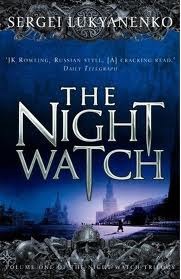
The Night Watch by Sergei LukyanenkoTitle: The Night Watch (Goodreads)
Author: Sergei Lukyanenko
Translator: Andrew Bromfield
Series: Watch #1
Published: Arrow, 1998
Pages: 576
Genres: Fantasy
My Copy: Library Book

Buy: AmazonBook Depository (or visit your local Indie bookstore)

Walking the streets of Moscow with the rest of the population are the Others, possessors of supernatural powers capable of entering the Twilight, a shadowy parallel that few know exists. Each Other owes allegiance to the Light or Dark side, The Night Watch follows Anton, a young Other of the Light, who must patrol the streets protecting ordinary people from the vampires and magicians of the Dark.

I’ve been trying more and more fantasy (in my quest to be a literary explorer) and with the success of some recent urban fantasy and The Lions of Al-Rassan, I thought I might try some Russian fantasy. This novel revolves around a confrontation between two opposing supernatural groups; the Night Watch, an organisation that polices the actions of the Dark Others, and the Day Watch, who police the Light Others. Now to help wrap your head around the novel, I first must explain just what are the Others; these are humans that while they live into the real world they can step into the Twilight (the supernatural world). Why do the Watch need to help police these two sides? The balance between Light and Dark must be kept at all times.

I thought my love of Russian literature would help me through this novel but in the end there was no saving this one. While the premise was excellent and the whole battle between good and evil in a police procedural type urban fantasy novel can really work (see The Dirty Streets of Heaven) but not in this book. Straight off the bat the whole book took a very long time to build momentum, I think I was a quarter of the way through the book when I started to enjoy it then Bam! a completely new story. Turns out these are three completely independent stories and each one of them was a very slow burn that ended too quickly. My major problem with the entire book that I had to spend so much time building the story then finally getting sucked into the plot only to have it end too soon.

There were so many interesting elements worth exploring, I would have liked to see more of the Post-Soviet Russia that this book (like most modern Russian literature) hints at but regrettably never really explored. Russia has this amazingly rich history that has sparked so many great novels and authors and I truly think Sergei Lukyanenko could be one of them with some work. Like Dostoyevsky, Lukyanenko tries to inject the novel with philosophical ideas on morality and this could have really worked in his favour had he stuck with one story right through to the end.

Personally I think Sergei Lukyanenko did not do himself any favours by dividing this book into three short tales; none of them really stood out and I really think the first of the three had the most potential if he explored it in greater detail and developed a more complex plot. The tension between Anton and Kostya Saushkin could have made for some really interesting philosophical discussion on morality, evil and the effects it has on the world around you. Plus the sexual tension between the two didn’t hurt either but that is when this short story ended abruptly. I felt disappointed at the miss opportunity.

The Night Watch really didn’t work for me; there was so much it could have done but I feel it shot itself in the foot when anything complex started to surface. On the front of the cover was a blurb that said “J.K. Rowling Russian style” which feels like a marketing ploy that I doubt it did itself any favours; it does not make me want to read the Harry Potter series. The second book in the pentalogy of Watches is called Day Watch which intrigues me but because it is broken into little stories as well, I think I will give it a miss. The Night Watch has left me with the need to explore some more of Sergei Lukyanenko’s novels but this is his most recent series, which makes me worry that he has not perfected his craft.


Day of the Oprichnik by Vladimir Sorokin

Posted March 8, 2013 by Michael @ Knowledge Lost in Dystopia / 0 Comments

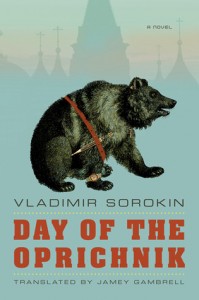
Day of the Oprichnik by Vladimir SorokinTitle: Day of the Oprichnik (Goodreads)
, 2006
Pages: 191
Buy: AmazonBook Depository (or visit your local Indie bookstore)

Welcome to new Russia, where the Russian Empire has been restored back to the draconian codes of Ivan the Terrible. Corporal punishment is back and the monarchy is divided once again, but this is the future, the not so distant future for the Russian empire, or is it? Day of the Oprichnik follows a government henchman, an Oprichnik, through a day of grotesque event.

Day of the Oprichnik is a thought provoking Science Fiction novel of the worst possible Russia imagined. But while the book is dark, it also is hilarious and then it has this wonderfully satirical nature about it. Komiaga is the narrator of this gem, an anti-hero and one of the Tsar’s most devoted henchmen. While the humour and satire throughout this book is grotesque, this book is a perfect example of great contemporary Russian literature as well as a political critique.

I will admit I like these types of modern Russian Science Fiction novels, like Super Sad True Love Story, you have this wonderful dystopian backdrop as well as the high tech gadgets like the “mobilov” and then you use this to create delightfully thought provoking plot riddled with satirical elements. These witty and intelligently written books are what I live for.

Komiaga is one of the elites, enforcing the laws of the land, helping the Czar’s to rule with an iron fist for the sake of the motherland and the Russian Orthodox Church. This is my first Vladimir Sorokin novel and I would like to compare this novel to one of Philip K. Dick’s (The Man in the High Castle to be exact); there is this wonderfully crafted story and you have these philosophical and political ideas that stick with you well after you have finished the book.

The Telegraph named this book one of the best for 2011 and the New York Review called Sorokin “[the] only real prose writer, and resident genius” of late-Soviet fiction”, just to give you an idea of what to expect. Day of the Oprichnik is deliciously complex, full of garish science fiction and hallucinogenic fish. Komiaga’s day might not be a typical one but it’s full of executions, parties, meetings, oracles, and even the Czarina.

I loved every moment of Day of the Oprichnik, even the moments that made me think “WTF” and for all of the people that have read this book, I want to say one word that will mean something to you but not the others, the word that the person who recommended this book to me said when I finished. That word is “caterpillar”. For everyone else; read the book, enjoy the satire, black humour and Science Fiction elements of this book and also find out what I mean.


What I Talk About When I Talk About Running by Haruki Murakami

Posted January 26, 2013 by Michael @ Knowledge Lost in Non-Fiction / 0 Comments

What I Talk About When I Talk About Running by Haruki MurakamiTitle: What I Talk About When I Talk About Running (Goodreads)
Author: Haruki Murakami
Translator: Philip Gabriel
Published: Knopf Doubleday, 2007
Pages: 180
Genres: Non-Fiction
My Copy: Library Book

Buy: AmazonBook Depository (or visit your local Indie bookstore)

What I Talk About When I Talk About Running is a memoir by Haruki Murakami where he talks about his interest in running. From running for pleasure to competing in over twenty marathons and an ultramarathon. Part training log, travelogue and reminiscence, this is a memoir of Murakami’s passion for running.

Now I’m not a runner and I don’t think I ever will be but I like to read about people being passionate about a topic and although this was brief, the passion was not in short supply. Most people know Haruki Murakami for his postmodern novels which include Hard-Boiled Wonderland and the End of the World, Norwegian Wood, The Wind-Up Bird Chronicle and 1Q84. This is an unusual memoir, not just because it only focuses on one interest, but because I don’t think any other authors have written something like it.

The book tries to explore why he is so passionate about running and why he runs. For a non runner reading this book for its memoir aspects, it’s just interesting the approach he takes. It’s like seeing Murakami’s thought process on the page; not offering tips or anything, just being nostalgic about past runs or discussing plans for a marathon or just tracking his daily runs.

For me this is nothing special, but for people obsessed with running this would be an interesting read. I read just to see the passion he has towards running, as well as the fact it was mentioned in Metroland and I want to be a book hipster. I was surprised how well this worked, like a stream of conscious of Haruki Murakami’s love of running.


Revenge by Yoko Ogawa

Posted January 17, 2013 by Michael @ Knowledge Lost in Short Stories / 0 Comments

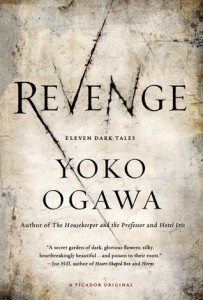
Revenge by Yoko OgawaTitle: Revenge (Goodreads)
Author: Yoko Ogawa
Translator: Stephen Snyder
Published: Picador, January 29, 2012
Pages: 176
Genres: Short Stories
My Copy: ARC from Netgalley

Buy: AmazonBook Depository (or visit your local Indie bookstore)

An aspiring writer moves into a new apartment and discovers that her landlady has murdered her husband. Years later, the writer’s stepson reflects upon his stepmother and the strange stories she used to tell him. Yoko Ogawa weaves together a collection of short stories to create a haunting tapestry of death.

While this is a collection of short stories, Yoko Ogawa has managed to link each story with the last with recurring images and motifs. Apparently this is an old tradition from classical Japanese poetic collections. This is an eerie and very sinister novel but there is a real beauty within it too; not just in the writing, but in the imagery.  Yoko Ogawa takes the reader on a clever journey of life and the afterlife.

I love what Ogawa does in this book, not only looking at the human psyche but plays with it a little to mess with the mind.  From the very start of this book, I was planning my next dip into the world of Yoko Ogawa, I was hooked and I wanted to explore her writing more. It was just the combination of beauty with the sinister tones of the stories that really worked for me.

If this book is anything to go on, Yoko Ogawa is an amazing writer; showing the reader the beauty behind the dark and disturbing. Each story is macabre but the best part of the entire book is the way the stories link together and the beautiful tapestry Ogawa weaves.  Highly recommended for lovers of short stories and the dark and disturbing, you won’t be disappointed by how Yoko Ogawa captures your attention.