Tag: Translation

The Dinner Guest by Gabriela Ybarra

Posted March 29, 2018 by Michael @ Knowledge Lost in Contemporary / 4 Comments

The Dinner Guest by Gabriela YbarraTitle: The Dinner Guest (Goodreads)
Author: Gabriela Ybarra
Translator: Natasha Wimmer
Published: Harvill Secker, 2018
Pages: 160
Genres: Contemporary
My Copy: eBook

Buy: AmazonBook DepositoryKindleWordery (or visit your local Indie bookstore)

Longlisted for the Man Booker International Prize 2018

In 1977, three terrorists broke into the home of Gabriela Ybarra’s grandfather, taking him by force. The first half of The Dinner Guest follows her research into what actually happened. This book blurs the lines between true crime and fiction to create a unique narrative. However, The Dinner Guest doesn’t stop there; the book is also centred around Gabriela Ybarra’s mother dying of cancer.

The story goes that in my family there’s an extra dinner guest at every meal. He’s invisible, but always there. He has a plate, glass, knife and fork. Every so often he appears, casts his shadow over the table, and erases one of those present.

The first to vanish was my grandfather.

I have a feeling that the judges of the Man Booker International Prize are focusing on unique narrative styles, particularly when it comes to exploring grief. Of the four books I have read so far from the long list, these have been the similarities. Whether or not we call this a memoir of grief with fictional elements or an autobiographical novel is not something that I choose to debate. However this book evokes too many similarities to War and Turpentine by Stefan Hertmans, with the latter being a much stronger book.

It is almost impossible to talk about this book without looking it as a piece of non-fiction. The fact her grandfather was taken at gun point is wrapped throughout the narrative. The rest of The Dinner Guest is around witnessing her mother’s heath deterioration and her eventual passing. The two tragic events shapes the majority of the book. Evoking many powerful images but ultimately I never felt it really came together.

There is an idea that seemed to stick with me that never played out to my satisfaction. That was the idea of a person viewed differently, not just after their passing. For Gabriela Ybarra, her mother stopped being her mother long before her death. Her identity was stripped away and all that was left was cancer. There is a line in the book that says, “The last time I saw her, she had already stopped existing.” Even after her death, the press suddenly became interested in her.

At first I couldn’t understand why my mother’s death was of interest to the press. Then I was frustrated, because some of the reflections shared had nothing to do with the way I remembered her.

If it was not for the Man Booker International Prize longlist, I may have never have picked up The Dinner Guest. There is some interesting and notable parts within this book but the more I think about it the less I am satisfied. I love trying to read through the longlist to join in on all the conversations but you cannot expect me to like all the picks. I doubt this will make the shortlist, so instead of reading this one, may I recommend War and Turpentine by Stefan Hertmans which was translated by David McKay.

The Master and Margarita by Mikhail Bulgakov

Posted March 10, 2015 by Michael @ Knowledge Lost in Classic, Magical Realism / 2 Comments

The Master and Margarita by Mikhail BulgakovTitle: The Master and Margarita (Goodreads)
, 1967
Pages: 403
Buy: AmazonBook Depository (or visit your local Indie bookstore)

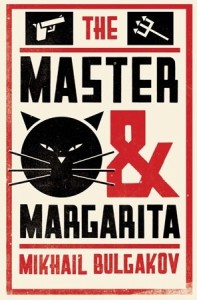
When I first read The Master and Margarita by Mikhail Bulgakov back in 2012 I had no idea how to review it. Now that I have re-read the book, I am still at a loss. The Master and Margarita is often considered as one of the best novels of the 20th century by critics and cited as the top example of Soviet satire. Like most of Mikhail Bulgakov’s bibliography, this author never saw the effect that this novel had on the world; it was written between 1928 and 1940 but was first published in 1967, long after his death.

One of the things I love about Russian literature is the social commentary and satirical nature found in a lot of their books. During the Soviet era there was a lot written about the political state of the country but these were often heavily censored before publication. There was a distribution practise happening at the time call called samizdat, which is when individuals reproduced censored publications and passed them out to readers. The term samizdat comes from the Russian words, sam which roughly means “self” and izdat “publishing house”, so possibly the first use of self-publishing. If it wasn’t for this underground practice we may never have the uncensored editions of Russian classics like Doctor Zhivago by Boris Pasternak, the majority of Aleksandr Solzhenitsyn books and of course The Master and Margarita.

The novel starts out with Berlioz and Bezdomny talking at the Patriarch ponds when a mysterious professor appears and strikes up a conversation. This professor is actually Satan and he was talking to them about the existence of God, the idea being if God doesn’t exist, can Satan?. Russia at the time was an atheist state, in fact communism and religion often do not go hand in hand. During the Stalinist era the Soviet government tried to suppress all forms of religious expression. Bulgakov’s commentary on religion and the government is an interesting one and while there are other interpretations of the novel this was what I took away from the novel this time round.

The ideas of censorship of religion continues with the Master’s book about Pontius Pilate, which was rejected and he was accused of pilatism. Though pilatism is found throughout the book The Master and Margarita as well, Pilate is not only in the Master’s novel but appears in Satan’s stories as well as dreams. The Master has poured his heart and soul into it his novel and having rejected sent him into a tailspin. This satirisation of censorship and religion plays though out the entire novel.

The idea of pilatism is an interesting one since in Christianity Pontius Pilate is the seen as the one that sentenced Jesus (referred to by his Hebrew name Yeshua Ha-Nozri in this novel) to die on the cross. Pilate becomes a symbol of humanity’s evil within religion and The Master and Margarita but you can argue that it is possible that he was a victim of society. Pilate’s ruling on Yeshua Ha-Nozri was due to pressure from the people and the high priests, he literally (and symbolically) washed his hands of the situation. I got the impression that Mikhail Bulgakov was comparing this idea of pilatism with the soviet government at the time. Human nature is apparently evil but it is also very influential of society, and what does that say about the atheist state?

There is so much going on within this novel and I would love to talk about the influences of Goethe’s tragic play Faust on the book. However I think I would need to re-read Faust to be able to compare it with The Master and Margarita. I would have also liked to explore the constant changes on narration, from an omniscient observer to the characters within the book but not sure what else to say about that. I re-read this book as part of a buddy read, my first buddy read in fact and I had a lot of fun doing this but I think I wasn’t a good reading partner. This time I read the Hugh Aplin translation of The Master and Margarita and I think I enjoyed it more than the Pevear/Volokhonsky translation I read last time. This may have been because I got more out of the book or maybe there is something about Richard Pevear and Larissa Volokhonsky translations I didn’t like, I tend to avoid their translations.

I hope I have made a coherent review, I focused mainly on censorship and religion because this book is weird and all over the place so I needed to stick to one topic to make sense of what I have read. I do plan to re-read The Master and Margarita sometime in my life, I might even try a different translation again (any suggestions?). I got so much out of this book this time around and has really made me appreciate the value of re-reading. I ended my last review of this book telling people to ‘just read it’ and I think that sentiment still stands.


Norwegian Wood by Haruki Murakami

Posted March 8, 2015 by Michael @ Knowledge Lost in Contemporary / 10 Comments

Norwegian Wood by Haruki MurakamiTitle: Norwegian Wood (Goodreads)
Author: Haruki Murakami
Translator: Jay Rubin
Published: Vintage, 1987
Pages: 389
Genres: Contemporary
My Copy: Library Book

Buy: AmazonBook Depository (or visit your local Indie bookstore)

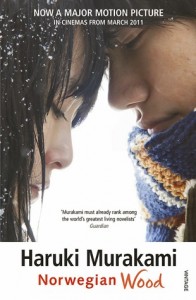
Having just arrived in Hamburg, Germany, 37 year old Toru Watanabe hears an orchestral cover of The Beatles’ song “Norwegian Wood” which reminds him of his college years. In high school his best friend, Kizuki completed suicide and Watanabe moved to Tokyo for college in the hopes to escape the pain. One day he was reunited with Kizuki’s girlfriend Naoko and they sought solitude in each other’s company. However this relationship wasn’t the right solution for Naoko and she left for a secluded mountain sanatorium near Kyoto.

Norwegian Wood is often referred to as the best starting point when diving into the works of Haruki Murakami, mainly because this is one of the few books that don’t have a magical realism thread to it. This is a good place to start but what I find fascinating is the way Murakami uses magical realism to explore ideas of the mind. Colorless Tsukuru Tazaki and His Years of Pilgrimage and Norwegian Wood don’t have that same fantastical style but they still follow similar themes. Colorless Tsukuru Tazaki looks at the psychological impacts of losing friendships, while this novel looks at ideas of memory. From what I have read so far, Murakami’s other books do similar things but the use of magical realism allows him to dive into the mind and explore it as a fantastical world.

I have heard Norwegian Wood described as a coming of age story so many times, but I find it difficult to classify this book as such; for the simple fact that Toru Watanabe is 37 years on at the start of the novel, even though the majority of the novel is set during his college years. I think this is more a reflection on life and love, a novel that explores ideas of memory and nostalgia through themes like loss, depression and sexuality. This leads me to wonder just how reliable Watanabe really is and if there is a ‘rose coloured glasses’ perception happening in the novel. However the way this novel comes together and deals with memory (especially at the end) works so well and I can understand why Norwegian Wood is a Haruki Murakami favourite for many people.

One thing that really stuck with me with Norwegian Wood is the way Murakami developed characters. I found most characters to be complex and well rounded, they all had a unique personality and it was such a joy to read something with such great character development. A favourite of mine was Midori, who reminds me a lot of my wife; a confident and sure character who is at times insecure but has a great interest in talking about sex with others. She was the highlight of the whole novel and I always looked forward to her turning up within the story.

Before I knew who Haruki Murakami was, I saw the 2010 Japanese movie adaptation and thankfully I forgot most of the story. While images and plot points did come back to me as I read the novel, I was glad I didn’t have that outside influence but now I do need to re-watch the movie. Norwegian Wood is a great starting place if you have never read Haruki Murakami before. Apparently Murakami isn’t too happy that this is the novel that people will read or recognise him by, but it really is one of his stand out books. I have so many more Murakami books to read and I am really looking forward to diving into them all.


Perfume: The Story of a Murderer by Patrick Süskind

Posted January 28, 2015 by Michael @ Knowledge Lost in Historical Fiction / 6 Comments

Perfume: The Story of a Murderer by Patrick SüskindTitle: Perfume: The Story of a Murderer (Goodreads)
Author: Patrick Süskind
Translator: John E. Woods
Published: Penguin, 1985
Pages: 263
Genres: Historical Fiction
My Copy: Library Book

Buy: AmazonBook DepositoryKindle (or visit your local Indie bookstore)

At birth Jean-Baptiste Grenouille was tossed aside into a pile of fish guts in the slums of eighteenth-century Paris. His mother believed he would be a still born, just like all the others and quickly got rid of him to continue working. From birth Jean-Baptiste was a little different; born without a scent but grows into a man with an absolute sense of smell. He quickly found work as a perfumer, learning the trade. He wanted to capture the scents of the world, but more importantly the one that intoxicated him; the scent of a beautiful young virgin woman.

When first published in German in 1985, Perfume: The Story of a Murderer (Das Parfum: Die Geschichte eines Mörders) was a literary sensation for author Patrick Süskind. Two years later it was translated into English by John E. Woods, who went on to win the PEN Translation Prize for his work with this book. The original cover (which sadly isn’t used now) was from the painting Nymphe et satyre by Antoine Watteau 1715-16, which in English translates to Nymphs and Satyr. The novel was the inspiration for Nirvana’s Scentless Apprentice, Rammstein’s Du riechst so gut, Red Head Girl by Air and so on.

The point I am trying to make is that this book was a huge success that went on to inspire many. This is actually a re-read for me and I first read this almost five years ago and found myself being completely captivated but the book. When I first reviewed the novel, I said that “I love an anti-hero and Jean-Baptiste Grenouille didn’t disappoint as the cold hearted, scent obsessed protagonist.” Which is true, but this time I wanted to look at the novel a little more in-depth.

Firstly, I found it interesting the way women where portrayed within this book. At birth and childhood, women are represented as carers but his mother, wet-nurses and the nuns all reject Jean-Baptiste Grenouille. Then when he grew into a man, the role of the woman changed from carer to the object of desire. However, for Jean-Baptiste, the idea of acceptance by a woman remained strong throughout his life, but he remained alone, which made him feel undesirable.

I had been thinking about Perfume since first reading the novel and I came to the conclusion that scent worked as a metaphor for lust in this book. A lust that Jean-Baptiste had towards young virgins; which is so typical and boring but I was interested in the way Süskind used smell to explore this idea of lust. While this still rung true for me the second time around, I also began to look at smell as a representation for class; the higher the social standing the better you smell.

Both ideas seem to come together at the end, when Jean-Baptiste releases the fragrance everyone smells the same; become equals. When it comes to theme of lust, everyone is over come with desire and the scent makes everyone attracted to each other. No one has to feel the way Jean-Baptiste felt, rejected from birth. However this scene left me curious, if everyone becomes desirable and equal; why is everyone straight in this scene. There is no mention of any same sex coupling and I felt a little perplexed by this; it is not like everyone is straight or no mention that the scent only attracts you to the opposite sex.

It is an interesting experience re-reading a book, I don’t often do it but I am starting to see the appeal. First time around, I really focused on the plot and when I picked up Perfume again all that came flooding back which allowed me to explore themes and ideas within the book. I was able to take what I thought previously and dive deeper into the novel which I found so much more rewarding. I think I have converted myself into a re-reader; I have already started reading The Master and Margarita again.


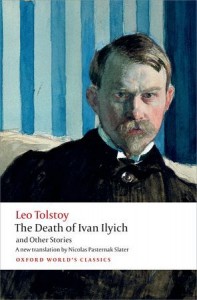
The Death of Ivan Ilyich by Leo Tolstoy

Posted January 15, 2015 by Michael @ Knowledge Lost in Classic / 0 Comments

The Death of Ivan Ilyich by Leo TolstoyTitle: The Death of Ivan Ilyich (Goodreads)
Author: Leo Tolstoy
Translator: Nicolas Pasternak Slater
Published: Oxford World's Classics, 1884
Pages: 256
Genres: Classic
My Copy: Paperback

Buy: AmazonBook DepositoryKindle (or visit your local Indie bookstore)

Ivan Ilych’s life revolved around his career; as a high court judge he takes his job very seriously. However after he falls off a ladder, he soon discovers that he is going to die. The Death of Ivan Ilyich is a novella that deals with the meaning of life in the face of death. A masterpiece for Leo Tolstoy written after his religious conversion in the late 1870s.

Something that was fascinating about The Death of Ivan Ilyich is the drastic change in writing style when comparing it to Anna Karenina and War and Peace. I am not just referring to the length, but that does play a big part. I have read somewhere that Tolstoy intentionally made Anna Karenina and War and Peace so long because he wanted to replicate life and the journey the characters face. Allowing the reader to experience every decision and moral dilemma that the character is facing, exploring the growth or evolution of each and every person within the novels.

The Death of Ivan Ilyich takes a more focused approach, dealing with major questions revolving around the meaning of life, death and spirituality. Leo Tolstoy had a major conversion in the late 1870s and the questions in this novel were the questions he was asking himself. Whether or not Ivan Ilyich found the answers he was looking for is up to the reader but it is believed that Leo Tolstoy was still looking for the same answers well after finishing this novella.

There is a lot of pain and torment that appears in this book, which reflects the authors search for answers and that is what really stood out for me. Not only was I reading a spiritual/existential struggle of the protagonist but Tolstoy’s own feeling really came out within the pages. This is what makes this a masterpiece that explores the tortured artist in great detail. I don’t want to say much more, this is the type of book people have to read and make their own mind up about the themes presented, but it is worth reading.


In the First Circle by Aleksandr Solzhenitsyn

Posted January 9, 2015 by Michael @ Knowledge Lost in Classic / 0 Comments

In the First Circle by Aleksandr SolzhenitsynTitle: In the First Circle (Goodreads)
Author: Aleksandr Solzhenitsyn
Translator: Harry Willets
Published: Harper Perennial, 1968
Pages: 784
Genres: Classic
My Copy: Paperback

Buy: AmazonBook DepositoryKindle (or visit your local Indie bookstore)

Moscow, Christmas Eve 1949; a man makes a phone call to the American embassy to warn them about the Soviet Atom Bomb project. This call was caught on tape and quickly disconnected by The People’s Commissariat for Internal Affairs (NKVD). A brilliant mathematician named Gleb Nerzhin, was taken as a sharashka (known as zeks) prisoner and ordered to help track down the mystery caller. The zeks know that they have it better than a “regular” gulag prisoners but they are faced with the moral dilemma; to aid a political system they oppose or be transferred to the deadly labour camps.

Aleksandr Solzhenitsyn is a Russian author as well as a historian; he was also a critic of Soviet totalitarianism which found himself in prison much like Gleb Nerzhin. He was accused of anti-revolutionary propaganda under Russian SFSR Penal Code (Article 58 paragraph 10) which is a ‘catch-all’ criminal offence that could be used against anyone that might threaten the government. During the period of Stalinism, the crime of “propaganda and agitation that called to overturn or undermining of the Soviet power” jumped from a six month prison sentence to seven years of imprisonment, with possible internal exile for two to five years. On 7 July 1945, Solzhenitsyn was sentenced to seven years in a labour camp for comments he made in private letters to a friend. After his sentence ended, Solzhenitsyn was then internally exiled for life at Kok-Terek, which is in the north-eastern region of Kazakhstan.

The First Circle was self-censored before Aleksandr Solzhenitsyn even attempted to get it published in 1968. Originally the book was 96 chapters long but the censorship turned the novel into 87 chapters. Some changes included the man telling another doctor to share some new medicine with the French instead of warning the Americans about the atom bomb. All mention of the Roman Catholics and religion was also removed. It wasn’t till 2009 a new English translation (not sure of the details on the Russian editions) saw the book restored and uncensored; now with the title In The First Circle.

The title alone is fascinating and it allows the reader to pick up on the whole metaphor before starting the novel. Looking at Dante’s Inferno, it is easy to find that the first circle of hell is limbo. In the epic poem Virgil introduces Dante to people like Socrates, Plato, Homer, Horace and Ovid. The time between Jesus’ crucifixion and resurrection is often referred to as the Harrowing of Hell, in which he descended into limbo and brought salvation to the righteous. However in Dante’s Inferno this meant that Christ saved people like Noah, Moses, Abraham and King David, but a lot of the intellectuals where left. This is metaphor for the penal institutions, making reference to all the intellectuals and political thinkers arrested under Stalin’s Russia.

This novel made me feel a lot smarter than I actually am, there is a lot of information within In The First Circle however Aleksandr Solzhenitsyn presented them in accessible way. Going into the book I knew a little about Solzhenitsyn’s life and the metaphor in the title was explained in the Goodreads synopsis. So I was able to witness how everything came together without doing any research. The book sometimes goes into Russian history; I was fascinated with everything I learnt.

I have read so many books set in Cold War Russia but I don’t think there have been many actually written by a Russian. Aleksandr Solzhenitsyn has lead an interesting life and I am keen to read more of his novels before attempting The Gulag Archipelago, his three volume book on the history of a gulag labour camp. If you have paid attention to my best of 2014 list you would have noticed that In The First Circle did make the list. This was a wonderful book that was both thrilling and educational, I would recommend it to anyone interested in Russian history, especially the Cold War era.


Measuring the World by Daniel Kehlmann

Posted December 28, 2014 by Michael @ Knowledge Lost in Historical Fiction / 4 Comments

Measuring the World by Daniel KehlmannTitle: Measuring the World (Goodreads)
Author: Daniel Kehlmann
Translator: Carol Brown Janeway
Published: Quercus, 2005
Pages: 259
Genres: Historical Fiction
My Copy: Library Book

Buy: AmazonBook Depository (or visit your local Indie bookstore)

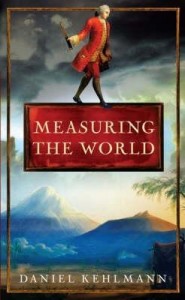
Measuring the World reimagines the life of German mathematician Carl Friedrich Gauss and geographer Alexander von Humboldt. The book follows a fictionalised account of their journey, along with Aimé Bonpland as they measure the world. Their methods where ground-breaking and this novel entangles their lives to explore their effects on science today.

This is not a book of science, this is historical fiction that explores the lives of two German scientists. While the subject matter may sound dull and fact heavy, Daniel Kehlmann handles the topic with skill. It is an impressive feat to make a subject that sounds boring come across exciting and interesting. Kehlmann’s writing skills turns the subject of science into a novel of elegance and beauty.

The two plots revolving around Carl Friedrich Gauss and Alexander von Humboldt worked well together and I found myself fully immersed in the whole experience. Having said that this is a book of science and German history so I feel hesitant in going into more details because I worry I will get the information wrong. That does make for short review but all I can really say is; read it.

Published in German in 2005 under the title Die Vermessung der Welt, Measuring the World turned into a huge literary sensation for the country. This book knocked bestsellers like Harry Potter and Dan Brown off the list. The only other German book that has achieved that (that I know of) was Perfume by Patrick Süskind.

This was a wonderful book and I learned a little about German and Prussian history. Carl Friedrich Gauss has sometimes been referred to as one of the greatest mathematicians of all time and Alexander von Humboldt as the second Columbus. Two great people of history I knew nothing about and I think the opportunity to learn something new while reading beautiful prose made for a wonderful experience.


A Man in Love by Karl Ove Knausgård

Posted December 18, 2014 by Michael @ Knowledge Lost in Contemporary / 4 Comments

A Man in Love by Karl Ove KnausgårdTitle: A Man in Love (Goodreads)
Author: Karl Ove Knausgård
Translator: Don Bartlett
Series: Min Kamp #2
Published: Harvill Secker, 2009
Pages: 528
Genres: Contemporary
My Copy: Library Book

Buy: AmazonBook Depository (or visit your local Indie bookstore)

Karl Ove Knausgård’s six volume autobiographical novel, My Struggle (Min Kamp) has been dubbed a literary sensation more often than I can count. Despite what the critics think, I often look to the book blogging community to help measure the success and popularity of a book and sadly this series hasn’t really become the sensation it should be. It has been compared to Proust but I think that is mainly because of the large autobiographical nature, My Struggle tells the story of Karl Ove Knausgård’s life in a non-linear way; A Death in the Family (My Struggle #1) focuses on the theme of death, while A Man in Love (book 2) looks at love.

When Karl Ove Knausgård leaves Oslo and starts his life afresh in Stockholm, it is because of a messy breakup with his wife. His move to Stockholm is aided by Geir, in which he develops a deep friendship with. He also meets a beautiful Swedish poet, Linda Boström, who captivated him and becomes the object of his affection. A Man in Love is the story of Karl Ove and Linda’s blossoming romance, eventual marriage and children.

As stated in my review of A Death in the Family, this series of books have been met with massive controversy and his friends and family have been none too pleased. His ex-wife has stated in an interview that he has made a “Faustian bargain”, sacrificing relationships for this series of books. Karl Ove Knausgård is brutally honest and doesn’t paint the best light on himself or others, despite the fact this is considered an autobiographical novel.

Compared to A Death in the Family, A Man in Love is a linear story that focuses on the relationship between Karl Ove and Linda. Knausgård writes with such affection and love towards Linda and there is such a tender and sweet tone to the book. However because he wants to remain viciously truthful there are moments where she isn’t portrayed as the sweet woman he feel in love with. Knausgård airs all their domestic disputes and Linda sometimes comes across as aggressive, angry and stubborn. In contrast, the reader will also notice that Karl Ove Knausgård is flippant, arrogant and narcissistic.

I loved the dark themes and what Knausgård had to say on bewilderment and grief, so I kind of felt like this was a little light and flowery for me. Don’t get me wrong, there are some dark moments here and Linda Boström Knausgård’s outbursts make their relationship rough but there was just something that bugged me about this novel. Karl Ove kept threating to leave Linda every time she had an outburst and that bothered me but I realised that was his style of arguing and at least he was honest about his flaws as well. After a little bit of research I found out that Linda suffers from bipolar disorder, which I don’t remember being revealed in the book but helps put things into perspective.

A Man in Love is a novel about love and Karl Ove’s relationship with Linda, which is an important part of his life but doesn’t always make for a compelling read. I did enjoy this novel and I am looking forward to picking up book three in the Min Kamp series, Boyhood Island. It sounds like the majority of the story has been covered in A Death in the Family but I will find out soon. The fourth book in the series is set to be released in March next year, but then I will be stuck waiting for the last two books. Karl Ove Knausgård’s My Struggle is well worth checking out and I am disappointed that not many other people are reading it, but maybe they are just waiting till the entire series is released.


What Is Literature? by Jean-Paul Sartre

Posted December 16, 2014 by Michael @ Knowledge Lost in Non-Fiction / 2 Comments

What Is Literature? by Jean-Paul SartreTitle: What Is Literature? (Goodreads)
Author: Jean-Paul Sartre
Translator: Bernard Frechtman
Published: Routledge, 1947
Pages: 280
Genres: Non-Fiction
My Copy: Library Book

Buy: AmazonBook Depository (or visit your local Indie bookstore)

What Is Literature? (Qu’est ce que la littérature?) by Jean-Paul Sartre has also been published as Literature and Existentialism. It is a collection of freestanding essays originally published in the French literary journals Les Temps Modernes, Situations I and Situations II. Jean-Paul Sartre is best known as the French philosopher who played a key part in the schools of existentialism and phenomenology. It is sometimes forgotten that he was also a literary critic and a Marxist who was often vocal about the abuses of human rights by the Soviet Union.

The reason I mention that Jean-Paul Sartre was a Marxist is because this plays a big part of What Is Literature? To understand his political standing is useful because it plays an important role in his literary criticism; Sartre was very vocal political, and though he embraced Marxism he never joined the communist party. While his literary criticism is always focused on Marxism, his schools of thought in philosophy are relevant, as well as his views on sociology and post-colonialism.

There are four essays found within What Is Literature? “What is Writing?”, “Why Write?”, “For Whom Does One Write?” and “Situation of the Writer in 1947”. “What is Writing?” is probably the most fascinating (for me, anyway) of the four essays, exploring the ideas of writing that distinguish it as an art form apart from poetry, painting and music. I found it interesting how Sartre has separated poetry and journalism out of his thoughts of writing to focus on literature as an art form. Whether you believe his idea of not, Jean-Paul Sartre will give you plenty of food for thought and I have to admit that a sufficient amount of it went over my head.

Jean-Paul Sartre has spent a great deal of time thinking about literature and writing as an art and philosophical idea, more than I could ever imagine. Because of this, it can be difficult and as a reader I had to admit that I wouldn’t understand everything. What Is Literature? did however leave me with plenty to think about and offer me a fresh perspective and that is all I wanted from this book. Let’s face it, this is a pretty pretentious book to read but I still think it is worth exploring the ideas within What Is Literature?


Roadside Picnic by Arkady & Boris Strugatsky

Posted December 12, 2014 by Michael @ Knowledge Lost in Science Fiction / 2 Comments

Roadside Picnic by Arkady & Boris StrugatskyTitle: Roadside Picnic (Goodreads)
Author: Arkady Strugatsky, Boris Strugatsky
Translator: Olena Bormashenko
Published: Chicago Review Press, 1972
Pages: 209
Genres: Science Fiction
My Copy: Paperback

Buy: AmazonBook DepositoryKindle (or visit your local Indie bookstore)

Aliens have made contact, or have they? Thirteen years after the visitation, an international science cooperative has locked up each landing site, dubbed Zones in an effort to study the unexplained phenomena. Red Schuhart is a stalker, someone that sneaks into the zones and tries to collect artefacts. Despite the legal ramifications, artefacts on the black market sell really well. When Red puts together another team to collect a “full empty” everything goes wrong.

The attempts to gain publication of Roadside Picnic is a story in itself; like most Russian literature this novel was originally serialised in a literary magazine. Attempts to publish in book form took over eight years, mainly due to denial by the Department for Agitation and Propaganda. The heavily censored book that originally was published was a significant departure to what the authors originally wrote. I am unclear as to whether the new translation I read corrected this censorship, to quote the back of the book “this authoritative new translation corrects many errors and omissions”. I know some of the corrections made included to the original translation starting thirty years after the visitation rather than thirteen but unsure what else was changed. However, despite the censorship and notwithstanding the fact this novel was out-of-print in America for thirty years; Roadside Picnic is wildly regarded as one of the greatest science fiction novels of all time.

The title Roadside Picnic refers to the visitation and the fact that they never made contact with humanity. The novel plays with the idea that intelligent life wouldn’t want to make contact with the human race. One look at humanity, full of all the violence towards each other, aliens would conclude that humans are not intelligent life forms but rather savages. One character within the novel, Dr. Valentine Pilman compared the aliens visit to that of an extra-terrestrial picnic.

“Xenology is an unnatural mixture of science fiction and formal logic. At its core is a flawed assumption—that an alien race would be psychologically human.”

It is fascinating to look at humanity in a first contact novel and it reminded me of how much I’ve enjoyed the psychological/philosophical science fiction novels that seemed to be produced in the 1960s and 70s. However Roadside Picnic went deeper; like most Russian novels of this time, there was a strong reflection on society at the time. Like I said before, I am not sure if this edition still holds the Soviet censorship but I was impressed by the subtle look at society. It wasn’t just a poke at the Soviet Union but rather a look at humanity under an unidentifiable superpower. This could be an American superpower and it looks at ideas of what might happen if the government prohibits the people from gaining access to the biggest scientific discovery of their time. You have a struggle between quarantined verses legitimate scientific research, playing with the moral idea of government regulated technology.

Moving away from the themes, Roadside Picnic is a thrilling and beautifully written novel. Red Schuhart almost comes across as a hard-boiled narrator but less cynical; he remains a wide-eyed curious protagonist throughout the narrative. A surreal, tense story that threw out the rules found in a ‘first contact’ novel and ended up redefining the genre. It went on to challenge some of the ideas in the study of xenology and perhaps even ufology.

Arkady and Boris Strugatsky have been the authors of over twenty science fiction novels, their unique style of blending Soviet rationalism with speculative fiction can be found throughout their books. Roadside Picnic remains their masterpiece and inspired the Russian cult classic movie Stalker (1979) directed by Andrei Tarkovsky. Arkady and Boris Strugatsky wrote the screenplay for Stalker and then the novelisation; no idea why you need a novelisation of a movie that was based on a book. Roadside Picnic is an amazing novel, and reminds me why I love Russian science fiction. The blend of social commentary and science fiction is what I continue to look for when searching for books in this genre.