Tag: Translation

War and Peace by Leo Tolstoy

Posted March 20, 2014 by Michael @ Knowledge Lost in Classic / 2 Comments

War and Peace by Leo TolstoyTitle: War and Peace (Goodreads)
Author: Leo Tolstoy
Translator: Aylmer Maude, Louise Maude
Published: Oxford World's Classics, 1869
Pages: 1392
Genres: Classic
My Copy: Personal Copy

Buy: AmazonBook DepositoryKindle (or visit your local Indie bookstore)

When people thing of big books often War and Peace by Leo Tolstoy is mentioned. This Russian classic depicts the French invasion of Russia in 1812. True to Tolstoy form, War and Peace also looks at classes and the impact of the Napoleonic invasion on the Tsarist society. While this book can be considered an epic historical war novel, for me this was a work of philosophical ideas. This is one of the hardest books to review, not because I have nothing to say but rather there is so much to cover and I have no idea where to start.

Just to put things into perspective, I started this book in October and have been slowly chipping away at it for four months. It is a hard battle and you really need to take your time with a book like this because Tolstoy has a lot to say. This is the kind of book that feels like you‘ve climbed a mountain when you finally finish and you can just feel your pretentious levels rising. For those interested, I read the Oxford World’s Classics edition which has the translations by Aylmer and Louise Maude. Many people debate on which translation is the best but I thought going with an Oxford World’s Classics would be a safe bet; I love this publisher and know I’m always getting a decent copy of the book.

Right off the bat you are flung into this world and you meet so many people. Tolstoy has an amazing ability to give the reader a sense of a person with a few lines, so even the minor characters in this book get some sort of personality. There are hundreds (over 500) characters within War and Peace and I often found it difficult to keep up with them all but thanks to Leo Tolstoy’s writing ability I could relax a little because even if I forgot about a character, when they reappear further in the book I still had a sense of who they are. This is possible due to the way this book was originally written and I will talk more on that later.

Most of the major characters within War and Peace are members of the aristocracy and it is interesting to see them all fighting for a higher position in society, government or the military. People like Boris rise in society while others like the Rostov fall, Dolokhov gets demoted while Pierre plots an assassination. Not only do we have the Napoleonic war happening within these pages, a battle for social standing rages through this novel. It is all about power but paradoxically the people with the most power within this book are the ones that seem to give up control.

If you don’t have the knowledge of Russian or Napoleonic history, this novel accommodates the reader. I found myself at times looking up information about the history just to satisfy my curiosity but as the book progressed, my research subsided. It is in Leo Tolstoy’s style to give you as much information as possible, this does make the book longer but for me I think it was a huge bonus. But you must realise this is a work of fiction and most of the people are fictional. Tolstoy was telling a story of the invasion and the harsh nature of war. You can even look at the second epilogue and read more of the authors thoughts on the subject and the philosophical ideas held within this book.

War and Peace was originally serialised in the literary magazine The Russian Messenger between 1865 and 1867. This magazine plays host to many of Leo Tolstoy and Fyodor Dostoyevsky’s novels. This means that originally people read War and Peace over the course of three years. This means at times the novel may feel repetitive and covering plot points done before but this is just a result of the original format. It comes in handy with characters as they are reintroduced and because I took my time reading this classic, it became a vital part.

There is so much going on within War and Peace and it took me a long time trying to work out what I wanted to say and what to leave out. This is the kind of book that needs to be revisited in the future, Tolstoy has a lot to say and I’m interested in exploring the themes. I loved this book; it is a roller-coaster of emotions and philosophical ideas. I’ve only scratched the surface of what is happening in this novel and then wrote a small amount of what I discovered. I can’t imagine ever being able to fully understand the brilliance of Tolstoy and War and Peace. For me, Fyodor Dostoevsky is a better writer but Leo Tolstoy has a unique ability to capture the lives of everyone involved in one war.


Encyclopedia of a Life in Russia by José Manuel Prieto

Posted February 20, 2014 by Michael @ Knowledge Lost in Literary Fiction / 0 Comments

Encyclopedia of a Life in Russia by José Manuel PrietoTitle: Encyclopedia of a Life in Russia (Goodreads)
Author: José Manuel Prieto
Translator: Esther Allen
Published: Grove Press, 2013
Pages: 224
Genres: Literary Fiction
My Copy: Paperback

Buy: AmazonBook DepositoryKindle (or visit your local Indie bookstore)

Encyclopedia of a Life in Russia tells the story of Cuban immigrant Thelonious Monk (not his real name) living in post-Soviet Russia. Monk loves women, many of them, particularly beautiful women. In St Petersburg he meets a young woman named Linda Evangelista (also not her real name) and after brief affair and some correspondence the two strangers become an inseparable pair. He takes her to Yalta where he starts work on a new novel about her, his notes for this novel comprise of this Encyclopaedia.

This is a really tricky novel to talk about, let alone try to understand but I will try to do my best. The novel explores these two misfits as they try to explore through a world that is changing. They are caught between old traditions and modern consumerism. I suspect that Encyclopedia of a Life in Russia is semi-autobiographical as José Manuel Prieto spent twenty years in Russian. Not knowing much of José’s life only leaves me to speculate, but I have to wonder if he is Thelonious, then who is Linda (real name Anastasia Stárseva according to an entry in the ‘L’). She comes across as a really interesting and mysterious character, a modernist who in a past like was an unorthodox poet and bourgeois muse.

The novel is a fusion of history, philosophy, social-critique and in my opinion autobiographical fiction. Though, like many other postmodern novels, there is a degree of difficulty in reading it; the rewards are great but I can’t help wondering just what I’m actually reading here. It’s a satirical, philosophical, meta-fictional encyclopaedia which is evocative of the era in which it was compiled in. This makes it incredibly complex and that would require more knowledge to understand it better. There are references that range from Bach to Dostoyevsky but also consumerism. I found a lot of nods to Russian literature and a better knowledge of this (especially Checkov) would be a huge asset to this novel.

The characters think of themselves as avatars of consumer culture, navigating the border between art and commerce during the Soviet Union’s collapse in 1991. This means we get this interesting perpective of a changing Russia. Mixed in are conversations about advertisement copy and art criticism. This is invoking a blending (and changing) from the old traditional high art to a more commercial culture.

I love the way that the novel is broken into mock Encyclopaedia entries; it was an interesting narrative type but surprisingly informative. The book did force me to flip between entries, I often found myself going back and forth but this ended up creating an ever-deepening picture of the world they are living in. Reading Encyclopedia of a Life in Russia runs the risk of looking like an idiot while trying to understand this overly complex novel but the reward is far greater and in the end well worth the effort.

I did take me a while to get through this book and even longer to put together my thoughts from the notes I made (yes, I’m trying to write notes now, does it reflect in my reviews?) but I’m so glad I read this novel. The novel is packed with wit, irony, philosophical thought and the written in a poetic voice. This is a translated book from Spanish and I can’t help but be angry that something can sound so beautiful after being translated out of its original language. If you are not afraid of post modernist novels and are willing to put the time and effort into this book, then reading Encyclopedia of a Life in Russia will be highly rewarding experience.


If on a Winter’s Night a Traveler by Italo Calvino

Posted October 27, 2013 by Michael @ Knowledge Lost in Classic / 4 Comments

If on a Winter’s Night a Traveler by Italo CalvinoTitle: If on a Winter's Night a Traveler (Goodreads)
Author: Italo Calvino
Translator: William Weaver
Published: Everyman's Library, 1979
Pages: 254
Genres: Classic
My Copy: Library Book

Buy: AmazonBook DepositoryKindle (or visit your local Indie bookstore)

If on a Winter’s Night a Traveler is an experimental classic that follows two protagonists, the Reader and the Other Reader. The Reader buys a fashionable new book that opens with those famous lines “You are about to begin reading Italo Calvino’s new novel, If on a Winter’s Night a Traveler. Relax. Concentrate. Dispel every other thought.” Thirty pages or so into the book he realises his copy is corrupt and consists of the same thing over and over again. Returning to the book store he discovers that what he thought was Calvino was a book by a Polish writer Bazakbal. Given the choice between the two he goes for the Polish book, as does the Other Reader, but his book turns out to be yet another novel by a different writer, as does the next, and the next.

Trying to write a synopsis for this book is tricky, there is no way I can do the novel justice in a paragraph.  This Italian surrealist novel (1979) was translated in 1981 to critical acclaim. The novel is best known for its structure. The odd number chapters are written in second person, but you have to ask yourself is it possible to have a novel in second person. As you read along eventually the narrator “you” does something that will take the reader out of the equation and turning them into a character called You. For instance, in this novel You is male, this will rule out about 50% of the readers in one hit.  This doesn’t take away from the enjoyment of this novel but is something I was deeply aware of throughout this book. There were times where I felt like the novel was in first and third person as well, so you end up with characters called You, I and He/She.

This whole book is subjective, I’m sure some people get different things out of If on a Winter’s Night a Traveler than I did but that is just what makes for a great novel. I want to talk a little about post-structuralism as I believe this novel is a great example of this literary theory. Firstly you need to understand structuralism, which is a theory that states that in order to understand a piece of literature you need to understand its relationship with the bigger picture, the overarching system or structure. You need to look into its influences, the genre, narrative and any other elements that might be relevant. The problem with this is you going further and further back eventually you might lose sight of the original text. Basically this is a set of specific rules that govern literature. Post-structuralism is basically taking those rules (they often study and analyse the rules) then setting out to critique the premises. It isn’t really throwing out the rules, more demonstrating how the rules don’t always apply.

Italo Calvino doesn’t stop at narrative modes and post-structuralism, the novel explores many more literary themes; the most obvious is the use of metafiction; a book within a book. You won’t find Outside the Town of Malbork by Tazio Bazakbal on Goodreads, I’ve checked. Then you have intertextuality, pastiche, post-modernism and so on. If you are interested in exploring literary theories this novel might be a good way to experience a whole range of different concepts in one hit. I don’t know much about literary theory so I hope my understanding on these concepts have come across as accurate and I haven’t missed it completely. I would love to attend a series of lectures where this book is deconstructed and looked at in real detail; I think that would be incredibly interesting.

Don’t worry, this isn’t a dense or hard-to-read book and I’m aware that talking about literary theory might turn people off this novel but please reconsider. This book is not only devilishly clever but it is beautifully executed. I took my time with this novel because I wanted to re-read sections, write done quotes and just talk about the book to anyone that would listen. If I didn’t borrow this from the library I would have highlighted the entire books (seriously, every line is just that great). I have brought my own copy now (yes, I broke my book buying ban) and I hope to be able to re-read this again. I’m not sure if reading this with others will help but the whole experience of reading this novel is worth sharing.

I’ve heard Italo Calvino is heavily influenced by Vladimir Nabokov which makes a lot of sense to me, the writing style does feel similar, even the humour and wit. A literary labyrinth that is so masterfully executed that the novel needs to be read again and again. I won’t go into any more details as there are a few things you just need to experience. I’m jealous of anyone that gets to read this novel for the first time as that is an experience I will never have again.

 I have to wonder why the Vintage classics cover of the word “Traveller” written correctly but throughout the book it is written in the American (wrong) spelling. I have to wonder if there is anything in that. I wonder if there is a reading companion to If on a Winter’s Night a Traveler that you can read alongside this book (similar to Infinite Jest) to discover the brilliance of this novel. I really enjoy Post-Modern literature but there is so much that I’m probably missing.

All book lovers should experience If on a Winter’s Night a Traveler, there is nothing like that feeling of pure joy when you read a beautifully clever novel. You never want it to end, that ecstasy is like a drug and you immediately want to read it again only to find that feeling is just not the same. This is a masterpiece, I know I didn’t talk much about the plot but this was so I don’t give anything away. Go read it.


Alex by Pierre Lemaitre

Posted May 26, 2013 by Michael @ Knowledge Lost in Thriller / 1 Comment

Alex by Pierre LemaitreTitle: Alex (Goodreads)
Author: Pierre Lemaitre
Translator: Frank Wynne
Series: Verhoeven Trilogy #2
Published: MacLehose Press, 2011
Pages: 368
Genres: Thriller
My Copy: Personal Copy

Buy: AmazonBook Depository (or visit your local Indie bookstore)

When someone is kidnapped, the first few hours are critical; the chances of finding the victim alive drastically decrease after that. The beautiful and tough Alex Prévost is no ordinary victim but can she escape? Her time is running out. Commandant Camille Verhoeven has nothing to go on, no suspects, no leads and no hope. All they know is the girl was snatched off the streets of Paris and shoved into a van. The mystery of the fate of Alex will keep Verhoeven guessing until the bitter end.

This is the second book in the Verhoeven trilogy but the only one that has been translated into English so far. While it is very much a standalone novel, I got a feeling that some critical information about Commandant Camille Verhoeven was missing in the development of this character. This could be the simple fact that this is the standard and over done thriller formula. I picked up this book because I’ve heard it being compared to Gone Girl a few times and thought it was a good excuse to read some translated crime.

Alex does have an unreliable victim, like Gone Girl but comparing this book to that one is a big stretch. The whole style and feel to Alex was nothing like the psychological thriller that is Gone Girl. This novel does try to be psychological but comparing the two is pointless, this novel takes a whole different route and the only real similarities are the genre and the unreliable victim. I tend to think marketing people look for connections between books as a way to promote books and this can be destructive.

Alex is a thriller told from a third person narrative that follows both the victim, Alex and Commandant Camille Verhoeven as he tries to piece together this enigma of a case. While this tends to work well in exploring the two sides of this case as victim and investigator, I sometimes wished I could get into the mindset of both characters. Without spoiling any of this novel, there are parts of the book that could have been interesting to explore the psychology of the characters. I think Alex was a complex character that could have been used better within the book to improve both plot and the overall novel.

Now, there are so many plot holes within this novel that really got to me, from the very first few chapters I got that feeling everyone was attractive, despite their age. It seems like Pierre Lemaitre knew of no other way to describe someone. I don’t want to spoil anything for people that want to read this book so I won’t mention the biggest plot hole I found (if you have read this book I’d love to discuss it with you). There is also a lot of repetitiveness within this novel, I don’t know how many times Lamaitre can mention she wasn’t average and when she was a teen Alex blossomed into a bombshell with large breasts but it was too many. Then you mix the generic thriller formula to the mix and you are left with a novel that could have done great things but took the safe road.

I think the unreliable victim narrative could have been executed a whole lot better and we could have had a decent novel with twists and turns. I’m a little disappointed that the author decided to play it safe and go with the cliché plot that is known to sell books. Books like Gone Girl that take risks and surprise the reader are the ones that are remembered and respected by readers. Sure sometimes we want something that we know will be enjoyable and doesn’t require much effort for a cosy winter (or summer read) but when you set up a book like Pierre Lemaitre did in Alex and chose not to take full advantage of the situation I feel let down and disappointed.


The Reader by Bernhard Schlink

Posted May 15, 2013 by Michael @ Knowledge Lost in Historical Fiction / 0 Comments

The Reader by Bernhard SchlinkTitle: The Reader (Goodreads)
Author: Bernhard Schlink
Translator: Carol Brown Janeway
Published: Orion, 1998
Pages: 216
Genres: Historical Fiction
My Copy: Personal Copy

Buy: AmazonBook Depository (or visit your local Indie bookstore)

The Reader tells the story of the teenage years of Michael Berg while recovering from hepatitis and his passionate affair with a mysterious woman twice his age. Later going on to study law and discovering that this woman was involved in the death march from Auschwitz. The book continues on through the war crimes trial and the relationship between the two after her imprisonment.

Bernhard Schlink was born in 1944 (one year before the war ending), studied law then became a professor of public law and the philosophy of law. His passion for reading comes from a teacher in his high school who encouraged his reading and discovery of literature. Later he discovers that this teacher was a member of the Gestapo and involved in some questionable practices. His first series of books featuring a sixty year old private investigator Gerhard Selb (Selb translates to Self) also had a questionable past during the war and his coming to terms with this. This is interesting since the books in the series are called; Self’s Punishment, Self’s Deception and Self’s Murder. Also he has a collection of essays called Vergangenheitsschuld which translates to Guilt about the Past, which leads you to believe that Bernhard Schlink has a fascination about the effect of World War II has on the next generation of Germans.

This is not a book about the Holocaust novel; while this historical event plays a role, this is rather a novel that gives you a lot of questions and problems to think through. Divided into three parts; the summer of love, the trial and imprisonment; The Reader explores three different scenarios as well as the notion of keeping secrets. At the start of the book Hannah comes across as Good Samaritan trying to help Michael who was throwing up in the street. Later he pursues her and she gets an impression that he is old enough to be out of school; he doesn’t correct her, thinking the papers he leaves behind was enough for her to know his true age but we later finds out she would never have looked at them. When she finds out, they are in bed together and he tells her that he is skipping classes to be with her. She throws him out and it’s not until very later in the book we discover just how important education is to her. Hannah is his first love, he is too young to fully understand the kind of relationship they are having, while Hannah remains guarded and tries to protect both her public and private shames.

While most people focus mostly on the relationship between the two, but there is so much more to look at in the novel. Years later Michael finds Hannah again in a trial and the reader is asked to consider two things; the nature of her guilt and the significance of her other secret (the one she is more ashamed of it). While she was never the ringleader of her charges and she was following orders, when it came to the damning report, she let the court believe she wrote it to continue to hide her illiteracy. This brings to the overall concept to the book; ignorance is not necessarily innocence. The pride to protect herself from people discovering of her illiteracy works against her though out the entire book. She gives up promotions and lands herself in prison all to protect this secret.

This leads into the third part; years later we find that Michael starts reading to Hannah once again. Sending cassettes both the reader and Hannah mistakenly get the impression that this is an act of affection and when Hannah eventually finds out,  we also find out just how cold he has been acting. I’m not sure if he was trying to gain back the power in their relationship or just the bitterness of his life doing it but we are led to believe he still cares about Hannah when all he really cares about is that summer fling when he was still a teenager.

The book wants you to recognise that you are the reader, and Hannah, in particular, wants you to realise just how blessed you are to be able to read this book. I remember there was a great movie adaptation of this book a while ago; while very meta to have a movie about reading, I’m surprised how well it came together. I didn’t remember much about this movie while I read this but it all come back to me as I discovered it in the book. It was a great feeling to remember as I read and not know what would happen next.

I really loved this book; there is that element of uncomfortableness with the relationship at the start, which really is something people can be afraid to talk about but with a book like this it can be scandalous.  There are also so many other interesting elements that I think are equally valuable; especially with the whole German shame towards what they did in World War II and the next generation having to deal with it. While the movie closely follows the book, it is still worth reading; I highly recommend it.


Hard-Boiled Wonderland and the End of the World by Haruki Murakami

Posted April 29, 2013 by Michael @ Knowledge Lost in Book of the Month, Literary Fiction, Magical Realism / 0 Comments

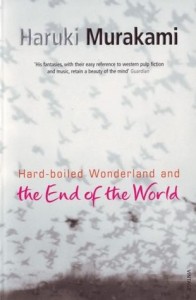
Hard-Boiled Wonderland and the End of the World by Haruki MurakamiTitle: Hard-Boiled Wonderland and the End of the World (Goodreads)
Author: Haruki Murakami
Translator: Alfred Birnbaum
Published: Vintage, 1985
Pages: 400
Genres: Literary Fiction, Magical Realism
My Copy: Personal Copy

Buy: AmazonBook Depository (or visit your local Indie bookstore)

In the future, Tokyo remains the technology powerhouse it is today. With the major advances in technology, data security has become more valuable; problem is all codes can be broken if you know how. The Calcutec is a human data processor/encryption system who has been trained to use his bio-algorithms implant and subconscious for encryption. A new comer to a strange, isolated walled town known as “The End of the World” is assigned a job as a dream reader. As he finds acceptance within the town, his mind begins to fade; or has it only been suppressed?

Hard-Boiled Wonderland and the End of the World tells the story of a split between two parallel narratives from different worlds. The consciousness and the unconscious mind; “Hard-Boiled Wonderland” refers to The Calcutec’s life as an encryption machine while “The End of the World” is his subconscious world. The two stories are told in alternating chapters as the reader slowly discovers the mysteries connecting these two worlds together. Hard-Boiled Wonderland is a homage to Raymond Chandler and hard-boiled fiction, as well as to science fiction and cyberpunk and “The End of the World” has similarities to Franz Kafka’s The Castle.

The major theme within this book is the nature of consciousness; both narratives are constructed around this general idea. While the odd numbered chapters refer to the conscious mind and the even-numbered chapters the subconscious, it is interesting to note they link together with similar themes; for example the song Danny Boy appeared in consecutive chapters. Even characters are shared between consciousnesses; the object of the narrator’s desire, the librarian is a perfect example of this.

Beyond that, the concept of subconscious being able to be controlled or shaped plays out in the entire book. This brings me to another major theme within this novel; the morality of science. The scientific experiments been done on the narrators mind in the attempt to separate the conscious and the subconscious in an attempt create more secure encryptions is an interesting topic. It reminds me a little of Frankenstein when it looks at the dangers of science and its moral implications. The Professor’s experiment killed about twenty people and while he feels remorse for the tragedy he also feels like it was the right choice in the name of progress.

While there are many more themes that would be interesting to explore I wanted to look at character. In both narratives there are no names for any of the characters, each is referred to by their occupation or a general description; from the Narrator, known as The Calcutec, the Librarian, the Old Man, the Professor, the Big Guy and the Chubby Girl. I never really payed too much attention to this while reading the book but referring to a girl as “the Chubby Girl” did bother me; it wasn’t till the very end that I was bothered by the lot. I couldn’t understand why this book was so frustratingly vague and incomplete with character and setting descriptions, I don’t know what the reason behind it would be, except for maybe removing any obstructions that might hinder the understanding of the novel.

Even the narrative is offering a very limited view of what is actually happening but slowly most of the mysteries do become clearer but the entire focus was on the subtext of this book. This wasn’t meant to be about great characters or scenes; this was all about exploring the themes as a way to get Haruki Murakami’s thoughts on the subject across. In a sense, this is what Murakami excels at; if it wasn’t for these well thought out ideas his books would just be odd and weird. This is my second Murakami novel and the first one I’ve actually enjoyed.

I’ve finally discovered what makes Haruki Murakami an author to take notice of; I didn’t find the same thing with 1Q84, I thought it was long winded and repetitive but Hard-Boiled Wonderland and the End of the World really worked for me. I have some issues with the novel, obviously the vagueness was one of the major ones, but overall this was a really interesting journey for me.


The Night Watch by Sergei Lukyanenko

Posted April 13, 2013 by Michael @ Knowledge Lost in Fantasy / 0 Comments

The Night Watch by Sergei LukyanenkoTitle: The Night Watch (Goodreads)
Author: Sergei Lukyanenko
Translator: Andrew Bromfield
Series: Watch #1
Published: Arrow, 1998
Pages: 576
Genres: Fantasy
My Copy: Library Book

Buy: AmazonBook Depository (or visit your local Indie bookstore)

Walking the streets of Moscow with the rest of the population are the Others, possessors of supernatural powers capable of entering the Twilight, a shadowy parallel that few know exists. Each Other owes allegiance to the Light or Dark side, The Night Watch follows Anton, a young Other of the Light, who must patrol the streets protecting ordinary people from the vampires and magicians of the Dark.

I’ve been trying more and more fantasy (in my quest to be a literary explorer) and with the success of some recent urban fantasy and The Lions of Al-Rassan, I thought I might try some Russian fantasy. This novel revolves around a confrontation between two opposing supernatural groups; the Night Watch, an organisation that polices the actions of the Dark Others, and the Day Watch, who police the Light Others. Now to help wrap your head around the novel, I first must explain just what are the Others; these are humans that while they live into the real world they can step into the Twilight (the supernatural world). Why do the Watch need to help police these two sides? The balance between Light and Dark must be kept at all times.

I thought my love of Russian literature would help me through this novel but in the end there was no saving this one. While the premise was excellent and the whole battle between good and evil in a police procedural type urban fantasy novel can really work (see The Dirty Streets of Heaven) but not in this book. Straight off the bat the whole book took a very long time to build momentum, I think I was a quarter of the way through the book when I started to enjoy it then Bam! a completely new story. Turns out these are three completely independent stories and each one of them was a very slow burn that ended too quickly. My major problem with the entire book that I had to spend so much time building the story then finally getting sucked into the plot only to have it end too soon.

There were so many interesting elements worth exploring, I would have liked to see more of the Post-Soviet Russia that this book (like most modern Russian literature) hints at but regrettably never really explored. Russia has this amazingly rich history that has sparked so many great novels and authors and I truly think Sergei Lukyanenko could be one of them with some work. Like Dostoyevsky, Lukyanenko tries to inject the novel with philosophical ideas on morality and this could have really worked in his favour had he stuck with one story right through to the end.

Personally I think Sergei Lukyanenko did not do himself any favours by dividing this book into three short tales; none of them really stood out and I really think the first of the three had the most potential if he explored it in greater detail and developed a more complex plot. The tension between Anton and Kostya Saushkin could have made for some really interesting philosophical discussion on morality, evil and the effects it has on the world around you. Plus the sexual tension between the two didn’t hurt either but that is when this short story ended abruptly. I felt disappointed at the miss opportunity.

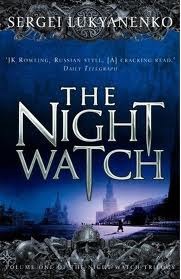
The Night Watch really didn’t work for me; there was so much it could have done but I feel it shot itself in the foot when anything complex started to surface. On the front of the cover was a blurb that said “J.K. Rowling Russian style” which feels like a marketing ploy that I doubt it did itself any favours; it does not make me want to read the Harry Potter series. The second book in the pentalogy of Watches is called Day Watch which intrigues me but because it is broken into little stories as well, I think I will give it a miss. The Night Watch has left me with the need to explore some more of Sergei Lukyanenko’s novels but this is his most recent series, which makes me worry that he has not perfected his craft.


Snow White Must Die by Nele Neuhaus

Posted March 28, 2013 by Michael @ Knowledge Lost in Crime / 0 Comments

Snow White Must Die by Nele NeuhausTitle: Snow White Must Die (Goodreads)
Author: Nele Neuhaus
Translator: Steven T. Murray
Series: Bodenstein & Kirchhoff #4
Published: Minotaur Books, 2013
Pages: 384
Genres: Crime
My Copy: Library Book

Buy: AmazonBook Depository (or visit your local Indie bookstore)

Skin as white as snow, hair as black as ebony and lips as red as blood… Snow White Must Die is far from a fairy Tale. In a small German town, after serving 10 years for the murder of two 17 year old girls, Tobias Sartorius is released. The town is not happy with his return and when another pretty girl goes missing the suspicion obviously is put on him. As the police race to find the missing girl they start to discover things are not as black and white and maybe Tobias isn’t the killer they all thought he was.

Snow White Must Die is my first German crime novel and I was very impressed with the way this book played out. You start off with a suspicion and slowly through the complex twists you discover that this is just a huge web of lies. The book starts off with Tobias return and the whole town angry toward him, it reminded me a little of We Need to Talk about Kevin with the author exploring the psychology of trying to live in a town where everyone hates you.

Then you discover all the evidence that convicted Tobias was circumstantial and that’s when the questions start. I spent a lot of time trying to understand the motivations of each of the characters, always suspecting they are hiding something. Nele Neuhaus plays with the reader really well, always hinting but never showing her hand too early. The complexity of this case grows but Neuhaus beautifully handles it all without going overboard.

I love the way Nele Neuhaus starts off the story with Tobias as the lead and then when things start getting more centred around the crime it shifts focus toward the detectives working the case. I think this was masterfully done and left it open to kill off lead characters if she wished without throwing the story out. As the corruption and the conspiracy within this town begins to be uncovered, no one is safe and this leaves the reader with an anxiety when they put the book down.

I don’t remember the last time I’ve read a police procedural that I’ve enjoyed this much, I’ve noticed this is book four in a series but it reads like a standalone book. I really hope they translate more of Nele Neuhaus novels because I’m really impressed with her style and would love the chance to enjoy more of her books.

Snow White Must Die is a well crafted thriller that while brutal and violent, it still remains accessible. I would have liked this book to be a little darker but it was still a brilliant book of lies, greed and corruption. I would love to read some more German novels, crime ones in particular if anyone has some good recommendations. Nele Neuhaus showed real skill when she wrote Snow White Must Die and it was a real pleasure to experience it. I wish I could read German to enjoy this book in its original text.


Day of the Oprichnik by Vladimir Sorokin

Posted March 8, 2013 by Michael @ Knowledge Lost in Dystopia / 0 Comments

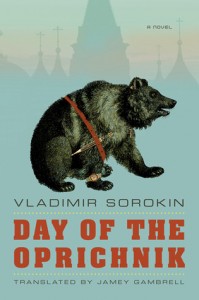
Day of the Oprichnik by Vladimir SorokinTitle: Day of the Oprichnik (Goodreads)
, 2006
Pages: 191
Buy: AmazonBook Depository (or visit your local Indie bookstore)

Welcome to new Russia, where the Russian Empire has been restored back to the draconian codes of Ivan the Terrible. Corporal punishment is back and the monarchy is divided once again, but this is the future, the not so distant future for the Russian empire, or is it? Day of the Oprichnik follows a government henchman, an Oprichnik, through a day of grotesque event.

Day of the Oprichnik is a thought provoking Science Fiction novel of the worst possible Russia imagined. But while the book is dark, it also is hilarious and then it has this wonderfully satirical nature about it. Komiaga is the narrator of this gem, an anti-hero and one of the Tsar’s most devoted henchmen. While the humour and satire throughout this book is grotesque, this book is a perfect example of great contemporary Russian literature as well as a political critique.

I will admit I like these types of modern Russian Science Fiction novels, like Super Sad True Love Story, you have this wonderful dystopian backdrop as well as the high tech gadgets like the “mobilov” and then you use this to create delightfully thought provoking plot riddled with satirical elements. These witty and intelligently written books are what I live for.

Komiaga is one of the elites, enforcing the laws of the land, helping the Czar’s to rule with an iron fist for the sake of the motherland and the Russian Orthodox Church. This is my first Vladimir Sorokin novel and I would like to compare this novel to one of Philip K. Dick’s (The Man in the High Castle to be exact); there is this wonderfully crafted story and you have these philosophical and political ideas that stick with you well after you have finished the book.

The Telegraph named this book one of the best for 2011 and the New York Review called Sorokin “[the] only real prose writer, and resident genius” of late-Soviet fiction”, just to give you an idea of what to expect. Day of the Oprichnik is deliciously complex, full of garish science fiction and hallucinogenic fish. Komiaga’s day might not be a typical one but it’s full of executions, parties, meetings, oracles, and even the Czarina.

I loved every moment of Day of the Oprichnik, even the moments that made me think “WTF” and for all of the people that have read this book, I want to say one word that will mean something to you but not the others, the word that the person who recommended this book to me said when I finished. That word is “caterpillar”. For everyone else; read the book, enjoy the satire, black humour and Science Fiction elements of this book and also find out what I mean.


Les Misérables by Victor Hugo

Posted February 14, 2013 by Michael @ Knowledge Lost in Classic / 0 Comments

Les Misérables by Victor HugoTitle: Les Misérables (Goodreads)
Author: Victor Hugo
Translator: Lee Fahnestock, Norman MacAfee
Published: Signet, 1862
Pages: 1463
Genres: Classic
My Copy: Personal Copy

Buy: AmazonBook Depository (or visit your local Indie bookstore)

This is the story of Jean Valjean, a man seeking redemption after serving nineteen years in prison for stealing a loaf of bread to feed his starving relatives. When everyone else turns their back on him, it was a Bishop that showed him immense kindness and inspires him to do the same to everyone else. He finds him eventually appointed mayor of Montreuil-sur-Mer but then back on the run hunted by police inspector named Javert.

That is a very brief outline of what this book is about, as the book is about 1400 pages.  If I tried to go into more detail it could be too big for a one paragraph synopsis, but I think people are familiar enough with this novel to know the basic plot of this book. I decided to read the book because of the recent adaption; yes I know it was an adaptation of the musical but I still wanted to read the book first so I’d have a better understanding of the plot.

This novel covers some very interesting topics from the nature of the law and the idea of grace, politics, justice, romance and moral philosophy. All this weaved into the plot but then you find yourself reading huge chunks of text outlining the battle of Waterloo, religion, the construction of the Paris sewers and urban design of Paris. These digressions really threw me off with the book and honestly think that if the editor removed them, the book would have been more accessible and readable.

There is a lot to offer within the book and I would say I could easily read it again (not now but in the future) and explore the sense of compassion and love that is in this book. It’s a heart breaking story but I will admit I cried more in the adaptation than I did in the book. I know I haven’t mentioned the French Revolution which is a huge part of this book, but it really is hard to review a book that is so packed with ideas and still cover the plot points as well.

While this book did take a while to get through and at times I was struggling to enjoy it. In the end I found this to be worth the journey. Now that I’ve also seen the most recent movie adaptation I would probably recommend people just watch that. But if you are interested in digesting a book this size and exploring the ideas it raises or you just love to read great literature then make sure Les Misérables is on your to-read list.