Format: Audiobook

Landline by Rainbow Rowell

Posted September 11, 2014 by Michael @ Knowledge Lost in Chick Lit / 0 Comments

Landline by Rainbow RowellTitle: Landline (Goodreads)
Author: Rainbow Rowell
Narrator: Rebecca Lowman
Published: St. Martin's Griffin, 2014
Pages: 320
Genres: Chick Lit
My Copy: Audiobook

Buy: AmazonBook Depository (or visit your local Indie bookstore)

Georgie McCool is on the verge of getting her big break in TV. She and her writing partner, Seth have received the opportunity to pitch their show to a TV station, but this means there is a lot of writing to do in preparation for the meeting. Only problem is, she was about to fly to Omaha to spend Christmas with her husband, Neal’s parents. Their marriage is in trouble, not from the lack of love but from continuous tension and distance. Now her family is in a different state and things take a weird turn when Georgie picks up the landline and is able to talk to Neal, from before they were married.

First of all I must admit that I’m never going to be the target audience for a book like Landline and I don’t think I can ever enjoy a book like this. It just feels predictable and I know that Georgie and Neal will work things out before even starting the book. Being a literary explorer, I still feel the need to read book in the chick-lit genre and sometimes they surprise me. However for something like Landline, I felt the urge to yell at the characters to “use your words!” during the entire novel.

This is my first Rainbow Rowell book but I think I should have started with something nerdy like Eleanor & Park or Fangirl. I like the idea of nostalgic and nerdy references throughout a novel and while Landline did offer this, I was just too annoyed with the characters. The whole subject of relationships falling apart due to lack of communication doesn’t interest me too much; I just find myself getting frustrated with the characters and expect the plot to do something new and interesting. Landline didn’t give me anything I wanted.

This isn’t to say Landline was a bad novel; in fact it was entertaining, I just prefer some complexity. However this does bring up an interesting moral issue; there is a scene within the book where Georgie and past Neal are talking about her writing partner Seth. Georgie asks Neal not to make her choose between him and Seth, which brings up a fundamental problem in the relationship, she acknowledges that he is causing unease in the relationship but she is not willing to make an effort to solve the problem.

The idea of talking to Neal from fifteen years ago is an interesting plot device, it adds a little magical realism or science fiction into the novel but it does something more. This concept of holding onto the past seems to be a major problem, they don’t seem to understand people change over fifteen years and you have to evolve with them. It is also a really creepy plot device. Also the fact that Georgie has to try calling the landline because Neal is ignoring every call to his mobile from her is a whole other issue.

One last moral issue I found in the novel involved the relationship between Georgie and Seth. There was a point in Landline where I thought they should get together, they seem to be an easier more logical fit but then I realised what I was thinking. I would never want something like this to happen in real life; why would I want to characters in a novel to make this choice. This got me thinking about morality. As humans we expect people to do the right thing but in books, movies and TV we don’t have the same reaction when a character makes the wrong choice. We do react but I think we prefer to explore infidelity, murder and immorality via a work of fiction than in real life, but does this say something about humanity?

As soon as I finished the book I was angry and wanted to give the book a low rating but then I began thinking more about Landline. I don’t think it is a bad book, it has a nice and happy ending but I don’t think the underlining problems in Georgie and Neal’s marriage was actually solved. My initial impression to rate the novel with 2 stars ended up being the correct choice. Now I need to find a book in the chick-lit genre that I like; any suggestions?


In Cold Blood by Truman Capote

Posted August 30, 2014 by Michael @ Knowledge Lost in Book of the Month, Non-Fiction / 0 Comments

In Cold Blood by Truman CapoteTitle: In Cold Blood (Goodreads)
Author: Truman Capote
Published: Penguin, 1965
Pages: 336
Genres: Non-Fiction
My Copy: Library Book

Buy: AmazonBook DepositoryKindle (or visit your local Indie bookstore)

In 1959 a farmer from Holcomb, Kansas was killed along with his wife and two of his four children by a couple of two-bit thieves. This brutal crime spawned a desperate search for the killers who left bloody footprints at the murder scene. From petty crime to mass murder, In Cold Blood tells the story from murder to the gallows where they were executed by hanging.

In the Truman Capote literary masterpiece, it is easy to consider In Cold Blood a crime novel; it has shades of pulp and southern gothic throughout the book. However this journalistic investigation has often been cited as the first and best example of the non-fiction genre known as true crime. While there have been true crime books before In Cold Blood, this book did redefine the genre. Capote likes to call his book a non-fiction novel which he defined in an interview with The New Your Times as “a narrative form that employed all techniques of fictional art, but was nevertheless immaculately factual”.

However this is not just a book about the brutal murder of the Clutter family; we also get a Capote’s depiction of rural America. Outside the details of the crime, the author paints a descriptive backdrop of Kansas, the way he sees it. Religion, masculinity, femininity, the nuclear family and small town communities all play a big part in developing the scene. When he talks about the crime, the reader gets to explore the psychological motivations of murder and awaiting execution.

There is the issue of mental illness that needs to be explored when talking about In Cold Blood. It is almost like Truman Capote wants to challenge the reader to consider if Perry and Dick suffered from an untreated mental illness. There are shade of delusional, depression, schizophrenia and a sociopathic personality that comes through when talking about these two people but as this is 1959 I expect no psychological consult or treatment were given to these men; the court rejected the request.

I expected a true crime book but I feel like In Cold Blood was trying to do something similar to One Flew Over the Cuckoo’s Nest by Ken Kesey and The Bell Jar by Sylvia Plath. I was very impressed with this book and I feel like Capote may have ruined true crime and even narrative non-fiction for the rest of the authors in these genres. Capote’s investigational skills and mastery over the written word is what makes this book a masterpiece.


The Fictional Woman by Tara Moss

Posted July 19, 2014 by Michael @ Knowledge Lost in Non-Fiction / 0 Comments

The Fictional Woman by Tara MossTitle: The Fictional Woman (Goodreads)
Author: Tara Moss
Published: Harper Collins, 2014
Pages: 352
Genres: Non-Fiction
My Copy: Library Book

Buy: Book Depository (or visit your local Indie bookstore)

Tara Moss is probably best known as a person you hate; she seems to succeed in everything she puts her mind to. Starting her career early at 14 as a model, she always dreamed about being a writer. People don’t encourage others to be writers but they do tell girls that they should be a model. Eventually she did and it took her around the world and taught her so much; the experiences may not have been all good but it helped shape her life. Eventually she did start writing and her Makedde Vanderwall become a huge success and she created this character as a way to explore her interests in forensic science, psychology and other topics. Now with nine fiction novels under her belt Moss is giving us her first non-fiction book, The Fictional Woman.

The title comes from the idea that people tend to dismiss and stereotype others. Tara Moss is no stranger to this; she even took a polygraph test to prove she wrote her books. While this book starts off as a memoir it is important to know that this is a social critique on the world and feminism. The book begins as a memoir to provide context, an understanding of Tara Moss’ struggles and her life helps to see where The Fictional Woman is coming from. Historical context is also an important part of understanding feminism as well, especially when it comes to gender equality and pop culture. There have been plenty of Spiderman (too many), Zorro and James Bond movies but there has never been a Wonder Woman movie. In literature, the female archetype stems from fairy tales and medieval fiction, heroines tend to face off another woman, often older and depicted as witches. Cinderella type stories require a man in order to live happily ever after and even chick-lit often portrays a gender inequality.

The Fictional Woman explores this imbalance in pop-culture and society and looks at where these archetypes come from. It is impressive to see the amount of research and information Tara Moss puts into this book; it really was eye opening. I highly recommend people read this book but I need to warn everyone it may contain triggers. I’m surprised to see that the imbalance is so prominent in today’s society and I am trying to make more of an effort to read a balance of authors. The problem I found is I tend to pick up books without taking notice on of the author, sure it sometimes easy to know their gender but I don’t research authors before starting a book. I try to make more of an effort and it is an area I need to work on.

I’m really impressed with Tara Moss, she seems to succeed in everything she does; sure I’m a little jealous that she is so talented but I still feel motivated. For those interested, I recently wrote a piece about an author event with Tara Moss on Boomerang Books if you are interested, I talk in a lot more detail about The Fictional Woman. I have never spent so much time thinking about feminism, I plan to do a lot more of it, even read some more books on the topic. I might even incorporate it into my critical reviews; it is an important topic that needs to be addressed.


Provenance by Laney Salisbury and Aly Sujo

Posted July 10, 2014 by Michael @ Knowledge Lost in Non-Fiction / 0 Comments

Provenance by Laney Salisbury and Aly SujoTitle: Provenance (Goodreads)
Author: Aly Sujo, Laney Salisbury
Published: Penguin, 2009
Pages: 301
Genres: Non-Fiction
My Copy: Audiobook

Buy: AmazonBook DepositoryKindle (or visit your local Indie bookstore)

For those that don’t know, a provenance is a document (or documents) that chronologies the ownership of a historical object. In the art world, the provenance serves almost like a certificate of authenticity as well as a historical document of the ownership, custodies or locations the piece has been displayed. The problem was, there was a time in art history where authenticating a provenance was all you needed to prove the art was genuine. This lead to all kinds of problems, in the world of computers and photocopiers it became very easier to make a document look authenticate than it was to forge a painting. This book explores this very problem; Provenance: How a Con Man and a Forger Rewrote the History of Modern Art tells the story of what was described as ‘the biggest art fraud in the 20th century’.

Provenance has one of the most extraordinary narratives I’ve ever read in a non-fiction book; it reads like an art thriller, full of suspense and mystery. It wasn’t what I expected from a true crime book on art history, I was hooked in this world and on the edge of my seat to find out what will happen next. The authors of this book, Laney Salisbury and Aly Sujo are both investigative reporters and spent the time to research and tell us the story of John Drewe, a villainous con man that set out to defraud the art world. Recruiting a struggling artist, John Myatt, to paint the forges, it is estimated that over 200 forgeries were made and only about 60 of them recovered. This means there is about 140 paintings still out there been accredited to artists like Giacometti, Dubuffet and so on.

If I may, I want to quickly touch on the problematic approach to authenticating a provenance rather than a painting. As I said before the use of computers and photocopiers made it easy to fake these documents, but John Drewe went further by sneaking forged documents of auctions, gallery displays and so on into the archives of museums and the Institute of Contemporary Arts (ICA) in London. What was scary about the elaborate efforts Drewe went to to make this provenance real is the fact a test on the painting might have been so much quicker. If they took the effort to test the paint they would have found that Myatt used a combination of emulsion paint, K-Y Jelly and then vanish to make the paintings look like oil paintings.

All my knowledge on art forgery came from people like Neal Caffrey (White Collar) so I’m not nearly knowledgeable on the topic, as I’d like to be. Art history and art crimes can be fascinating topics and what I loved about Provenance is how it showed how crime seeps in and becomes part of the history. When John Myatt served his time he decided not to point out any paintings that he had done, and that raises an interesting question. Is it better to point out the 140 or so fakes still out there and have the owners lose all that money or not? If a fake is just going to be burnt is it better to own up to the forgery or let it remain a piece of art? The financial and artistic costs would be devastating but what about the moral code that Myatt wished to live by?

This is what made for a fascinating read, I learned a small part of art history, art crimes and it also raised some philosophical questions. I know I might have said a little too much but this is history, can you give spoilers on historic events? It is a great piece of narrative non-fiction and a great way to learn more about art crimes.


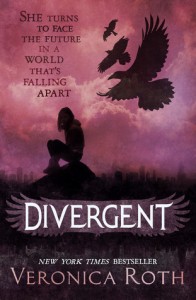
Divergent by Veronica Roth

Posted June 29, 2014 by Michael @ Knowledge Lost in Book of the Month, Dystopia, Young Adult / 6 Comments

Divergent by Veronica RothTitle: Divergent (Goodreads)
Author: Veronica Roth
Series: Divergent #1
Published: Harper Collins, 2011
Pages: 489
Genres: Dystopia, Young Adult
My Copy: Library Book

Buy: AmazonBook DepositoryKindle (or visit your local Indie bookstore)

A futuristic, post-apocalyptic Chicago is where the dystopian world of Divergent is set; where everyone is divided into five factions. At 16 you are required to take an aptitude test; this will determine which faction you are best suited for. Abnegation are selfless, Amity are peaceful, Candour are honest, Dauntless are brave and Erudite are intelligent. Following the aptitude test comes the Choosing Day (terrible name) where you are required to pick which faction you wish to belong to based on your score and personal preference. For some, like Celeb Prior this means giving up his family and moving from Abnegation to Erudite.

The novel, Divergent follows Beatrice Prior (later known as Tris) who is one of those rare people who have to hide the fact that the aptitude test was inconclusive. In this world she is known as divergent and would be considered an outcast and a danger to society if this was to come out. Tris’ test shows she has an aptitude towards three factions; Dauntless, Erudite and Abnegation. She picks Dauntless where she is trained up to be courageous and reckless, tools she believes maybe useful if her test scores ever come out.

I read this novel as a social critique; the idea of cliques and groups taken to the extreme. You know what I’m talking about; society likes to create rivals, in sports teams, smart phones, gaming consoles, etc., but more importantly when it comes to DC verse Marvel comic’s social-political stands. In this world the Abnegation are the governing body, since they are the selfless they are tasked with looking after everyone. However the Erudite are conspiring to take control, and a step that they believe will advance the world both socially and technologically.

This makes the novel sound more complex that it actually is; in reality I found that Veronica Roth liked to wave the symbolism in the readers face forcing them to take notice. It is like a child who is proud at what she has produced; jumping up and down and explaining everything detail over and over again in the hopes that we will think she is brilliant. The symbolism is prominent in the story, she didn’t need to try and draw extra attention to it. Most readers are smart enough to figure it out and those who don’t are only interested in the plot.

Take the title of the novel and the factions, if you look at abnegation, amity, candour, dauntless, erudite and divergent in the dictionary you pretty much how the entire book worked out already. However Roth reminded us again and again what each word meant. Reminds me of that old writing tip ‘show, don’t tell’. While this is not always true, I feel within the context of Divergent, it would have been a better solution.

There are a lot of interesting themes within the novel and I really wish Roth had let people discover them on their own; I don’t like having everything pointed out to me. The whole concept of social structures and classes would have given a literary theorist in the school of Marxism a lot to work with. There are other themes including courage verse recklessness, power, choices, secrets and even guilt that made the novel bearable.

While the novel has a protagonist fighting against a totalitarian state, the book is full of Christian themes and concepts. At times you can see Abnegation being depicted as weird/cult-like faction in the back drop of a controlling society but then they come through as righteous and merciful. There is a Christian misconception that stems from the Age of Enlightenment, which seems relevant in some radical churches that still believe that intellectualism is a dangerous thing. This comes across in the novel as well as some other Christian ideals. Veronica Roth states she is a Christian but has also claimed that Divergent is not a religious novel. She even believes that most Christians would consider the novel to be profane. It is unclear if Roth is an advocate for intellectualism or warning the reader of its dangers.

Yet another issue I found with Divergent was the characters and world building felt a little flat; I think Roth spent too much time explaining everything that the plot and the setting suffered. I didn’t care what happened to any of the characters; in fact thought they were all two dimensional, which is possibly the case with most of the characters. The idea of each faction just acting like a giant cookie cutter, forcing everyone to fit into that mould is clear.  The divergents (I’m not going to name them) should have been richer, more fleshed out characters. The dystopian world borrows heavily from 1984 and The Hunger Games although it sometimes forgets this and reverts back to a more generic present day world. Then realising the book has gotten off track reverts to borrow again from previous dystopian novels.

Finally I would like to focus a little on the feminist qualities of Divergent, since reading The Fictional Woman this seems to be an area of focus for me. The concept of a woman trying to figure out her place in the world is a positive step for equality; however Divergent also reverts to two old archetypes that need to stop. I’m talking about the idea of a wise intelligent older woman being depicted as a witch or evil character and the female heroine needs to have a female enemy. Divergent does tackle the idea of what happens to a woman when she becomes more successful than the men she is competing against, and while it is not pretty it is a very real issue that needs to be looked at more often.

I would have liked this novel a lot more if the message was subtle and ambiguous; I just feel like everything got over done. As a reader I like to look for the messages but if the author hits me over the head with it and then proceeds to explain everything I lose interest. Dystopian fiction has a unique ability to tackle social issues and just because a book is aimed for a young adult audience doesn’t mean they need to be everything explained to them. I have to wonder how many YA lovers read the book for the themes rather than the plot. I suspect the majority of them read for the story and they probably prefer not to be stepped through themes either. If Veronica Roth left the themes in place and focused on the plot, this may have been a better book.


The Silent Wife by A.S.A. Harrison

Posted June 11, 2014 by Michael @ Knowledge Lost in Thriller / 4 Comments

The Silent Wife by A.S.A. HarrisonTitle: The Silent Wife (Goodreads)
Author: A.S.A. Harrison
Narrator: Emily Pennant-Rea
Published: Penguin, 2013
Pages: 326
Genres: Thriller
My Copy: Audiobook

Buy: AmazonBook DepositoryKindle (or visit your local Indie bookstore)

It seems that when Gone Girl had huge success there were plenty of novels being released that were marketed as the next big psychological thriller. One that seemed to get closer than all the others to duplicating the same style as Gone Girl was The Silent Wife by A.S.A. Harrison. While this novel does come close to being like Gone Girl, almost to the point of suspecting plagiarism, there is something different to this novel.

The Silent Wife follows the story of Jodi and Todd who are in a bad place in their marriage. Told in the same style as Gone Girl where you get Jodi and Todd’s story in alternating chapters, the story follows the familiar plot but not really. Without giving too much away I’ll just disclose what has been mentioned on the back of the book. Todd is an unfaithful husband planning to leave Jodi for his mistress. Jodi’s life is at stake, she is about to lose her marriage and even her beautiful water front condo.

I’m going to stop comparing The Silent Wife to Gone Girl; there are similarities but it is a different novel. This novel is very much focused on Jodi more than Todd. His chapters are there to fill in the story but the readers get to watch Jodi as she slowly falls apart. This really is a look at the psychology of a woman that did everything to be the perfect wife (the silent wife that doesn’t complain or causes waves) slowly take control of her life for the first time in her life. Interestingly she is a psychologist, who should have noticed her life was as bad as it was and take control.

This would make an interesting novel for a book club, you have the psychological you can investigate, but then you have the whole concept of marriage and what makes a marriage to explore. As a reader we can see this is a bad marriage and Jodi should get out but she is blind to this fact. This is an all too common issue in the modern world and I think The Silent Wife does a good job at exploring it.

I really don’t want to say much more about this book; everything needs to be experienced by the reader. It isn’t the best novel and there are a lot of flaws but it is a quick read and won’t take much effort to read. I recommend borrowing it from the library, that way you don’t have to invest in an average book. A.S.A. Harrison had the making to be a great psychological thriller author but sadly she died soon after finishing The Silent Wife and this makes this the only novel by her. I’m sure there are plenty more psychological thrillers to be released about marriage but this had an interesting approach.


The Sex Lives of Siamese Twins by Irvine Welsh

Posted June 8, 2014 by Michael @ Knowledge Lost in Contemporary / 10 Comments

The Sex Lives of Siamese Twins by Irvine WelshTitle: The Sex Lives of Siamese Twins (Goodreads)
Author: Irvine Welsh
Narrator: Lorelei King, Penelope Rawlins
Published: Jonathan Cape, 2014
Pages: 480
Genres: Contemporary
My Copy: Audiobook

Buy: AmazonBook Depository (or visit your local Indie bookstore)

Irvine Welsh has always been an author that I have wanted to read, but he always seemed to sit on the backburner. I have Trainspotting on my bookshelf and I’m sure I’ll get to it eventually. His new novel The Sex Lives of Siamese Twins seemed like just the right amount of filth and bizarreness for me at the time. The novel kicks off questioning American’s obsession with numbers, from statistics, ratings, western culture seems to measure everything with numbers. From crime rates, percentages to economical values to shoe and breast sizes; everything is about numbers.  This sets up the protagonist, personal trainer Lucy Brennan, who obsessively records everything, from her calories, her exercise and every aspect of her life, as well as those she trains.

Set in the image obsessed Miami, The Sex Lives of Siamese Twins tells the story of Lucy who heroically disarms a gunman who was chasing down two homeless men. This was witnessed and recorded by the sole eyewitness, Lena Sorensen. Lucy’s act of heroism transforms her into an insta-celeb with national exposure, giving her the break she has been looking for. Lena becomes obsessed with Lucy and signs up as one of her clients. The two find themselves getting closer, too close for comfort.

I officially believe that all personal trainers are sadists; however Lucy takes this to a whole new level. She goes from strict personal trainer to scary crazy in the efforts to get Lena into shape. Reading this novel reminds me never to get a trainer; I don’t think I can handle the efforts one might go to, to get me into shape. I won’t go into details; the whole concept of fitness and eating healthy within this novel is worth exploring without any spoilers.

In an interesting twist, it turns out that the two frightened men Lucy saves from the angry gunman turned out to be paedophiles. The media focus quickly shifts from heroine to whether she should have stopped a victim of sex abuse from getting his revenge. Would she have acted differently if she knew the reason? It is no longer  a story about bravery and heroics but one of pain and vengeance.

I read this novel as a caper that quickly spiralled out of control. Irvine Welsh was able to produce very unique acerbic characters, all vastly different from each other, with their own little quirks and flaws. Lucy a militant personal trainer, we get to watch her stardom rise and fall and Lena an avant-garde sculptor who is a shy talent with a dark side that comes through mainly in her art.

I get the impression that Welsh likes to explore the darker side of humanity. While I tend to enjoy transgressive fiction I was finding some issues within this novel that I will try to explain. Irvine Welsh doesn’t hold back; Lucy Brennan is a hard hitting, foul-mouthed, aggressive woman; an anti-hero that I can’t help wondering if she is realistic. She claims to be a feminist but comes across almost like a misogynist, rather than just an angry bitch. I increasingly began to see her less as a female protagonist and more as Welsh’s fantasy of the ideal woman. His own masculinity seems to come through in this character and she comes across as a slutty bi-sexual that has the libido and personality of a teenage boy. That is not to say that there aren’t women like that out in the world; for me, her personality never rung true.

I was never sure how to take Lucy; she started off as a strong willed, fitness freak with no social filter and a mouth and sex drive that is unmatched. These people obviously do exist in the world and I tried to take her seriously but as the novel went on it become harder and harder to suspend my disbelief. She became less of a character in the novel and more the voice that satirizes Irvine Welsh’s own soapbox views.

Lean Sorensen is far more interesting; she comes across as timid but talented artist but she doesn’t see that. She views herself the same way the world does, as just a pathetic overweight woman. Whether it is the manipulative ex-boyfriend, the passive aggressive parents or the fake friends of the art world, she is depicted as a broken woman trying to get her life together. I enjoyed the darkness that came through under the perky and cheerful facade that she tries to put on; it really rounded out the character. She kept my interest throughout the novel.

The title The Sex Lives of Siamese Twins is an interesting topic as it refers to a subplot about the media frenzy around two conjoined teens, Annabel and Amy. Annabel is considering losing her virginity to her boyfriend but Amy is not too keen on this idea. A conversation about the twins and their sex lives is a reoccurring conversation/argument between Lucy and Lena. They have differing views about sex and the conjoined twins and often the focus of their personality clash.

I have to mention the morning pages program that mentioned throughout this novel. It is a program where you must write three pages in a stream of consciousness format every morning. The idea of this program is to help identify issues that need extra attention while trying to achieve their goal, in this example weight loss. Morning pages interested me because it was the concept that inspired 750words.com a site I’ve been using to develop a good writing habit.

In the pursuit for perfection, things get dark and twisted; The Sex Lives of Siamese Twins explores this very topic. A novel of depravity, revenge, sex and crime, Welsh gives the reader plenty to think about and if you can suspend your disbelief when it comes to Lucy, this book really is extremely rewarding. Be warned there is a lot of swearing and sex, not for the sweet and innocent. The sex has a voyeuristic approach to it, not erotic at all and often disturbing. In the end, this novel was a rewarding endeavour into transgressive fiction but I need something sweet to read next.


Young Romantics by Daisy Hay

Posted May 21, 2014 by Michael @ Knowledge Lost in Non-Fiction / 2 Comments

Young Romantics by Daisy HayTitle: Young Romantics (Goodreads)
Author: Daisy Hay
Published: Bloomsbury, 2010
Pages: 384
Genres: Non-Fiction
My Copy: Personal Copy

Buy: AmazonBook DepositoryKindle (or visit your local Indie bookstore)

The Romantics have been a huge part of my life; if it wasn’t for them I may never have become a reader. Problem is, I don’t know much about their lives so I have set out to learn more. Young Romantics by Daisy Hay tells the basic story of their lives, but with the subtitle The Shelleys, Byron and Other Tangled Lives you can be sure it will be heavily focused on Mary and Claire.

This is not necessarily a bad thing; Mary Shelley and Claire Clairmont were fascinating people, however this seems to be the primary focus of more biographies. I was a little surprised when Daisy Hay spends so little time on that fateful time in Geneva that birthed Frankenstein but I assume that she deliberately glossed over that story assuming everyone was aware of it anyway.

Young Romantics did something I didn’t expect and that was spending a lot of time talking about the Hunt brothers. I knew they played a big part in literature at the time and that in context to the Romantics it is relevant information. However I never viewed them as Romantics and often over looked learning about them. This is a mistake on my behalf; the role the Hunts played in the Romantic Movement is an essential part in dealing with context. I might not consider them Romantics but they were there shaping the literary world along side them.

Having discovered a new interest in non-fiction I find myself wanting to read more biographies. While I have a great interest in the Romantics, I found that Young Romantics works to create a basic understanding of their lives. You get a quick overview of the lives of the Shelleys and the Hunts. Unfortunately there isn’t much to do with Lord Byron and even less to do with the others. I would have loved to read more about Keats but he only got a brief look in.

I plan to read more biographies about a range of different authors but I’m sure there will be plenty on the Romantics. I like Young Romantics for the broad strokes approach it took on the Romantics. I learnt a lot from this book but I’m sure people with a great knowledge would have been a little disappointed with it. I think if you have a passing interest in the Romantics this might be the perfect choice.


Boardwalk Empire by Nelson Johnson

Posted April 25, 2014 by Michael @ Knowledge Lost in Non-Fiction / 0 Comments

Boardwalk Empire by Nelson JohnsonTitle: Boardwalk Empire (Goodreads)
Author: Nelson Johnson
Narrator: Joe Mantegna
Published: Plexus Publishing, 2002
Pages: 312
Genres: Non-Fiction
My Copy: Audiobook

Buy: AmazonBook DepositoryKindle (or visit your local Indie bookstore)

Atlantic City has quite a history, from the rocky beginnings to its colourful characters like Louis “Commodore” Kuehnle and Enoch “Nucky” Johnson. Boardwalk Empire by Nelson Johnson (subtitle: The Birth, High Times, and Corruption of Atlantic City) tells the history of this US city. While this book inspired the current HBO series of the same name, this is not a reason to read this. The HBO show tells the story of a fictional character based on Nucky Johnson (called Nucky Thompson in the show). If you were to base a show on this non-fiction book it would turn out more like House of Cards.

There was a big chapter of Boardwalk Empire devoted to Nucky Johnson, who was an interesting guy. If you know the plot of the HBO series you might be aware of the type of character Nucky was, despite being only loosely based on him. His rise to power came thanks to the Volstead Act, but he wasn’t just a mob boss, he was a political powerhouse. Corruption never seemed so complex and scary; using the Republican Party to control the city all the while using extortion to fund the party. This technique helped control Atlantic City, keeping it corrupt well into the modern era.

While the history of Atlantic City is fascinating, it is sad to see just how big of an impact organised crime had on a growing city. I have an interest in the Volstead Act and how prohibition helped organised crime get a foothold in America. Boardwalk Empire shed some interesting insights into the cultural impact it had on a large scale.

I have started a new phase in my reading life where I’ve become very interested in non-fiction. While Boardwalk Empire wasn’t the greatest book, there was a lot to learn about politics and organised crime. This period of time interests me and I plan to read a whole lot more reading on the Volstead Act and organised crime, so I need recommendations. If you know good non-fiction books on these topics let me know.


The Sorrows of Young Werther by Johann Wolfgang von Goethe

Posted April 24, 2014 by Michael @ Knowledge Lost in Classic / 1 Comment

The Sorrows of Young Werther by Johann Wolfgang von GoetheTitle: The Sorrows of Young Werther (Goodreads)
Author: Johann Wolfgang von Goethe
Translator: David Constantine
Published: Oxford World's Classics, 1771
Pages: 160
Genres: Classic
My Copy: Paperback

Buy: AmazonBook DepositoryKindle (or visit your local Indie bookstore)

The Sorrows of Young Werther is an epistolary novel that has influenced the Romantic Movement. Often known as the original ‘emo’, a term that I hate, this novel is a semi-autobiographical novel that brought huge success to Johann Wolfgang von Goethe. The novel is a collection of letters written by Werther to his friend Wilhelm. These letters are an intimate account of his attraction towards the beautiful Lotte; a young woman he meets in the village of Wahlheim. Despite knowing that she is already engaged to a man 11 years her senior, Werther falls for her and attempts to develop a friendship between the two in an effort to get closer to Lotte.

You can probably guess how this story goes; Werther, an artist of highly sensitive and passionate nature heading down a road that can only lead to heartbreak. I’m not one to enjoy a novel that revolves around a love triangle but when it is done properly it can be an effective plot device; I’m thinking of books like those mentioned in this post. There is no denying the cultural impact The Sorrows of Young Werther has had on the world; unfortunately the ‘Werther effect’ is the most common reference to the novel nowadays.

I’ll be honest, I wanted to read this novel because Frankenstein’s monster finds this book in a leather portmanteau along with Plutarch’s Lives of the Noble Greeks and Romans, and John Milton’s Paradise Lost which gives you an interesting insight into FrankensteinLives of the Noble Greeks and Romans is a series of biographies of famous men to illustrate their common moral virtues or failings, while Paradise Lost is an epic poem on creationism and the fall of man. The Sorrows of Young Werther embodies the Romantic ideals; Werther being a sensitive intellect with an obsession of nature and values emotion over reasoning. All three novels represent different themes that Shelley wants the reader to explore when reading Frankenstein.

While this may sound like a morbid and depressing novel, Goethe shows the beauty behind the tragedy. One thing I loved about this book is the wording, and permit me to post a few quotes from the book to just show you the beauty in the novel.

 “Sometimes I don’t understand how another can love her, is allowed to love her, since I love her so completely myself, so intensely, so fully, grasp nothing, know nothing, have nothing but her!” 

The major theme obviously is love; a look in how it can defy all logic. Werther can’t stop his heart from falling for Lotte, even if he knew it would lead to pain. The idea that the heart has more control over someone’s actions than their head is often evident in life and The Sorrows of Young Werther captures it perfectly. For me, that is what makes this novel spectacular and significant.

“I am proud of my heart alone, it is the sole source of everything, all our strength, happiness & misery. All the knowledge I possess everyone else can acquire, but my heart is all my own” 

However, you can look at this novel as something other than love; the idea that Goethe is portraying the decline in Werther’s mental health is also a vital angle that needs to be considered. The reason I hate the term ‘emo’ I won’t go into at this time but Werther’s overly emotional journey could also be symptoms of a bi-polar depression, though not a known diagnosis of the time. We have to consider the idea that his joy and sorrow is not just unrequited love but a deeper issue. The love triangle would have added fuel to his depression and we cannot ignore that this could be the root cause of Werther’s sorrow.

For such a small novel, The Sorrows of Young Werther packs a huge punch. This is the type of book I can see myself reading again and again, not just because of the Romantic ideas but what it has to say about love and mental illness. I can’t help but think that The Sorrows of Young Werther is just a better version of The Catcher in the Ryein the sense that is a journey of a self-absorbed protagonist, but maybe too difficult for high-school student. The Sorrows of Young Werther is an important book, not only did it influence the greatest literary movement we’ve seen but it still relevant today, almost 250 years later.